

Legislation about military recruitment, AI, other updates will affect Talawanda Schools this year
The 136th General Assembly of the Ohio Legislature has committee hearings scheduled again beginning Sept. 15.
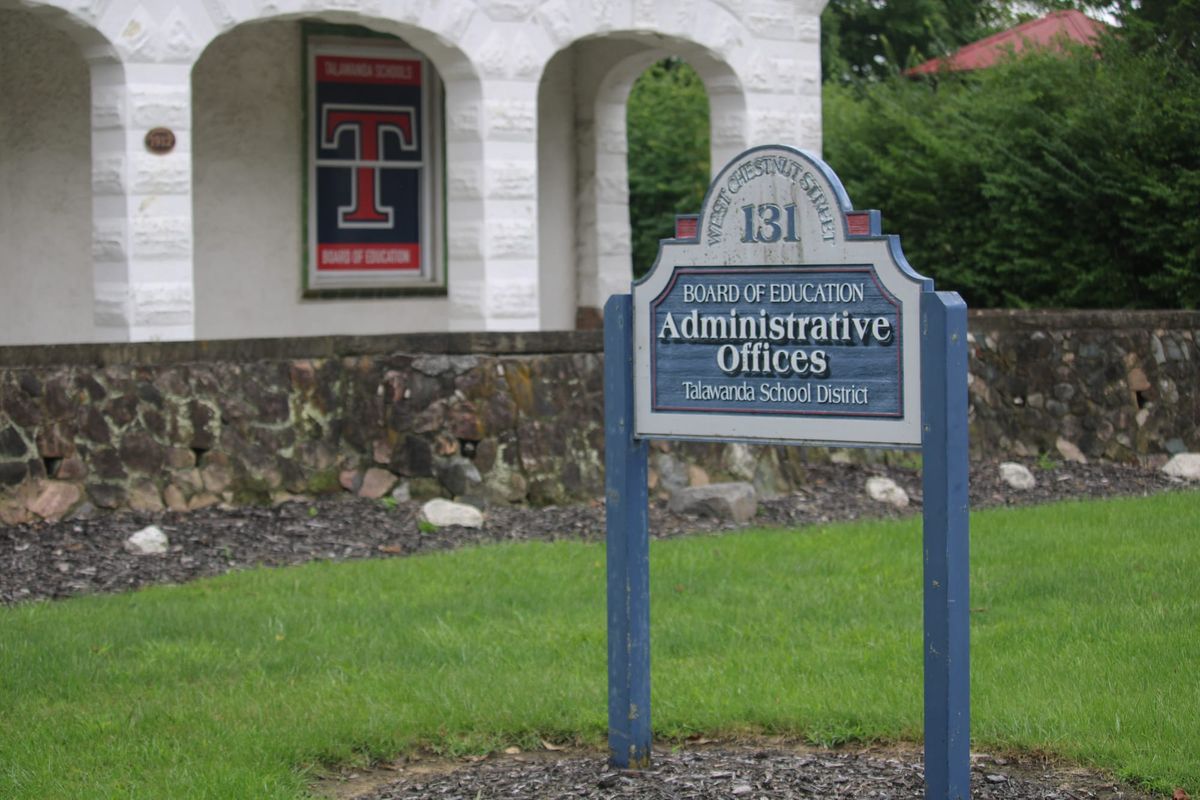
Several legislative updates will take shape in local schools this year, including at the Talawanda School District.
National Defense Authorization Act
The National Defense Authorization Act, or Senate Bill 1071, which was signed into law by President Donald Trump on Dec. 18, 2025, includes a section on “recruiter access to secondary schools.”
This section amends previous U.S. Code to include that military recruiters, for the purpose of recruiting students at least 17 years old, will have access to secondary school campuses and one in-person recruitment event per academic year, as well as access to student names, addresses, emails and telephone numbers upon request.
According to Talawanda Schools Director of Communications and Public Engagement Holli Hansel, this is the same access that college recruiters typically have and would not be a change from what the district already provides.
Superintendent Edward Theroux said in an email to the Oxford Free Press parents and guardians could previously opt out of sharing directory information. It was unclear as of press time Aug. 19 if this is still an option.
Student Athlete Mobility Act
The Student Athlete Mobility (SAM) Act, or Ohio Senate Bill (SB) 276, will allow public high school students to petition to participate in sports at neighboring schools if the students’ home school does not offer that sport beginning with the 2026-27 academic year.
Each school district and public school governing body that offers an extracurricular activity as a member of the Ohio High School Athletic Association, an organization that regulates interscholastic athletics, must comply with this law.
Hansel said she is unsure what sports may be included in future requests, but she speculated swimming and diving could be one example if neighboring school districts don’t have facilities available to students who want to join a team.
‘The success sequence’
Also in Ohio SB 276, a three-pronged teaching “framework” for youth and young adults called the “success sequence” is defined, which was originally outlined in SB 156. This sequence includes that individuals who complete a high school education, go on to work full time and marry before having children are less likely to live in poverty in adulthood.
The bill requires the Ohio Department of Education and Workforce to review and maintain a list of curriculum and resources for students in grades six through 12 teaching the success sequence.
During a Talawanda Schools Board of Education meeting in December 2025, Board Member Matt Wyatt said of the success sequence curriculum, “My concern as a board member (is that) the legislature is increasingly telling local districts exactly what to teach and how to teach.”
Additionally, he said he was concerned the curriculum is “telling kids from single-parent homes, kids being raised by grandparents, kids of all kinds of all family situations that there's only one right way, one right path.”
Overdose reversal drugs and religious instruction time
Ohio House Bill (HB) 57, which technically went into effect in January although this will be the first full school year with the law implemented, requires school districts that choose to maintain a supply of an overdose reversal drug, like Naloxone, to adopt policies regarding the maintenance and use at each school.
The Talawanda School District has had a policy like this in place since 2023, which requires each building in the school district to have at least two authorized employees, volunteers or contractors who are trained in the use of Naloxone.
Separately, the policy also includes that students can no longer be excused from school to attend a course in religious instruction for longer than two periods total per week for elementary students and the equivalent time of two units of high school credit per week for high school students.
Artificial intelligence policy
Ohio HB 96, among several provisions, required school districts to adopt a policy on the use of artificial intelligence (AI) in its schools by July 1.
Talawanda has had a policy in place since 2024, which was last revised in March, that includes definitions of AI and acceptable uses.
According to the policy, “The (Talawanda Board of Education) recognizes the importance of preparing students and educators for the successful integration of innovative technologies.
“To that end, the Board directs the administration to responsibly integrate AI by building AI literacy for all students and educators, including integration of AI into relevant curriculum, professional learning opportunities, and safe and responsible usage.”
Kindergarten age requirements
Ohio HB 114, regarding age requirements for kindergarten admissions, requires students be at least 5 years old by the first day of school starting with the 2026-27 academic year. Hansel said previous cutoffs were near the end of September and have moved up throughout the years.
Although it’s unclear if HB 114 is a factor, the Talawanda School District is predicting an overall decreased kindergarten enrollment this year compared to last year, according to data provided by Hansel.
The 136th General Assembly of the Ohio Legislature has committee hearings scheduled again beginning Sept. 15.