

Miami recognized for carbon neutrality efforts as sustainability park nears completion
The university’s solar fields were completed in August 2025.
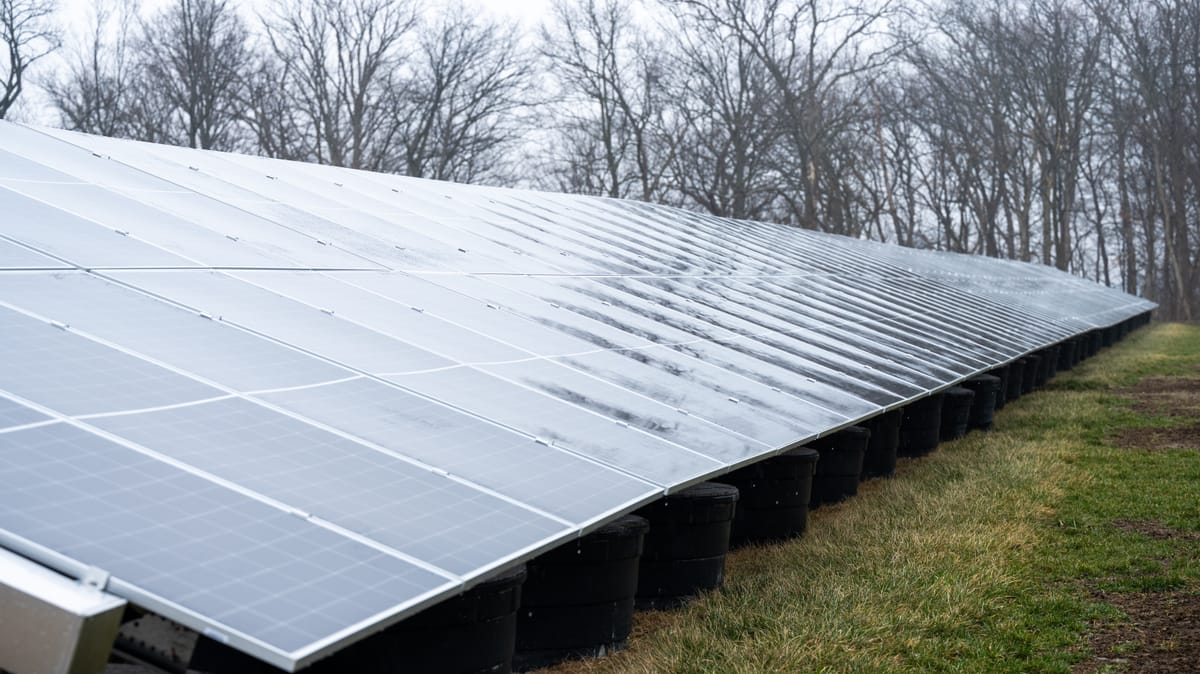
As the Sharon and Graham Mitchell Sustainability Park nears completion, with a public opening slated for March 31, Miami University is one step closer to its mission of achieving carbon neutrality by 2040.
The park was made possible in September 2025 through a $5 million gift from alumni for whom it was named.
Once complete, the park will include walking paths around the Western Geothermal Solar Fields that connect to nearby trails in Miami’s Natural Areas.
Miami was one of six colleges and universities across the county recognized at the 2026 Higher Education Climate Leadership Summit in Chicago on March 10 with Climate Luminary Honors for “exemplary climate leadership.”
According to a news release from Second Nature, a national nonprofit with a mission of “accelerating climate action in and through higher education,” the university was chosen for its decarbonization efforts in building the Sustainability Park.
According to the release, Miami’s Sustainability Park, when complete, will be the first co-located solar and geothermal project on a college campus in the country, combining renewable energy infrastructure with education and a public space.
The Western Geothermal Solar Fields, installed directly above the Western Geothermal Well Field on Miami’s Oxford campus, were completed in August 2025, with 3,336 solar panels mounted in total.
According to Olivia Herron, director of sustainability at Miami, the university is still finalizing its interconnectivity agreement with Duke Energy, which it needs before it can begin producing energy.
Once the solar fields are connected to the grid, they are expected to begin producing around 2,100 megawatt hours (MWh) of electricity annually, or more than 2% of Miami’s annual electricity consumption, Herron said. That’s enough electricity to power 200 average-size homes for a year.
Herron said the solar fields were installed on top of the geothermal well field to maximize the space, as nothing substantial can be built on top of the wells.
“The big challenge of geothermal is that it’s invisible. It’s underground. When we’re done, we plant the grass. You don’t even know it’s there,” Herron said. “By putting solar on top of (the wells), it really emphasizes how important this area is for our campus sustainability goals.”
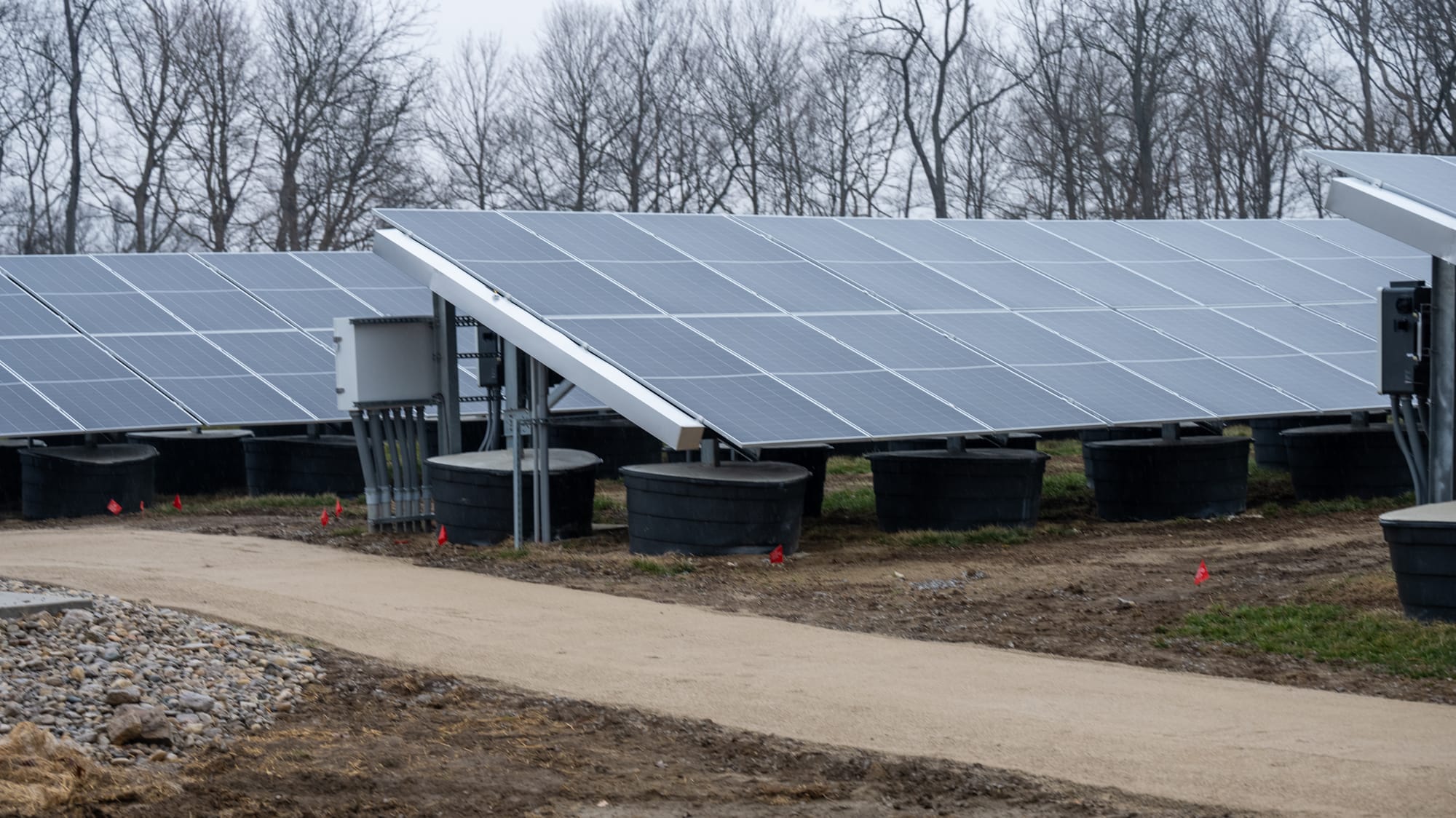

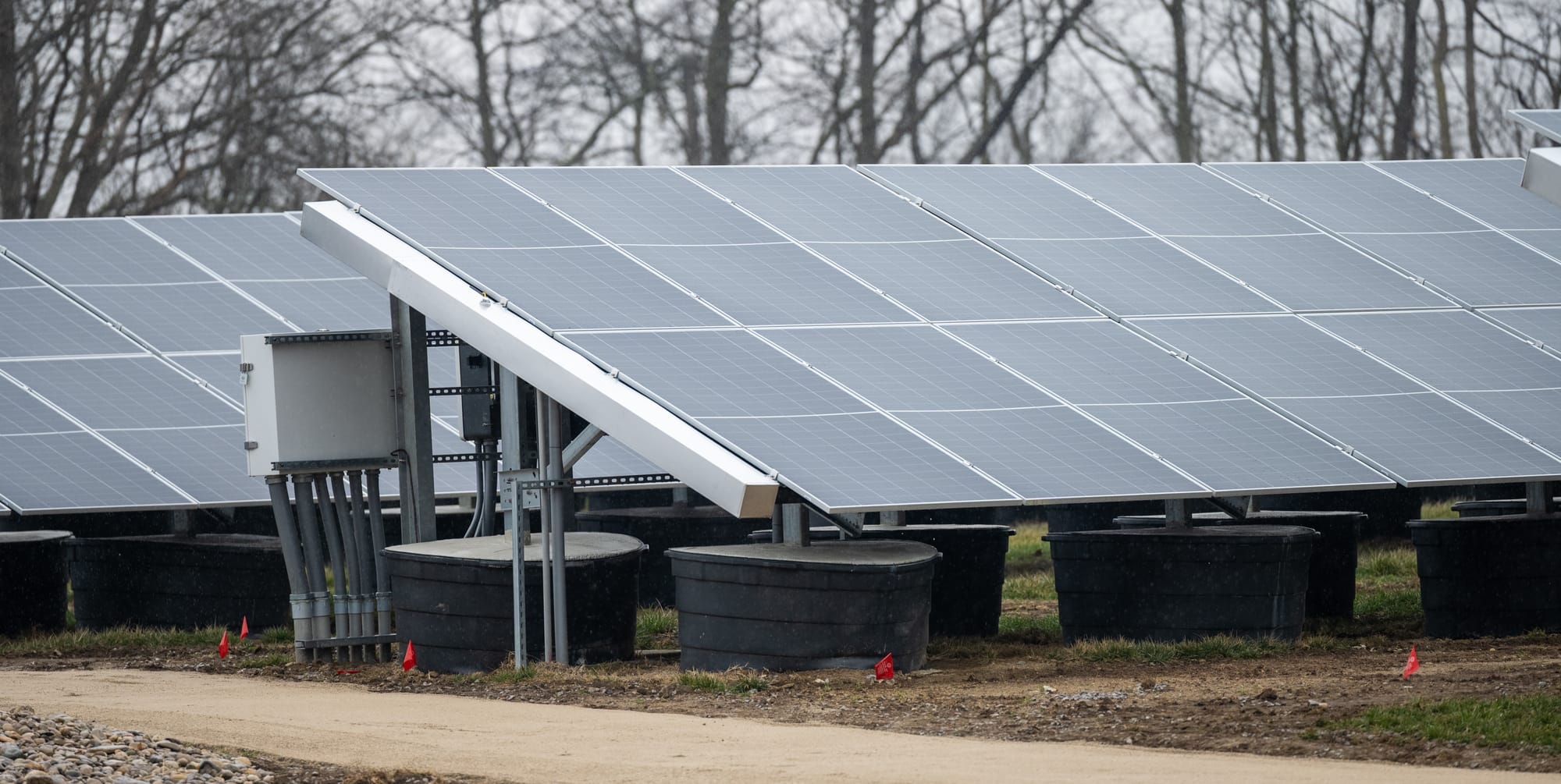

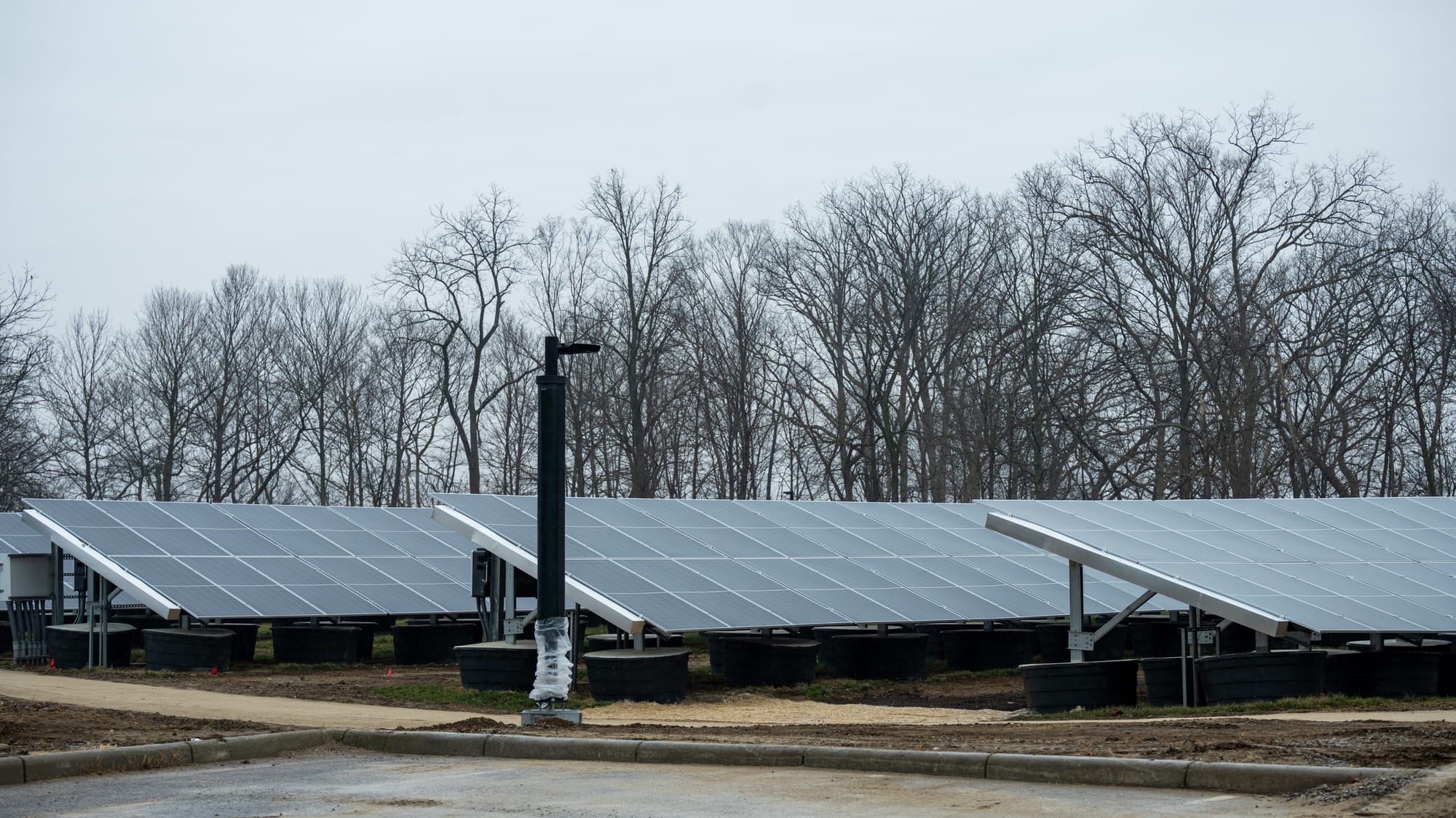
More than 3,330 solar panels were installed directly over top of Miami University's Western Geothermal Well Field in August 2025. This is to be the new site of the Sharon and Graham Mitchell Sustainability Park. Photos by Aidan Cornue.
Since the 690 wells were installed in 2014, each around 600 feet below the surface, Herron said Miami has saved $115 million in utilities costs from making its buildings more efficient.
Geothermal wells work by storing heat in the ground that’s released from buildings during the summer when they’re being cooled. That heat is then reused to warm buildings in the winter.
Herron said when the Sustainability Park is complete, the walking path will include benches made from recycled stone from historic campus buildings, including stone from the original Goggin Ice Center.
She said the path will also include self-sufficient solar-powered light posts – which Herron said the university hopes to test on other parts of campus – and nine education signs that will stand along the path to teach walkers about geothermal and solar energy and the history of sustainability at Miami.
“Trying to educate the community about what we are doing in terms of sustainability is very important to us,” Herron said. “And being a model for other campuses and for the Butler County community is something we really value.”
Once the geothermal wells in front of Millett Hall are brought online in April, Herron said Miami will have one of, if not the, nation’s largest geothermal systems on a college campus.
Since 2008, Herron said Miami has reduced its energy-based emissions by 50% in pursuit of its carbon neutrality goal, and emissions are expected to decrease an additional 10% in 2026 with the combined impact of the Sustainability Park and the geothermal wells in front of Millett.
Overall, Herron said the goal is to make sustainability one of the “defining features” of Miami.