
Miami's Center for Civics, Culture and Society sees increase in faculty, courses for fall semester
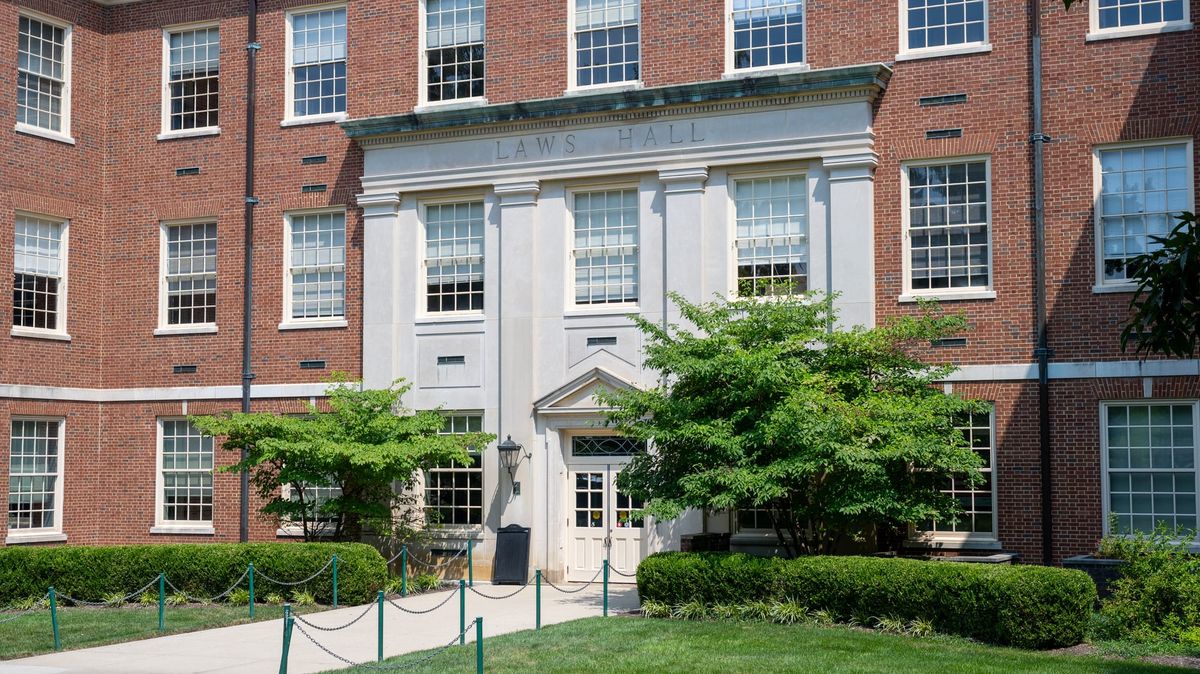
The center is moving to Laws Hall to accommodate its growth
This academic year, Miami University’s Center for Civics, Culture and Society will see an increase in staff size and course sections.
Starting this fall, all Miami undergraduates in the class of 2030 and after will be required to take a three-credit civic literacy course and pass an exam in civic literacy – a requirement as part of Ohio Senate Bill 1.
The state-funded center was created in 2023 in accordance with legislation by the Ohio General Assembly. Miami officially put together the center in the spring of 2025, and according to the center’s website, was supported unanimously by the Miami Board of Trustees.
According to the Center for Civics, Culture and Society’s website, its mission is to “conduct teaching and research on the historical ideas, traditions, and texts that have shaped the American constitutional order and society.”
Ohio House Bill 96 appropriates $2 million each academic year to Miami in order to support the center.
Last academic year, the center saw 350 students enrolled in classes, according to Flagg Taylor, the center’s first director. It also had three faculty members – one visiting assistant professor and two research associates – according to Taylor.
Taylor said the growth from the center’s first year of operation was “dramatic,” and that this fall semester will be exciting.
This fall, there are 1,261 students enrolled in civics classes as of Aug. 17, and 11 faculty members, comprising five assistant professors, three visiting assistant professors, two postdoctoral research associates and one associate director who functions as a full professor.
Additionally, the center, previously in Upham Hall, moved to Laws Hall to accommodate the increase in staff and enrolled students. Fall classes will be held in Harrison, Upham, McGuffey and Kreger halls.
Taylor said he hopes enrolled students will “take seriously the question of what it means to be a citizen … and the meaning of that in the contemporary United States.”
This fall, the following courses will be offered to students:
- CIV 105: The American Political Tradition: Its Background, Founding, and Development
- CIV 205: Dimensions of American Civic Thought
- CIV 212: Constitutionalism: Ancient and Modern
- CIV 305: The Art of Statesmanship
- CIV 306: Rhetoric and Civic Life
- UNV 201: Civic Thought: An Introduction
Taylor said that this fall, UNV 201 will have three sections taught, as a requirement for students in the center’s Civic Thought and Practice Living Learning Community (LLC), according to Taylor. This LLC currently has 23 students.
This past academic year, the center at Miami piloted two classes to fulfill state requirements and act as “trial balloons,” Taylor said.
These courses included UNV 105: The American Political Tradition: Its Background, Founding, and Development and UNV 205: Dimensions of American Civic Thought.
These two courses were required to cover seven particular documents, including the United States Constitution, the Declaration of Independence, five of the Federalist Papers (chosen by professors), the Emancipation Proclamation, the Gettysburg Address, Martin Luther King Jr.’s Letter from Birmingham Jail and selections from the writings of Adam Smith, Taylor said.
According to the center’s website, it also offered two additional courses the past academic year, including UNV 201: Civic Thought: An Introduction and UNV 320: Free and Civil Speech.
Fall changes
“We’re really working on building a strong departmental culture and identity,” Taylor said of the new faculty. “I think they are all really talented people who are very committed to teaching.”
Part of building that identity includes having a faculty of different academic backgrounds, Taylor said. While the faculty is mostly made of political scientists, some faculty have backgrounds in philosophy, religion and English.
Taylor added that having this diverse group of disciplines possessed by the center’s faculty creates the opportunity to approach the questions each course poses from different perspectives.
Gregory McBrayer, associate director of the center with a background in government and political science, started working there in July. He said he hopes to help the center reach its best potential.
McBrayer added that Miami can be the perfect fit for this center to succeed.
“I just really thought Miami offered the best institution from which to try to do something serious in this area,” McBrayer said. “Miami has historically placed such great emphasis on undergraduate education.”
This semester, McBrayer will be working alongside Taylor with public outreach, cultivating donations, raising money and working toward the goal of the center becoming financially independent.
Like Taylor, McBrayer said he is also looking forward to helping students understand what it means to be a citizen in a democratic country.
“We’re all sort of on board with a similar focus on primary documents, great texts, civil discourse,” McBrayer said. “I’m hoping we will develop a reputation for a certain kind of product that students can know what to expect when they come (to) our classes.”
McBrayer will be teaching some basic courses that cover citizenship, American political thought, civics and rhetoric – his personal favorite.
“I think (rhetoric is) a very useful class for undergraduates,” McBrayer said. “Students, as citizens, they’re going to be listening to politicians for the rest of their lives … and there’s a way in which, if you can understand rhetoric, you will be able to filter out things that people are saying to you that are meant to be merely persuasive and actually try to get down to what a speech is about or (what) a politician’s about.”
McBrayer said he hopes students will learn to be better consumers of political speech with these skills.
No-tech policy
Taylor also stressed the center’s commitment to the “traditional” classroom approach.
“We want students to bring hard copies of their books,” Taylor said. “We want students to take notes by hand, without a laptop.”
Taylor said this approach to education is a “way to reignite people’s passion in the classroom and get them engaged and get them interested.”
Kenlea Barnes, assistant professor at the center, is the only staff member besides Taylor who is returning to the semester after the new additions. Barnes started working at the center last year as a research associate.
This fall, she will be teaching a few classes that focus on American civic thought, political philosophy, the foundations of citizenship and even ancient political thought.
Barnes added she is looking forward to continuing the no-technology policy that the center upholds, excluding students who need special accommodations.
In Barnes’ classroom, the no-tech policy includes no laptops, tablets or texting. There will only be paper quizzes, exams and essays.
Barnes said while students initially pushed back from the policy, “They all walk away saying they enjoyed it at the end because they’re talking to each other (and) engaging with each other.”
Barnes said she hopes her students will learn how to enjoy reading and understand how foundational texts shape American civilization, both in the past and today.
“I just want my students to understand that they need to be active participants in their society, whether they agree with everything or not,” Barnes said.