
Myaamia Center collaborates on exhibit now open in France
An exhibit showcasing indigenous artwork is now open at the Palace of Versailles in France and was organized in part by the assistant director of the Myaamia Center at Miami University.
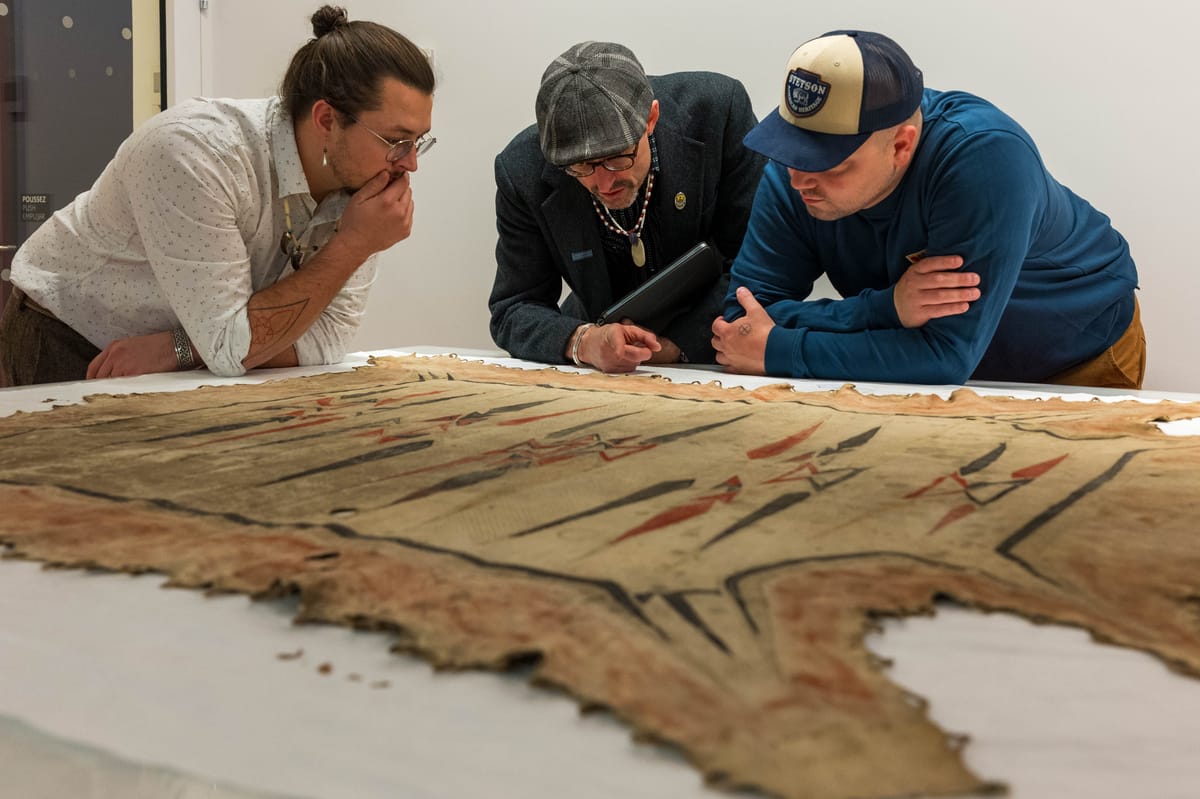
An exhibit showcasing indigenous artwork is now open at the Palace of Versailles in France and was organized in part by the Myaamia Center.
Miami University’s Myaamia Center is an initiative of the Miami Tribe of Oklahoma, and works in Oxford around education development.
During the pandemic, Assistant Director George Ironstrack, who is also a citizen of the Miami Tribe of Oklahoma, worked as a consultant on a project that would revitalize minohsaya, or painted hide robes.
Along with the Myaamia Center, Ironstrack connected the University of Illinois and members of the Peoria Tribe to showcase the art form that began losing popularity among tribes in the mid-1700s and was superseded by the early 1800s.
“I think it’s pretty momentous,” he said. “These are some of the oldest objects of indigenous art from my people’s homelands.”
Ironstrack connected with the Musée du quai Branly-Jacques Chirac, a large museum in France that holds a unique collection of objects from the present-day territories of Canada and the United States, in order to do research on these robes, according to the museum’s website.
The museum had already launched its own project around the painted hide robes with the goal of contextualizing French colonial collections with the knowledge and experience of Native Nations.
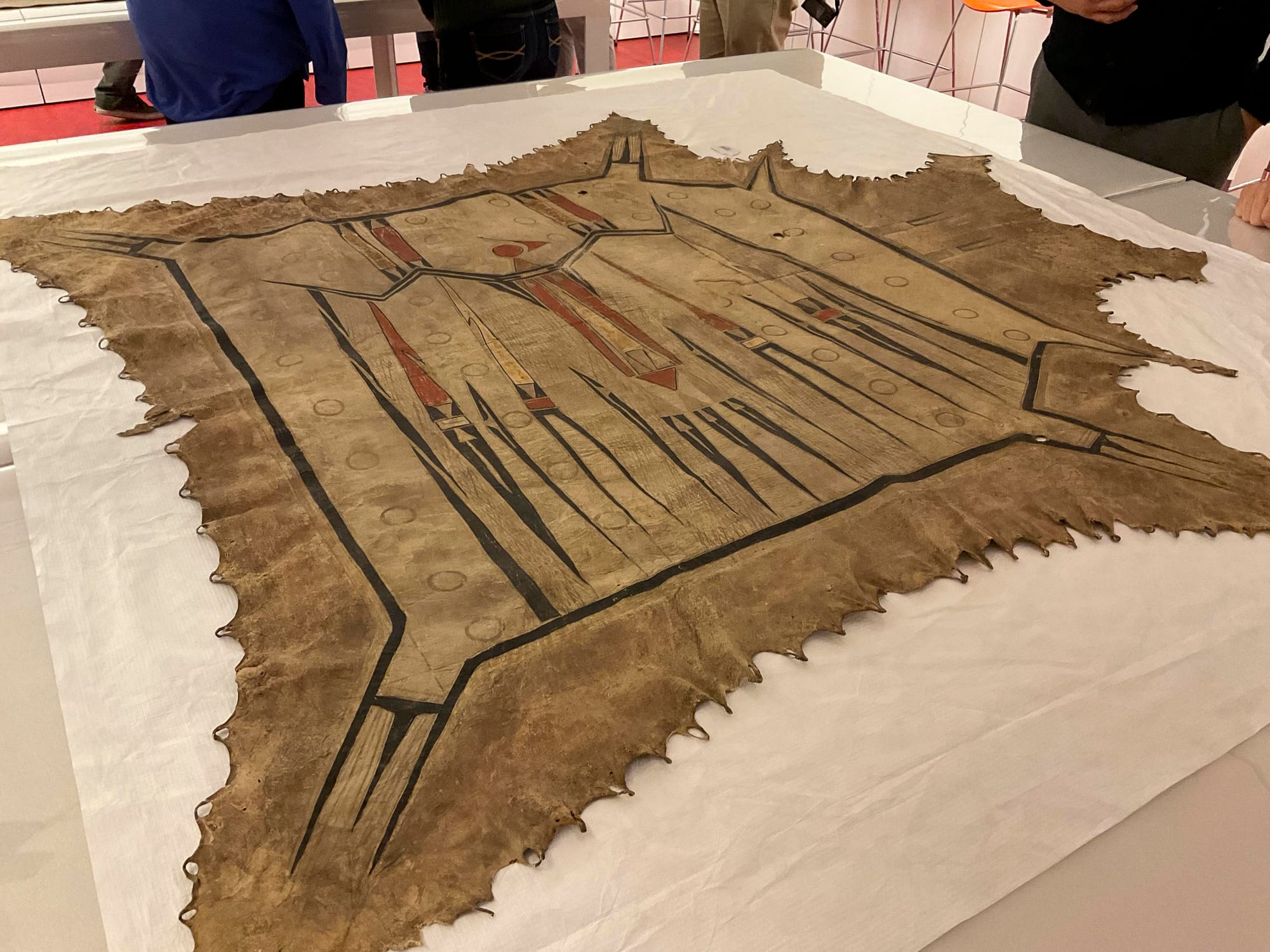
The two parties began collaborating to highlight a story of place and experience by using historic maps, beads, trade goods and more.
“It’s wonderful, beautiful artworks that symbolize these connections to place,” he said.
The exhibit, now featured at the Palace of Versailles, includes three painted hide robes, two calumet pipes, which were used in diplomatic protocol in North America from the 1600s through the 1800s, a wampum belt, also used for diplomacy, multiple headdresses that were gifted to the French King, a musket, jewelry and paintings that depict Native people in the 1700s.
Ironstrack said a video at the end of the exhibit showcases interviews from five consultants from Native Nations.
“We really wanted to speak about who we are today,” Ironstrack said. “We wanted visitors to see us today living as people and as connected to the experiences of Native people in the 1700s. We’re not in a chrysalis, we’re not shaped only by that experience from 300 years ago.”
“Native people have been visiting (Versailles) for over 300 years,” Ironstrack said. “This will be, from my understanding, the first kind of exhibit curated together with Native people at Versailles.”
The exhibit runs through May 3, 2026.