
Skate park closes, future to be decided by city council
The Oxford Skate Park on the TRI (Talawanda Recreation Incorporated) Community Center grounds was officially closed by the Parks and Recreation Department last month with the plan to convert it into pickleball courts.
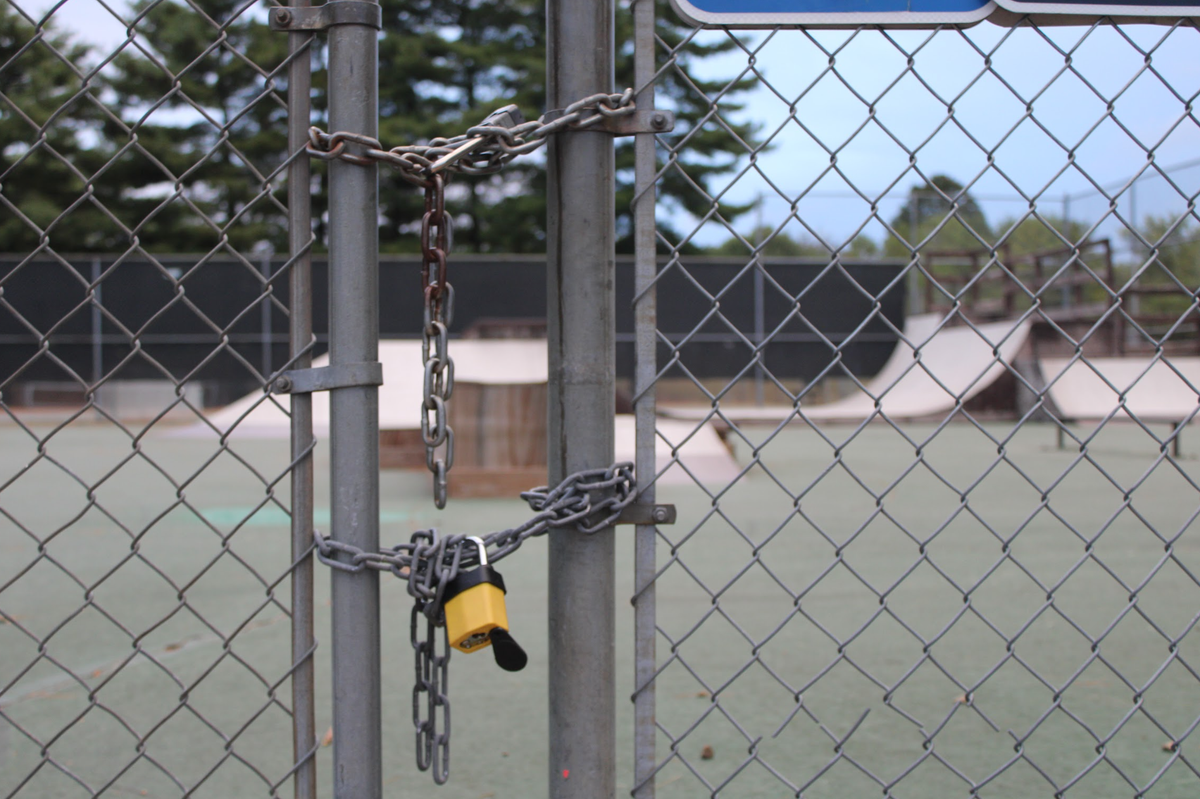
The Oxford Skate Park on the TRI (Talawanda Recreation Incorporated) Community Center grounds was officially closed by the Parks and Recreation Department last month with the plan to convert it into pickleball courts.
The wooden skate park, which was shut off from access on Sept. 30, has been a fixture of the community for over 20 years and doubled its life expectancy by over a decade.
Several professional assessments of the park, completed in June and July, found the park was beyond repair and no longer safe to use, Oxford Parks and Recreation Director Chad Smith said during public input sessions on Sept. 29 and Oct 2.
Smith said the assessments also found the misuse of bikes and scooters on the park ramp contributed to its decay.
“We have a facility that’s outlived its lifespan, and it’s often used for purposes it wasn’t intended for, and here we are looking for the best path forward,” Smith said.
Smith said he looked at this issue from an objective standpoint, based on safety and budget.
Smith told the Free Press that the pickleball court replacement was not a factor in closing the skate park.
“(Pickleball) wasn’t the decision to get rid of the skate park, it was the solution after we removed the skate park. So that’s still happening, but now there’s new conversation and a new opportunity to build a new skate park at a different location, likely, but not necessarily at the TRI, but somewhere at the TRI Community Center,” Smith said.
In 2023, the parks and recreation department was unsuccessful in obtaining grant funds for the park, mainly due to the original design not meeting industry standards, according to Smith. The standard for skate parks involves a concrete structure.
“We know that one of the reasons we haven’t been successful replacing in the past is because where it currently sits is not optimal and doesn’t score well for grants because it’s got tight margins. It’s been on an old tennis court, and it’s just restricted,” Smith said.
The estimated cost of replacing the skate park with pickleball courts in the city’s proposed 2026 Capital Improvement Plan is $60,000, and $50,000 of those funds will be provided by the city, with the rest coming from grants. The floor of the park is a former tennis court, which Smith said will help with the conversion.
Smith told attendants at the public input session that the proposed improvement plan currently includes funding for the Parks and Recreation Comprehensive Strategic Plan. Smith said he hopes to include a concrete skating place in the plan.
Smith said he also believes creating a master plan will provide Oxford a competitive advantage in receiving grant funding for a concrete pump track. The cost of a concrete pump track can vary depending on its size and the scope.
Assistant City Manager Jessica Greene said during an Oxford City Council operating budget work session Monday she’s going to recommend a Community Development Block Grant (CDBG) application for a replacement for the skate park that would cover close to half. The grant is about $130,000, which the city will need to match.
If the city gets the grant, Greene said it will likely be in late November 2026, meaning the project will not likely be started until late 2026 or in 2027. If the council decides to move forward in applying for the grant, she said they’ll have to give up proposed improvements at Leonard G. Howell Park, including the construction of a dog park, in exchange.
The TRI Community Center held public input sessions on Sept. 29 and Oct 2, where some attendees expressed frustration by the lack of transparency from the parks and recreation department.
One participant at the meeting, Janice Bisson, found out through Facebook only ten days before the park’s closure. Her family visits the park on a regular basis.
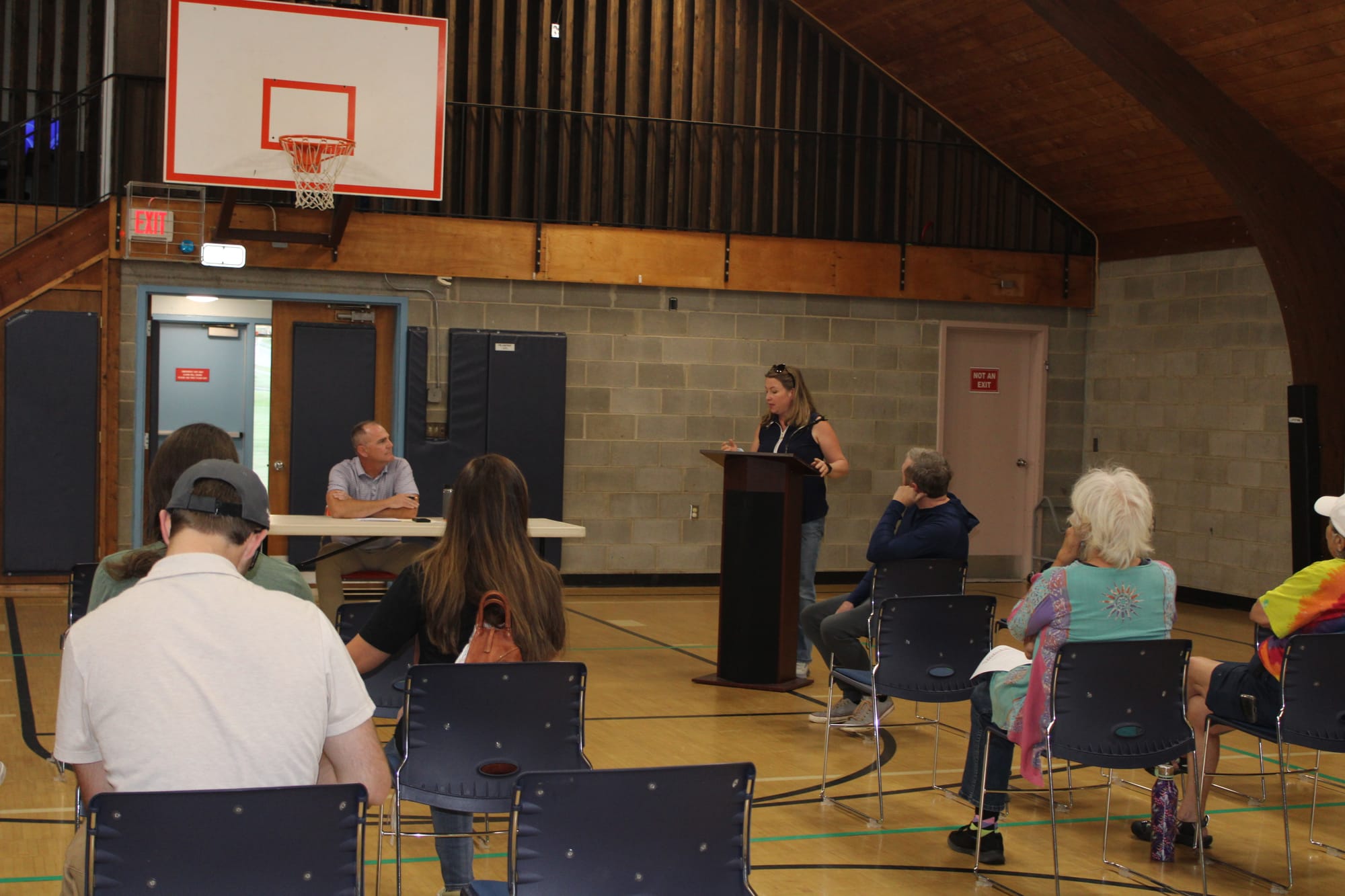
“I never saw any official notice anywhere, until I saw [one] on Facebook. Somebody in the community said, ‘They’re closing the skate park, and this is terrible.’ … Then we went over to the skate park, and there’s a sign on the fence,” Bisson said.
With more notice, members of the public input session said they believe they could’ve been involved in the process of finding solutions.
“It would have been really nice to be part of the process for searching for grant money. It would have been nice months ago to be a part of this process – to know there was an issue,” attendee Evan Pitts said.
Pitt said he believes seeking funds for the skate park was not a priority as its life span wore out.
“We might not have prioritized this, and now the community is going to have to eat the cost of that, which is the loss of the skate park,” Pitts said.
Attendees of the public input session expressed concern the closure of the skate park, without firm plans for a new one, will displace a subcommunity. At the meeting, Perry Gordon asked “Where are skateboarders going to go?” Without a designated area to use, he said skaters may skate in unsafe areas, such as parking garages and streets.
Another attendee, Mark Walsh, used the rink since he moved to Oxford in 2002. For him, skating is not only a form of exercise, but it’s also therapy. While he said he can make the drive to the second closest option, the Hamilton-Fairfield Skate Park, not every skate park-goer can.
“A lot of these people I have skated with out there over these 24 years, they don’t have a car, and some of them don’t have support, maybe family support. So we might be taking away the only space they have where they can get outside, do their own thing and hang out with their friends,” Walsh said.
Attendees at the meeting also said they were concerned expanding the pickleball courts would mainly cater to Miami University students, when the university has courts behind Cook Field already accessible to them.
Smith said he hopes community input around the closure of the park isn’t a stopping point, but rather a starting point.
“I’m hoping for this to be the start of a conversation, and we can look back on this and say, ‘Wow, look at what we accomplished,’” he said.