

Oxford City Council approves new gas rates, takes step back with mayor’s court
The Oxford City Council approved changes to gas rates for residents and businesses during a meeting on March 17 and delayed a decision that would begin funding the city’s mayor’s court.
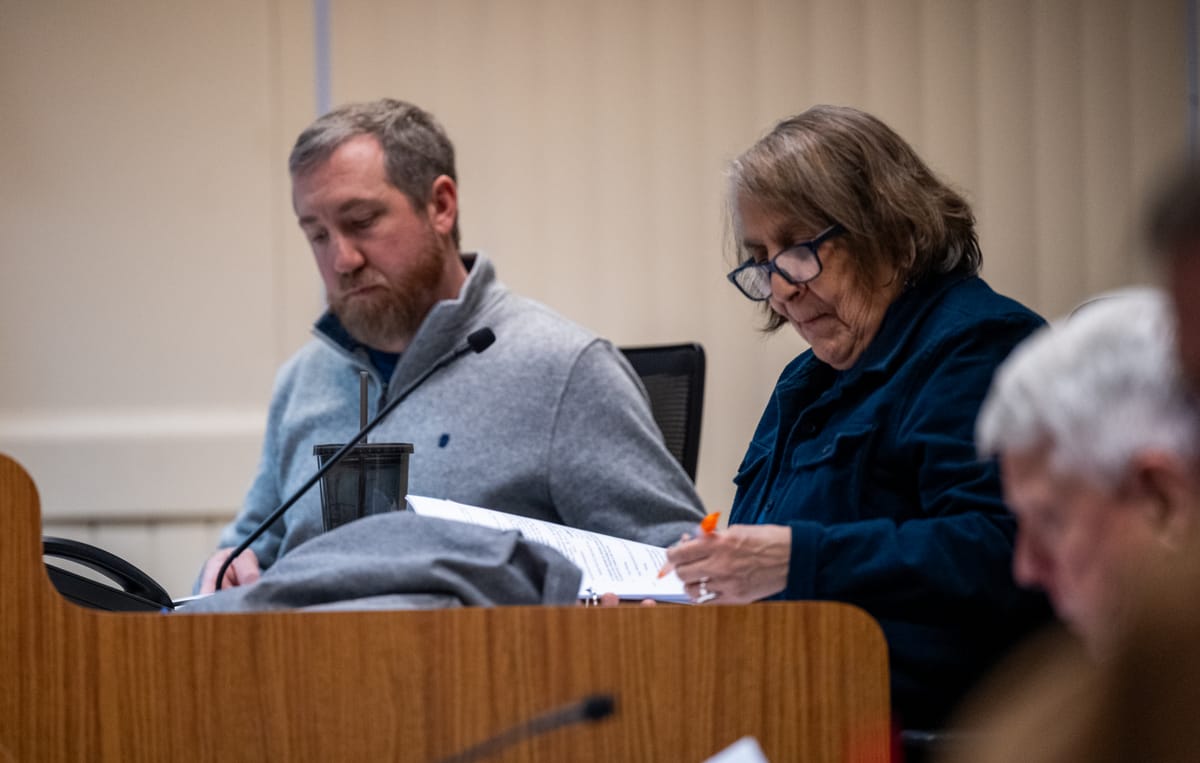
The Oxford City Council approved changes to gas rates for residents and businesses during a meeting on March 17 and delayed a decision that would begin funding the city’s mayor’s court.
The city council also signed off on new police and fire department contracts for equipment and resources.
Glenwood Energy increase
Glenwood Energy, a natural gas provider for residents and business owners in Oxford, submitted an application to the City of Oxford that would alter several fees for locals.
The main sources of revenue for Glenwood Energy are made up of three separate rates: a gas cost recovery (GCR) rate, a fixed meter charge and a general service rate (GSR).
The GCR rate is based on the price that Glenwood Energy must pay to purchase gas. This relies on varying market prices, is passed directly on to the consumer and doesn’t generate a profit for Glenwood Energy.
In January, the GCR rate was $9.0217 per 1,000 cubic feet (MCF). This rate consists of approximately 50% to 70% of a customer’s monthly gas bill, according to the city staff report.
The application suggested an increase in the gas pressure test fee from $80 to $90.
Glenwood Energy’s application also contained a proposed change, over a three-year period, to the residential fixed monthly meter charge from $14 to $22 per meter in the first year. For the second and third years, the application proposed a charge increase to $28 per meter per month.
For commercial businesses, the application proposed a monthly meter charge increase from $20 to $28 per meter for the first year, with years two and three seeing an increase to $32 per meter per month.
With these changes, the GSR would decrease from $3.46 per MCF to $2.92 per MCF, according to the staff report.
The City of Oxford reached a tentative agreement with Glenwood Energy on the proposed rate adjustments with some changes in recommended rates, according to the city staff report.
The city recommended the rates for the residential fixed monthly meter charge to increase from $14 to $22 per meter for all three years. The city recommended the monthly commercial meter charge to increase from $20 to $28 per meter for all three years.
Additionally, the GSR would remain at the current rate of $3.46 per MCF for both residential and commercial/industrial customers.
The staff report added that Duke Energy’s current residential monthly meter charge is $43.29.
The ordinance was approved by the council and will take effect on May 1.
Mayor’s court hesitation
During the city council meeting, an ordinance was introduced which would, in part, appropriate $139,000 for operations and personnel of the city’s mayor’s court.
This $139,000 would include pay for required workers in the mayor’s court, including a magistrate, a court clerk and a prosecutor.
Additionally, money from the allotted $139,000 could be used to cover basic requirements for the mayor’s court to function, including software, which could be used for reporting, collections, online docking and payments for the mayor’s court, and to establish fines, fees and bond amounts.
Members of the city council discussed various issues with the establishment of the city’s mayor’s court.
Councilor Amber Franklin said the process of establishing the mayor’s court felt “rushed.”
“This feels like a much bigger step to do without as much information,” Franklin said of earmarking $139,000 for the mayor’s court.
Councilor Roxanne Ornelas said she feels there is a lack of information about the court that needs to be shared with the city council.
Franklin suggested a new report be made to evaluate cost-benefits and other information about the project. She also suggested the city could refrain from establishing the court while considering other options.
“We don’t really know what it’s like to do nothing with the students around unless we are willing to do that through an academic year, at least half of the academic year,” Franklin said.
Councilor Jason Bracken shared Franklin’s sentiment, saying refraining from establishing the mayor’s court would create “optionality for what else we can do with the building and resources. … I’d love to slow down and consider optionality.”
Bracken added he still supports creating the mayor’s court “as long as it’s the best choice.”
Councilor Bill Snavely said, while he is still in favor of the mayor’s court, he would like “some time for us (councilors) to think about it and find out what the numbers are.”
Multiple councilors agreed not to use the mayor’s court as a “cash generation machine,” according to Councilor Jim Vinch.
“I hope we will use it just to break even,” Vinch said of the city covering the costs of running the court. “I’m not concerned about us abusing the system.”
Bracken said he hopes the city council will put rules in place to prevent profit generation.
“I trust us,” Bracken said. “We’re going to put in rules, I’m sure, and make sure it can’t be abused.”
Heidi Ridenour, finance director for the City of Oxford, said she would prefer having the mayor’s court functional sooner rather than later.
“From an implementation standpoint, we would rather do it not when the students are here,” Ridenour said. “It’s going to be a learning curve for all of us.”
The city council voted in favor of adding an amendment to the ordinance to remove the line item containing the $139,000 in appropriations for the mayor’s court. The city council approved the remaining items in the ordinance, including other city fund appropriations.
Doug Elliott, city manager for the City of Oxford, said staff cannot be hired for the mayor’s court until the appropriation is approved by the city council.
The city council will revisit this item in a future meeting.
Oxford Division of Police new contract
In other news, the city council adopted a resolution allowing the city’s Division of Police to renew its contract with Axon Enterprise Inc., a group that sells body cameras, police equipment and other resources.
The Oxford Division of Police first entered a contract with Axon Enterprise in 2021 to purchase body-worn cameras (BWCs) and associated equipment, data storage and support.
Currently, Axon Enterprise’s services to the Oxford Division of Police include Axon Performance, an automated auditing tool to measure policy compliance, pro-licensing – which includes full-feature licenses for supervisors and records personnel – and Axon auto-tagging, or automated data reconciliation with Butler County Sheriff’s Office’s dispatch computer.
Each of these software subscriptions will increase efficiency in the Division of Police by automating data entry tasks currently handled manually by individual officers and/or supervisors, according to the city staff report.
The total cost of services from Axon Enterprise is $289,800.02 over the five-year period of the new contract.
The Police Division’s budget for body cameras is $40,000 for 2026 and will need to increase for Fiscal Year 2027, according to the city staff report.
According to the resolution, costs for the first year will total $37,000.02 in order to fit the Division of Police’s budgeted amount. Years two through five will cost $63,200.00 annually.
OFD, EMS ambulance
The city council also adopted a resolution to allow the city manager to enter into a contract with Atlantic Emergency Solutions, a fire department equipment supplier in Springboro, Ohio, for the purchase of a 2026 Ram/Horton ambulance. The contract pricing cannot surpass $385,406.17.
Part of the city’s 2026 capital equipment budget includes $425,000 to purchase a new ambulance for the fire department.
According to the city staff report, this new ambulance will become the primary EMS transport unit and will increase the city’s fleet to four transport units in response to an increase in calls and events.
Oxford Fire Chief John Detherage spoke to the city council about the purchase of the new ambulance.
“We spent the last year looking at various manufacturers,” Detherage said. “(We) basically came back to Horton who we bought the last three from.”
Detherage said the price for the ambulance was better than other options, and the ambulance will be constructed in November 2026.
The Oxford City Council will meet again on April 7 at 7:30 p.m. at the Oxford Courthouse on 118 W. High St.