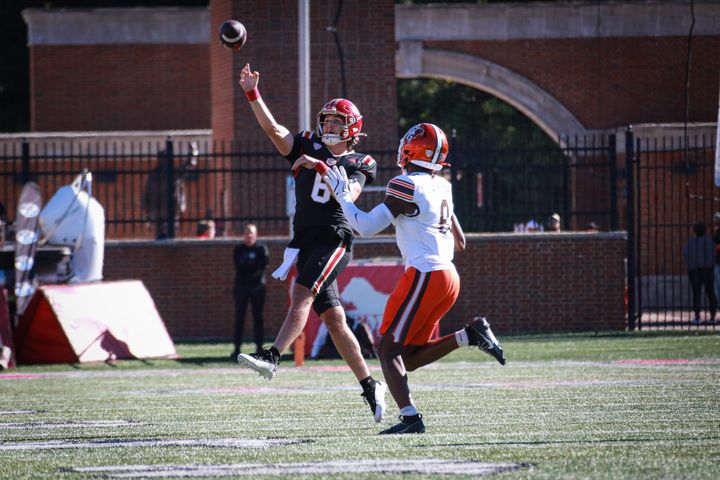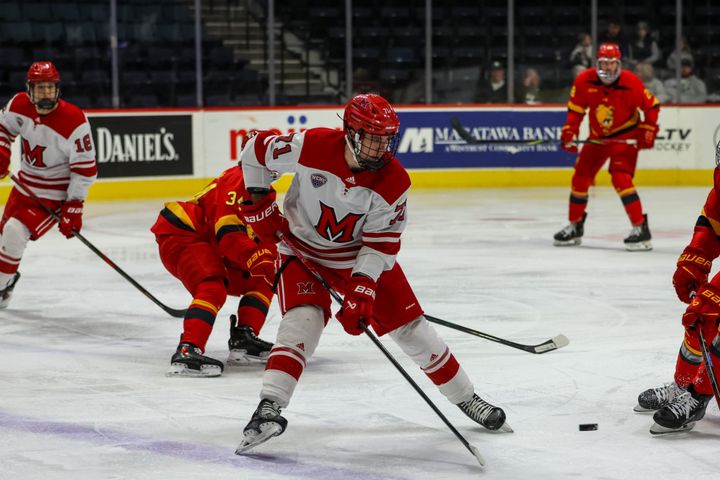

Recent conference changes spark success and create new opportunities for Talawanda athletics
Many factors play a role in the success of the athletic programs Talawanda offers. But a greater factor is the transition from the Southwest Ohio Conference (SWOC) to the Southwestern Buckeye League (SWBL).
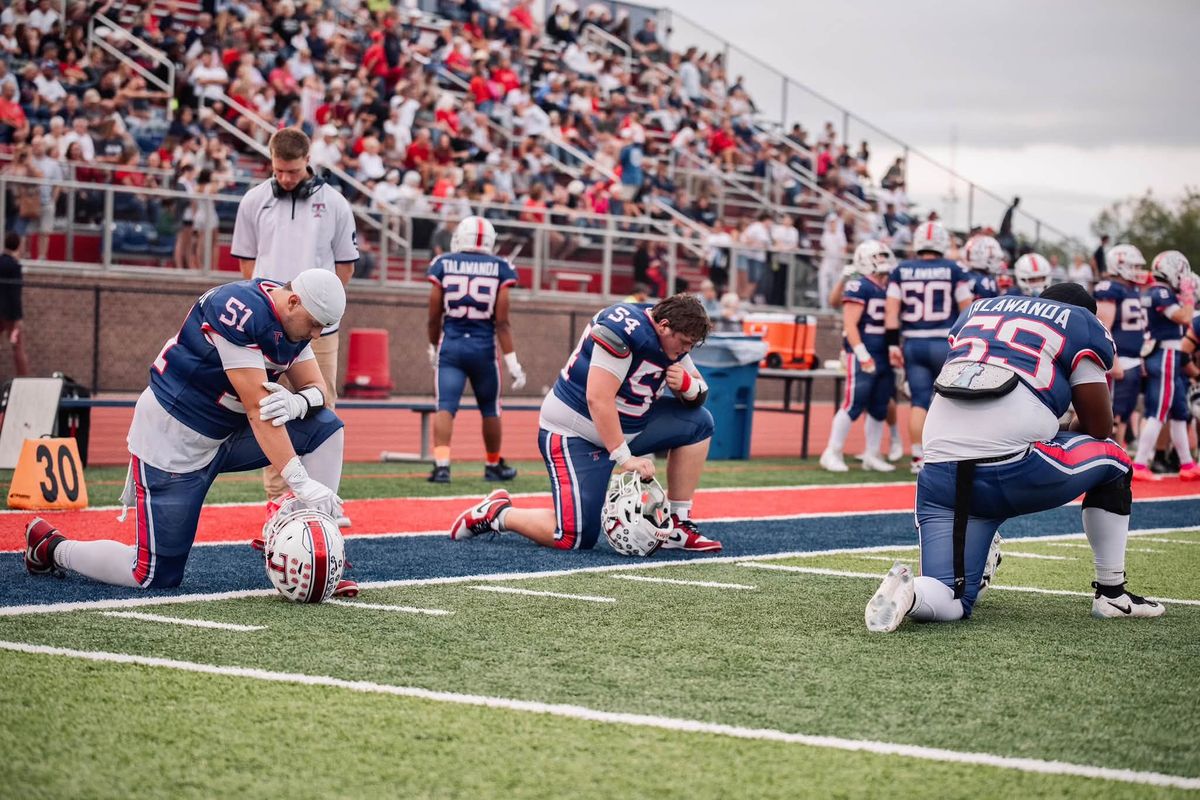
High-scoring football games, boys and girls soccer shutouts and intense volleyball and tennis sets are some of Talawanda High School sports’ most exciting fall events. This season, Talawanda’s athletic programs are at an all-time high in win-loss records, shutouts and competition against new opponents.
The boys varsity soccer team is 10-1-1 with nine shutouts, scoring 55 total goals and allowing six. It hasn’t had a winning record since the 2021-22 season. The girls varsity soccer team is 5-3-1 with dominant 14-0 and 9-0 victories. It hasn’t had a winning record since the 2019-20 season.
The varsity volleyball and girls’ tennis teams haven’t had as much success as the soccer programs, but have maintained a balanced record of 6-7 and 7-7, respectively. Volleyball is third of six teams in the conference standings and girls tennis is fourth.
Factors for this surge of success across the athletic programs include strong groups of incoming freshmen, experienced returning players and improved coaching. But a greater factor in this change of scenery for Talawanda sports is the transition from the Southwest Ohio Conference (SWOC) to the Southwestern Buckeye League (SWBL). The switch has given Talawanda new opponents, similar competition and more of an opportunity to showcase its best qualities.
“The conference schedules for all of our sports are lined up with schools that are size-similar,” said Jake Richardson, Talawanda High School’s Athletic Director. “We carry a lot of the same sports. We have the same kind of enrollment, the same kind of competitiveness … I think that’s what makes it such a great fit for us is that we’re all kind of in the same boat there with the sizes of schools.”
Before the transition, the SWOC, which began in 2012, was made up of eight teams: Edgewood, Harrison, Little Miami, Mount Healthy, Northwest, Ross, Talawanda and Wilmington high schools. Wilmington left after the 2013-14 season, Little Miami left after the 2019-20 season and Edgewood and Ross left after the 2022-23 season. Because of this, Talawanda became one of only three other conference opponents for the 2024-25 and 2025-26 seasons.
“Leaving us in a four-school conference put us in a situation where we needed to try to make a move, where all the schools were trying to make moves or figure out what to do,” Richardson said. “We were just fortunate enough to get the opportunity to go to the SWBL.”
Now, Talawanda joins the same conference as divisional opponents Bellbrook, Edgewood, Franklin, Monroe and Ross high schools, as well as eight other schools in the Buckeye division.
The jump from four conference opponents to 13 has drastically impacted the ease of scheduling more games and finding consistency in what days of the week teams would play.
Before the transition, Richardson said the boys soccer team played more games on Mondays, Wednesdays and Saturdays than usual, and it would affect preparation and narrow the time between games for practices and recovery.
The girls soccer team also experienced a short 1-2 day break between games in previous years. The teams had to play so many more non-conference games that it created an irregular schedule, sometimes forcing them to play back-to-back nights.
Now, the soccer teams play primarily every Tuesday and Thursday, and the entire back half of the season is full of conference games where long traveling distances and inconsistent game times don’t play a factor in the team’s preparation and recovery. The teams also have more new conference opponents.
“Playing a new team can be nerve-wracking,” said Darrel Davis, the girls soccer head coach. “We watch film on the teams that we’re going to play. But I would say that in our practices we have to make adjustments to who we’re going to play, and we do that so when we get here, we could try our best to compete. New teams, unfamiliar faces, you know, we take it in stride and try to do our best.”
The varsity football team is the only one that has not transitioned yet, due to schedules being set far in advance. Richardson said he’s finished scheduling Talawanda football through 2028 and has already made some of the 2029-30 season schedule. The team still faces mostly non-conference teams, which has led to more long distance travel.
When Ross and Edgewood left the SWOC, Talawanda had to travel to Wooster, Ohio, to play a week 10 football game. The next year, Wheeling Park High School in West Virginia traveled to Talawanda to play a week 10 football game.
“The kids’ scheduling allows us to be more consistent, especially with non-conference games,” Richardson said. “Our coaches are doing a great job, and we’re able to all work together and find resources. The culture is turning in the right direction.”
Still, the football team has been dominant this season and hopes to continue doing so after the switch to the SWBL for the 2027-28 season. The team is 5-1 with three shutout victories, and the defense has allowed just 26 points in the first six games.
Mike Buell, the assistant head coach of the girls soccer team, said tougher games are on the horizon, which will be good for the team.
“While we dropped one super hard opponent, we got another super hard opponent, and then all our other opponents are stronger,” Buell said. “It’s making us have to step up for a lot of games per season … the end result is that we just end up playing more tough games, which is good because it just builds us into a better team.”
The transition from the SWOC to the SWBL is an exciting move for the Talawanda community, especially for fans who love watching more competitive matches and high-intensity games.