
Saving birds, one band at a time
How local researchers at Hueston Woods track the health and migration of hundreds of bird species.
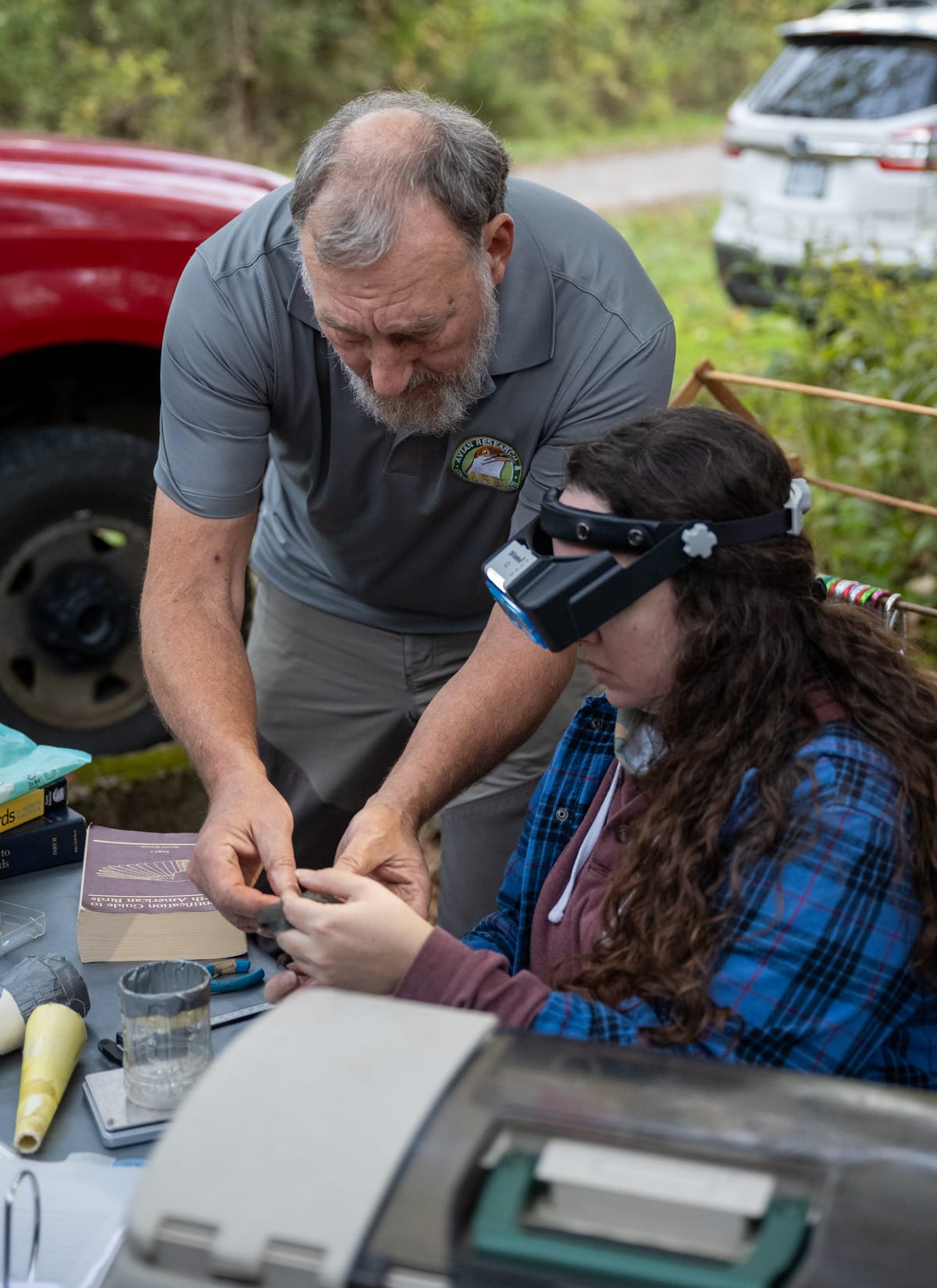
Every Tuesday and Thursday morning, while it’s still dark, David Russell, associate teaching professor at Miami University, drives to Hueston Woods State Park to lead the Avian Research and Education Institute Bird Banding Station.
As a birder, Russell expects to see between 235 and 240 different bird species in and around Oxford in a given year. Russell estimated he has “probably seen over 90-95% of the species in the U.S.” as a seasoned birder.
In 2004, Russell and his wife, Jill, opened the Avian Research and Education Institute (AREI) as a nonprofit aimed at supporting aviary efforts in the area.
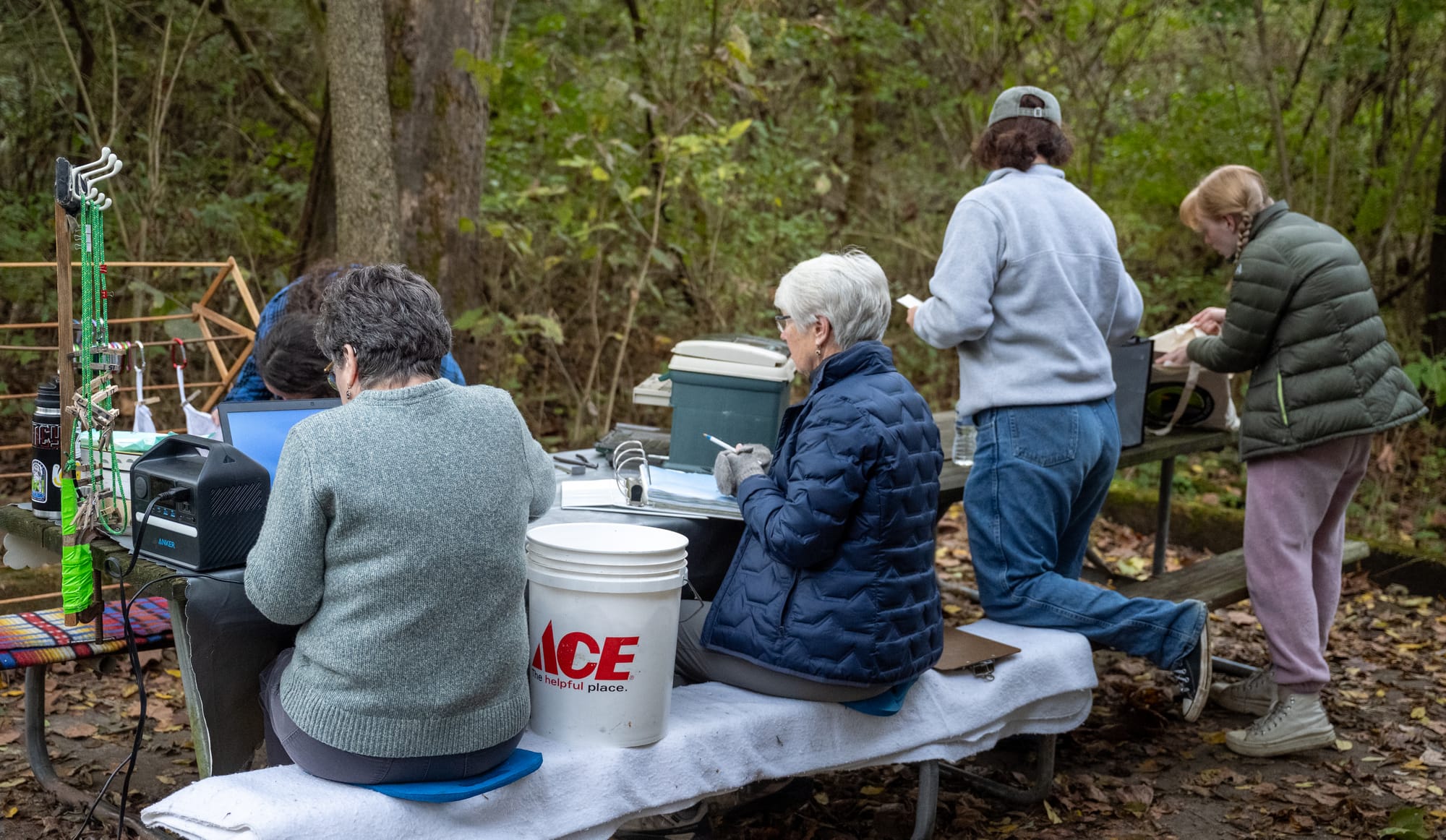
The operation started with just the two of them and has since grown to include between 10 and 12 volunteers, including some individuals who have been a part of the mission for more than 15 years, according to Russell.
Since the program’s start, around 116 species have been documented.
“In a given year, we get about 75 to 80 species,” Russell said. “There’s probably 30 species each year that we only get one or two individuals.”
Russell explained that the birds seen around the bird banding station are migratory, which means that they travel between two regions throughout the year.
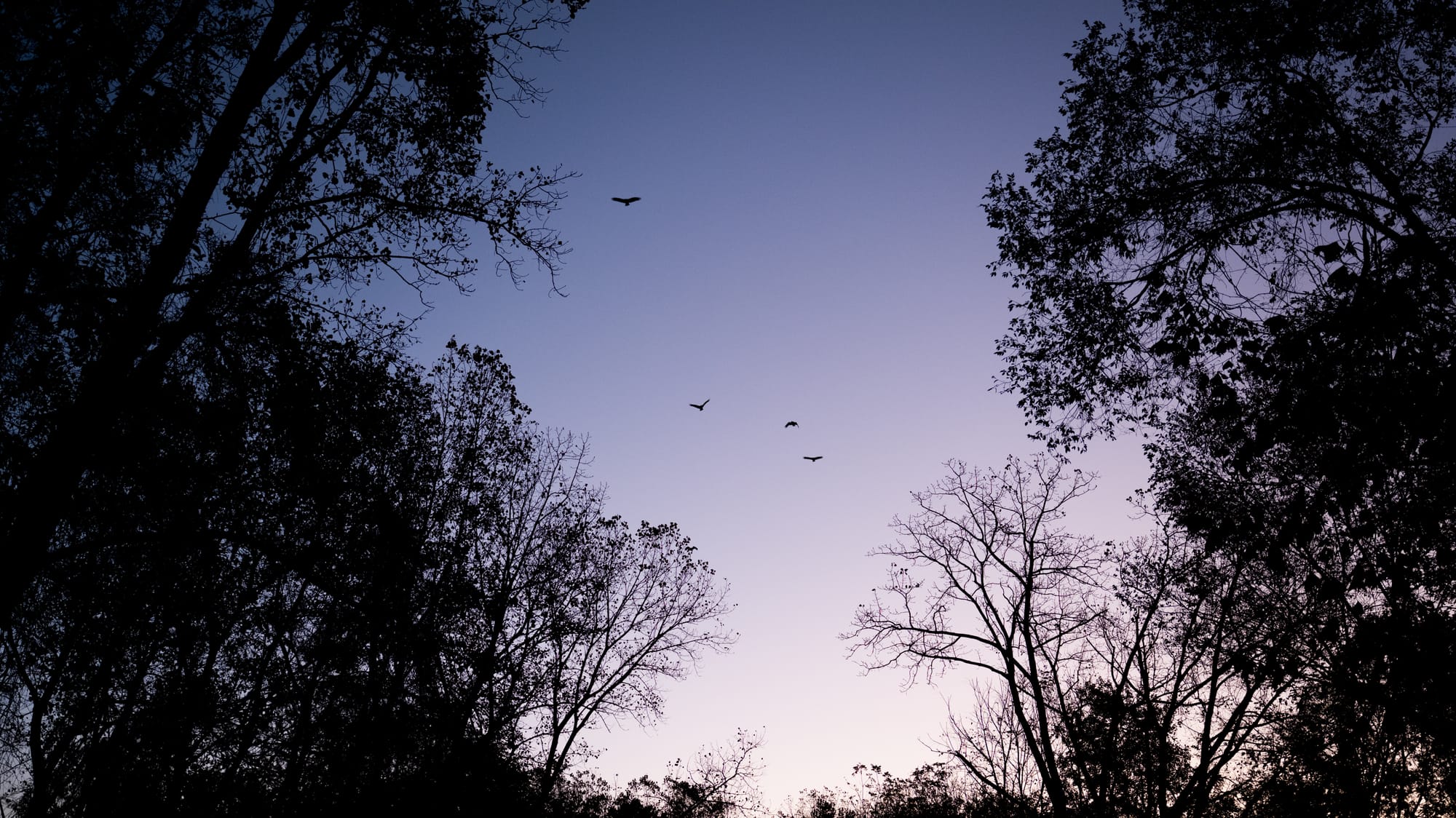
Some birds, like turkey vultures, can migrate as far south as Argentina.
“Most of them will probably stay in Florida, the Caribbean (and) northern South America,” Russell added when speaking about the turkey vultures.
Bird species like grackles are “one of the fastest climbing songbirds on the continent,” Russell said.
In order to identify such birds, 40 different nets are set up, each spanning 40 feet wide and 10 feet tall, around 10 acres of Hueston Woods State Park.
“There’re basically giant hairnets,” Russell said. “We put them in lanes where you expect birds to fly between.”
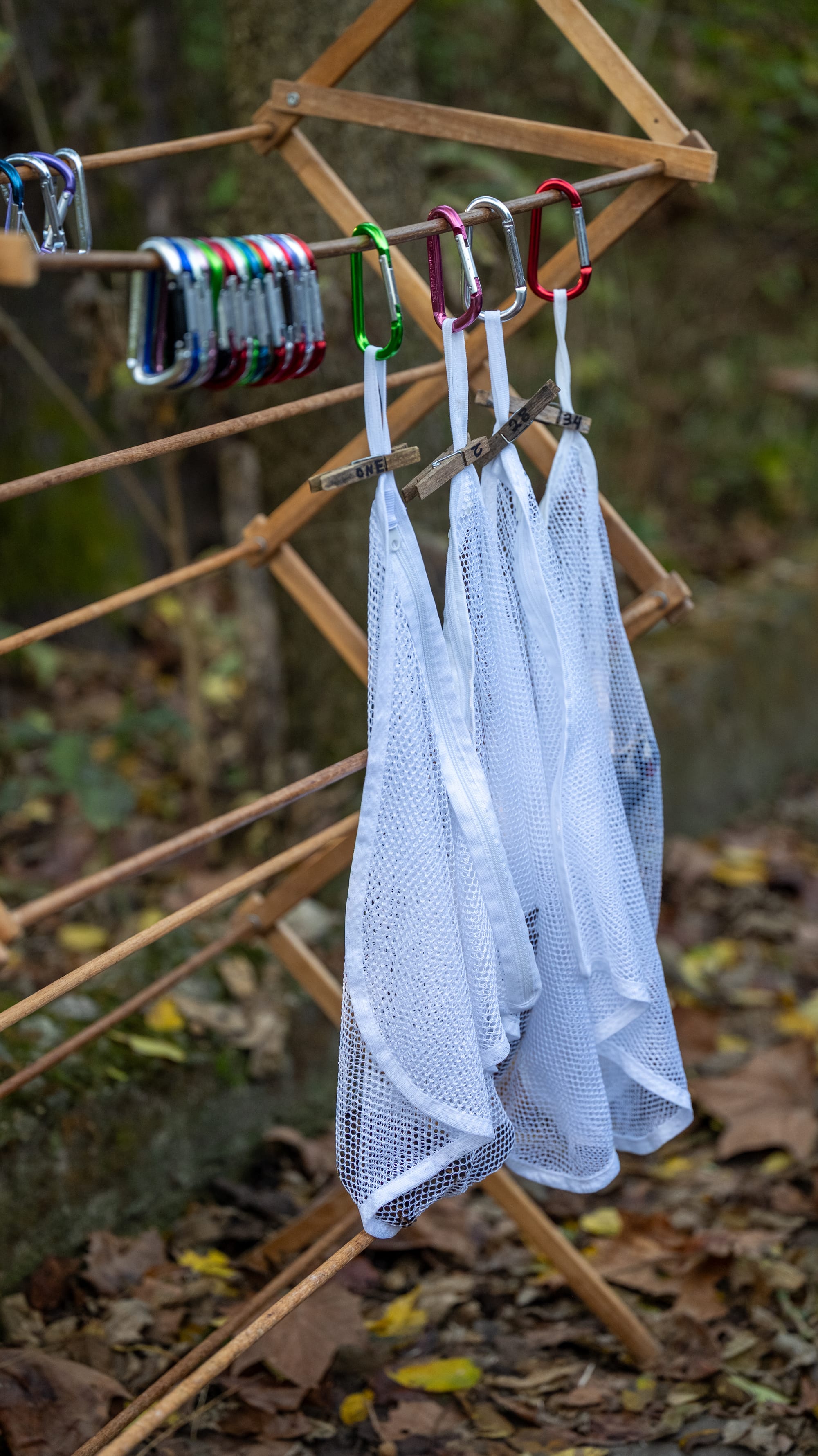
Once a bird flies into one of these nets, it becomes tangled in soft nylon fabric, which doesn’t hurt the bird, according to Russell.
“Bird safety is our number one priority,” Russell said. “All of our protocols, everything we are about here, is making sure the birds are safe.”
“We are interrupting their daily business, so it’s stressful (for the birds),” Russell added.
Every member of the bird banding station team goes through intensive training in order to be skilled enough at handling each bird without hurting them.
After a bird is captured in a net, it is brought back to the birding station to undergo tests to gain valuable information.
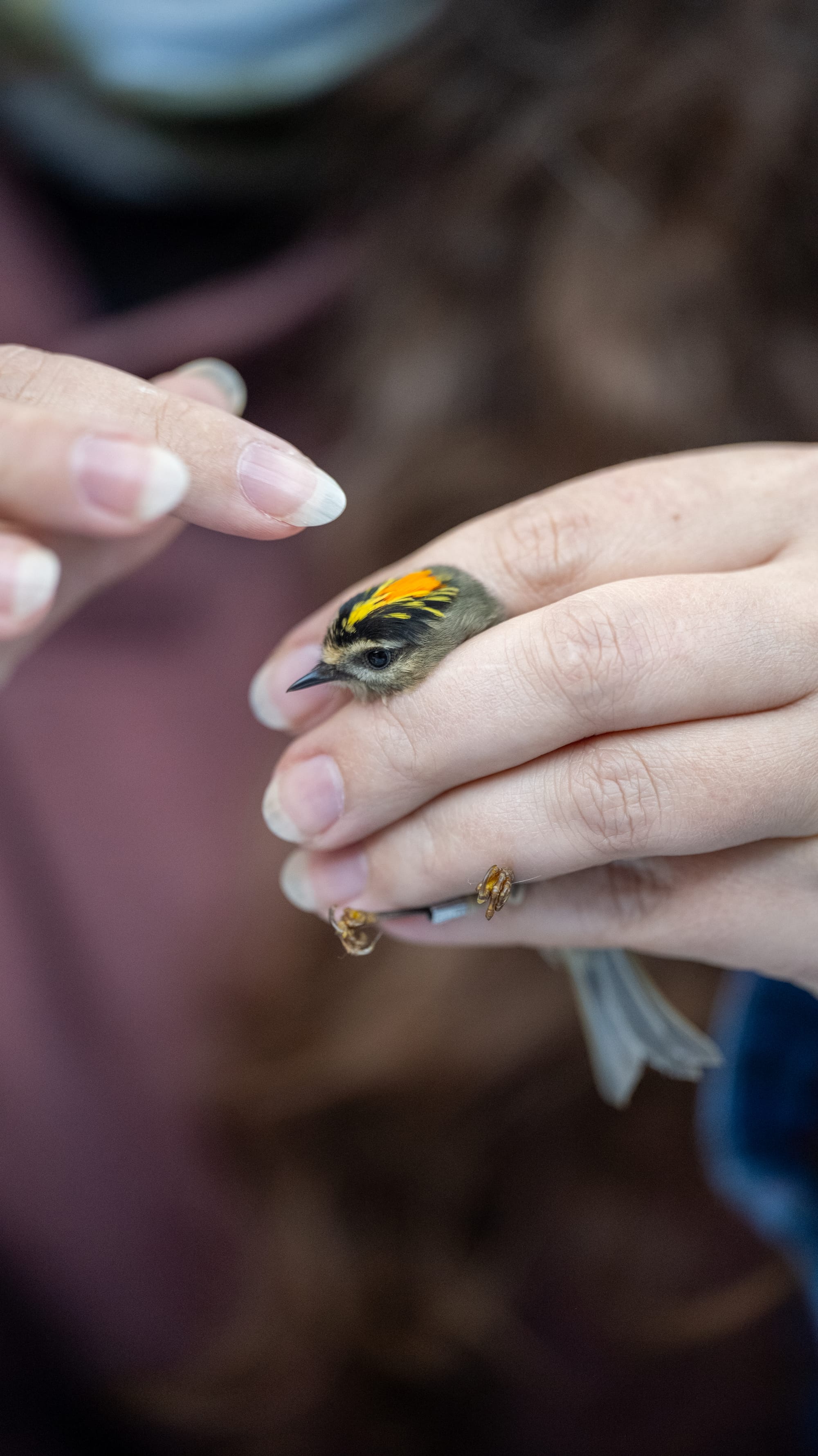
“They come in just like you would at a doctor’s office,” Russell said. “They have all of their morphometrics taken: wing length, bill length, tarsal length, age, sex, species.”
After this information is recorded by volunteers on a computer, each bird is assigned a “social security number” via a small aluminum band.
The birding station has 22 different band sizes, so each bird can have the correct size of their individually-fit “bracelet,” according to Russell.
After these tests are done, each bird’s wings and tails are photographed.
Then, before being released, blood samples of each bird are taken for research purposes, as it can help tell researchers about avian diseases in a given species.
According to Russell, “seven out of nine cardinals have avian blood parasites.”
Long-distance migratory birds, such as the Swainson’s thrush, are showing diseases like leukocytosis.
In places like Houston Woods State Park, with wooded areas surrounded by agricultural fields, there can be a large concentration of birds that come into these areas due to the landscape.
“By concentrating them, I think it allows for easier transmission of some of these (diseases),” Russell said.
Mosquitoes and biting midges can also contribute to the spread of diseases.
Ginny Boehme, science librarian at Miami University and researcher for AREI, met Russell through a project that he was working on several years ago that focused on creating a “visual dictionary” of different bird species.
“I realized that I knew basically nothing about birds,” she said. “I probably should learn more about birds if I’m going to be working on a bird project with (Russell).”
From then on, it “snowballed,” according to Boehme.
Currently, Boehme is working to achieve her bander certification through the North American Banding Council (NABC). This process takes years, and involves a “whole lot of training,” according to Boehme.
This work has various layers on top of banding, including measuring bird health and age, their current bodily conditions upon capture, then sorting these numbers and measuring overall populations in a given species.
Determining a bird’s age is an especially “tricky” task, Boehme said.
“You are looking at minuscule changes and differences in feathers and it takes so much experience to even just fully understand what you are looking at,” she said.
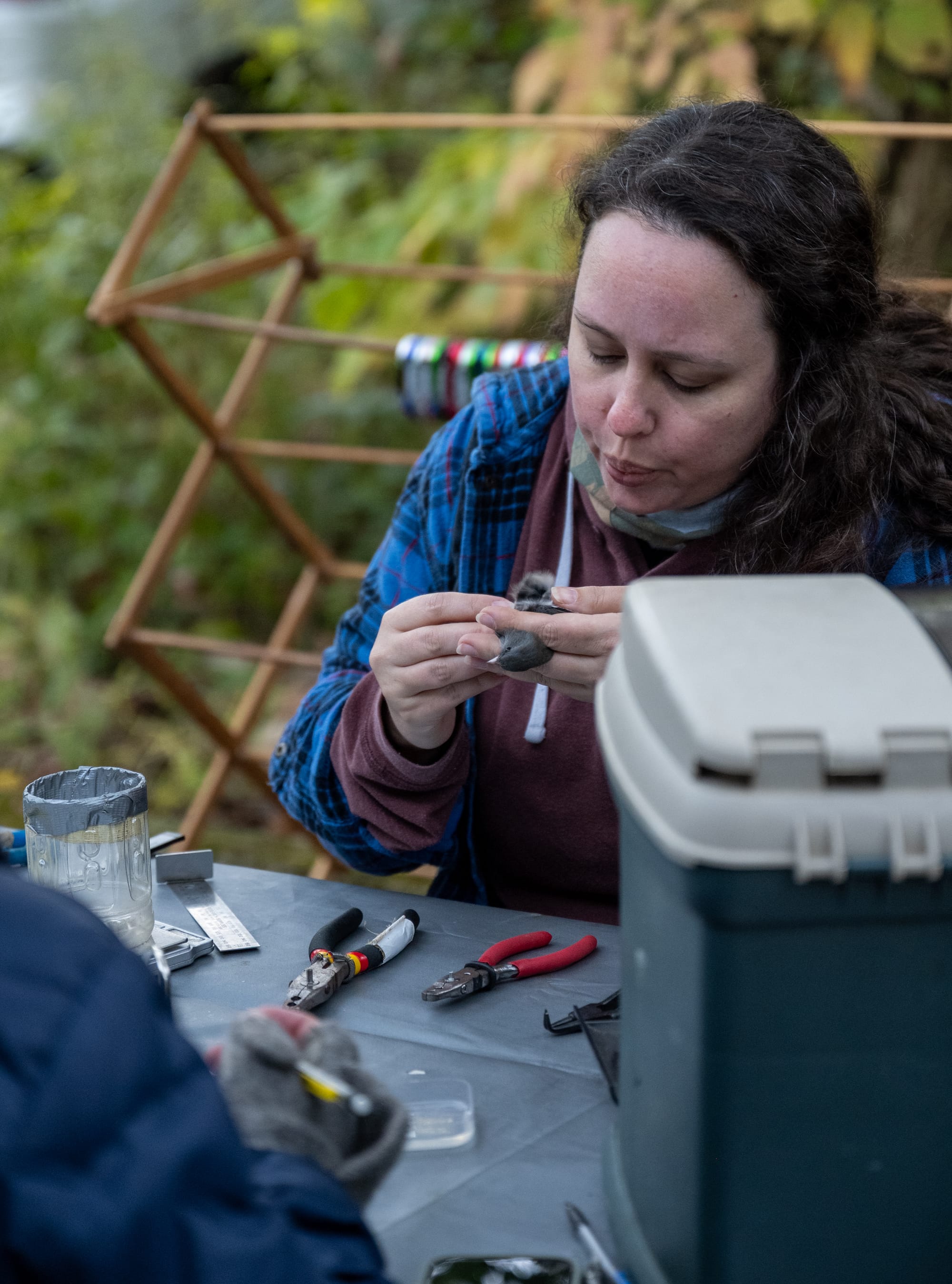
The impact of her work, however, justifies all of the countless hours of training.
As Boehme and Russell deal with migratory birds at birding stations, Boehme said, “We are contributing to not just knowledge here in the United States, but globally.”
“I think that it’s just kind of mind-blowing when you think about the tiny operation that we have and how much impact it potentially could have on conservation in other countries,” Boehme said.
Both Boehme and Russell hope to combat the declining bird populations globally.
“Our biggest concern – the reason we do this – is (because) bird populations are crashing,” Russell said, whether that be due to habitat loss, pesticides, cars or even cats.
Russell said a key issue that factors into these declining populations is also lack of awareness of the problem.
“One of the most important things we can do is build the capacity of people who care about birds and have the technical skills to be able to train others and do something about it,” Russell said.
Russell believes that long-distance migratory birds, which travel longer distances each year, face higher declining populations.
These birds include neotropical migrants, warblers, tanagers, orioles and other similar species.
“A good species is probably down 85%,” Russell said. “Some of them, (like) golden-wings, are down 98%.”