
What to know about Oxford’s Economic Activation Program

The program aims to improve “underperforming” local properties through incentivization, public participation
On May 1, the City of Oxford launched a new 16-month program focusing on incentive-based partnerships to reduce the number of “underperforming” properties and “encourage positive momentum” in town, according to the city’s website.
The Economic Activation Program relies on collaboration, incentives and partnership, supported by the city through enforcement, civil fines and economic development.
The first part of this project focuses on identifying “problem properties,” which includes helping property owners pinpoint code violations. These violations can be corrected by establishing an amnesty period for properties that don’t pose a significant threat to the health and safety of the community. During this period, owners can address issues without suffering a penalty.
Jessica Greene, assistant city manager for the City of Oxford, said the program started as a blight remediation program, which concentrated on abandoned and deteriorating properties. Greene added the focus was on commercial zones.
“We were trying to do (the program) with a positive outlook,” Greene said. “This is the first year we’ve done a really comprehensive economic plan.”
The program consists of four main steps: identify, inform, incentivize and enforce.
During the first step, community development staff inspect properties with suspected violations. Property owners may also “self-identify” and seek aid with improvements, and may request an inspection to spot potential violations.
The city identifies properties in commercial zones in Oxford and properties in the Mile Square area, including residential and mixed-use, that are deemed poorly maintained, underutilized or inactive. Properties that have trash violations are not the sole target during the identification process and such violations do not prompt eligibility for fee amnesty or financial incentive, according to the city’s website.
After the inspection, city staff complete citations and outline penalties, which are maintained and tracked, according to the city’s website. If this part of the program requires more staff, the city will look for funding to hire temporary workers.
The City of Oxford will then generate and provide outlets for public participation to help identify potential violations.
The second step of the program relies on the support of property owners, highlighting communication between the city and property owners about eligibility.
Via mail, property owners in the Mile Square area and commercial zones in Oxford were sent mailers with known violations and eligibility on May 1. These mailers included language specific to the code violation or violations, information about the Economic Activation Program and available support and outlined penalties for violations that remain unaddressed.

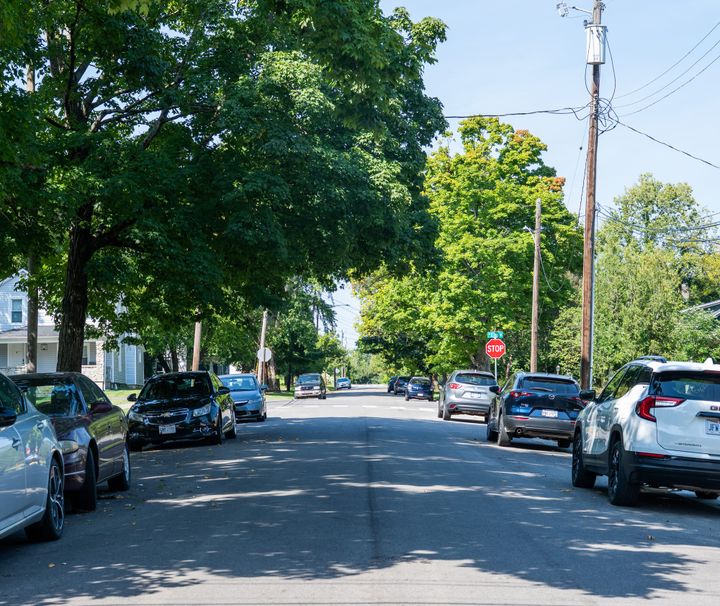
The Economic Activation Program aims to improve struggling local properties through incentivization and public participation. Photos by Aidan Cornue.
The third step promotes incentives for businesses based on how long it takes the business to complete the program.
Additionally, if code violations are successfully corrected during the amnesty period, potential fines from violations can be waived.
“We recognize that some of these things are expensive and hard to fix,” Greene said.
Other financial incentives may be available for commercial properties and are dependent on factors such as the violation and project scope, according to the city’s website.
If a property owner chooses to accept financial assistance from the city, they will enter into a development agreement with the city, which will outline expectations and timelines.
Potential financial incentives include the Improvement and Retention Low Interest Loan Program. This program is open to existing businesses that have been operating in Oxford for a minimum of one calendar year, and offers up to $10,000 in funding at 1% interest on a 60-month term for capital improvement projects.
The city also offers the Façade and Sustainability Reimbursement Grant Program, which covers up to 50% of eligible project costs up to $5,000. Projects may include either environmentally sustainable or façade improvements, like energy efficiency, enhancement of building appearance and streetscape vibrancy.
The Demolition and Site Readiness Grant Program is available for owners of commercial sites for future development, and can provide up to 50% of project expenses with a $10,000 cap for eligible projects.
According to the city’s website, “property and business owners may coordinate to apply for these loans if a business is operating in a building owned by another party.” Applications for these funds are reviewed by the Oxford Community Improvement Corporation and recommended to the city council for funding approval.
For projects that require a larger amount of capital investment, the city’s website offers more information on funding.
The final part of the project is the enforcement of code infractions, following the amnesty period. This “rigorous” effort, according to the city’s website, will require the city to enforce any outstanding or new code violations.
If a property owner is still in violation, the city will give a 90-day notice on June 2, 2027. If property owners do not comply, another notice will be given on Sept. 30, 2027.
“Any Code violation not successfully addressed, or any project not fully completed, by August 31, 2027, runs the risk of not qualifying for amnesty from fines and fees assessed due to Code violations,” according to the city’s website.
More information about the Economic Activation Program can be found online at the City of Oxford website.