
White Buffalo Inc. not returning to Oxford this year
“Folks felt that … we should try to solve the problem with our bow hunters first.”
Through community feedback, the city’s deer management program has seen early success in 2026
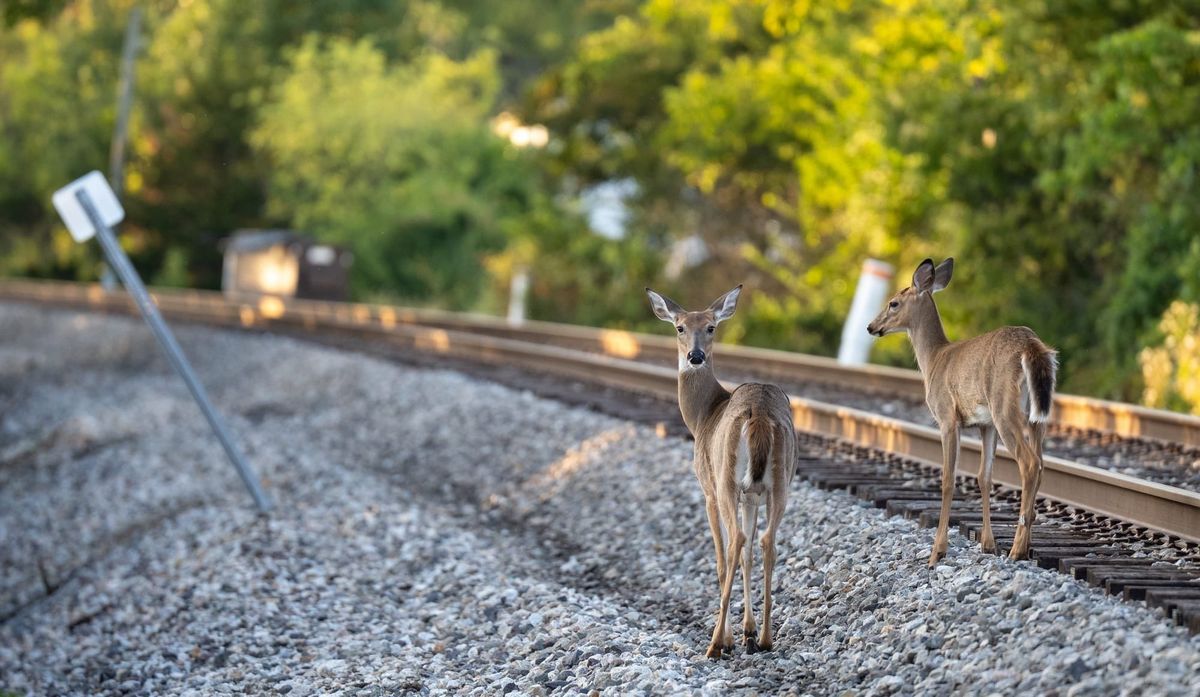
Oxford’s deer management program, which utilizes local bow hunters, concluded its first hunting session on Nov. 7, culling a total of 24 does and three bucks. With two sessions left, the program is on track to hit its anticipated goal of 35-50 deer culled in total.
Last season, the city’s program culled a total of 16 deer. In an email to the Oxford Free Press, Reena Murphy, sustainability coordinator for the City of Oxford, noted that the city’s bow program was paused while White Buffalo Inc. worked.
“Last bow hunting season was our best season in over a decade,” Murphy said. “This year … we have smashed our numbers.”
Program changes
Once the city started receiving complaints about the plethora of deer in the city, the city began working on their bow hunting program as well as hiring a third-party professional population control company, White Buffalo Inc., which culled 117 deer during the 2025-26 season.
“This year, we’ve taken even more hunter feedback,” Murphy said, adding that the program is now “easier” for participants to partake in.
A change this year is that the city removed a lot size requirement for private properties participating as sites in the program. Two years ago, the city had a requirement of five acres, and last year, the requirement was three acres. Murphy said the current priority shifted to “safe” properties.
The city also removed a requirement forcing hunters to use a tree stand in an elevated position to cull deer. This year, the requirement only specifies that hunters cull deer from an “elevated position,” Murphy said.
“They could use a tree standstill, elevated ground stands or saddles,” Murphy said. “If they have permission from the property owner, they could hunt from a deck, (but) they cannot hunt from a picnic table or a pickup truck back. … It has to be actual safe infrastructure.”
The city also removed its earn-a-buck requirement, which forced hunters to kill two does in order to kill a buck.
Through a conference with the Ohio Department of Natural Resources this past year, Murphy found new ways to improve the city’s program and address some of the issues that had limited the number of culled deer in Oxford.
This year, the city is reimbursing hunters $150 for every antlerless deer culled.
Murphy said this decision was made with community-guided feedback after White Buffalo Inc. worked in the city.“Folks felt that … we should try to solve the problem with our bow hunters first,” Murphy said.
Comparing the city’s deer management program to White Buffalo Inc.’s approach, Murphy said that “it’s two different types of deer management,” with the city’s program utilizing residents and White Buffalo Inc. consisting of trained experts.
Murphy said there are two reasons why the city isn’t utilizing White Buffalo Inc.’s services this year: cost and a priority requested to the city’s own deer management program.
Last year’s cost for White Buffalo Inc.’s services was $63,984, according to previous reporting by the Oxford Free Press. In the city’s deer management program report, the total cost of the contract ended up around $85,174.44.
While Murphy acknowledged that bow hunting may not be a long-term, effective approach to controlling the city’s deer population, this year’s early numbers are “positive.”
Murphy said the program has brought in as many deer in the first session of this season as the entirety of last year’s bow hunting program.
Murphy added that professional population services may be needed in the future, but the city’s program is focusing on maintaining the current population without reducing it any further.
“We are just trying to be responsive to what the situation is annually,” Murphy said.
The city’s program is split into three sessions, the first being from Sept. 26 through Nov. 7; the second being from Nov. 8 through Dec 19; and the third being from Dec. 20 through Feb. 17, 2027.