
Butler Tech Aviation Education Hangar opens to students
The $15 million facility next to the Middletown Regional Airport will have a ribbon-cutting and a community open house in March, two months after classes began.
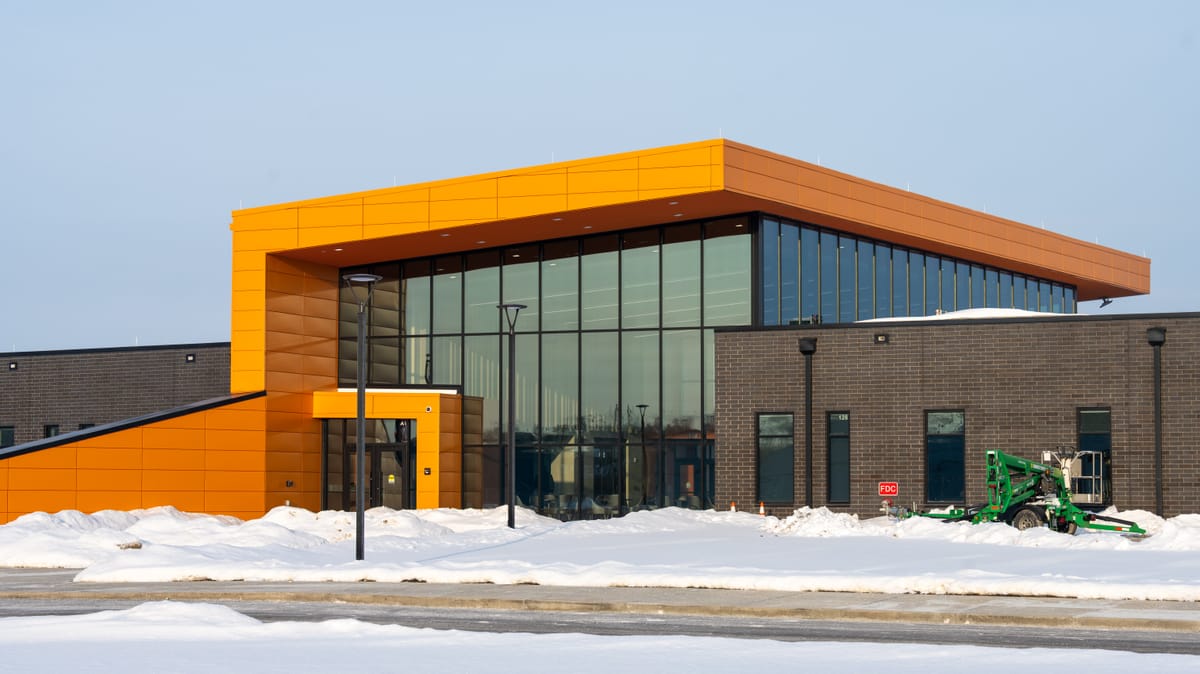
When the nearly 30,000-square-foot, $15 million Butler Tech Aviation Center opened on Jan. 20, it was the first time in more than six years since the aviation program began that all students were learning under the same roof.
Prior to the new facility opening, the career technical education students were divided into two groups that split their day between a rented location on the side of the Middletown Airport Community Hangar and Butler Tech’s D. Russell Lee campus in Hamilton, being shuttled back and forth between each.
“All of our students are all together throughout the entire day,” Aviation Center Principal Adam Snoddy said. “They actually get to know each other better now, but we can also do specific things to truly build a unique aviation culture, as opposed to it being fragmented across multiple locations.”
The new facility, located at 1902 Germantown Road next to the Middletown Airport, comprises a nearly 20,000-square-foot main building with classrooms and labs, and a nearly 8,500-square-foot education hangar.
Ground broke for the building in October 2024, and $7 million was given as a grant from the Butler County Commissioners’ Office, $1 million was given as a grant from JobsOhio and the City of Middletown contributed $500,000, Snoddy said.
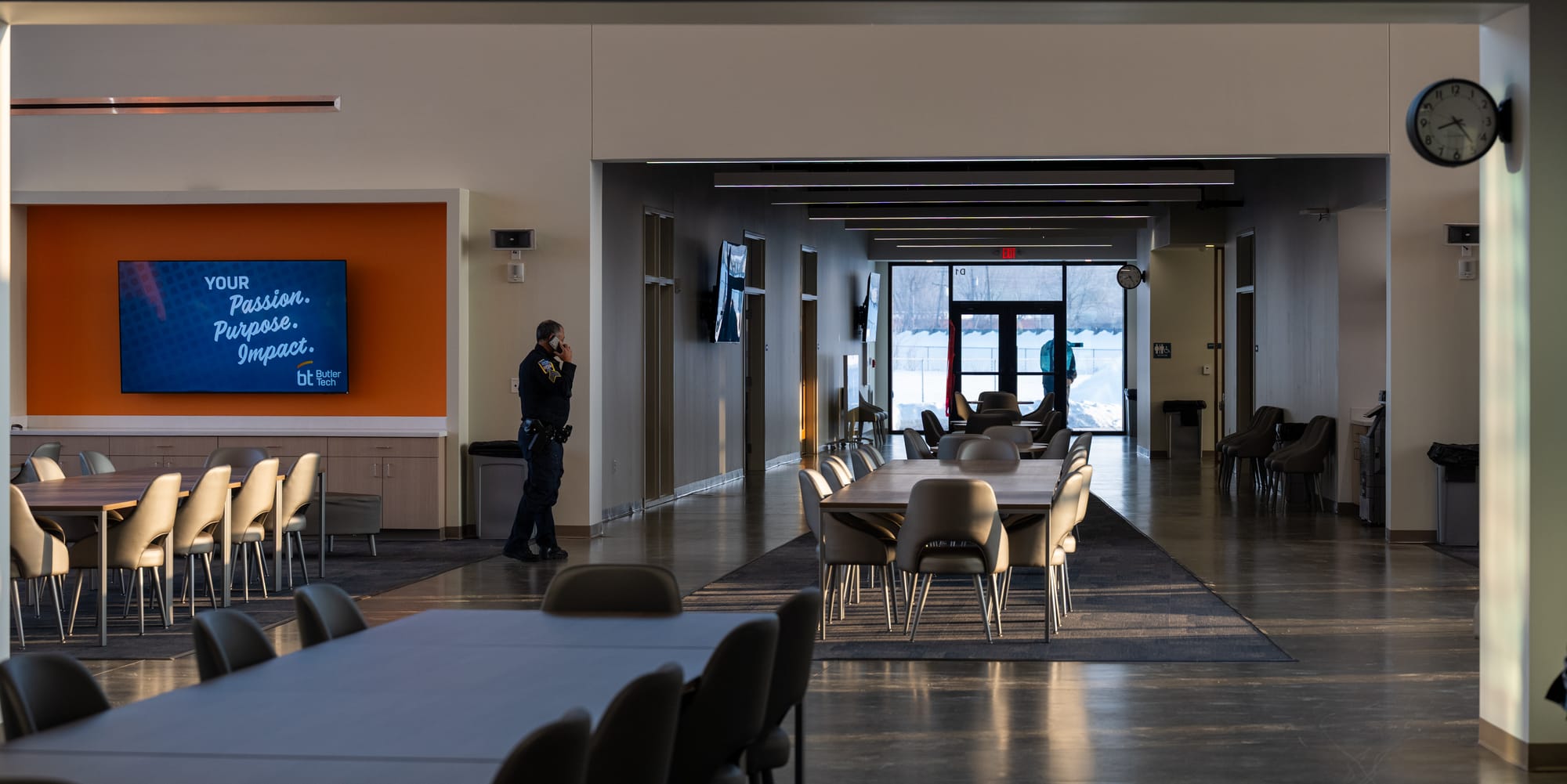
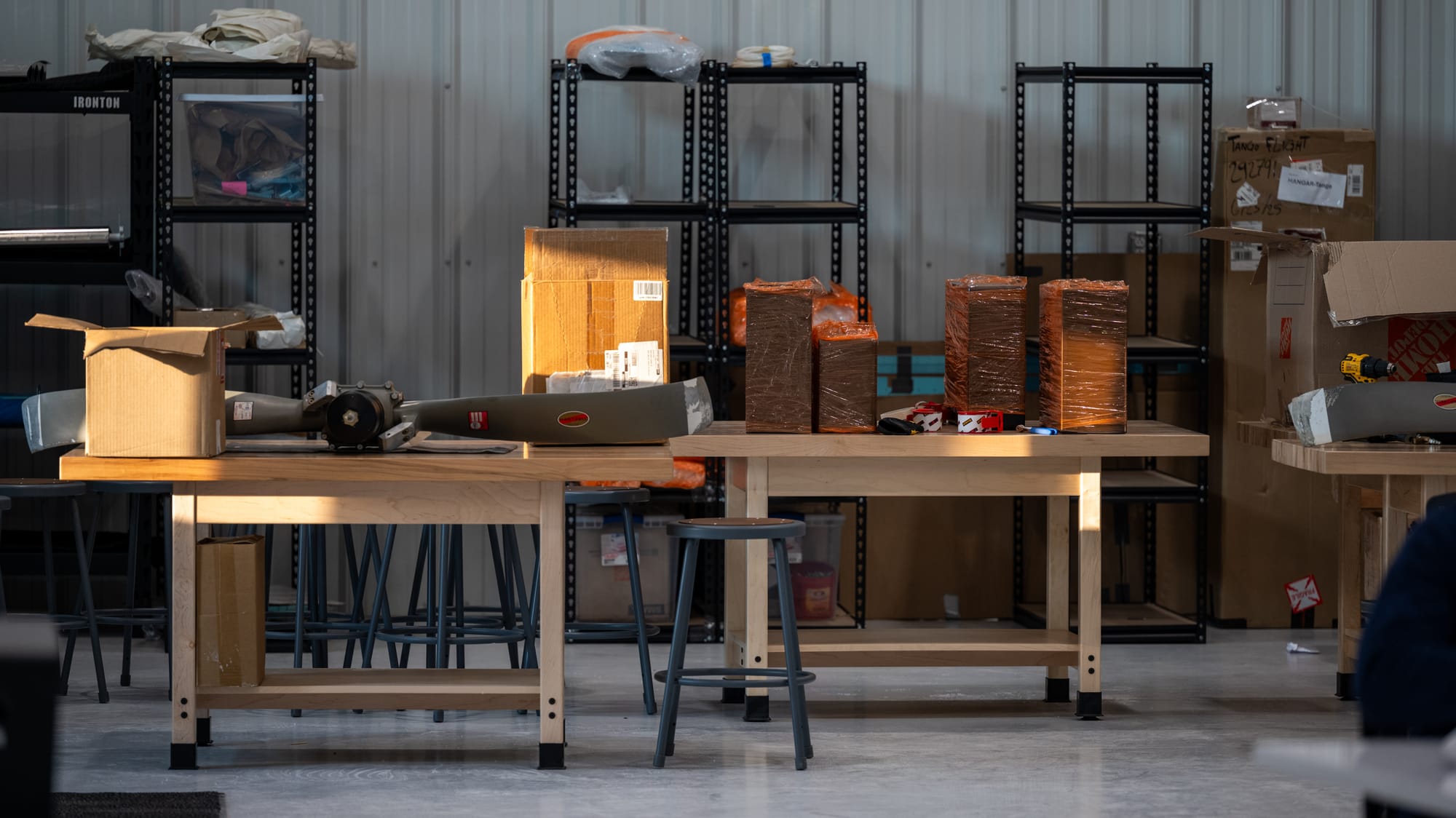
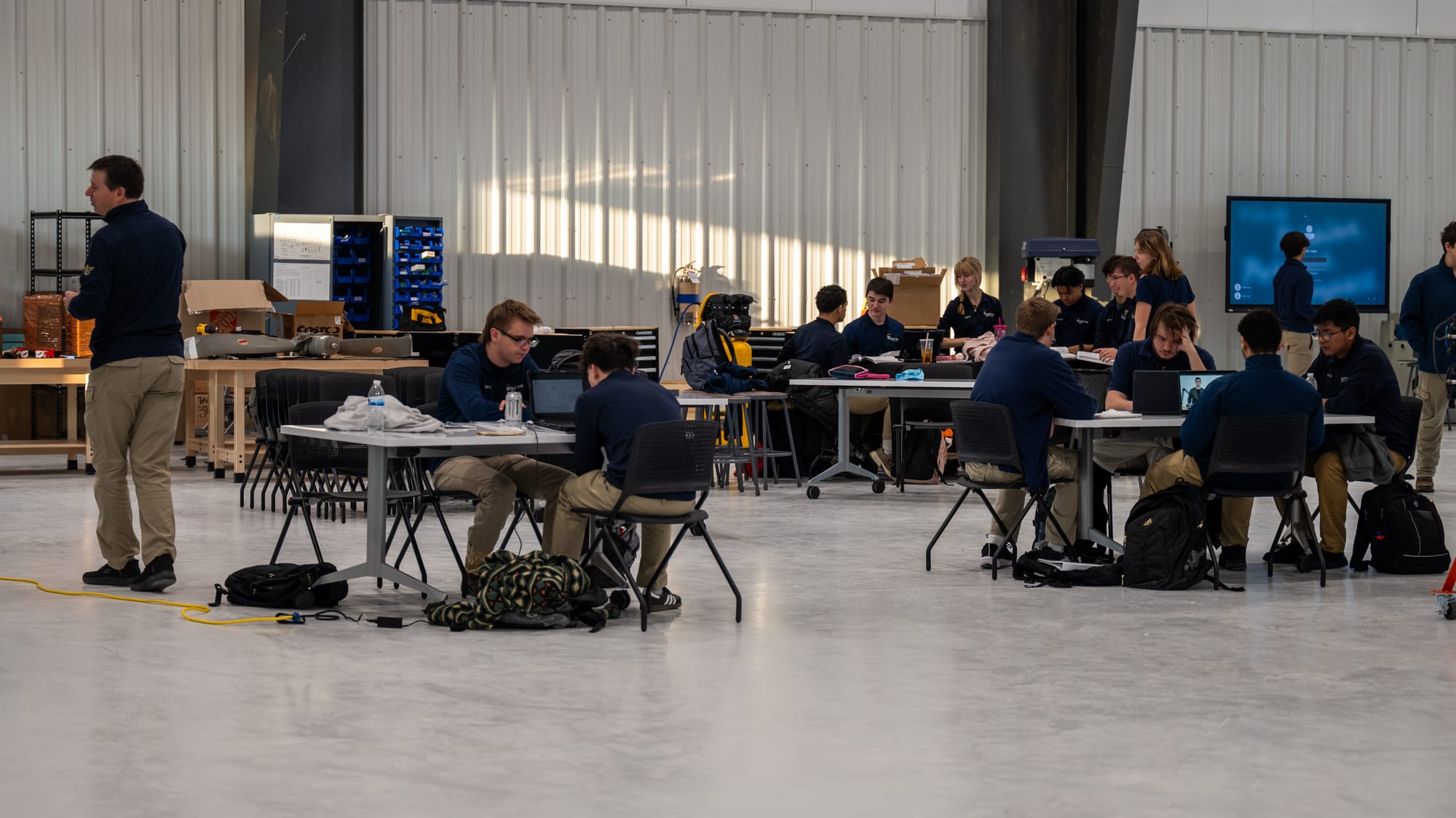
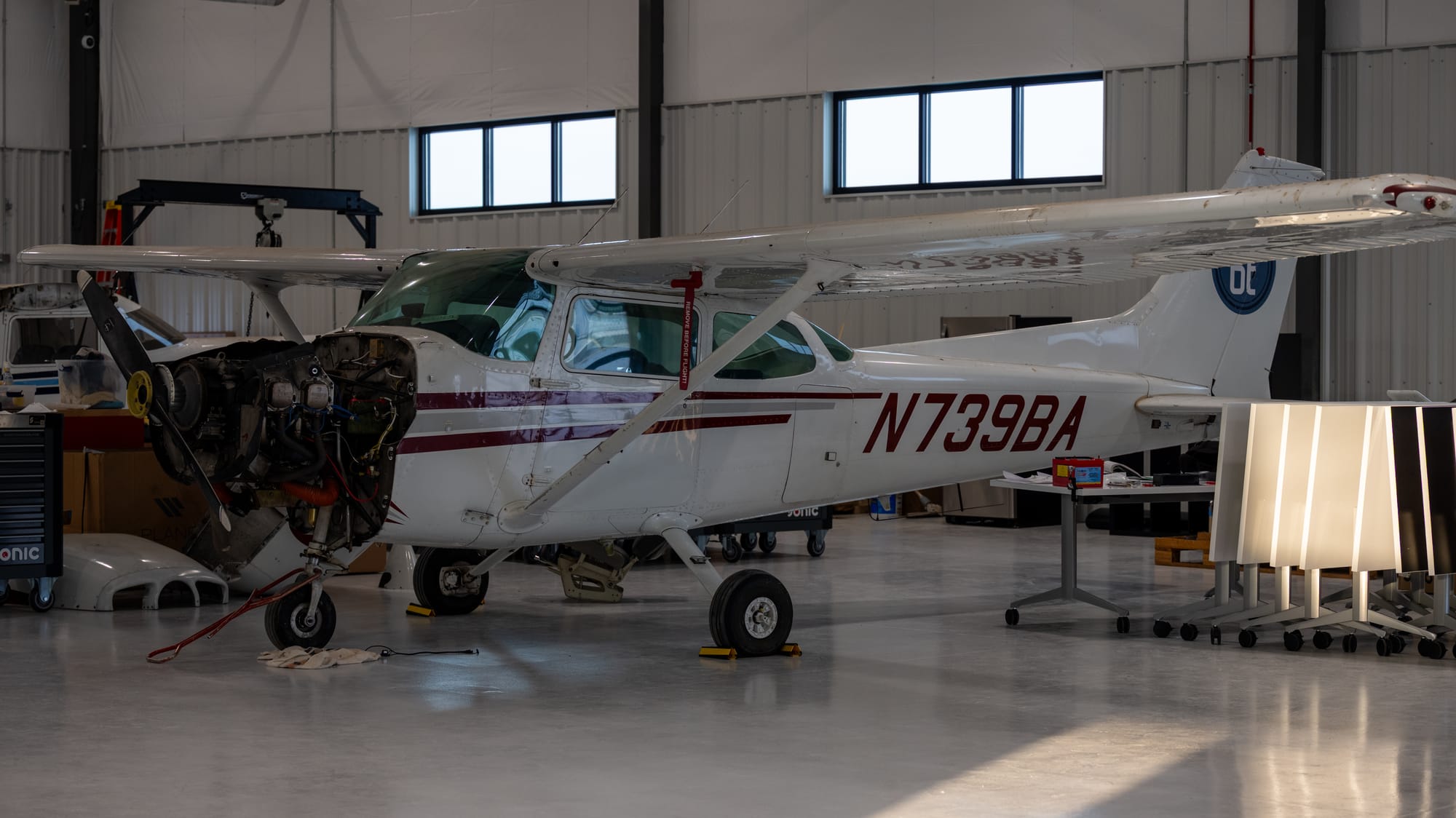

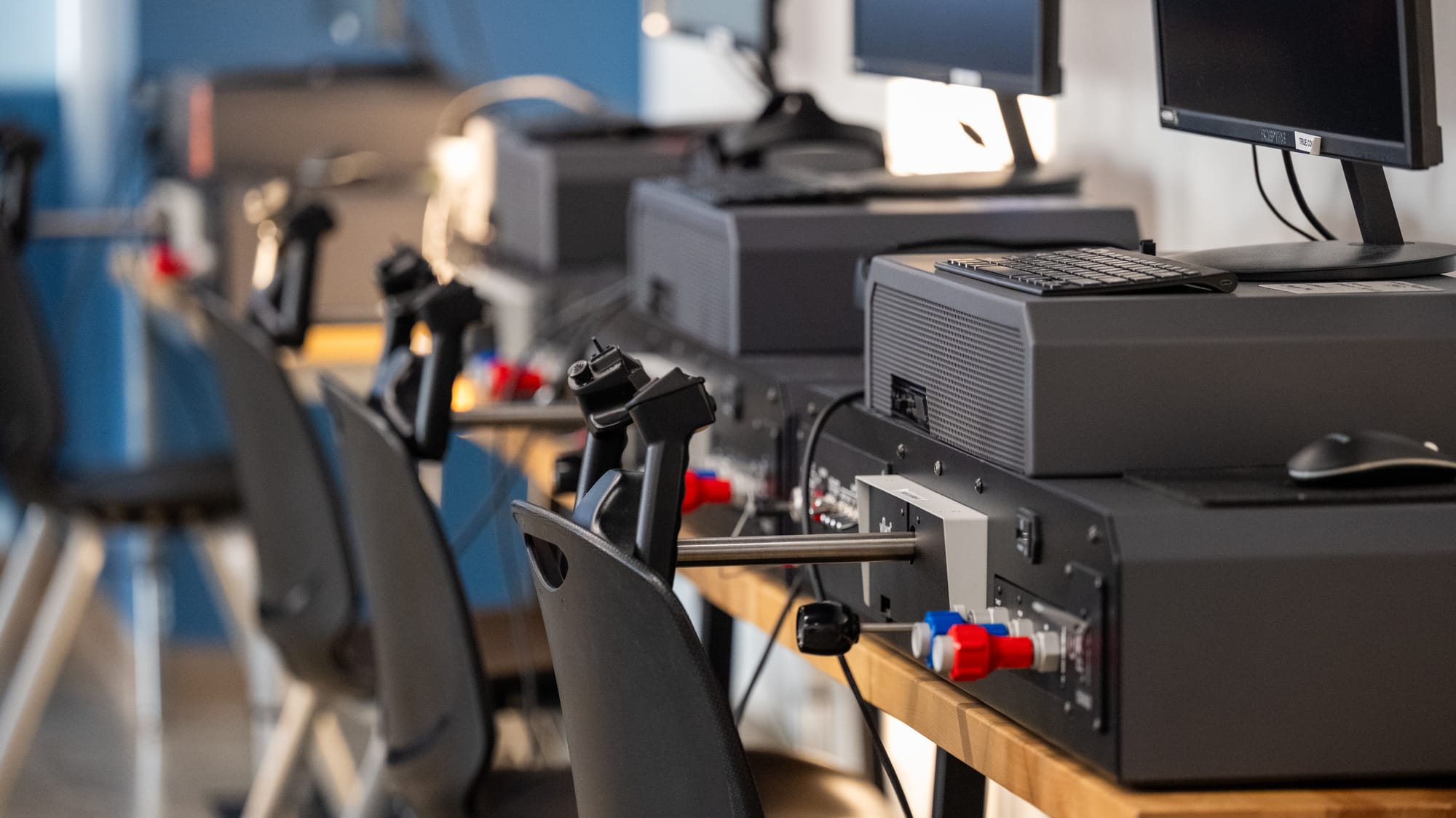

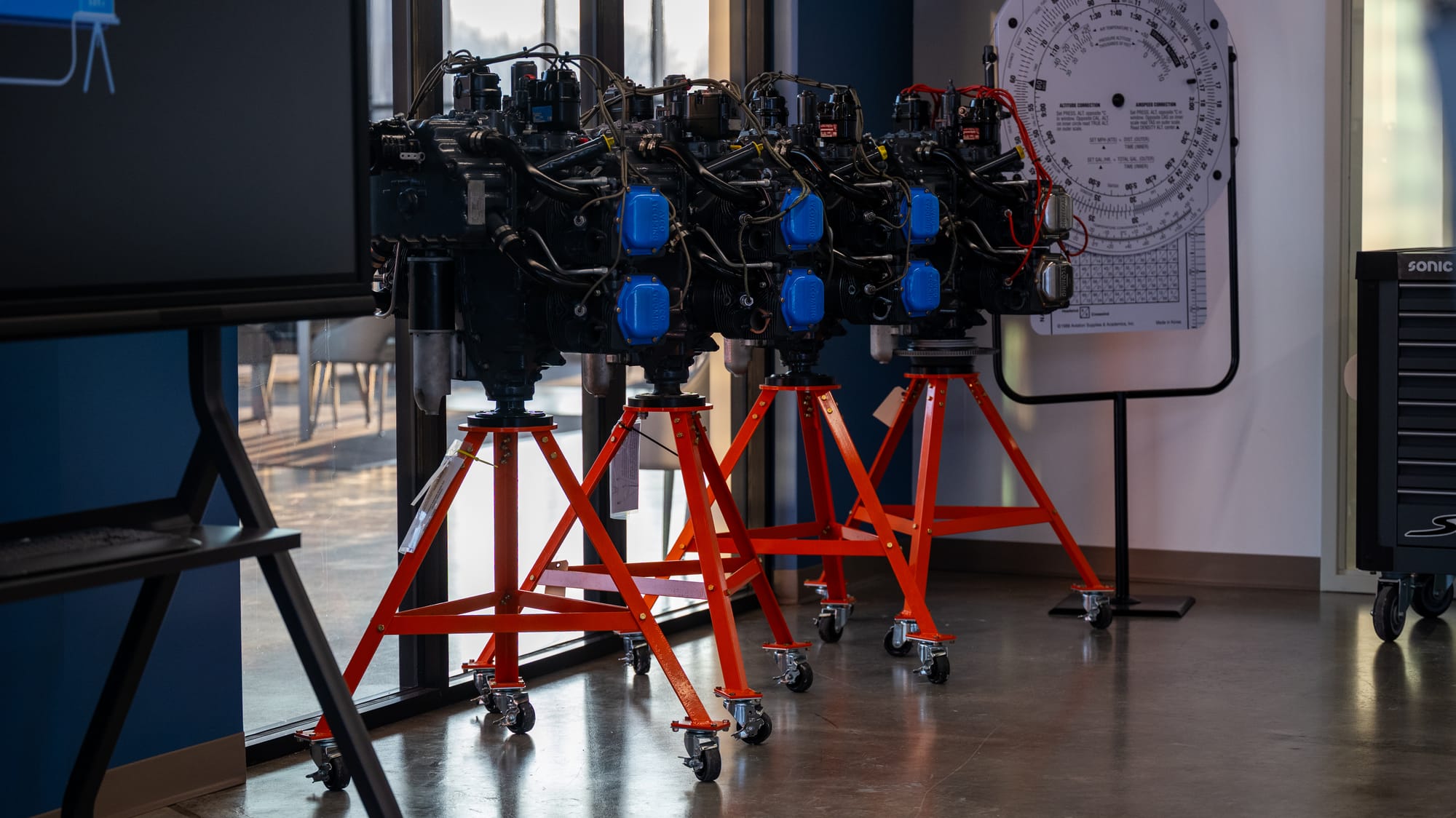
The Butler Tech Aviation Center is located at 1902 Germantown Road in Middletown, Ohio. Photos by Aidan Cornue.
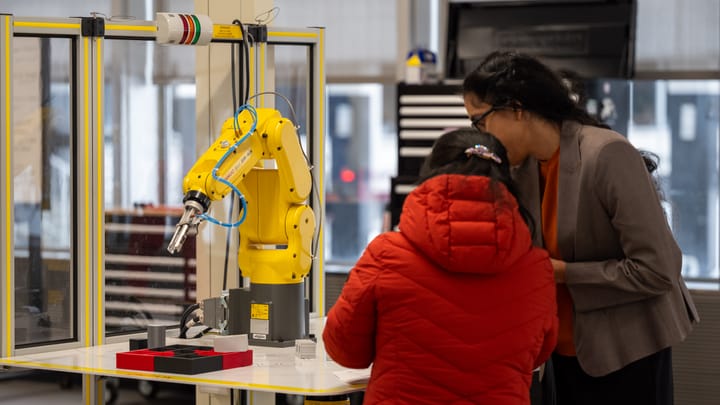
Inside the main building, students eat lunch and take the general education courses they would normally complete at the campus in Hamilton, but they also have access to a flight simulator lab, drones and other spaces where they can practice aviation maintenance and engineering skills – two pathways which are being added with the new facility.
In the hangar, students have access to two decommissioned aircraft where they can take a hands-on approach to studying the controls and inner-workings.
Snoddy said a major reason for opening the new facility was that student demand was outstripping the school’s capacity for the program, meaning there were more applicants than seats.
Up until this academic year, the aviation education program was a 2-year program open to juniors. Now, aviation is a 3-year program open to sophomores, allowing the program’s capacity to expand from taking 50 students to 75, or 25 students per grade level.
As the smaller groups currently enrolled graduate, Snoddy said the school is going to be able to take a double-cohort, or enroll around 50 to 60 new students. Within the next couple of years, Snoddy said there could be around 150 to 180 total students in the aviation program.
As students enroll in the program earlier, they’ll also have more time to figure out which path in education they want to take.
Snoddy said sophomores in the program begin taking introductory courses to explore careers in aviation education. By their junior year, they’ll be able to choose which path — engineering, maintenance or piloting – they want to take.
Another reason Snoddy said the new facility was necessary is the “significant workforce demand” in the field of aviation, especially in maintenance, which is part of the program’s expansion.
“As we’re adding that pathway to the pilot pathway that we’ve had the last several years, there’s always a need for pilots and engineers, as well,” Snoddy said. “But on the maintenance side, there's a desperate shortage to where … if (students) come to our program and they complete it and they pursue it to the fullest extent, they will not have any issues finding gainful employment in that industry somewhere in our region between Dayton and Cincinnati.”
According to the Cincinnati/Northern Kentucky International Airport (CVG) website, there will be a need for 1,300 aircraft maintenance positions in the region over the next three years.
Students pursuing the aviation maintenance pathway can complete their general maintenance test and work toward their airframe rating and powerplant rating needed to become a fully-certified aviation maintenance technician.
Students who take the pilot pathway at Butler Tech have the opportunity to work toward their commercial drone operating license from the FAA. They can also work through “ground school” on the private-pilot side, which includes all the coursework needed to pass the written FAA exam before completing in-flight training.
In 2026, Butler Tech also began a scholarship program to help defray the costs for some students when pursuing in-flight training hours with a regional flight-training school.

Snoddy said the engineering pathway won’t fully launch until the 2026-27 academic year, although he anticipates most students in the pathway will likely pursue post-secondary degrees.
Snoddy said the new location of the aviation education hangar is a “big advantage” sitting next to a functional airport. Every room in the building has large, floor-to-ceiling windows where students can watch part of the runway/taxiway and watch planes take off as they think about what they want to do with their future.
“They have that regular incentive and motivator because somebody is doing it in real life, right out the window,” Snoddy said, adding having a regular, skilled aviation-related workforce walking out of the building’s doors every year could lead to new development in the area. “The Middletown airport and the City of Middletown have been terrific partners. They’ve been very supportive of us being here.”
Chloe Matcalf, 18, is a senior in the pilot pathway and a student ambassador at Butler Tech, and her dream is to become a corporate pilot. She said she loves the new facility, with its “modern architecture” and the ability to look out the windows and watch planes go by. She also said the labs with the new hands-on equipment makes it easier for her to learn.
Rich Packer, director of aviation, has been teaching at the program since it started in 2019. He said the new facility not only offers more opportunities for the students with more space, but also in its proximity to the airport.
Packer remembered three Black Hawk helicopters landing on the runway right next to the new hangar, and students chatted with the pilots and learned about their field.
He said several of his students are also working at the airport fixed-base operator that provides aircraft parking, fueling and other services, getting real experience on a daily basis. Several of Packer’s former students are also working for an aircraft maintenance and salvage company nearby, and one of his students recently completed his first solo-flight at the airport.
“So the opportunities that being at the airport and being in the aviation environment – that’s just priceless, and the energy it provides, versus being in a high school 15 miles away … you can't replace it,” Packer said.
A ribbon-cutting for the facility will be hosted on March 16, and a community open house will be hosted on March 18.