
EdChoice ruled unconstitutional again, decision moves to Supreme Court
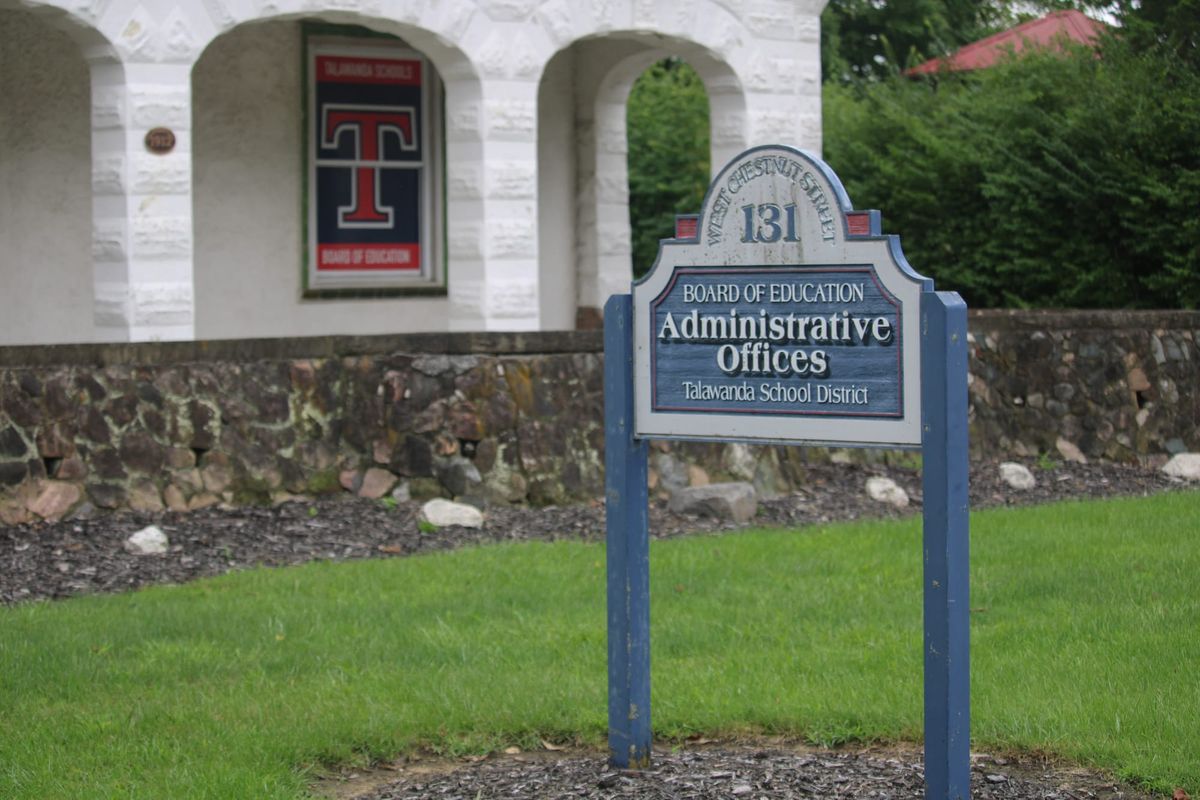
Talawanda administrators share thoughts, impact of program on public schools
The Ohio Tenth District Court of Appeals unanimously ruled Ohio’s EdChoice voucher program for private schools is unconstitutional on Oct. 15, affirming a lower court’s decision from 2025 that the program and its expansion violate Article IV, Section 2 of the Ohio Constitution.
The program provides education vouchers to kindergarten through 12th graders who meet one of several criteria to use to pay tuition at any state-approved nonpublic school. The expansion provides scholarships based on household income level.
According to the decision on Columbus City School District et al. v. State of Ohio et al. and Catholic School Family et al., signed by Ohio appellate judges David Leland, Kristin Boggs and Shawn Dingus, “EdChoice, as presently structured and funded, secures with taxpayer funds a competing system of uncommon schools that is not subject to the same obligations imposed on Ohio’s system of common schools.
“This system of uncommon schools violates the mandate of (Ohio Constitution Article VI, Section 2) to secure ‘a thorough and efficient system of common schools throughout the state.’”
The decision continues that participating non-public schools are subject to “materially less extensive state oversight,” adding they “cherry-pick” students from public schools, are isolated in Ohio’s urban centers and receive taxpayer funding at the “expense and detriment” of Ohio’s public schools and “consequently, the children who depend on those public schools for instruction, support, and opportunities that shape their future.”
Edward Theroux, superintendent of Talawanda Schools, told the Oxford Free Press in an email following the decision, “I believe Ohio’s EdChoice voucher program is unconstitutional and undermines the very purpose of public education.”
“Public tax dollars should support public schools that serve all students, not subsidize private schools while placing additional financial pressure on districts like Talawanda,” Theroux said in the email. “Every dollar diverted to vouchers is a concern for our community because our public schools must continue to educate all students, provide essential services, and maintain strong academic programs with limited resources.”
Shaunna Tafelski, Talawanda School District treasurer, told the Oxford Free Press in an email, while a private school EdChoice voucher for ninth through 12th graders is worth $8,407, and a voucher for kindergarten through eighth graders is worth $6,166, the district only receives $809.73 of funding for each student in the school district following the state formula.
However, Talawanda falls under the state’s guarantee, which ensures its state funding will not drop below a certain amount as a result of a drop in population. With the supplement, the district is given $2,398 for each student – still significantly less than what families would receive from a voucher while using public funds.
In fact, the EdChoice and EdChoice Expansion Scholarship programs cost taxpayers nearly $1.4 billion in Fiscal Years 2024 and 2025, according to the court’s decision. EdChoice schools received more than $677 million in taxpayer funding in FY24 alone, although defendants in the case presented to the appellate court argued the appropriations to EdChoice do not reduce funds to public schools.
Meanwhile, according to the court’s decision, public schools received $7.1 billion in taxpayer dollars in FY24, but would have received $7.8 billion if the Fair School Funding Plan had been funded. According to the decision, the Chief of Budget and School Funding for the Ohio Department of Education and Workforce (ODEW) testified that the state did not implement full funding from the outset of the program because it lacked funding.
“While we acknowledge the possibility that the near identical amount appropriated for EdChoice and the amount left unfunded under the Fair School Funding Plan could be nothing more than mere coincidence, Defendants’ separate appropriations argument does not stand up to the fiscal reality that state revenue directed to EdChoice was unavailable for other state educational purposes, including full implementation of the Fair School Funding Plan,” Leland wrote in the decision.
The court’s decision continued that the legislature is prioritizing a competing system of private schools over its constitutional obligations, running against prior warnings from the Supreme Court that the success of private schools “should not come at the expense of our public education system or our public school teachers.”
While public school enrollment decreases statewide and locally, enrollment in private schools and the EdChoice voucher program is up.
ODEW data shows 242 students living in the Talawanda School District during the 2025-26 academic year were enrolled in the EdChoice and EdChoice Expansion voucher programs. During a Talawanda Board of Education meeting in October 2025, Tafelski told the board the school district was seeing a drop in enrollment between FY20 and FY26 of about 173 students.
According to data from the ODEW, in 2021, there were 773 students across Butler County enrolled in the EdChoice and EdChoice Expansion programs, receiving more than $3.5 million. In FY26, there were 4,163 students enrolled in the programs, receiving more than $21.2 million in total.
Data from the ODEW shows during FY21, more than 1.7 million students were enrolled in Ohio public schools, while 161,664 were enrolled in non-public schools. By FY26, Ohio public schools saw a more than 1% decrease in enrollment, while non-public schools saw a nearly 14% increase.
The court also ruled EdChoice “undermines” public schools by allowing private schools to “cherry-pick” or include the least-expensive students to educate, while “leaving the most expensive students for the public schools to educate.”
More specifically, private schools retain discretion to deny or discontinue enrollment of students in circumstances in which public schools are obligated to provide services, including if a student has behavioral issues, a disability or other needs. Because the district-based cost per-pupil amount assumes a student population with varying educational needs and costs, public schools may discover a disproportionate share of students requiring more services and therefore funding, according to the decision.
The decision goes on to say EdChoice also undermines schools by “slowly eroding support for local school levies,” the loss of which the State Foundation Formula does not provide a mechanism to make up for.
Tafelski shared concerns with the Oxford Free Press in August 2025 about recent legislation to eliminate the ability of school districts in Ohio to impose replacement property tax levies should it ever need to, among other restrictions.
Leland wrote in the decision that the court does not judge all school voucher systems to be unconstitutional, although the EdChoice and EdChoice Expansion programs are exceptions.
Theroux said in his email to the Oxford Free Press, “This appellate court ruling is an important step toward accountability and protecting the public education system that our families and communities depend on.”
Ohio Attorney General Andy Wilson said in a statement, “Although we are disappointed in the ruling,” the EdChoice program will continue uninterrupted as an appeal is made to the Ohio Supreme Court.
Theroux continued in his email to the Oxford Free Press, “I hope the Ohio Supreme Court upholds this decision and ensures that public education funding remains focused on strengthening public schools, supporting educators, and giving every student in the Talawanda School District the opportunity to succeed.”