
Former Uptown bookstore approved for demolition
“The remediation and demolition of the property would take approximately six months to complete, and the construction of the new building would take approximately two years.”
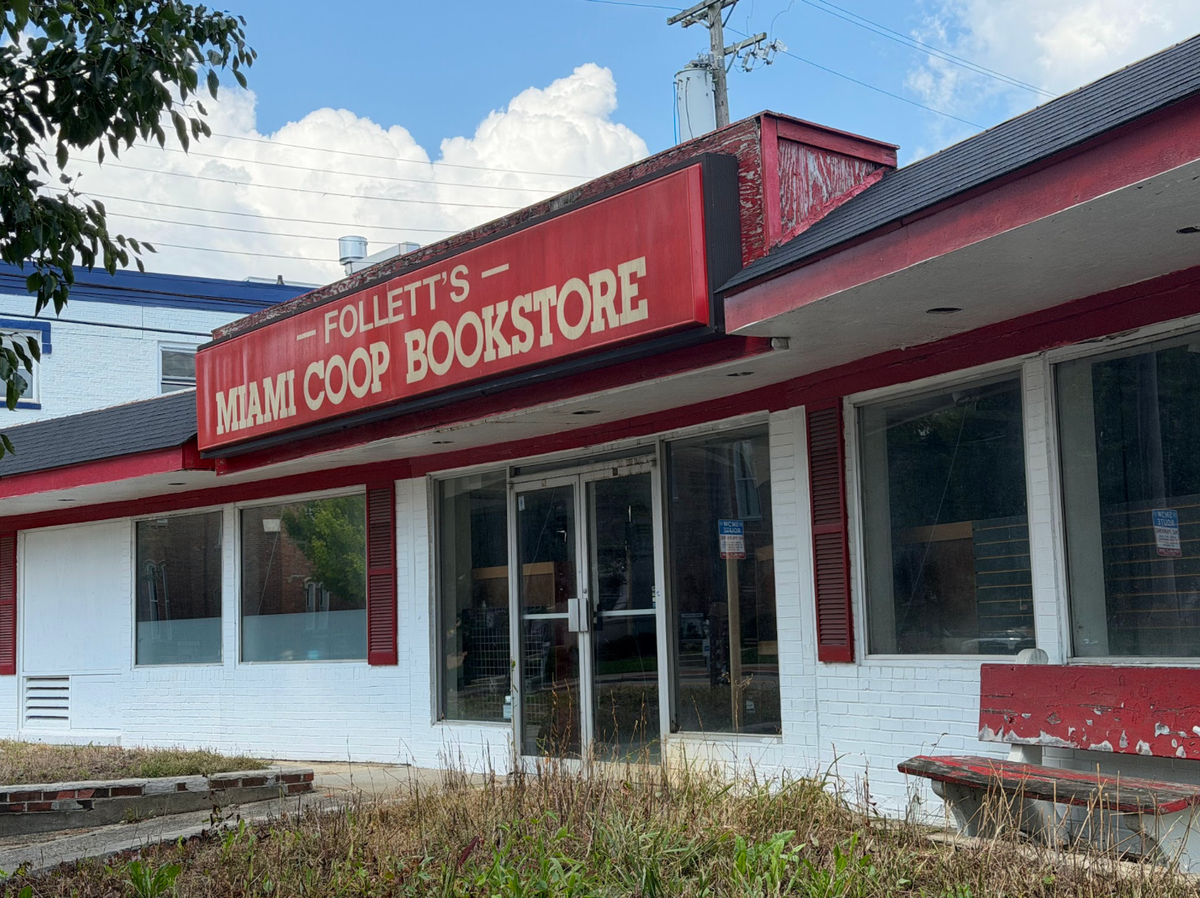
For seven years, a red and white cinderblock building, the former site of Follett’s Miami Co-op Bookstore, has sat empty on High Street. Now, plans have been approved to tear it down and build a multi-use apartment and retail space.
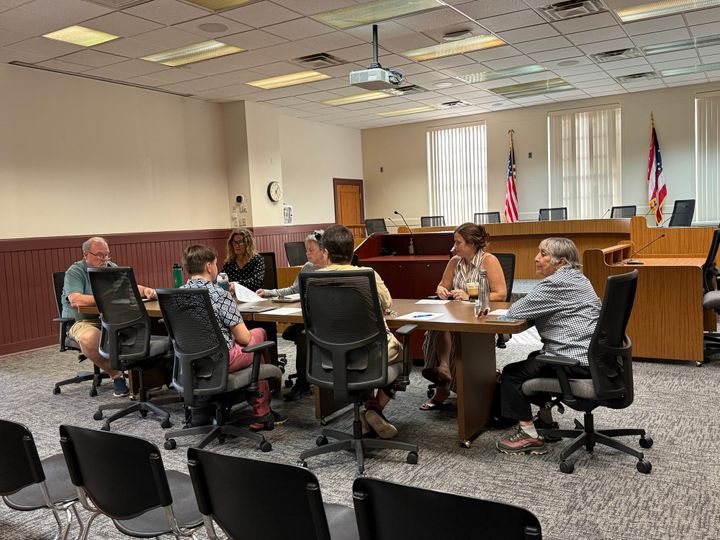
On July 8, the Oxford Historic and Architectural Preservation Commission (HAPC) approved the demolition and redevelopment of 110 E. High St. The property, which sits Uptown on the corner of High and Poplar streets, will be torn down and replaced by a four-story multi-use building, made up of retail space and residential apartments, according to the Butler County Land Bank.
In May, the Butler County Land Bank received $873,000 in a grant from Ohio’s Brownfield Remediation Program to demolish and redevelop the High Street property. According to Seth Cropenbaker, economic development specialist for the City of Oxford, this was the largest grant ever designated through the land bank.
The applications for demolition and redevelopment, as well as the proposed design plans, were submitted by Emily Lubbers, a senior project architect at McGill Smith Punshon Design. Lubbers predicted the remediation and demolition of the property would take approximately six months to complete, and the construction of the new building would take approximately two years. The project’s tentative completion date is in late spring of 2029.
The property is owned by Benjamin Federbush of 110 High St. LLC, according to the minutes of a 2019 City Council meeting. Lubbers reported to the HAPC that Patriot Engineering will carry out the demolition and remediation, and Conger Construction will oversee construction.
The permits for demolition and construction on the property were approved unanimously by the commission.
110 E. High St. has hosted several establishments over the years, including a car dealership, a gas station and a dry cleaners, Cropenbaker said. A 2019 report to the city manager found the soil at 110 E. High St. is contaminated with petroleum, and there are fuel tanks buried underground.
According to Cropenbaker, these issues, in addition to the asbestos in the original construction of the building, mean the property is considered a brownfield. The Ohio Environmental Protection Agency defines a brownfield site as a property that is “underutilized due to known or suspected contamination from past commercial, industrial, or multi-unit residential use.”
The demolition and redevelopment received praise from Cropenbaker and Ted Pickerill, chief of staff and secretary to the Miami Board of Trustees during the public comment period of the HAPC meeting.
Cropenbaker described it as “tremendous” for economic development and community advancement. He said the building would provide for a better impression of Uptown and all of Oxford for prospective and current residents, visitors and Miami University students and alumni, and added a new building that could potentially house a national brand retailer would bring more commerce to the Uptown district and contribute to its vibrancy.
Pickerill offered his “enthusiastic support” of the project on behalf of the President’s Office of Miami, highlighting the impact a revitalized property in the Uptown area will have on prospective and current students.
Pickerill described the day that Assistant City Manager Jessica Greene told the Board of Trustees the property had been awarded a remediation grant, saying the news was met with “enthusiastic hoots, hollers and applause that this was going to move forward and that corner was going to change.”