
‘Framing the Forgotten’ brings Japanese American history to Oxford
Yamashiro brings together historical documentation and contemporary photography to reconsider how history is understood.
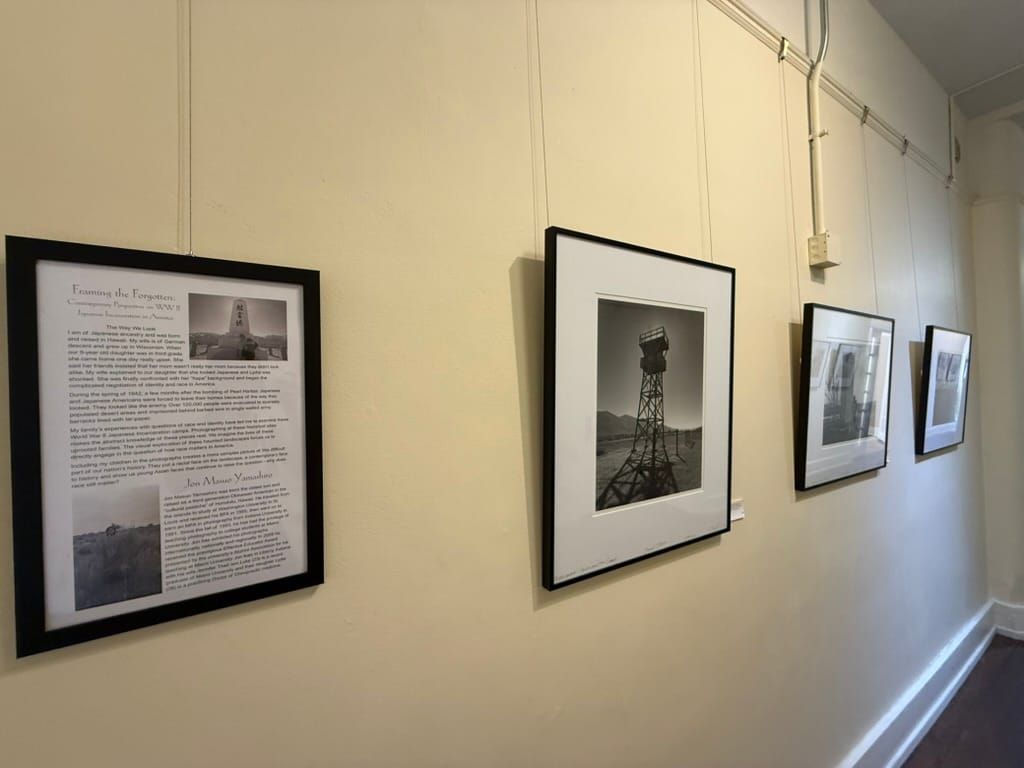
Miami University studio art professor Jon Yamashiro’s exhibition “Framing the Forgotten” at the Oxford Community Arts Center explores the history of Japanese American incarceration during World War II, inviting visitors to consider how the past continues to shape the present.
The exhibition is part of the eighth FotoFocus Biennial titled “The Long View,” which features more than 70 exhibitions across museums, galleries, universities and public spaces throughout Cincinnati, Dayton, Columbus and Northern Kentucky.
Yamashiro traveled to all 10 sites where Japanese Americans were incarcerated during World War II. His photographs capture landscapes, structures and monuments at these locations, exploring the Japanese American experience during this time period.
Following the attack on Pearl Harbor on Dec. 7, 1941, anti-Japanese sentiment intensified across the United States. On Feb. 19, 1942, President Franklin D. Roosevelt signed Executive Order 9066, authorizing the military to exclude people from designated areas. The order led to forced removal and incarceration of Japanese Americans, forcing them to leave behind a life they built for themselves.
The relocation process involved moving people to temporary assembly centers before being sent to permanent incarceration camps in remote areas. The camps had crowded barracks and shared facilities surrounded by barbed wire fences.
Alongside his wife, Jennifer, and their children, Lydia and Luke, Yamashiro traveled to former incarceration sites across the country, including California, Colorado, Utah and Arizona, to do his work.
The project developed from simple documentation into an artistic attempt to capture a sense of stillness and emotional depth.
The presence of his children in the photographs serve as a bridge between modern generations and the historical experience of the children who endured the camps.
“My kids became the characters and the way into contemporary audiences,” Yamashiro said during a presentation at Miami. “The way to see faces in place and for people to understand that children were in these places.”
By placing his children within the landscapes of former incarceration sites, Yamashiro offers a contemporary perspective to consider the experiences of those who had to live there. Their presence also emphasizes what children and families went through.
Yamashiro describes the photographs as an attempt to document “ghosts” and the emotional weight that remains at these locations, extending beyond the physical landscape the camera can capture. The photographs encourage viewers to think outside of what they see and to consider the lives connected to each site.
Yamashiro said while it is impossible to tell a whole story, personal artifacts and individual perspectives are essential to preserving history.
Through the exhibition, Yamashiro brings together historical documentation and contemporary photography to reconsider how history is understood. His work highlights the need to preserve stories, while creating opportunities for more exploration.
The exhibit will be free and open to the public until Nov. 7.