
HAC discusses draft of request for proposal for 47-acre plot
Considers possible cooling center, future of Winter House funds
The Oxford Housing Advisory Commission (HAC) reviewed the draft of a request for proposal (RFP) for development on 47 acres of land the city has owned since 2008 during a meeting on Sept. 3.
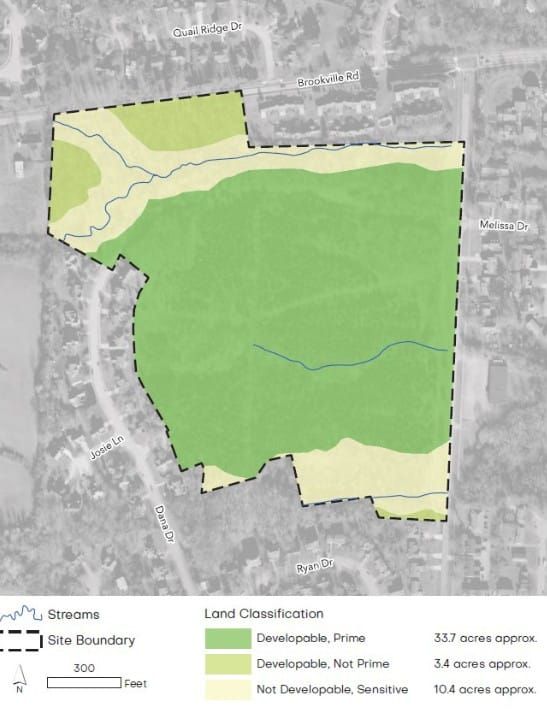
The Oxford City Council purchased the land south of Chestnut Street, west of Oxford Reily Road and east of Dana Drive – referred to by the city as the Western Knolls site – for $3.75 million, according to reporting from the Oxford Observer in 2020. Since then, the property has struggled to sell and has awaited development.
In 2020, the city organized a “design charrette” that invited citizens to collaborate on development for the area. The event garnered a mix of ideas that identified housing gaps and other community needs, and the Oxford Planning Commission met with an architect.
At the time, discussions included ideas about multi- and single-family housing, connections to the Oxford Area Trails System (OATS) and small-scale commercial businesses. Community Development Director Sam Perry was quoted by the Oxford Observer as saying the city was “probably a year-and-a-half to two years away from construction.”
In 2025, the Oxford Free Press reported that further discussion about a project on the land “hit a snag,” and the city was told residents wanted to preserve the area for residential use.
During the September meeting, Assistant City Manager Jessica Greene said the idea for retail space on the development would be cut from the RFP draft. Greene said Perry and his team determined 33 of the 47 acres are developable.
According to the RFP draft, the city’s objective is to “create a distinctive, high-quality, year-round residential neighborhood that substantially expands Oxford’s housing supply and homeownership opportunities while advancing the goals of the Oxford Tomorrow Comprehensive Plan, including Housing Opportunities for Everyone, a Thriving and Resilient Year-Round Economy, and Environmental Sustainability.”
The city is looking for a development that will incorporate a variety of housing types and price points, open space, connections to OATS and environmental stewardship.
The land is currently zoned for single-family medium-density residential units and allows for planned developments to have up to 5.8 residential units per acre. Single-, two-, three- and multi-unit residential buildings are permitted, according to the RFP draft.
According to the draft, the city’s current goal is for activity to commence on the development following the acceptance of a proposal by 2029 and be substantially completed by 2034.
“We all know it takes a long time to get things moving,” Greene said, “but I’m happy to amend that timeline. I just think we don’t want to be too restrictive nor too lenient (with proposals) that it dies in the water.”
Greene suggested adding language to say proposals addressing the Oxford Housing Needs Assessment published in 2021 by Bowen National Research could be viewed favorably. The study indicated a critical need in Oxford for low-income rental housing, as well as a high need for high-end rentals and high-end for-sale homes, according to the RFP draft.
Although Oxford City Councilor Jason Bracken pointed out the highest need by far was for low-income rentals, Greene said, “I think we decided that we can’t do both here, and so I think we were aiming for the other high areas in this housing study.”
The current version of the draft says the city’s goal for the development would primarily be market-rate housing.
Bracken said, although the property would be open to proposals for all housing options, “We just expect that we won’t get a lot for what we need.”
He suggested the city could sell a portion of the land for higher-end income housing and use the money from the sale to put into the Oxford Housing Trust Fund.
Greene said she could add language about being open to proposals using portions of the land into future drafts.
Shana Rosenburg, founder and operations manager of Thread Up Oxford, said of the possibility of development, “When you have more market rate housing, the more modest and older developments become more low-to-moderate income housing. I’ve seen it.”
“It’s exciting to me to see any new housing,” Rosenberg said.
The full draft is available on the city’s website under “Agendas and Minutes,” Sept. 3.
Greene said HAC will review edits to the RFP for the land based on their discussion at the next meeting on Oct. 1.
Future of Winter House funding
This year will be the second for the Oxford Winter House after its inaugural season in 2025. The temporary shelter located at 5223 College Corner Pike accommodates 13 people at any given time through the months of December, January and February.
Although operations of the Winter House were originally overseen by the local faith community and other volunteers, a board of seven members called Sheltering Oxford has since been formed to manage the organization and is pursuing 501c3 status.
The Oxford City Council approved $70,000 for the opening of the Oxford Winter House in December 2025 and chose to give $50,000 in July using Opioid Settlement Funds.
Greene said during the Sept. 3 HAC meeting the hope would be to provide the funding annually, and she has since added the funding into an early budget draft to be put before the council and awarded next winter.
But Greene warned that Opioid Settlement Funds are flowing into the city at lower amounts this year than projected, as at least one of the defendants in the settlement has filed for bankruptcy.
“I’m going to say that we’re good (for funding) for a few years, at least two, and then year three probably,” Greene said. “After year three, we’re going to have to see how that opioid fund is performing, and then we can cross that bridge.”
Greene said the city also wrote a one-time grant to Interact for Health to address “emergency needs” that will need to be presented to city council if awarded. The proposal for the grant funding includes assistance in winter, as well as a pilot for a cooling center in the summer. She said she is still waiting to hear back about the proposal.
Clarence Place updates
Greene provided HAC updates about construction for Clarence Place, an $11 million Habitat for Humanity townhome development along Chestnut Street.
One of the grant funders for the development was Welcome Home Ohio, to which Greene said some of the funds needed to be returned, as the original application was for all 31 townhomes, which will not be completed by the end of the year, and the organization would not grant an extension beyond December.
Greene said the funding was lowered to supporting just 10 houses by the end of the year, although the Welcome Home Ohio grant funding will be lost entirely if this is not accomplished.
She said there have already been around 27 applications for the first round of townhomes to be completed, and around seven have been approved.