
Holiday Side Dishes: Mamaliga and Latkes
Our household opts for two less familiar side dishes at holiday meals
Holiday meal planning this month tends to focus on the main dish – beef, pork, turkey or vegan – whereas the side dishes are often afterthoughts. Mashed potatoes and macaroni and cheese are the two most popular side dishes at Christmas, according to Crestline.com and Google’s unsourced AI Overview. Our household opts for two less familiar side dishes at holiday meals – mamaliga and latkes.
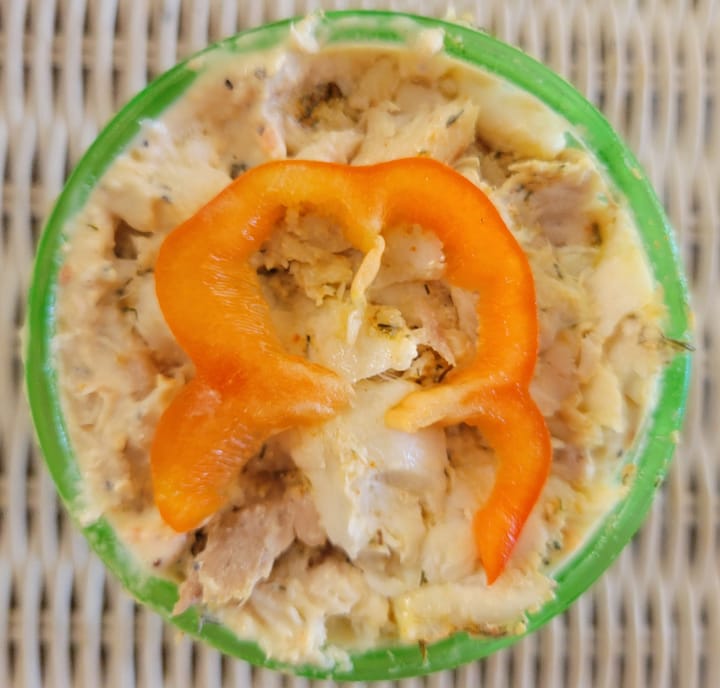
Out of respect for my in-laws’ Romanian heritage, traditional Romanian food made with mostly local Oxford ingredients forms one of our holiday meals. Mamaliga is the preferred side dish to accompany tocana. The Romanian names make them sound more exotic and fun to eat than boiled chicken stew and cornmeal mush.
Mamaliga is made from cornmeal that is coarsely ground. MOON Co-op’s bulk food section labels it polenta to distinguish it from finely ground cornmeal. Polenta gets its coarser texture by being ground from a harder corn than cornmeal.
I use Patricia Wells’ polenta recipe, which can be passed off as reasonably authentic mamaliga. Boil four cups of water, add a pinch of salt and slowly add one cup of polenta while stirring constantly with a whisk. Reduce the heat to low and stir frequently for around 20 minutes. Before serving, sprinkle dill and parsley on top.
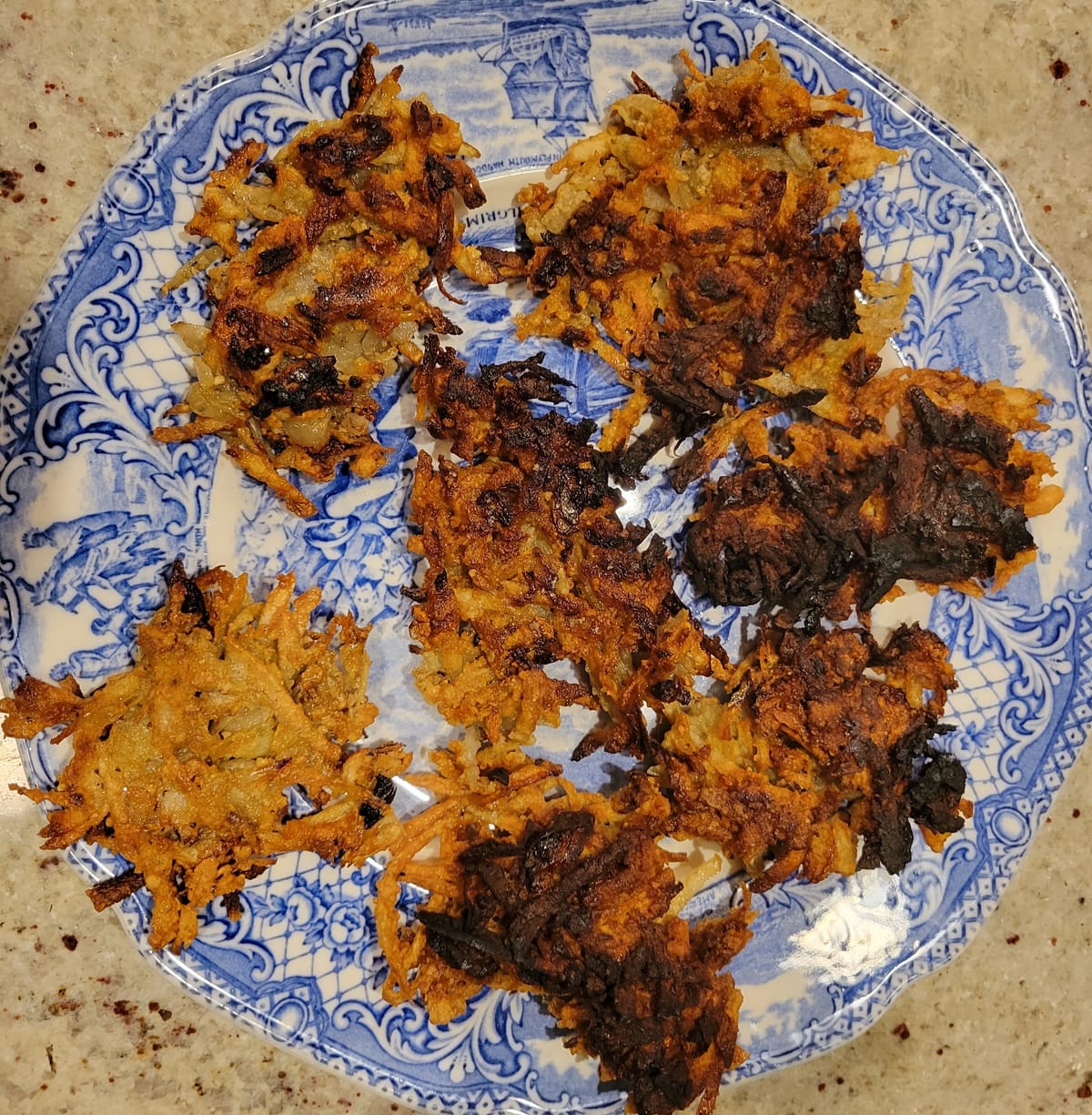
We serve potato latkes twice in December, once for Hanukkah, which starts this year Thursday evening on Dec. 14, and then again to accompany beef at Christmas.
Hanukkah commemorates the victory by the Maccabees in 166 B.C.E. that ended a period of religious persecution against Jews. The Maccabees captured Jerusalem, dedicated the Temple, and relit the Temple’s golden candelabra (menorah) with the small amount of available olive oil. Hanukkah comes from the Hebrew work for “dedication.”
Because the small amount of oil miraculously burned for eight days, traditional Hanukkah foods are oil-based. If you are a regular at the Oxford Farmers Market, you will no doubt have met Evie Semertzides, who lives in Southwest Ohio. Evie was born and raised in the village of Stavies, Greece, on the island of Crete, in the foothills below Mount Kofinas. Her family has grown and harvested olives there for many generations.
The olives are harvested by hand between December and February and pressed in the local olive oil mill. The pressed oil is placed in containers that are sent across the Atlantic on a boat. Here in Southwest Ohio, Evie decants the oil into small bottles that are also imported from Greece.
My sister considers this recipe to be the best. Grate one pound of potatoes and a small onion. Next is the most important step to assure crisp latkes. Squeeze the grated potato inside paper towels until very dry.
Combine the grated and dried potato with two beaten eggs, one-half cup fine breadcrumbs or matzo meal and salt and pepper to taste. Matzo meal works better because it is typically more finely ground than breadcrumbs.
Heat oil in a pan, drop in a generous tablespoon of the grated potato and spread thinly. Fry on medium-high heat for a minute or two per side until crisp. My vintage cast-iron skillet does a better job at making crisp latkes than a modern no-stick pan. Don’t crowd the pan – it’s better to fry in batches. Remove from the pan and place on wax paper until ready to serve.
If you make these dishes in advance, you can reheat polenta in the microwave and latkes in the oven.
James Rubenstein is president of the Board of Directors for the Oxford Free Press and professor emeritus of geography at Miami University.