
Local farmers work to adapt to changing weather trends
Scott Downing, of Downing Fruit Farm, said the unusually warm March, coupled with a late frost, has created difficulties for his farm, which relies mainly on fruit production.
The Oxford Farmers Market and MOON Co-op offer opportunities for local growers to sell their wares – everything from fresh fruit to cuts of beef – but this year’s weather has made some of those products harder to bring to the table.
Scott Downing, of Downing Fruit Farm, said the unusually warm March, coupled with a late frost, has created difficulties for his farm, which relies mainly on fruit production. Warm weather early in the season meant the trees bloomed early, but the late frost killed most of the peach, plum and cherry crop.
This was particularly disappointing to Downing because stone fruits, like peaches, plums and cherries, do not produce a large crop every year, and this year was shaping up to be a large crop.
Downing Farm also supplements its produce with vegetable crops, but much of its vegetable crop was also wiped out by the frost.
“(The) ground warmed early, everybody planted early, including myself,” Downing said. “Then we got a cold snap, and of course we lost all the early produce as well.”
In response, Downing is making adjustments this year to the farm. He isn’t mowing as often because gas prices have risen, and he eliminated his wholesale business so he could sell the remaining product for top dollar.
Other local farmers have not been impacted as much as Downing Farm, but have still had to adapt to the weather, like a late 32-degree freeze in early May and a July that marks the warmest month in the U.S. on record since the National Oceanic and Atmospheric Administration began tracking in 1895.
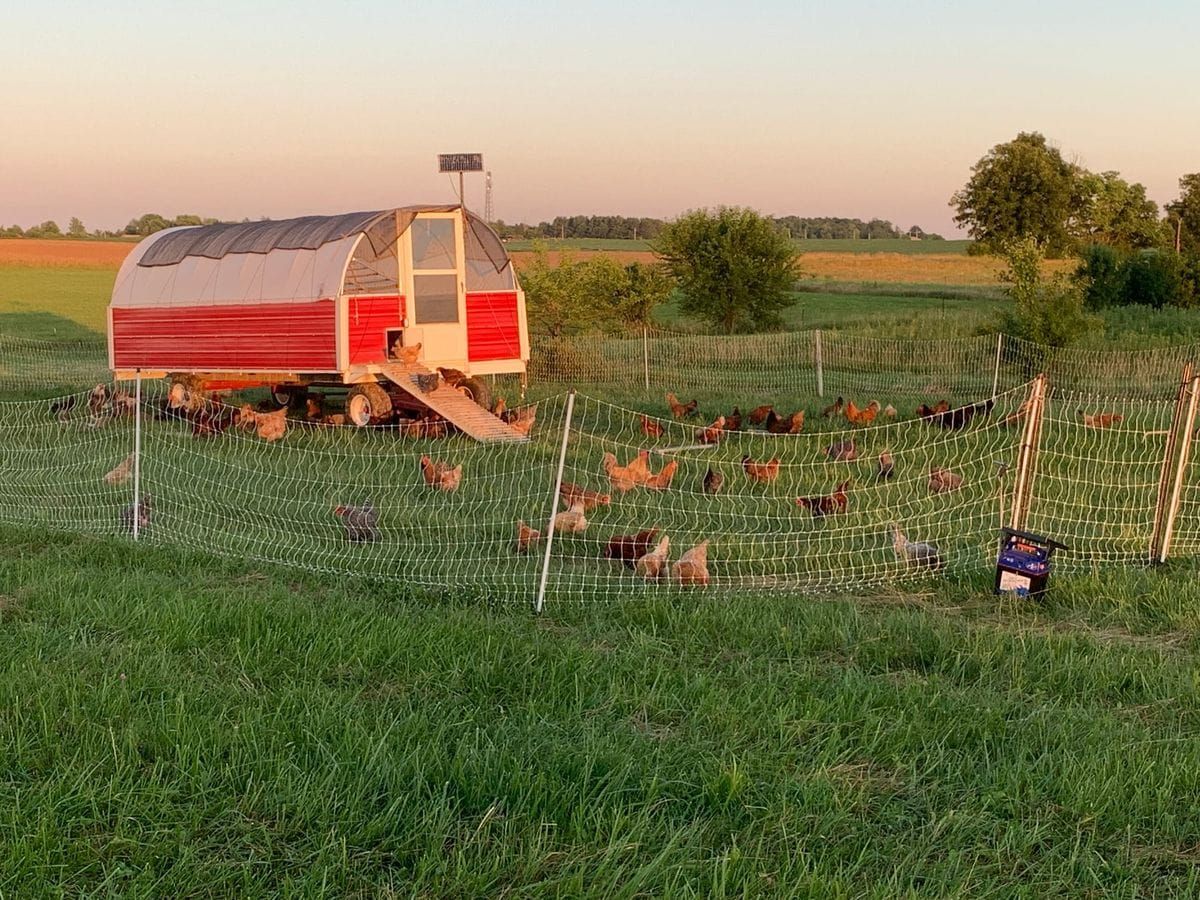
Craig Harkrider of Stoney Hedgerow Farm sells mainly vegetable produce and eggs. Because many of his plants are in greenhouses, the frost did not destroy his crops, but the heat can be hard on farmers and staff who harvest and tend to the plants.
“I’ve got greenhouse tunnels that are open on the sides; I have to really make sure the sides are very as open as they can be to allow as much airflow and cooling as possible,” Harkrider said. “It's still pretty intense.”
Like Downing, Harkrider also had to make changes to his farm this year to account for the heat. Stoney Hedgerow Farm usually sells tomato and pepper plants in the spring that buyers can then use to establish in their own gardens. When Harkrider saw a heat spike forecasted in mid-June, he decided to stop selling them because he knew the heat wave would be too much for greenhouse plants to handle.
“I purposely decided, ‘OK, I'm done with plant sales,’” Harkrider said. “I didn’t try to maintain the crop in greenhouses beyond that.”
Skyp Harmon of Caraway Farm, which raises cattle, said while the summer has contributed to quick grass growth that is helpful for grazing, high temperatures have been a distinct concern. Livestock, like cattle, can be impacted by heat stress, and beef cattle typically begin to show heat stress at 77 degrees, according to an article from the University of Kentucky.
“It does affect my everyday practices because I move the cows daily into another strip of grass,” Harmon said. “It’s intensive grazing, and when it's hot like that, we can’t back fence them and retain them in a small area because they have to be able to get to the shade.”
Harkrider said farming can be a gamble because it’s subject to the weather, which means farmers have to adapt where they can, but for farmers like Downing, there’s a limit to what they can do to protect a crop from freezes.
“It’s very important to support local farmers, especially on a year like this,” Downing said.