
Local Legends: A mom with a mission
"Born on Oct. 31, 1914, Branch was the daughter of Primus Luther Emerson and Elizabeth (Pipes) Emerson."
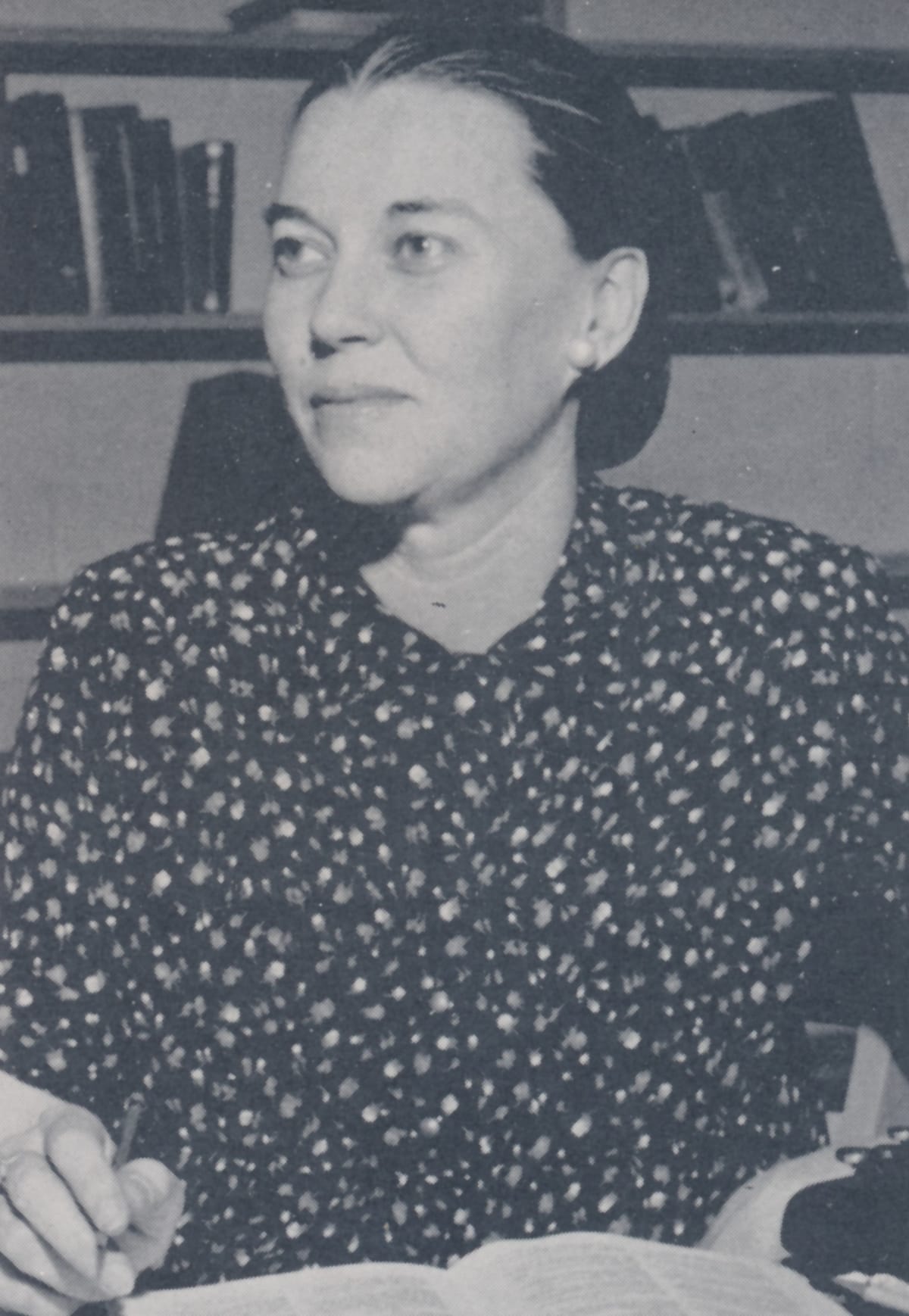
Mary Josephine “Mary Jo” (Emerson) Branch spent her life advocating for better educational and social opportunities for all developmentally disabled children across the county, including her son Robert.
Born on Oct. 31, 1914, Branch was the daughter of Primus Luther Emerson and Elizabeth (Pipes) Emerson. She was a native of Kansas City, Missouri, but by the time of her third birthday was living at the Porter Hotel in Lancing, Michigan where her father was a sales manager for the Olds Motor Works.
The family moved yet again to the Chicago area where her father took over ownership of a coal company. Branch graduated from Oak Park and River Forest High School in Oak Park, Illinois with the Class of 1933.
She continued her education, first attending Beloit College in Beloit, Wisconsin before returning to Chicago to complete her Bachelor’s Degree in English at the University of Chicago.
Branch married Edgar Marquess Branch, who was at the time a graduate assistant at the State University of Iowa working on becoming an English professor, in Iowa City, Iowa on April 29, 1939. Branch also briefly worked at the school as a stenographer. Edgar earned a professorship at Miami University in 1941, where he would also teach as part of the U.S. Navy V-12 program, bringing the Branchs to Oxford.
Their first child, Sydney Elizabeth (Branch) Dietz Daly, was born in 1943. Although not working outside the home, Branch became involved in the Oxford community and served as the legislative chairperson for the American Association of University Women. In this capacity, she wrote and published nonpartisan articles detailing the pros and cons of specific pieces of wartime legislation being considered at the national level.
Branch gave birth to Robert Marquess Branch in 1946, followed by another daughter Marian (Branch) Williams in 1958. When Branch attempted to find an organization through which developmentally disabled children, such as Robert, could socialize with one another, she came up empty handed. Although by this time Ohio had largely adopted the trends of deinstitutionalization, developmentally disabled children were still disqualified from receiving public education, with Robert being one of these children.
It was a situation that Branch was unwilling to accept. Her actions that followed ranked her among the most consequential advocates for the developmentally disabled in the history of Butler County. Seeking increased educational opportunities for him, she enrolled Robert in a special education teacher training class held at Western College in the early 1950s.
In the Spring of 1952, Branch and Helen F. Limoges, who was also the mother of a developmentally disabled child, hosted a meeting at the Jefferson School in Hamilton to organize a local chapter of the National Council for Retarded Children. The organization, which became the Butler County Council for Retarded Children, made it a mission to expand educational opportunities beyond the single appropriate class allocated for the county by the state, increase opportunities for socialization and specific job training, and to break the societal constraint that led to parents hiding developmentally disabled children away in their homes.
The following year, Branch took an even more hands-on approach, running for Butler County School Board. She placed third in the election, resulting in a successful campaign that won her one of the four open seats and making her the first woman to sit on the county school board.
Following her election, Branch put a thank you ad in the Oxford Press along with the vow, “I shall work hard to further the interests of all the school children in the county.” She was reelected in 1955 and continued her advocacy for developmentally disabled students and worked to improve standards for school bus drivers among other activities.
Branch remained a member of the county school board until resigning in 1957 to accept a position as the school librarian at the new Talawanda High School. She had studied library science, taking classes at Miami University as well as at Ohio State University, which greatly assisted her in building the new high school’s library from scratch.
In this time she continued her work with Butler County Council for Retarded Children rising to chair the education committee of the Ohio Council for Retarded Children while also serving as president of Miami University Women’s Club and a member of the Miami University Friends of the Library.
Branch and her husband lost Robert in 1966 who died at the age of 20 and was buried in Oxford Cemetery. The following year a change in state law paved the way for the creation of county level “boards of retardation” across the state, including the predecessor of the Butler County Board of Developmental Disabilities.
It was through the efforts of organizations such as the Council for Retarded Children and people like Brach that the change was enacted. A school specifically designed for developmentally disabled children soon opened in Hamilton.
Branch’s interests were not limited to her advocacy. She was a painter, a strong supporter of the arts and public history and a volunteer for Conflict Resolution Services, a community mediation organization. Additionally, she volunteered her time as a docent for many years and at the Miami University Art Museum and worked on projects for the Oxford Museum Association, including historic marker projects for Lewis Place, Patterson Place and Langstroth Cottage.
To support programs that supported those in need in the Oxford Community, Branch volunteered as part of the annual campaign of United Appeals, which later merged into Butler County United Way, to raise funds for nonprofit area social programs. She also remained politically engaged. As a response to the Watergate Scandal broke, Branch was one of 118 Oxford citizens who formed a telephone based organization called Common Cause to lobby for the strengthening of campaign finance laws.
The Branchs remained for the rest of their lives in the same home on Bonham Road, just outside city limits, that they had purchased in 1950. Edgar died on Aug. 14, 2006 at the age of 93. Branch lived to age 95, passing on March 28, 2010, being interred in Oxford Cemetery, sharing a headstone with Edgar and Robert.
Brad Spurlock is the manager of the Smith Library of Regional History and Cummins Local History Room, Lane Libraries. A certified archivist, Brad has over a decade of experience working with local history, maintaining archival collections and collaborating on community history projects. He also serves as a board member for Historic Hamilton Inc. and the Butler County Historical Society.