
Local Legends: The auditor
Wallace first experienced combat near Nashville, Tennessee in December 1862 while guarding a forage train when an engagement with a small Confederate force resulted in four casualties being suffered by his regiment.
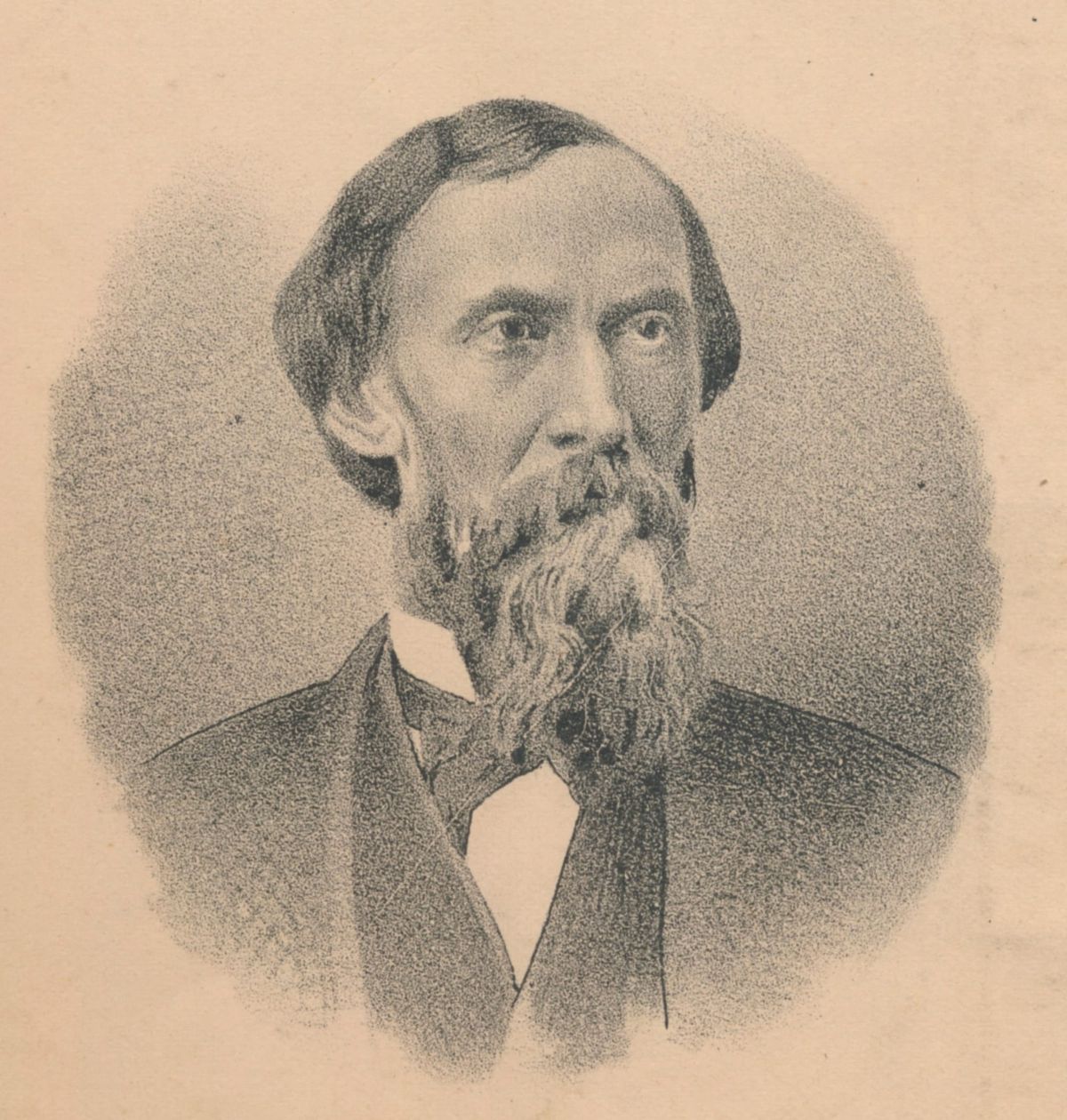
Milford Township native Henry H. “H.H.” Wallace was a school teacher, businessman, politician, veteran and government official who served three terms as an elected official in Butler County and fought in the American Civil War.
Born Dec. 30, 1824 in either Oxford or Milford Township, Wallace was the son of John C. Wallace and Priscilla R. Wallace. His mother’s maiden name is unknown. The Wallaces were an ancestrally Scottish family native to the Chambersburg, Pennsylvania area and were recorded as being one of the first families to settle in Milford Township.
His father worked as a millwright, and after landing in Cincinnati in 1806, he erected several mills around throughout the region. Although Wallace was recorded as being “reared on a farm, laboring in the summer and attending school in the winter,” his family doesn’t appear to have owned their own farm.
Wallace went from attending school to teaching school immediately after turning 18 years old. While the specifics are unknown, he also continued his studies, possibly under an independent instructor, and was later described as having received a “good business education.”
By the early 1850s, Wallace had moved from Milford Township to Hamilton where he would pursue countywide offices. In 1853, he was elected Butler County recorder and held that office until being elected as Butler County auditor in 1859. He served in that capacity for a single two-year term, the first of two terms that he would ultimately serve as county auditor.
On Aug. 11, 1857, Wallace was married to Sarah Jane (Bacon) Wallace, a descendant of original Butler County pioneers who was described as a “most estimable lady.” Their first of four children, John Bacon Wallace, was born in 1859 followed by Harry G. Wallace in 1862.
Alongside Ferdinand VanDerveer and Friedrich E. Humbach, as representatives of Hamilton’s Second Ward, Wallace worked to answer the call of Abraham Lincoln to raise 75,000 troops in response to quell the rebellion in the American South. He was commissioned a captain on July 20, 1862 and set about raising a company of infantry composed of men from Hamilton, Oxford, Darrtown, and Seven Mile. His company traveled up to Dayton where it became Company C of the 93rd Ohio Volunteer Infantry.
Wallace first experienced combat near Nashville, Tennessee in December 1862 while guarding a forage train when an engagement with a small Confederate force resulted in four casualties being suffered by his regiment. This small skirmish paled in comparison to the next engagement in which he would fight, the Battle of Stones River.
On the last day of 1862, Confederate forces defending Murfreesboro, Tennessee under General Braxton Bragg’s Army of Tennessee launched an assault against William Rosecrans' Army of the Cumberland as it continued its southward advance. In the third hour of the battle, St. John Liddell’s division of Arkansans slammed into the position of the 93rd OVI and its sister units, causing them to break and flee off the field.
The Battle of Stones River, which lasted three days, resulted in a tactical draw and made Wallace, who had been routed off the field with his regiment, a witness to the devastation brought by the American Civil War. He remained in command of his company in the Murfreesboro area until resigning his commission on June 16, 1863 due to “impaired health and disability” following an attack of typhoid fever.
Recovering his health, Wallace opened his own business in Hamilton in 1865, selling wallpaper and carpets for the next decade before selling the business in 1876.
Two years earlier, he had again been elected as Butler County auditor for an additional two year term. Also, immediately after his return from war, he and Sarah had a set of twins, Charles E. Wallace and Sadie P. Wallace.
Personally, Wallace was described as “an intelligent observer of passing events; prompt in his recognition of the strength or weakness of this or that measure; and indefatigable in endeavoring to crush the sway of corruption, and to place in office men of ability and spotless integrity.” While this was written of him while he was serving as auditor, Wallace’s track record of business and electoral success supports this politically polished description.
While Wallace was highly principled, politically minded and religious, he was also an independent thinker. Called a “Conservative Republican” in one biography, another biography clarified that “he has never adhered very strictly to party lines, but, under all circumstances, pursued that political course which candor and loyalty to the public interest required.”
Similarly, he attended services at the Hamilton Universalist Church, though one of these biographies stated, “religiously, his views are not circumscribed by the doctrines of any particular church.”
The late 1870s and early 1880s found Wallace doing a variety of work, including “selling school pens.” In 1883, he received a clerkship appointment in the United States Pension Office in Washington, D.C. Wallace relocated to D.C., but was only there until July 1884, when he was appointed a special examiner of pension claims and assigned to the southern Missouri-northern Arkansas area.
After three years in that region, Wallace returned to Hamilton and opened a real estate brokerage that he would maintain for nearly the rest of his life. John Wallace died in 1895, preceding his father by only four years. Wallace died at his home at 531 E. Ludlow St. on April 7, 1899 and was buried four days later in Greenwood Cemetery.
In summarizing his life, his obituary stated, “He was recognized as a reliable official and an accomplished businessman.”
Brad Spurlock is the manager of the Smith Library of Regional History and Cummins Local History Room, Lane Libraries. A certified archivist, Brad has over a decade of experience working with local history, maintaining archival collections and collaborating on community history projects. He also serves as a board member for Historic Hamilton Inc. and the Butler County Historical Society.