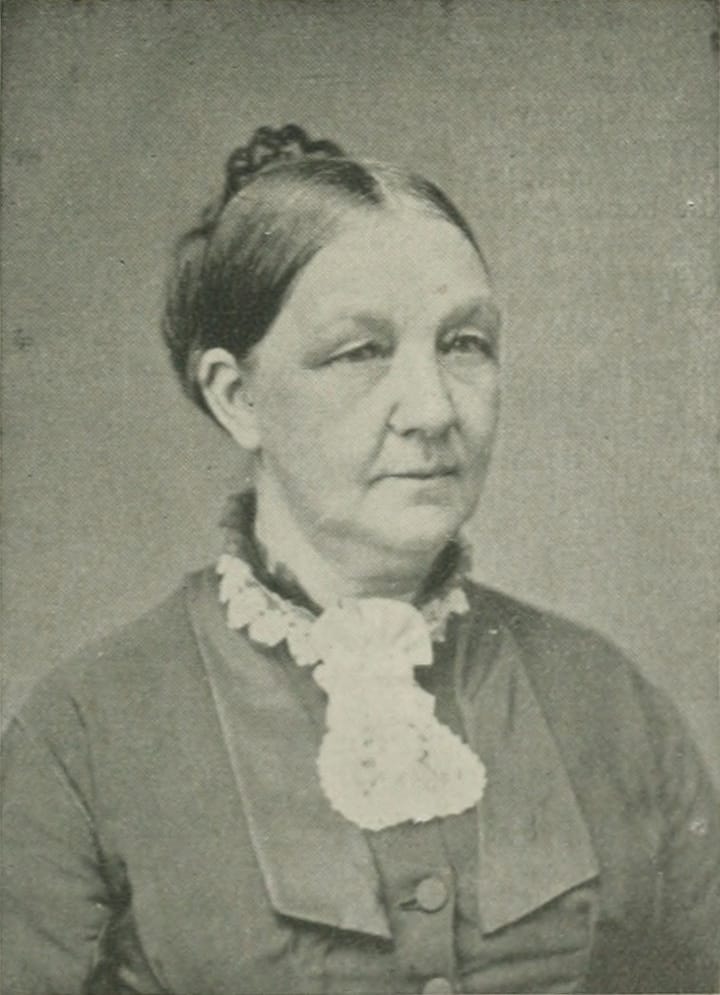

Local Legends: Unreconstructed
"The irreverent, unrepentant, flirtatious and slightly dangerous pair were Virginia Bethel “Ginnie” Moon and Cynthia Charlotte “Lottie” Moon, both of whom are remembered as Confederate spies."
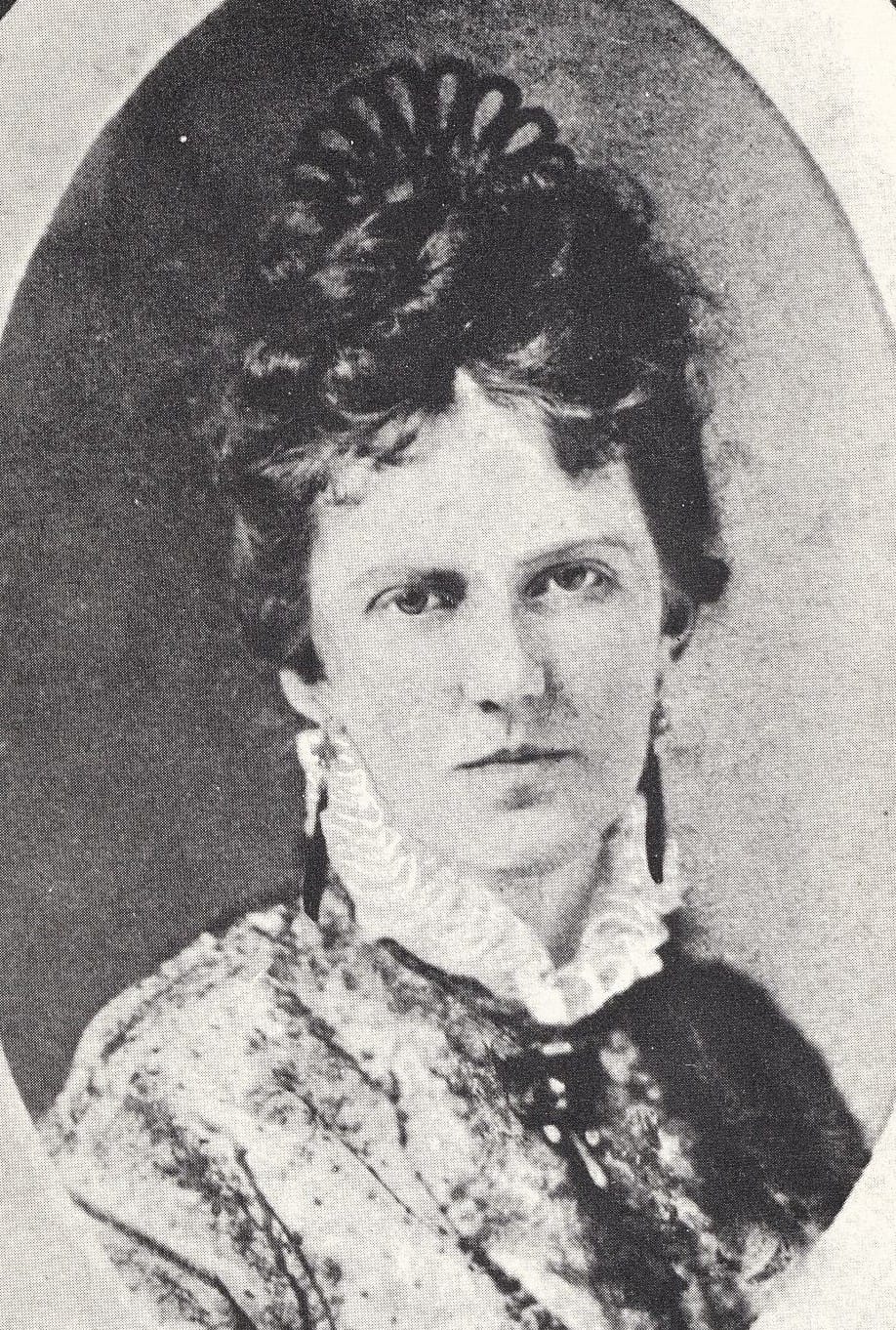
Where the Moon Sisters went, chaos followed. The irreverent, unrepentant, flirtatious and slightly dangerous pair were Virginia Bethel “Ginnie” Moon and Cynthia Charlotte “Lottie” Moon, both of whom are remembered as Confederate spies.
The children of Robert S. Moon and Cynthia (Sullivan) Moon. Robert was a physician and native of Virginia who was lured to the Miami Valley via Memphis, Tennessee by family members, arriving in Oxford in 1834.
Lottie was the older of the two sisters, having been born on Aug. 10, 1829 while the family was still in Virginia. Ginnie was significantly younger, with a birthdate of June 22, 1844. Although Ginnie was born in Ohio, likely in Oxford, there was no mistaking that she was also a southern belle as a result of the environment in which she grew up.
In her biography of the Moons, local historian Ophia Smith described Lottie, “Charlotte dominated any group in which she was apart. She was a merry prankster, a flirt, a superb horsewoman, and a crack shot.” The description could probably also have been applied to Ginnie who had a similar personality.
In their youth, both Ginnie and Lottie had a habit of getting engaged. The most notable of these instances involved a young Ambrose Burnside, a Liberty, Indiana native and namesake of sideburns who was destined to become a major general in the Union Army and one time commander of the Army of the Potomac.
Burnside met Lottie during a trip she took to see friends in Brownsville, Indiana and began courting her, resulting in her accepting his proposal. With all of their family and friends assembled the presiding minister asked Lottie if she would take Burnside to be her husband and she replied, “No siree, Bob, I won’t.”
Although she had jilted Burnside, she convinced him that it had just been an elaborate prank and he continued courting her. On one occasion when Burnside visited the Moons to see Lottie, a young Ginnie, ended up sitting in Burnside’s lap and eating candy he had brought for Lottie while assigning him the nickname of “Buttons” due to the polished buttons on his lieutenant’s uniform.
Lottie was up to her pranks again on May 10, 1849, her next wedding day. One of her fiances, James Clark of Hamilton, Ohio, arrived to wed her on that day, and although her wedding was planned, she had purportedly told multiple suitors that she would marry them instead if they beat Clark to the wedding. However, Clark had come prepared, pulling a handgun on Lottie and delivering a quote which would echo through Oxford’s folklore for ages to come, “there will be a wedding here tonight or a funeral tomorrow.”
Despite the pre-nuptial threat of violence, the two were well matched. As a southern sympathizing Copperhead former judge and attorney, Clark’s political views aligned with those of his new wife at the time of the coming of the American Civil War. Clark and Michael N. “M.N.” Maginnis, who would later create the Hamilton Police Department as mayor of Hamilton, acted as the primary Copperhead strategists in Butler County, likely also giving Lottie a voice in their planning efforts.
They also had ties to the Knights of the Golden Circle, a pro-southern secret organization claimed by some to have been a precursor to the Ku Klux Klan. With the invasion of Kentucky during the Heartland Campaign the Knights of the Golden Circle sought to get a message across the river and through Union lines to Confederate General Kirby Smith outlining plans for their uprising.
Lottie, disguised as an Irish washerwoman, volunteered to undertake the espionage mission, hiding the dispatch in her bonnet and tricking a group of Union soldiers to help her across the river before ditching them. The return trip was more hazardous given that the whole of the federal forces were now on the lookout for a female confederate spy. However, maintaining her cover, she made it back to the vicinity of Butler County and made her way back to their home in Jones Station, later known as Stockton on foot through the woods, now in the city of Fairfield, where the Clarks had moved from Hamilton.
Ginnie was also a Confederate sympathizer and famously shot out the stars on an American flag flying at the Oxford Female College. She moved to Memphis around the time of the war started.
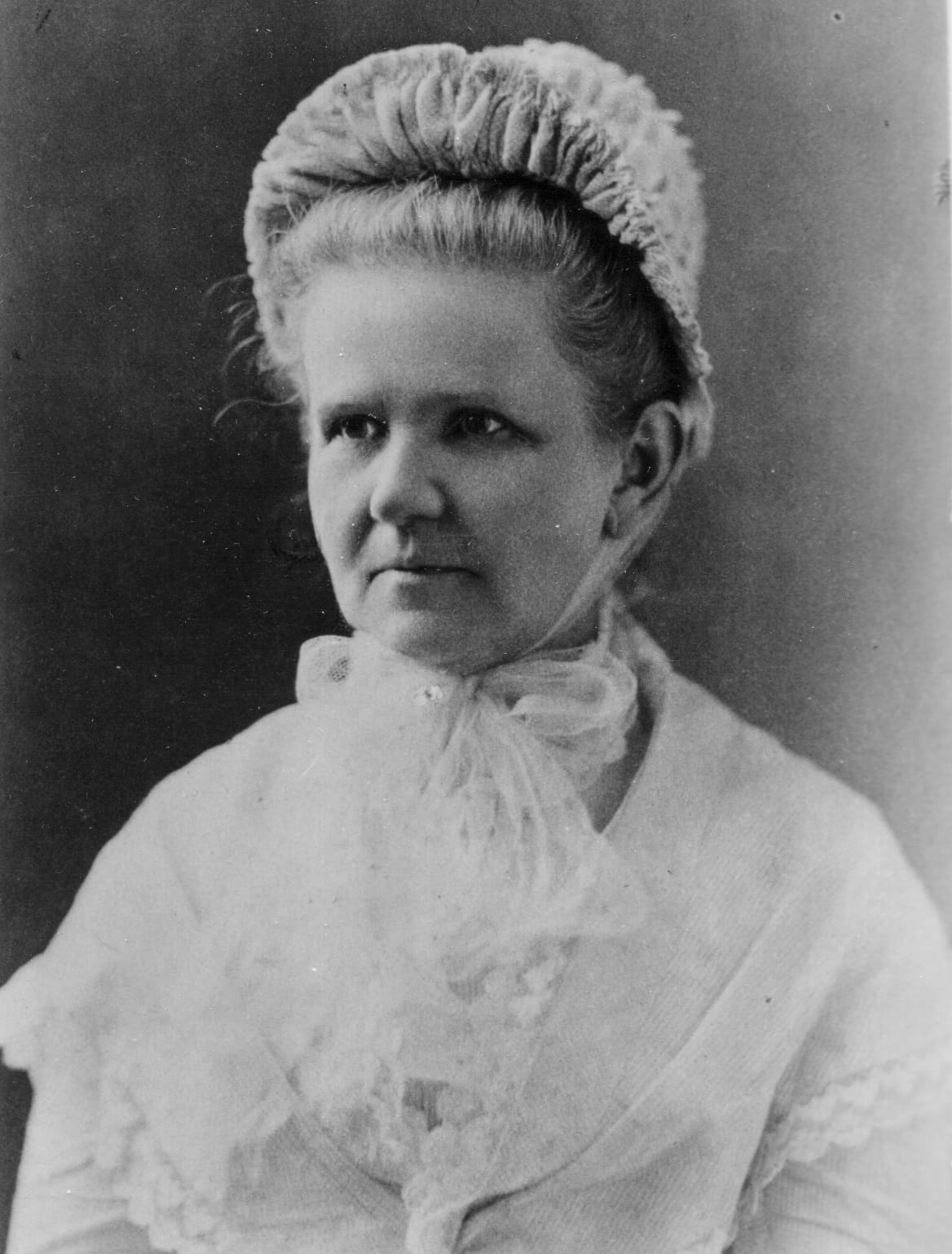
Her mother still owned property in Oxford and in December 1862 took a trip with Ginnie, who by that time was engaged to no less than sixteen Confederate soldiers, back to Oxford to sell the property. Ginnie, however, was also spying and carried with her a dispatch from the Confederate government to James Clark, the contents of which were not known. She delivered the message to her brother-in-law at his home, and took with her on the return trip a reply that possibly included the signature of Clement Vallandingham, leader of the Copperhead movement.
However, her cover was blown en route and she was confronted by a Union Army officer who said he had orders to search her person. Ginnie pulled a revolver from the layers of her dress and told him she would not be searched by a man. When he left the room, she removed the paper message she was smuggling, dipped it in water and ate it.
When she was ultimately searched, she was found to have had a bolt of fabric, up to 50 letters and a large quantity of morphine, opium and camphor on her person that she was hoping to carry back to Confederate forces. Ginnie was eventually brought before none other than General Burnside, commander of the Department of Ohio at the time.
Burnside is reported to have ensured that she and her mother received some degree of protection and had her sign a parole that allowed her to return to Memphis. The extent of her activities throughout the remainder of the war is unverified, though she was report daily to the local general in charge.
Lottie was hauled into Burnside’s office almost immediately after he had spoken to her sister. She had been captured posing as an Englishwoman traveling to a resort for her health while carrying dispatches between a cell of the Knights of the Golden Circle in Canada and the Confederate government, possibly even Jefferson Davis himself.
Trying to keep up the act in front of Burnside, who had once wanted to marry her, proved to be fruitless. In the end, Burnside essentially let her go with a warning that if she was caught again there would be no leniency. She returned to her husband at Jones Station, but when Vallingham was arrested, later to be exiled to the South, the Copperhead movement was dealt a major blow and the Clarks relocated to New York where they remained for the rest of their lives.
In her later years, Ginnie led a life defiant of societal customers, being an avowed agnostic, mixing her own mint juleps and referring to herself as an “unreconstructed rebel.” At the age of 75 she decided she wanted to be an actress and talked producer Jesse L. Lasky into hiring her. She appeared in at least two Hollywood films.
Lottie became a foreign correspondent in Paris in 1870, working for the “New York World.” Upon her return, she traveled the lecture circuit for many years giving speeches on the social conditions she witnessed in Europe. Later in life, she wrote fiction books under the pseudonym Charles M. Clark, the most notable of which being “How She Came Into Her Own Kingdom” and translated French novels.
Having outlived James by fourteen years, Lottie died of cancer in Philadelphia on Nov. 20, 1895. Ginnie died at her Greenwich Village home in New York City on Sept. 11, 1925.
Much of the Moons’ stories survive in works of folk history with varying degrees of consistency and reliability. This includes the likely apocryphal account that Lottie shared a carriage with Abraham Lincoln on one of her trips between Canada and the Confederate states. True, partially true, or untrue the captivating stories of Oxford’s spies have lived on since the failure of the Confederacy.
Brad Spurlock is the manager of the Smith Library of Regional History and Cummins Local History Room, Lane Libraries. A certified archivist, Brad has over a decade of experience working with local history, maintaining archival collections and collaborating on community history projects. He also serves as a board member for Historic Hamilton Inc. and the Butler County Historical Society.