
Media Matters: Our attraction to distraction
“We are living in an attention economy and social media is addictive by design.” – Tristan Harris
The YouTube rabbit hole I recently jumped down involved watching ex-NBA players discussing Larry Bird as the best trash-talker. These video shorts explain how Bird taunted whoever was guarding him by announcing exactly what he was going to do, then made the move and the shot anyway.
After a few of those, Pete Maravich videos pop up and I’m watching late 1960s highlights from a year when he averaged 44 points a game for LSU, still an NCAA record … and he did this three straight years without the 3-point line.
Then Wilt Chamberlain clips appear from the 1961-62 NBA season when he averaged 50 points a game, including a 100-point game – both still NBA records. Now, I’m on to Wilt videos about him beating Cleveland football legend Jim Brown in a foot race. Next stop: Jim Brown football highlights.
This behavior obviously has some downsides. I recently read that our attention span for on-screen tasks – like working at a computer – has collapsed from two and a half minutes in 2004 to under 50 seconds today.
It’s no wonder. Several studies say, on average, we check our phones around 200 times per day. A landmark analysis from the American Psychological Association “identified potential links between high consumption of short-form videos and several negative mental health outcomes. The analysis, which synthesized data from 71 separate studies involving nearly 100,000 individuals, points to concerns over diminished attention spans, increased feelings of loneliness, and poorer sleep quality among frequent users.”
But there is some good news. In March, a jury in New Mexico ordered Meta, owner of Instagram and Facebook, to pay $375 million in damages for failing to protect young users from child predators. The next day, a Los Angeles jury found that these media platforms, plus YouTube, were negligent in designing addictive components that harmed the mental health of a 20-year-old California woman. She started watching YouTube at age six and was on Instagram at age 11, eventually suffering from several mental health issues, including anxiety, depression and suicidal thoughts.
Meta was ordered to pay $4.2 million in damages and YouTube $1.8 million. The verdict takes a page from the tobacco settlements of the 1990s, which revealed that the tobacco industry knowingly created products that were addictive and unhealthy.
Both Meta and YouTube are appealing. TikTok settled before the trial started.
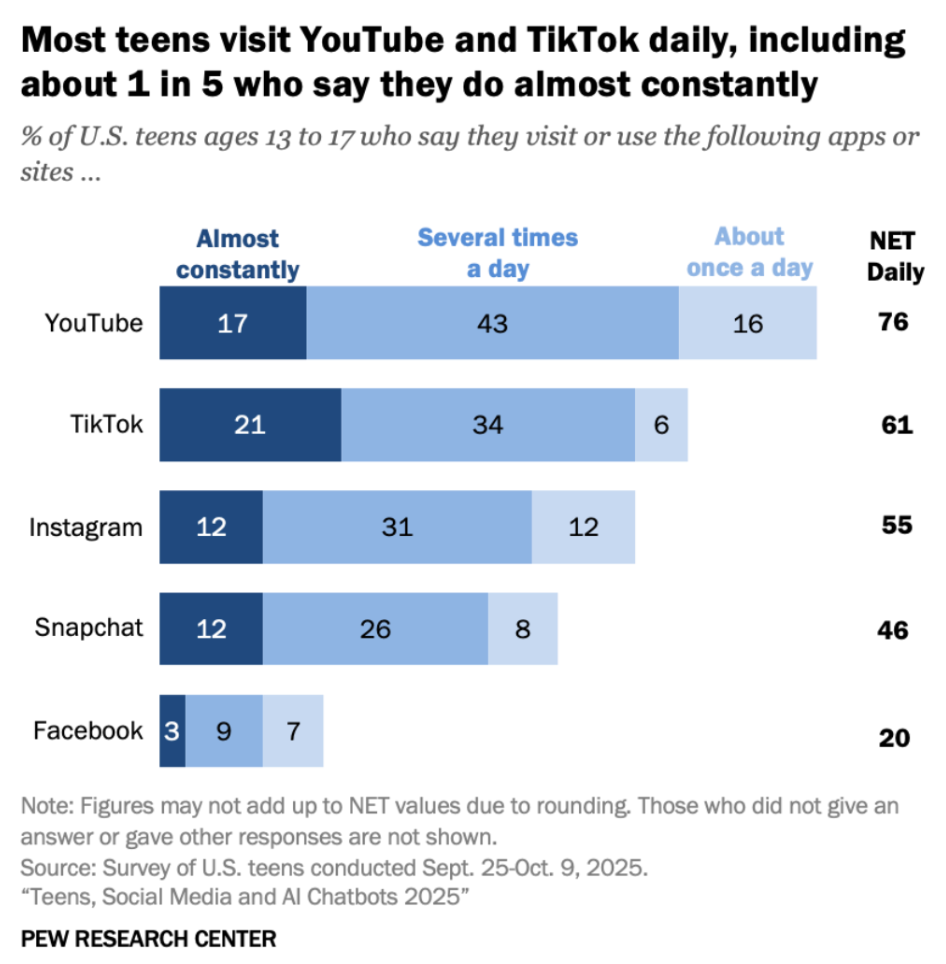
No studies yet prove YouTube obsessions directly cause shorter attention spans, loneliness or depression. And no clinical condition called “YouTube Addiction” exists (not yet anyway). But binge watching short-form videos, interfering with daily tasks, is a real thing. By the way, YouTube has over 2.5 billion monthly viewers, including 254 million users in the U.S. Facebook has over three billion users worldwide, including 280 million in the U.S.
In a column last year, I reported on Australia’s social media ban, which outlawed social media accounts for all children under age 16. The ban went into effect in January. Before it began, Meta’s Instagram and Facebook removed some 550,000 accounts of young users. Overall, social media companies have now nixed more than 4.7 million accounts in Australia belonging to children age 15 and under. Two 15-year-olds in New South Wales, however, recently filed a lawsuit claiming the ban violates their freedom to participate in political communication.
While individual lawsuits against the giant media companies may offer some hope, Google and Meta make too much money to change their business plan or their algorithms. Facebook, Instagram, YouTube and TikTok alone account for over 90 percent of social media ad revenue, according to one media analysis.
Last year, Meta reported record profits of over $200 billion, with net income of $60 billion. Google’s YouTube last year reported $60 billion in revenue from advertising and subscriptions – also a record. They both can afford to pay off a lot of million dollar lawsuits.
But Australia’s experience does offer more hope. In the U.S., at least 40 states have existing or pending legislation to protect children from “addictive feeds,” including California and Tennessee, which both have Protecting Children from Social Media Acts that hold media companies accountable when children become addicted. And Florida has banned social media accounts for children 13 and under, with parental consent needed for 14- and 15-year-olds.
In Ohio, legislators in 2023 passed the Parental Notification by Social Media Operators Act, which required providers like FaceBook and TikTok to obtain parental consent from users under age 16. But, according to an AP report, a federal judge permanently struck down the law in 2025 after “a trade group representing TikTok, Snapchat, Meta and other media tech companies” complained that “the law unconstitutionally impedes free speech and is overly broad and vague.” Legislators went back to the drawing board.
I’ll admit to using YouTube to watch Cincinnati Reds highlights, which shortens the game for me from a few hours on game day to about 10 minutes the next day. For a fan, that’s a lot of stress reduction.
But I am also proud to say, I have never joined social media. This may seem negligent since I chaired media departments for more than 20 years. But my students told me early and often that social media had more negative than positive effects.
I understand Facebook’s benefits in connecting us to family and friends. But the research is clear: “Facebook’s stated mission is ‘to give people the power to build community and bring the world closer together.’ But a deeper look at their business model suggests that it is far more profitable to drive us apart. By creating ‘filter bubbles’ – social media algorithms designed to increase engagement and, consequently, create echo chambers where the most inflammatory content achieves the greatest visibility – Facebook profits from the proliferation of extremism, bullying, hate speech, disinformation, conspiracy theory and rhetorical violence.”
Richard Campbell is a professor emeritus and founding chair of the Department of Media, Journalism & Film at Miami University. He is also a co-founder of the Oxford Free Press.