
Media Matters: Presidents, publishers and ‘Citizen Kane’
“You know, Mr. Thatcher, if I hadn't been very rich, I might have been a really great man.” – Charles Foster Kane
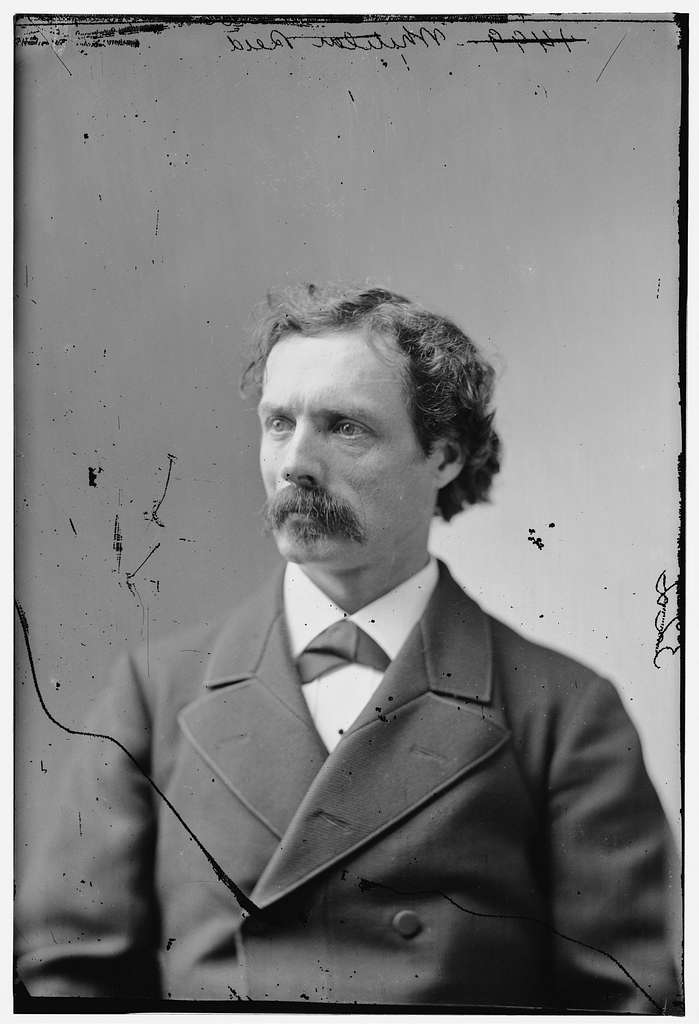
In Oxford, Ohio, most folks know that Benjamin Harrison served as our 23rd president. He went to college here. Fewer people know about Whitelaw Reid.
Reid was Harrison’s Republican running mate in the 1892 election. The pair lost to Grover Cleveland, whom Harrison had beaten in the 1888 election. Reid was also a Miami University grad, making them – to this day – the only undergraduates from the same university to run on the same presidential ticket.
Whitelaw Reid had made his reputation as a reporter during the Civil War, writing battlefront dispatches at Shiloh and Gettysburg, mostly for the Cincinnati Gazette. Earlier, in the late 1850s, he and his brother had purchased the Xenia News. Before leaving to cover the war, Reid served as its publisher and editor. After the war, Reid became editor of the New-York Tribune, owned by Horace Greeley. Reid bought the paper after Greeley’s death in 1872 and ran it until 1912. He would also serve as U.S. ambassador to both France (under Harrison) and to England (under Theodore Roosevelt).
Reid grew up in Cedarville, Ohio (near Xenia). Today, his house is owned by Ohio’s governor, Mike DeWine, also a Miami graduate.
It wasn’t often that newspaper publishers ran on presidential tickets, but Ohio holds the distinction of hosting the only presidential election pitting two newspaper publishers from the same state. In 1920, Warren G. Harding, who owned the Marion Daily Star, defeated James Cox, owner of the Dayton Daily News and the Springfield Daily News. Previously, Harding had served as a state senator and later a U.S. Senator. Cox had been Ohio’s governor for three terms. His running mate in 1920 was FDR. Cox, who died in 1957, would buy the Atlanta Journal in 1939 and Atlanta Constitution in 1950. The two papers were merged, and the family moved its media headquarters from Dayton to Atlanta in the early 1980s.
Leaving Ohio, the most famous publisher associated with politics and the presidency was William Randolph Hearst, a media mogul who once owned 28 newspapers, 18 magazines, 10 radio stations and a film newsreel company. In 1904, Hearst sought the Democratic presidential nomination but lost. In 1908, he ran unsuccessfully as an independent.
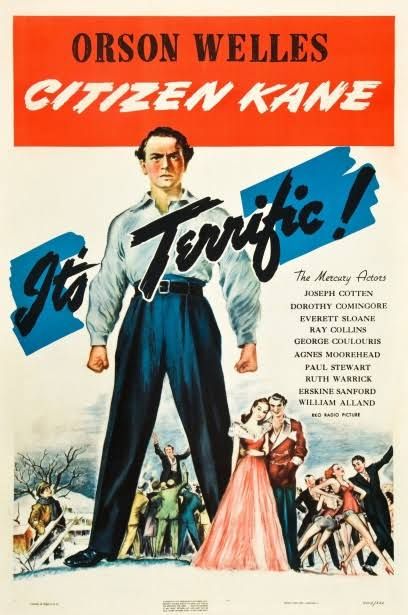
Hearst’s fame escalated when, in 1941, Orson Welles used him as a model for Charles Foster Kane, a newspaper publisher/editor and main character in the Welles’ classic movie, “Citizen Kane.” For 50 years, “Citizen Kane” ranked as the best movie ever made, both for its storytelling and technical innovations.
The narrative strategy was complicated for its time. Famously, the beginning of the movie is also the end of the story, which is told through the memories of others and through a movie newsreel embedded in the film. The 25-year-old Welles portrayed Kane – a complex character, ambitious, charismatic, ruthless, flawed, a champion of “decent ordinary citizens,” but ultimately a tragic figure.
The cinematic techniques included “deep focus,” with foreground, mid-ground and background all in sharp focus, mimicking what the eye actually sees. The film also featured long takes, fewer edits, and low-angle shots that gave the flat screen the feel of three dimensions. The British Film Institute’s Sight & Sound magazine ranked “Citizen Kane” No. 1 in five consecutive critics’ polls, conducted every 10 years from 1962-2002. It was finally dethroned by Alfred Hitchcock's “Vertigo” in 2012.
Although the film was nominated for nine Oscars, including “best actor” and “best director” nominations for Welles, it won only for original screenplay. “Citizen Kane” was a flop at the box office, partly attributed to Hearst’s campaign to stop its release by banning all references to the film from his publications. An episode of PBS’ American Experience reported that Hearst’s friend Hedda Hopper, the leading gossip columnist of her day, panned the movie, calling it “a vicious and irresponsible attack on a great man.” Hearst even conspired to buy “Citizen Kane” in order “to burn the negative.” Given that many Hollywood executives feared Hearst’s retaliation, the campaign largely succeeded and it took years for the film to gain recognition as a masterpiece.
Interestingly, historian Jonathan Zimmerman, in a 2018 article about Hearst’s efforts to become president, noted that “Hearst foreshadowed Donald J. Trump in many ways, although the president might even be less self-aware than Hearst was.” Hearst hated “Citizen Kane,” which he “correctly recognized as an indictment of his character and career. But Trump has called it his favorite movie.”
In 2002, Trump said of Charles Foster Kane: “He and his wife getting further and further apart as he got wealthier and wealthier – perhaps I can understand that.”
Shortly after Trump’s 2016 election win, film critic Alison Willmore compared him to Kane: “They both rose to wealth with the benefit of an inheritance, Trump from his developer father, Kane from a gold mine discovered on property left to his mother…. They both carved out their own empires with the help of that money, Trump in real estate and Kane in newspapers. They both divorced twice, though Trump, unlike Kane, would marry a third time. They both own cavernous Florida estates with fanciful names, Trump’s Mar-a-Lago and Kane’s Xanadu.”
In the film, Kane is running for governor of New York. He loses. But, we learn that he has ordered two different front pages – one announcing his win, the other declaring “Fraud at the Polls!”
Richard Campbell is professor emeritus and founding chair of the Department of Media, Journalism & Film at Miami University. He is also a co-founder of the Oxford Free Press.