
Media Matters: Rock ‘n’ roll … and race
“If I could find a white boy who could sing like a black man, I’d make a million dollars.” - Sam Phillips, Sun Records
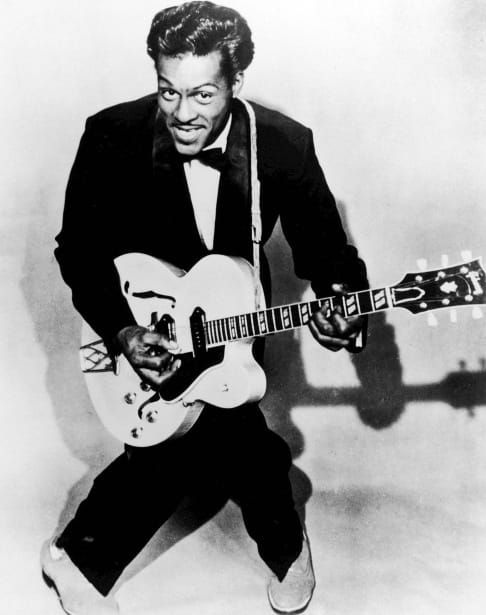
For a lot of parents, I suspect 1955-1962 was a rough time. Rock ‘n’ roll was dangerous back then. Lots of white kids started listening to Black music. Moms and dads worried about suggestive lyrics. In 1956, Chuck Berry’s “Roll Over Beethoven” seemed like an assault on culture: “You know my temperature risin' / And the jukebox blowin' a fuse … / Roll over Beethoven / And tell Tchaikovsky the news.”
“To have young, teenage white girls in America screaming to someone like Little Richard, as he's singing ‘Good Golly Miss Molly, you sure like to ball. When you're rocking and rolling, can't hear your mama call,’ that was brand new in the American experience and it freaked a lot of people out,” noted sociologist Steve Williams.
I was around nine or ten when I first heard Elvis Presley sing “Hound Dog” and “Don’t Be Cruel” – a 1956 double-sided 45-rpm hit. “Hound Dog” had been written in 1952 by two white teenagers, Jerry Lieber and Mike Stoller, who later wrote and produced for Black groups like The Coasters (“Poison Ivy”) and The Clovers (“Love Potion No. 9”). The writing duo originally wrote “Hound Dog” for Big Mama Thorton, a hit rhythm and blues (R&B) song. I had listened to Elvis’ tamer version at a friend's – played for us in the attic by his teenage brother. The parents didn't know he had the record. I thought I was doing something bad.
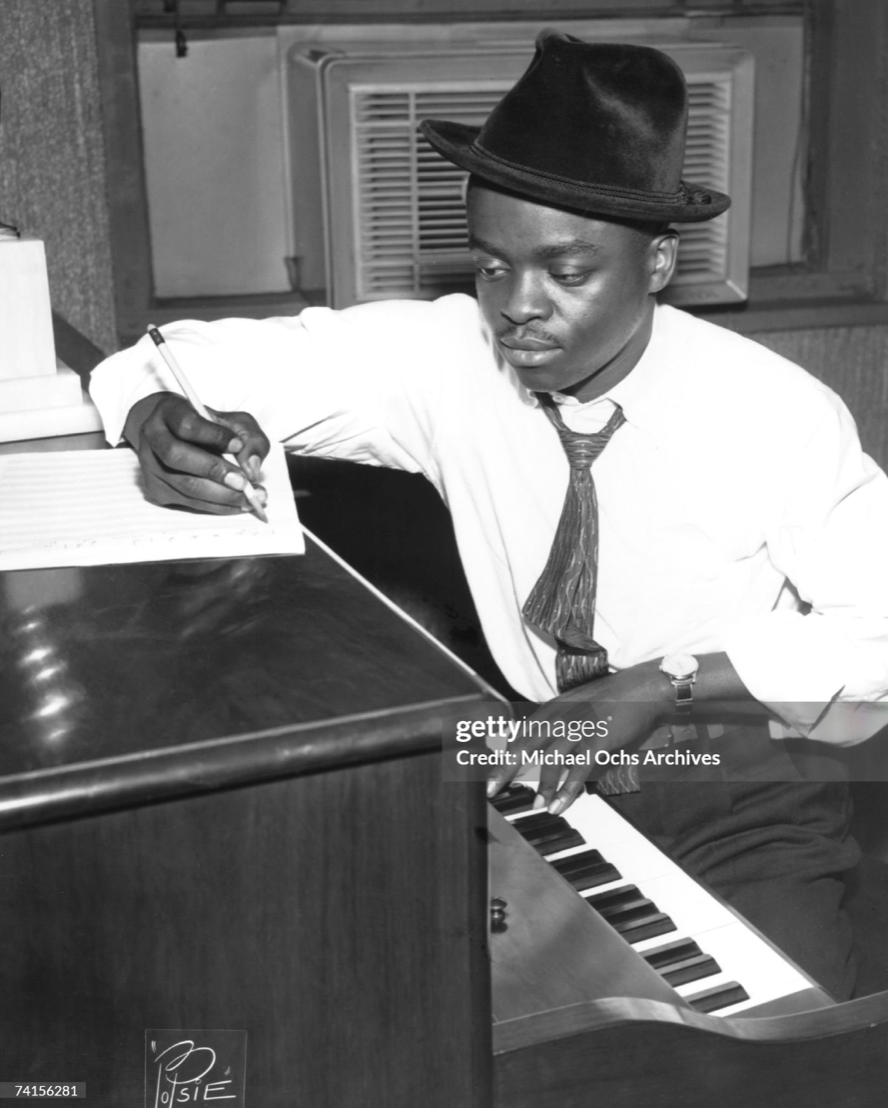
Singer/songwriter Otis Blackwell wrote “Don’t Be Cruel.” He also recorded the demo which Elvis imitated. Presley got a dubious co-writing credit on the song, although he never met the songwriter. When dealing with record companies, Blackwell sometimes used the pen name John Davenport so he could write for more than one label. He wrote over 1,000 songs, including “All Shook Up” for Elvis and “Great Balls of Fire” for Jerry Lee Lewis.
In the 1950s, it was more profitable for record producers to find white singers to “cover” the songs of Black artists. So, Pat Boone covered Little Richard’s “Tutti Frutti” and had a bigger hit. Boone also covered Fats Domino’s “Ain’t That a Shame,” which had charted at No. 10, but the cover version became a No. 1 hit in 1955. LaVern Baker’s ”Tweedlee Dee” was an R&B hit in 1954, but Georgia Gibbs’ cover went to No. 2 in 1955 on Billboard’s all-genre chart.
From the 1930s on, many Black artists were exploited, often receiving a one-time payout for a song – sometimes for as little as $50. Managers or record labels kept the publishing rights, earning the royalties that came later, year after year. As music journalist Del Cowie noted, “The list of legendary Black musicians who didn't receive fair pay for their work is long. It includes Jimi Hendrix, James Brown, Nina Simone and Little Richard, just to name a few.”
Arthur Crudup, a blues singer, wrote “That’s All Right” in 1946. It became Presley’s first hit in 1954, but Crudup’s corrupt manager kept the publishing rights. At age 50, Crudup left music to work on farms to support his family. He died in 1974, but his family fought to recover what he should have earned, eventually “receiving around $3 million over the following decades,” according to a 2024 PBS/AP story.
When rock ‘n’ roll hit, it messed with the chart system. Billboard, the trade magazine that tracked hit songs, had created a separate category for Black music in 1942 called the Harlem Hit Parade, although Black groups like the Ink Spots occasionally cracked the all-genre hit list. Billboard changed that category to Race Records in 1945 and to R&B in 1949. In 1956, Carl Perkins, known as a country singer, wrote and released “Blue Suede Shoes.” It ranked No. 1 on Billboard’s country chart, No. 2 on the R&B chart, and No. 2 on all-genre Hot 100 chart. No record had ever done that.
Indeed, one of rock‘n’ roll’s cultural achievements was blurring boundaries. The music made Black culture accessible to white audiences, particularly teenagers, who first heard blues and rock ‘n’ roll on powerful AM radio stations like WLAC in Nashville and WDIA in Memphis, featuring both white and Black DJs. XERF on the Mexico-Texas border starred the legendary rock ’n’ roll DJ Wolfman Jack. My wife Dianna remembers listening to rock ‘n’ roll on Oklahoma City’s KOMA in tiny Wahpeton, North Dakota, at night after the sun went down and AM signals traveled farther.
This accessibility did not always mean acceptability. The ugliest criticism of rock ‘n’ roll’s boundary violations came from the executive secretary of the North Alabama White Citizen’s Council: “Rock and roll is a means of pulling the white man down to level of the Negro. It is part of a plot to undermine the morals of the youth of America." Six members of that “council” attacked Nat King Cole on stage during a performance in Birmingham in April 1956.
By the early 1960s, the “moral panic” created by rock ‘n’ roll subsided, aided by the record companies promoting “clean-cut” white singers like Paul Anka, Frankie Avalon, Connie Francis, Ricky Nelson, Neil Sedaka and Bobby Vinton. Elvis had gone into the army for two years in the late 1950s. Little Richard and Jerry Lee Lewis, both sons of Southern preachers, became convinced (for a time) they were playing “the devil’s music.” Little Richard became a minister.
1962 was the last year cover-artist Pat Boone, at age 28, had a Top 40 hit. In a delicious irony, also in 1962, Ray Charles became the first Black artist to have a No. 1 record on Billboard’s Hot 100 chart, covering “I Can‘t Stop Loving You,” a country hit from 1958, written and recorded by the Grand Ole Opry’s Don Gibson.
Rock ’n’ roll changed the culture, providing early groundwork for the activism that drove civil rights legislation in the mid-1960s. Former U.S. congressman Andrew Young famously said, "Rock ‘n’ roll did more for integration than the church.” Or as Chuck Berry put it, describing his audiences: “Salt and pepper all mixed together, and we’d say, ‘Well, look what's happening.'"
Richard Campbell is professor emeritus and founding chair of the Department of Media, Journalism & Film at Miami University. He is also a co-founder of the Oxford Free Press.