

Media Matters: ‘The Pitt,’ a TV metaphor for our times
“‘The Pitt’ implores us not to rush to judgment and not to assume the worst.” – Frank Bruni

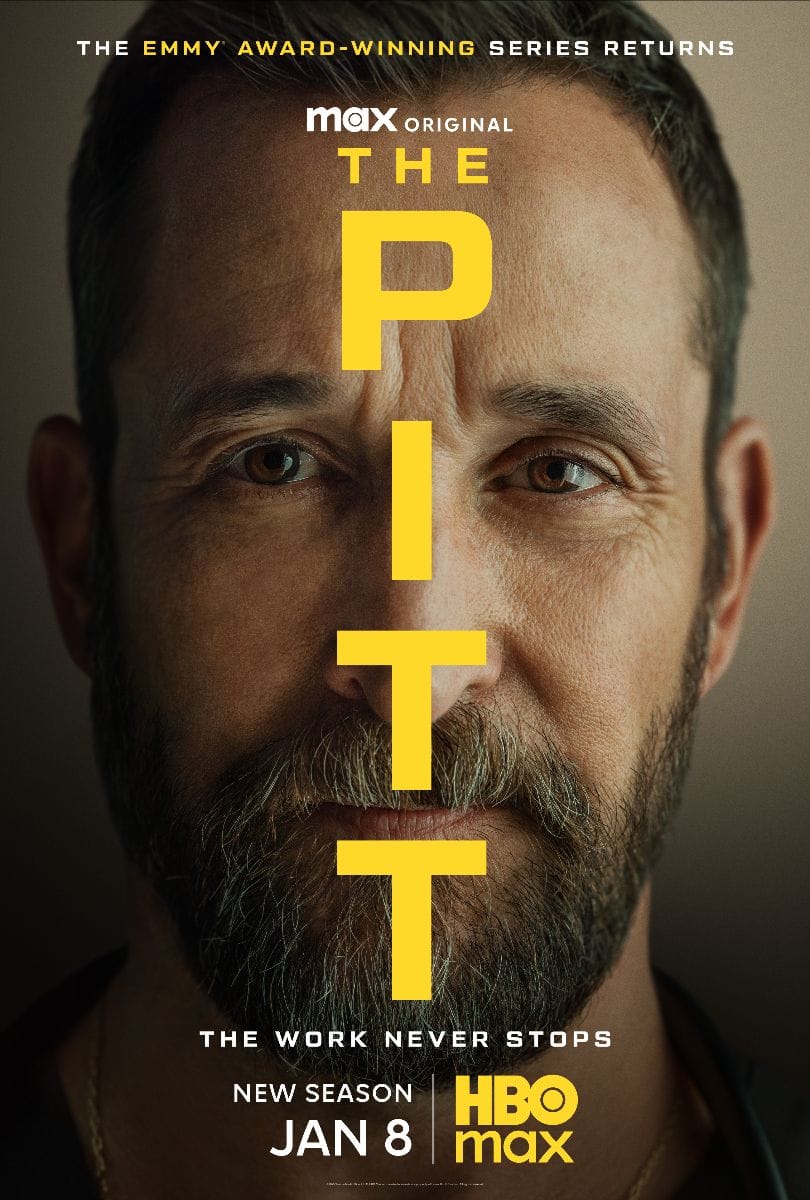
Watching HBO’s compelling hit TV show “The Pitt,” about an overburdened emergency room in a Pittsburgh hospital, got me thinking about the long arc of prime-time medical dramas that laid the foundation for what is arguably the best of an enduring genre.
Unlike the diverse ensemble casts in 21st-century medical dramas, the first popular medical dramas were all about the men – “Dr. Kildare” (NBC, 1961-66) and “Ben Casey” (ABC, 1961-66). These were the first two to crack the ratings top ten and spawned a craze among teenage girls wearing Casey and Kildare medical shirts with the rounded neck collars.
It would take 30 years for a woman to anchor a medical drama. “Dr. Quinn, Medicine Woman” (CBS, 1993-98) starred Jane Seymour and centered on a Boston physician transplanted to Colorado in the 1860s, struggling to be accepted as a doctor. In the 1860s, roughly 270 women doctors practiced medicine in the U.S. By the early 1960s, research studies show that just six to seven percent of doctors were women. Today, that figure is nearly 40% with women now accounting for 55% of medical school candidates.
“Marcus Welby, M.D.” (ABC, 1969-76) was the first medical drama to rank No. 1. During the 1970-71 TV season, 30-40 million viewers watched. Those were the days when just three networks dominated TV. Starring Robert Young (from “Father Knows Best” fame) as a kindly “old school” doctor, the show’s popularity spawned the “Marcus Welby syndrome" with doctors’ offices reporting spikes in visits concerning the featured ailment after each week’s show. (“Welby” justifiably caught flack in 1973 for portraying homosexuality as a disease.)
“The Pitt” owes much credit to “St. Elsewhere” (NBC, 1982-88), created by Joshua Brand and John Falsey (who would later create “Northern Exposure” for CBS). Ahead of its time with multiple plots and an ensemble cast, “St. Elsewhere” was not a ratings hit in its six seasons, never among the top 25. But it had a loyal following among 18-49 year olds, and advertisers loved that demographic.
“St. Elsewhere” paved the way for messy narrative structures depicted in “The Pitt” that better portray the complexities of life in hospital emergency rooms. It also helped establish the careers of Mark Harmon, Denzel Washington and Alfre Woodard.
Building on the narrative complexity of “St. Elsewhere” and laying a foundation for “The Pitt,” “ER” became the most popular medical drama in U.S. history. Created by Michael Crichton and produced early on by Steven Spielberg, “ER” ran for 15 seasons on NBC, dominating the ratings between 1995 and 1999, finishing No. 1 three times and No. 2 twice, just behind “Seinfeld.” One 1999 episode drew 48 million viewers. “ER” launched the careers of George Clooney and Noah Wyle, who today plays a flawed doctor on “The Pitt.”
Another influence for the darker humor in “The Pitt” was “House” (Fox, 2004-12). This medical drama starred British actor Hugh Laurie as Dr. Gregory House, certainly the crankiest and darkest character to ever star in a hit medical show. He was a post-9/11 anti-hero, the anti-Welby. A drug addict and brilliant diagnostician, House was always scrounging pain pills, always on the verge of losing his job (and sometimes did) and always saving lives.
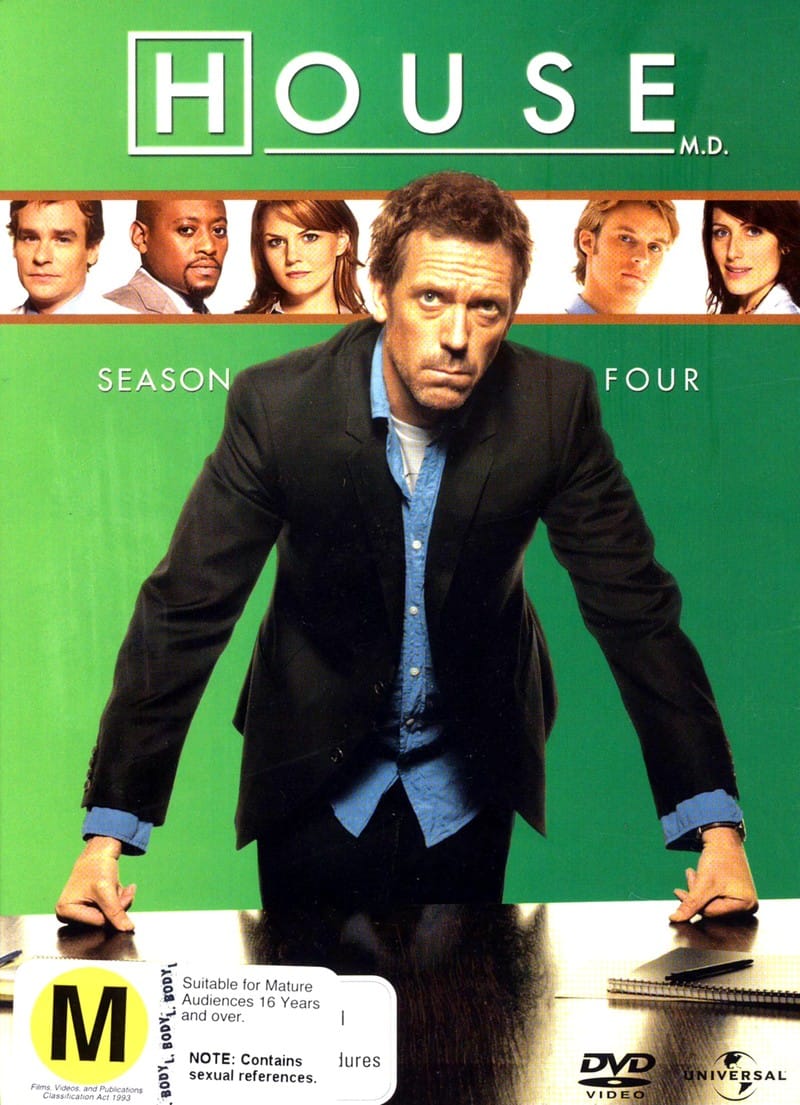
In the last season, he did jail time. He was always the smartest person in the room … and let everyone know it. “House” ranked in the top 10 three times in its 8-year run, and by 2008 was the most popular TV drama in the world, syndicated in 66 countries and reaching 80 million viewers.
Carrying the legacy of ensemble shows forward, the longest-running prime-time network series, “Grey’s Anatomy,” is now in its 22nd season. Created by Shonda Rhimes (who also created Netflix’s “Bridgerton”), the show’s record is overshadowed a bit by a daytime soap opera, “General Hospital,” running since 1963. “Grey’s Anatomy” in its early years, without serious competition from streaming services, reached 20-30 million viewers. While it ranked as a top 10 show between 2005-09, today its viewership in linear prime-time is only two million, although several million more watch it online later.
“The Pitt” won the Emmy for Outstanding Drama Series last year. It is a streaming phenomenon, with each episode reaching about 18 million viewers globally. These are not “Welby” or “ER” numbers, but in a fragmented marketplace, “The Pitt” audience is larger than any scripted network program.
Cultural critic Frank Bruni recently wrote a New York Times newsletter titled “The Television Show Every American Should Watch.” I mostly agree, but be warned – there’s blood and needles. Each episode of “The Pitt” covers one hour of a 15-hour shift. The current 15-episode season takes place on a fictional July 4.
The large ensemble cast features Dr. Michael “Robby” Robinavitch, played by Noah Wyle, the senior attending physician. Wyle is also executive producer and has written several episodes. Each hour portrays patients interacting with doctors, nurses, interns, staffers and guards. Early medical procedurals usually focused on one case, while later series, like “ER,” featured three or four subplots. But “The Pitt” may have as many as 10-12 cases going in a single episode, and ongoing in the subsequent episodes.
“The Pitt” is messy. There are flawed relationships, heroic deeds, saved lives and sad deaths, trauma and drama. Dr. Robby can be kind and compassionate like Dr. Welby, and he can be arrogant and insensitive like Dr. House. Like most characters in “The Pitt,” he is complicated.
Bruni viewed season one of “The Pitt” as a metaphor for our messy times – “a drained, imperfect enterprise that gets by on last-minute fixes rather than permanent solutions.” He argues: “There's a war in America between erudition and improvisation, science and superstition, head and heart…. While [“The Pitt”] routinely and rightly exalts medicine's wondrous advances, … it understands that the wiring of people and of societies demands room for both proper procedure and imagination.”
“The Pitt,” Bruni concludes, “has no illusions about how defiant people can be. How self-destructive. How irrational. That’s also in our wiring, and ‘The Pitt’ amounts to a plea that we humbly bear that in mind as we try – which we must – to put ourselves on a better track. It’s the most patriotic show on television.”
For me, that patriotism manifests in the way that a team works together to solve problems. There’s very little about politics in “The Pitt” and a lot about how a diverse group of professionals works through differences to try to make things better.
Richard Campbell is a professor emeritus and founding chair of the Department of Media, Journalism & Film at Miami University. He is also a co-founder of the Oxford Free Press.