
Media Matters: Trusting the news
"Alongside this decline has come a significant loss of trust in the news media – with one remarkable exception: local news."
The Miami Student (TMS), the university’s leading student publication, just celebrated its 200th anniversary. It has existed, in some form or other, since 1826. In a stunning display of organizational competence, the newspaper’s current leaders hosted an enriching three-day event for more than 150 current and former staffers.
It was an honor to be a part of it, but I worry.
In the last 25 years, the meteoric rise of the internet, social media and artificial intelligence has brought a precipitous decline: the loss of more than 3,500 newspapers and 75% of daily newspaper reporters. While once there were 40 reporters for every 100,000 Americans, today there are just eight, according to a Rebuild Local News/Muck Rack study last year.
Alongside this decline has come a significant loss of trust in the news media – with one remarkable exception: local news.
Consider what has happened: In the late 1970s, soon after the press (especially the once-great Washington Post) held the Nixon White House accountable for the Watergate scandal, Gallup found that 72% percent of Americans expressed a “great deal” or “fair amount” of trust in newspapers, TV and radio to report “accurately and fairly.”
But today that stat stands at 28%.
There are key reasons for the lack of trust in national media.
One, they are more remote and less familiar with local histories and contexts. We tend to trust news when we get it from someone who lives in town and knows our issues.
Two, many of us feel neglected or misrepresented by East and West Coast media – we’re just “flyover country” where media types parachute in when there’s trouble.
Three, it is not helpful that we have a president who, since 2015, has routinely labeled any journalism that holds leaders to account as “fake news.”
But on the flip side, Harvard’s NiemanLab reported in 2024 that 74% of Americans said they had “a lot of” or “some” trust in their local news media and “85% believed their local news outlets are at least somewhat important to their community.”
In addition, the American Journal of Political Science has reviewed surveys over the last 40 years, showing that “local news has been more trusted than the national media since the late 1990s. The local news trust advantage still exists today and is present even among those who are skeptical of the media as a whole. As views of the national media have become negative … an underappreciated pool of media trust still exists.”
Sadly, Northwestern University’s State of Local News Project reports that more than 50 million Americans have little or no access to local news. This means that many Americans who live in these “news deserts” (nearly half the counties in the U.S.) turn to national outlets for information. But much of that comes from cable TV pundits, talk radio hosts and social media influencers. Often unsourced and undocumented, these are highly charged partisan spaces. As I wrote last summer, places where local news exists suffer less from political polarization than places where it does not.
So what can be done?
First, the national news media should report on the loss of local news, not as a problem here and there, but as a national crisis. But don’t count on that anytime soon. The national media do a poor job covering journalism.
Second, universities need to step up. While Miami has supported the Oxford Free Press in a number of ways, it has neglected the program that actually produces journalists. When I led the journalism program at Miami, at its height, we had 15 full-time and part-time faculty, including working professionals teaching as adjuncts, helping us keep up with the rapid changes in the delivery of news. Today, only six of those faculty members are left (including one who is retiring), with no professional adjuncts.
Near the beginning of the newspaper crisis in 2005, the late Vartan Gregorian, the former president of Brown University (who later led the Carnegie Corporation of New York), called on universities to support journalism education: “Journalists who are analytic thinkers, clear writers and communicators and who have in-depth understanding of the complexity of issues facing the modern world are the building blocks of an informed citizenry.”
The same is true today. But Gregorian’s challenge to university leaders has only become more urgent.
As we celebrate The Miami Student’s 20-decade arc and 20 years of Miami’s journalism program, we can count hundreds of Miami alums who have done, and still do, the hard work of journalism. The program began graduating students in 2006. Since then, Miami grads have worked for such major news outlets as The New York Times, the Washington Post, the Boston Globe, USA Today, National Public Radio, CNN, NBC News, Apple Podcasts, MS Now, Fox News and the Chronicle of Higher Education.
But Miami can be equally proud of graduates at regional outlets that keep those media deserts at bay. These include the Cincinnati Enquirer, Columbus Dispatch, Cleveland Plain Dealer, Dayton Dayton News, Journal-News [Hamilton], Toledo Blade, Louisville Courier-Journal, Charlotte Observer; TV stations across Ohio (and many stations elsewhere); and numerous public radio stations, including WVXU in Cincinnati and WYSO in Yellow Springs.
Even more have worked as reporters in smaller towns and cities, including Bangor, Maine, Baton Rouge, La., Cape Girardeau, Mo., Columbus, Ga., Daytona Beach, Fla., Easton, Pa., Evansville, Ind., Greenville, S.C., Manistee, Mich., Marion, Ohio, Quad Cities, Iowa, Roanoke, Va., South Bend, Ind., and Zanesville, Ohio.
Finally, former (and current) Miami and TMS students are now reporting for nonprofit news organizations, including at the Baltimore Banner, Maine Monitor, Spotlight Delaware and the Oxford Free Press. This is a bright spot and the future of local news.
Bill Moyers once said, “Journalism is the oxygen of democracy.” While I do worry about the national media and partisan politics sucking up so much of the air, it’s encouraging to know that there are a lot of smart young people out there breathing new life into journalism. I trust them.
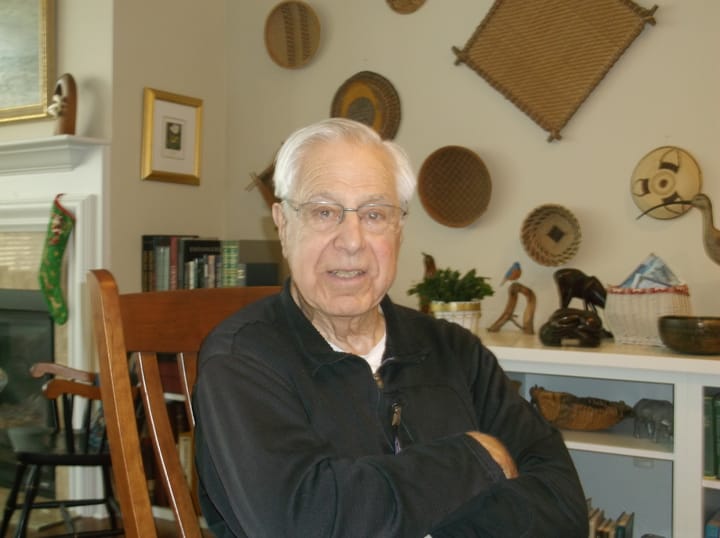
Richard Cambell is a professor emeritus and founding chair of the Department of Media, Journalism & Film at Miami University. He is also a co-founder of the Oxford Free Press.
![[clockwise from top] Tatsoi, Tokyo Bekana and Komatsuma.](/content/images/size/w720/2026/02/01-5.jpg)