
Media Matters: TV westerns refuse to die
“Well, the first man comes along that can read Latin is welcome to rob us, as far as I’m concerned. I’d like a chance to shoot at an educated man once in my life.” - Augustus McCrae, “Lonesome Dove”
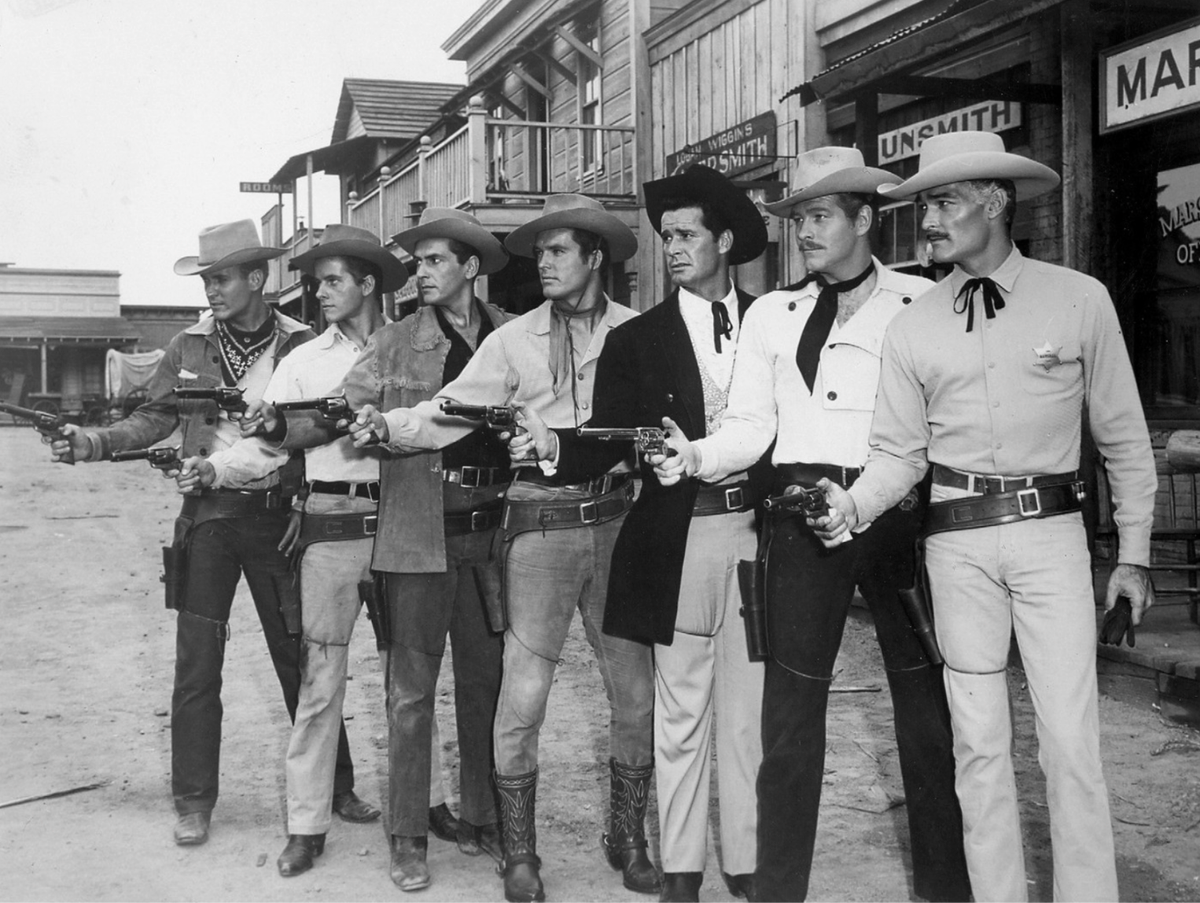
Between the late 1950s and early 1970s, the cowboys rode out and the cops drove in. During the 1958-59 TV season, seven of the highest rated U.S. programs were westerns. At No. 1, “Gunsmoke” had a rating of 39, meaning that nearly 40 percent of all U.S. TV households tuned in on Saturday night. The top-rated programs from that season:
1. Gunsmoke
2. Wagon Train
3. Have Gun Will Travel
4. The Rifleman
5. The Danny Thomas Show
6. Maverick
7. Tales of Wells Fargo
8. The Real McCoys
9. I've Got a Secret
10. The Life and Legend of Wyatt Earp
There were 26 westerns on television in the late 1950s. By the 1971 season, only “Gunsmoke” (#4) and “Bonanza” (#20) were still standing. Cop shows now dotted the top 25 landscape with titles like “Mannix,” “Adam 12,” “Hawaii Five-O,” “The FBI” and “Mod Squad.”
The western’s rise started in the mid-1950s, when the networks moved their entertainment divisions from New York to Los Angeles to take advantage of western movie sets, rugged desert scenery and decent year-round weather. Westerns also benefited from the rigged quiz show scandals of the late 1950s and their banishment from network TV. (“The $64,000 Question” had been the No. 1 ranked show during the 1955-56 TV season.)
Suburbanization also played a subtle role in the rise of westerns. The years 1945-1960 saw enormous shifts in folks moving to the suburbs – to uncharted territory. TV westerns often romanticized this journey, and by the late 1950s, 90% of U.S. households had TV sets. I believe for many new suburbanites, westerns resonated with that movement from city to country.
In 1955, my parents moved from the center of Dayton to Mad River Township – a mysterious name evoking wild territory. (Later, it became Riverside, joining the ranks of 45 other U.S. cities with that name.) We got our first TV around 1956. Early westerns included “The Roy Rogers Show” and “The Gene Autry Show,” featuring singing cowboys and comic sidekicks. I preferred “The Lone Ranger” (Clayton Morre), who didn’t sing and wore a cool mask. His stoic sidekick was Tonto (Jay Silverheels). These were 30-minute programs, adapted from radio, filmed by Hollywood studios and licensed to the networks.
With age, my tastes evolved, and I graduated to hourlong programs like “Maverick,” starring two brothers, Bret and Bart Maverick, who alternated episodes on Sunday evening. They were not singers. They were amiable gamblers who could handle a gun. For one Christmas in the late 1950s, my two favorite presents were a St. Joseph’s Daily Missal and a Mattel Fanner 50 cap gun and holster set. I was armed and ready, a cowboy crusader. Next step: Alter boy for St. Helen’s Parish.
Although wounded, the TV western in the late 1980s had a miraculous comeback. A four-part miniseries, “Lonesome Dove” (based on Larry McMurtry’s 1985 novel), was a ratings hit, watched by some 40 million viewers over four nights. Produced by Motown’s Suzanne Depasse, who bought the rights for just $50,000, CBS ambushed its competitors. “Lonesome Dove” earned 18 Emmy nominations, more of any program during the 1988-89 TV season.
The popularity of “Lonesome Dove” buffaloed industry experts who thought they had signed the Western’s death notice. The sprawling cactus-dotted landscapes, so vital to John Ford’s classic Western films, seemed diminished on TV's small screen. Talky, domestic shows like “Gunsmoke” and “Bonanza” had been the best the networks could offer.
“Lonesome Dove” starred two retired Texas Rangers turned cattlemen, Woodrow Call and Augustus McCrae, played by Tommy Lee Jones and Robert Duvall. For decades they had fought Comanches, Mexicans and outlaws, and now, sometime in the 1870s, they were driving a herd of cattle north from the desolate Texas town of Lonesome Dove, near the Mexican border, to “new territory” – Montana.
For a 1990 Television Quarterly article, I interviewed Tommy Lee Jones by phone. He objected to attaching the “Western” label to “Lonesome Dove.” A thoughtful Harvard grad from Texas who majored in English literature, Jones said he did not believe in “THE Western,” which for him conjured up “Roy and Gene.” Jones considered the miniseries “a period piece that treats the subject of imperialism in North America.” He called it “revisionist history … made up of bits and pieces from the common consciousness of America … assembled into something new and different that speaks directly to our hearts. It does not forgive the past or condemn it – or try to rip it off.”
One of those “new and different” bits in “Lonesome Dove” was a biting critique of masculinity. Jones’ portrayal of Call embodied rugged individualism; he feared his own emotions … and women. Duvall’s McCrae, on the other hand, elevated the traditional Western role of sidekick (still bringing the humor, since Call was humorless), providing an ongoing critique of his partner’s stoic masculinity. McCrae too was torn between following Call to Montana or returning to Clara, his lost love (played by Anjelica Houston).
In the late 1980s, “Lonesome Dove” drew women viewers to a genre traditionally written for men by men. Last year, in fact, a New York Post article (“Young women are now obsessed with this 40-year-old cowboy novel”), reported a resurgence of interest in McMurtry’s book, in part because author Stephen King pronounced “Lonesome Dove” his favorite novel on a Steven Colbert “What Ya’ Readin’” segment from CBS’s “Late Night.” In “more than 7,000 #lonesomedove posts,” female TikTokers wrote “finishing the book is like having to say goodbye to your friends”; “the book had me spellbound, obsessed with the characters”; “just need to read my thousand page book filled with old cowboy dudes not talking about their feelings”; and “I was so thankful for the reminder that reading could still be like this.”
“Lonesome Dove” breathed life into a TV genre on life support, influencing new revisions, including HBO’s dark “Deadwood” and Netflix’s popular “Yellowstone.” As the film critic Philip French observed in “Westerns,” published in 1973, “The Western is a great grab-bag, a hungry cuckoo of a genre, open equally to visionaries and opportunists. Yet despite this … one of the things the Western is always about is America rewriting and reinterpreting her own past, however honestly and dishonestly that may be.”
A new TV adaption of “Lonesome Dove” is in the works.
Richard Campbell is a professor emeritus and founding chair of the Department of Media, Journalism & Film at Miami University. He is also a co-founder of the Oxford Free Press.