
On My Plate: Spinach
"Spinach was first cultivated in ancient Persia, and the word spinach may have derived from the old Persian word aspanakh."
Oxford’s local produce is transitioning from winter to spring. The leafy greens of winter, such as spinach, will be available at Oxford’s Farmers Market for a few more weeks, while we await the imminent local harbinger of spring – asparagus.
I was torn this week between writing a final farewell to our winter produce or an eager anticipation of spring. Oxford Free Press Editor-in-Chief Aidan Cornue made the decision for me when we were together at Oxford’s Farmers Market last Saturday. Spinach it is.
Spinach was first cultivated in ancient Persia, and the word spinach may have derived from the old Persian word aspanakh. Spinach cultivation moved east to India and then to East Asia, where more than 90% of the world’s production is now concentrated. Spinach gained popularity in the United States during the 1920s, after Popeye the Sailor Man attributed his superhuman strength from eating it.
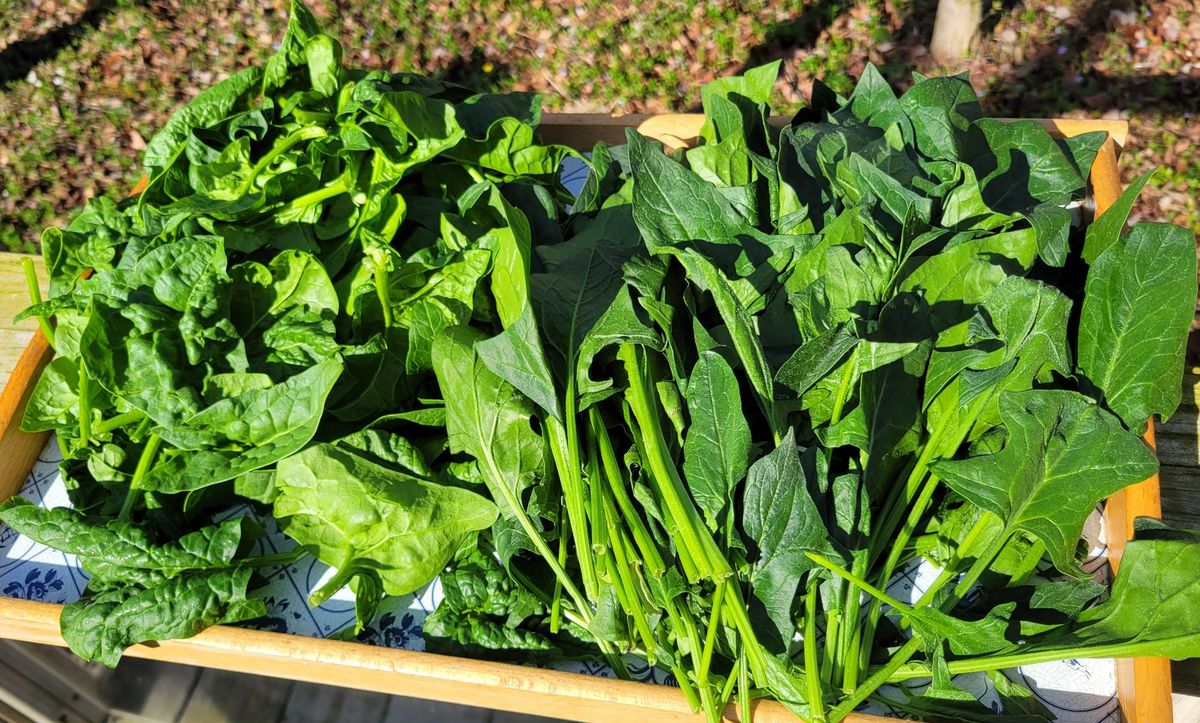
Jennifer Bayne’s 7 Wonders Farm offers two varieties of spinach with very different appearances. Savoy spinach has deeply crinkled leaves attached to relatively thick stalks, whereas her flat-leaf variety has smooth wispy leaves attached to relatively long thin stalks. Though very different in appearance, the two varieties can be handled the same way.
Cooking spinach takes a bit more care than with other vegetables. Because spinach is 90% water, it can quickly cook down from a large mass to a tiny portion. The most important rules for cooking spinach are to minimize both the amount of water and the cooking time.
Bayne reports she consumes her flat-leaf lettuce uncooked, like lettuce. However, spinach is more nutritious if briefly cooked. The reason is that spinach is high in oxalic acid, which can bind with calcium and iron, reducing their absorption, and as a result, increasing the risk of damaging kidney stones. Briefly cooking spinach breaks down most of the oxalic acid, thereby enhancing the absorption of the calcium and iron and reducing the risk to kidney stones.
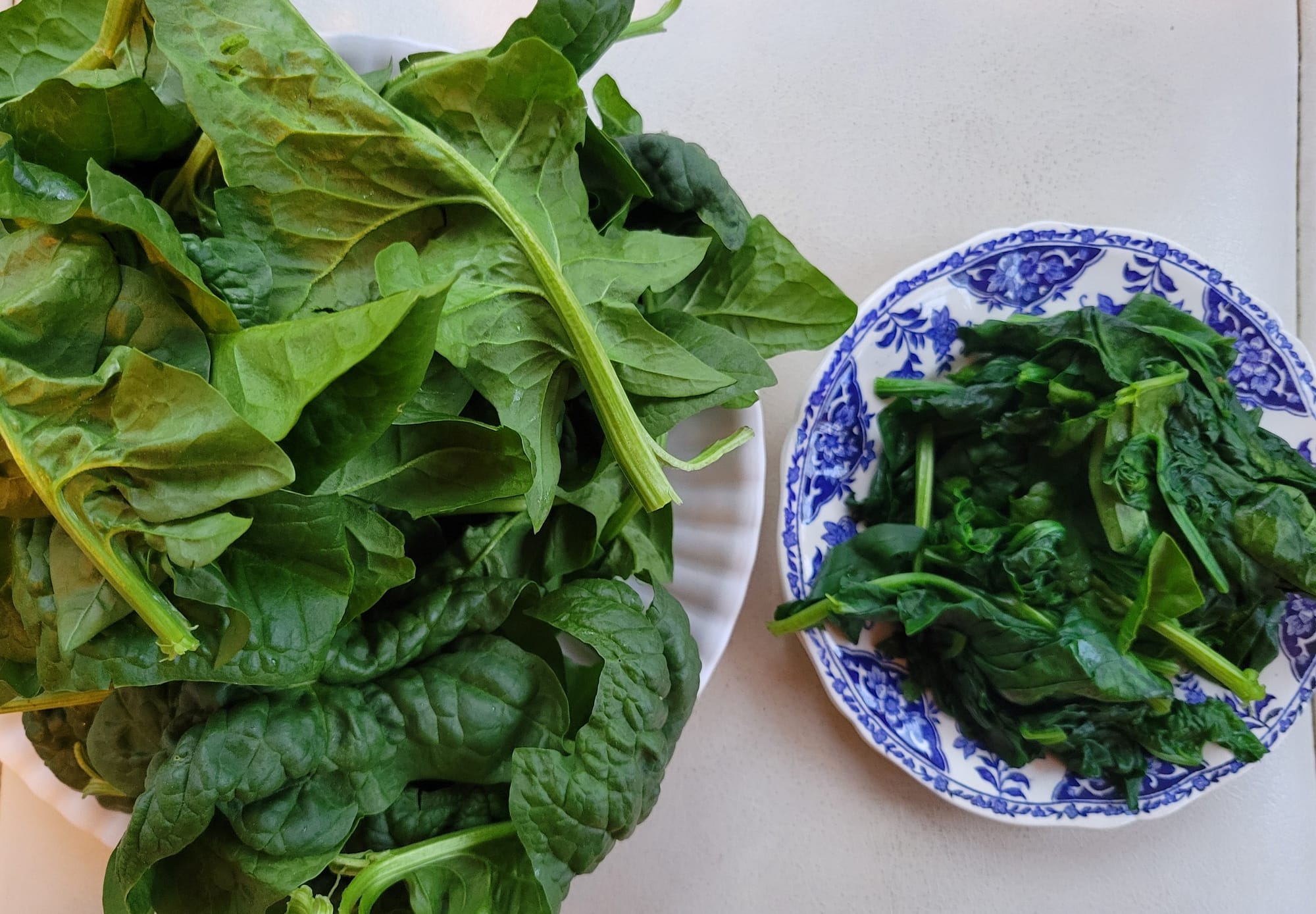
Spinach needs to be cooked quickly in one of three ways: steaming, microwaving or sautéing in olive oil. In all cases, cook for no more than two or three minutes, and immediately drain the water if used. Jo Robinson in her book “Eating on the Wild Side” admonishes readers: Do not boil.
Robinson continues, “After ten minutes of boiling (spinach), three-quarters of its phytonutrient content will have leached into the cooking water. . . . You would be better off drinking the water and discarding the greens.”
Conventional supermarket spinach has two serious flaws. First, the Environmental Working Group ranks spinach as having the highest concentration of pesticides among the 47 types of produce it reviews, based on U.S. Department of Agriculture tests.
The second problem with supermarket spinach is its age. Spinach loses around one-half of its nutritional value within one week, but supermarket spinach grown in California, the source for 90% of U.S. spinach, is much older than that. Organic spinach from California does not have high pesticide concentrations, but it too is older than one week.
I unreflectively drafted a sentence for this column reporting that spinach is one of Americans’ least favorite vegetables, as generations of parents forced spinach on their children. Much to my surprise, YouGov reported recently that spinach is among the most favorite vegetables, whereas asparagus ranks among the least favorite.
Scott Downing assures us that he will have asparagus at Oxford’s Farmers Market soon. If it is truly one of Americans’ least favorite vegetables, that will leave more asparagus for me.
James Rubenstein is president of the Board of Directors for the Oxford Free Press and professor emeritus of geography at Miami University.