
Miami alum studies coral spawning in Colombia to support reef restoration
Miami University alum Stephanie Costagliola spent 10 days diving off the Santa Marta coast this summer, collecting coral spawn in an effort to better understand and restore some of the ocean’s most threatened reefs.
Miami University alum Stephanie Costagliola spent 10 days diving off the coast of Santa Marta, Colombia this summer, collecting coral spawn in an effort to better understand and restore some of the ocean’s most threatened reefs.
Costagliola grew up in Florida, and from a young age, she knew she wanted to work with animals.
After various internships and brief stints in different fields of work with animals, Costagliola fell in love with aquariums, and for the past decade, has surrounded herself in sea life in these aquatic zoos.
Costagliola works at Mystic Aquarium in Stonington, Connecticut, as an assistant curator of fish and invertebrates.
The purpose of going down to Colombia and doing this work was to collect genetic material to bring back to the aquarium, she said.
After spending more than a week in the reefs of Santa Marta, Costagliola said, “you never know what you’re going to see.”
“There’s such a big diversity in corals,” Costagliola said. “They are such a hub for species diversity and … nurseries for a lot of smaller fish.”
The research in Colombia was funded through a $2 million, two-year appropriations grant from the United States Fish and Wildlife Service.
“Our goal is (answering) how we can make this (research) successful and proving that we’re helping outside of the aquarium,” she said.
A key factor for these projects is figuring out when to travel, according to Costagliola.
Making sure to get to a given location is important, as coral spawn times are incredibly specific.
“Everything about coral spawning is very lunar,” Costagliola said. “ It’s very much tied to where you are in the moon phases.”
“Studies have shown that the lunar lighting influences the expression of genes that trigger release of gametes,” Costagliola said. “Corals have proteins that are able to tell the change in moonlight intensity through the months and spawning generally occurs a few days to a week following the full moon of certain months.”
Costagliola added that temperature is the other most important factor, as it influences what time of year coral spawns.
During her trip, Costagliola went on roughly six night dives to study this spawning, with each dive lasting around an hour and a half.
On top of diving equipment, Costagliola carried a compass and a flashlight for each dive, as well as special traps.
“We carried what we call tents,” she said. “It’s a dome-shaped netting with weights on the bottom, (and) at the top of it is a funnel.”
Each net was designated to one type of coral to collect spawns in the funnels.
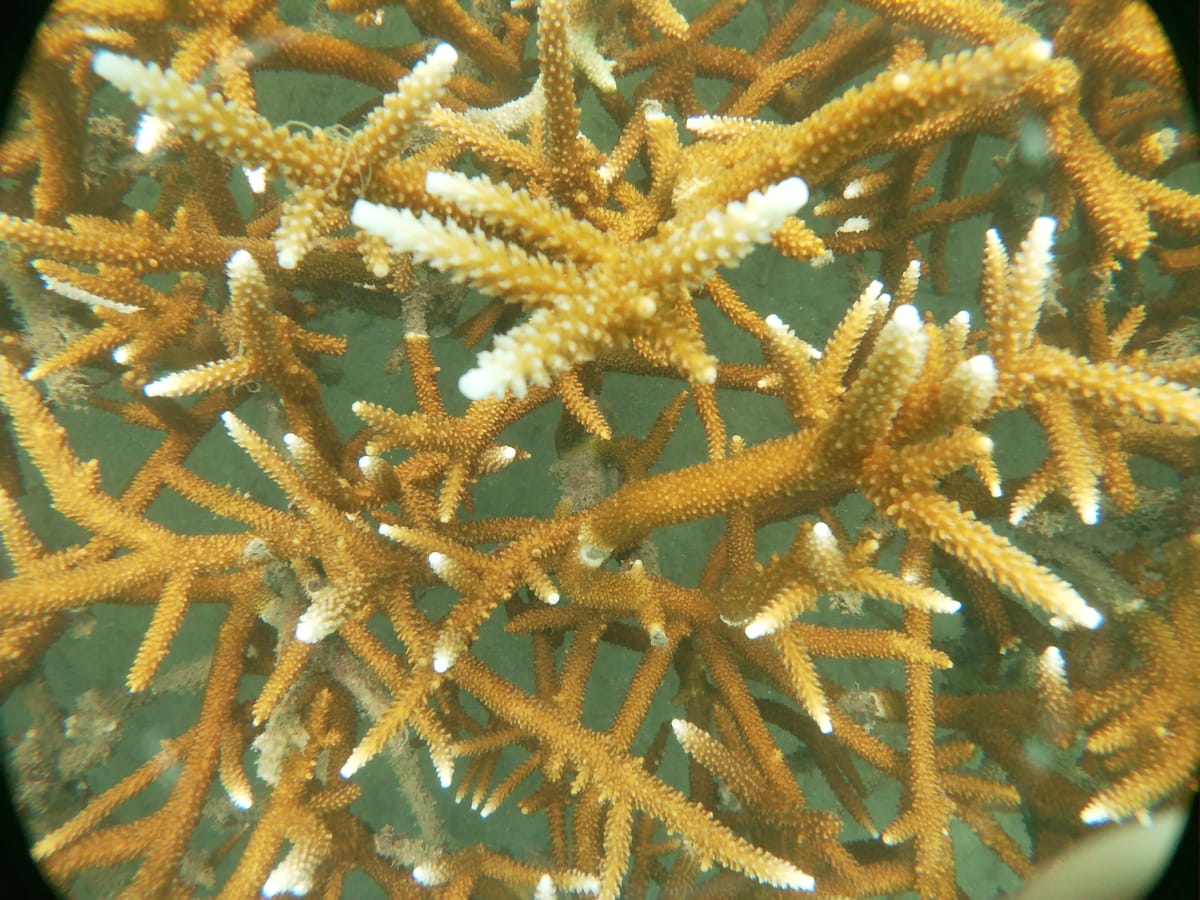
Staghorn corals were largely the main focus for Costagliola during her August trip. Staghorn, or elkhorn, coral are species from the genus Acropora, which contains around 149 species in total. They tend to spawn between July and August around four to six days after a full moon, and around two and half hours after sunset.
The bulk of the research conducted was in the immediate area around Centro de Vida Marina (Center for Marine Life), an aquarium in the area in Santa Marta. The center has been a frequent contributor to coral studies and research, according to Costagliola.
“They have a couple nurseries right off of the aquarium site,” she said. “They’re outplanting these corals.”
The outplanting process in this project consisted of fertilizing and growing coral spawns in a controlled environment.
“(This) gives them potentially a higher success rate than being out in that area,” Costagliola said. “It’s trying to speed up the process of growing corals because there’s so much coral bleaching happening around the oceans.”
Coral bleaching is a stress response where corals push away algae, causing them to turn white. By doing this, corals lose a primary food source in the algae. This response is largely due to rising ocean temperatures from climate change, pollution or extreme low tides.
Where this research was conducted is important as well, Costagliola said.
“There is a lot of boat traffic in the area, so fuel runoff, pollution and anchoring have a big impact on the corals,” Costagliola said. “There is substantial runoff, rising water temperature, and frequent upwelling (where colder water from the deep cycles up to the surface), which all impact coral health.”
Costagliola shared some ways to protect reefs.
“Choosing sustainably sourced seafood, volunteering for beach cleanups, practicing safe diving and boating, choosing sunscreen that is less harmful to marine life when at the beach, and of course other energy and water conservation efforts that are feasible, as climate change is a leading threat to coral health,” she said.
For the future, Costagliola said she is working on creating a new coral lab called the Kishfy Coral Lab, at Mystic Aquarium. The new interactive exhibit will work hand-in-hand with her work in Columbia, and combine education, science and conservation to showcase coral reef species and highlight the aquarium’s coral research initiatives.