
Miami considers renaming Office of Liberal Education, changing curriculum
Interim Provost Chris Makaroff suggested several changes to the university’s Miami Plan, among other announcements made during a committee meeting of the board of trustees on Dec. 11.
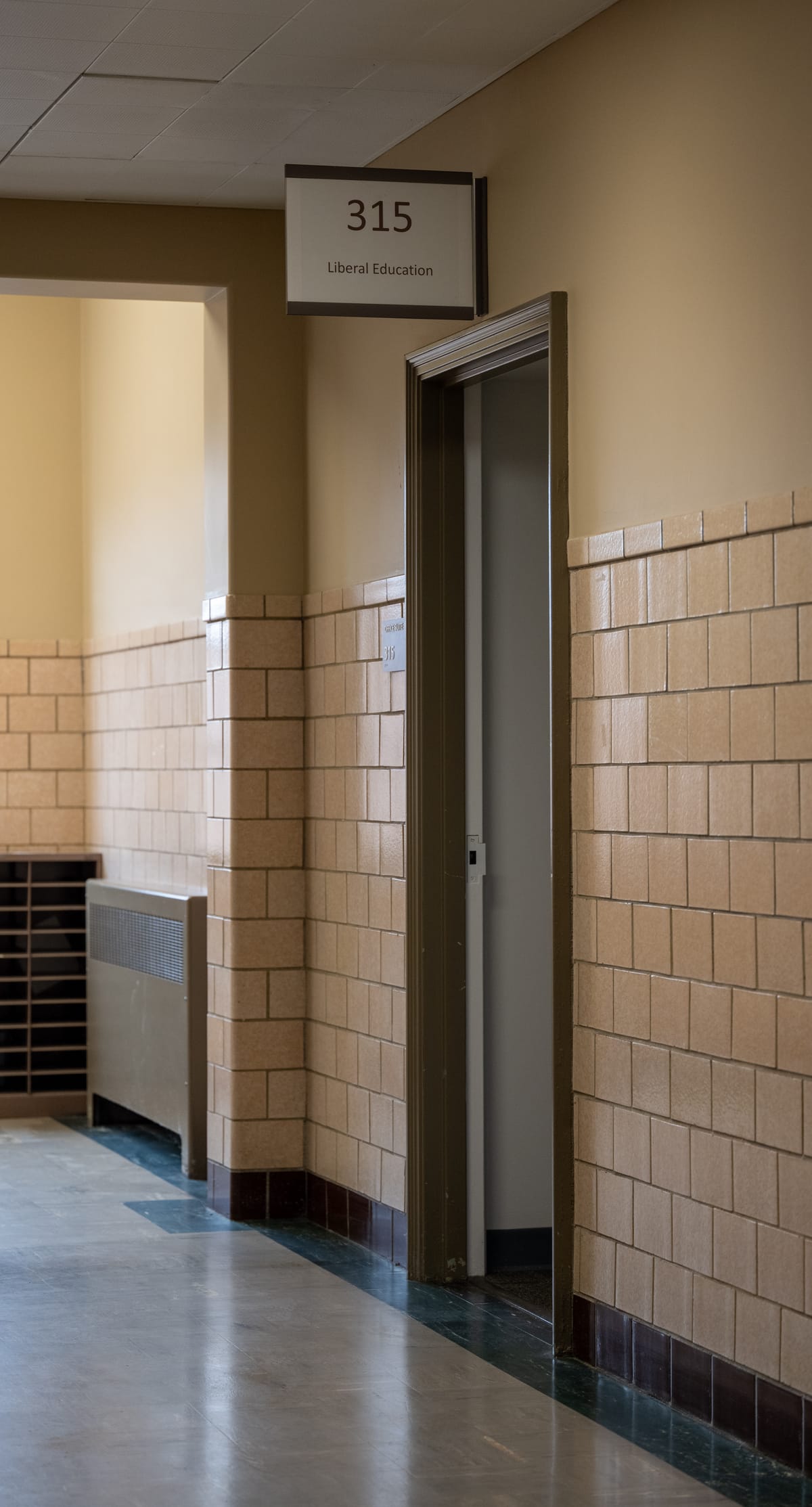
Miami University is considering renaming the Office of Liberal Education, according to Interim Provost Chris Makaroff.
Makaroff suggested alternative names during an Academic and Student Affairs Committee meeting Dec. 11, including the “Office of Integrated Learning” or the “Office of Learning and Connection.”
“In the current environment, liberal education has a certain connotation that is, I don't think, appropriate for what it actually does, but still it, it has a negative connotation to many people,” he said.
A statement on the office’s website reads: “Miami University was founded in 1809 on the belief that a liberal education provides the best possible experience for life in a changing world. ‘Liberal,’ from the Latin liberalis, means ‘free’— the kind of education that free and democratic citizens should attain.”
Along with the name change, Makaroff proposed altering the role of the office to work more closely with the Student Success Center, Career Services and Professional Development, and the Division of Student Life, adding its name may need to change to encompass its “broader scope and purpose.” Right now, the office manages the Miami Plan, or the core curriculum needed to graduate.
Makaroff also said Miami is considering cutting global citizenship requirements from its Miami Plan.
This proposal was among several Makaroff presented for revising the Miami Plan, including eliminating the requirements for taking courses regarding ethical citizenship and leadership, intercultural consciousness, and global inquiry.
In 2023, these requirements included an education in diversity, equity and inclusion (DEI), according to Miami’s website.
Ohio Senate Bill 1 (SB1), also known as the Advance Ohio Higher Education Act, was passed by the Ohio General Assembly this year, prohibiting training or orientation for DEI for state-funded institutions of higher education, among other restrictions.
The Oxford Free Press asked Miami’s communications office if SB1 is one of the reasons for the newest proposed changes to the Miami Plan.
Makaroff responded in an email to the Oxford Free Press saying the changes are a response by the university for the “desire(s) of students and parents to prepare our graduates for careers in our ever-changing environment.”
“Our current effort with the Miami Plan is focused on identifying ways we may modernize the core curriculum based on student demand, and to make navigation and completion easier for students while retaining its value,” he said in the email.
According to Makaroff, the goal of the university is to both “simplify” its Miami Plan and make it more “flexible.” He said part of changing the plan, cutting requirements down from 42 to 51 credits to 33 to 39 credits, will be ensuring courses are more “interesting” so students are “attracted” to signing up.
Makaroff said there are about 427 courses which apply to the global citizenship requirements, and although the university wouldn’t explicitly cut any under the proposal, he expects some to drop off as fewer students are required to take them.
“There will definitely be less of a demand by eliminating that (requirement), and I imagine that a number of those courses, because there won't be student demand for them, will actually come off the book. So we will end up streamlining our curriculum,” he said.
Additionally, Makaroff suggested changing the name of the Miami Plan, presenting ideas such as the “Miami Compass” or “Miami Inquiry.” He also proposed cutting “signature inquiries” requirements.
No action was taken on these proposals by the Miami Board of Trustees (BOT), as Makaroff said the plans for the curriculum are not yet finalized. Makaroff said the goal is to finalize changes to the Miami Plan in time to roll them out for the fall 2027 semester.
Peyton Morrow, a student representative of the committee, said he appreciated the simplification of the plan and the idea of having more flexibility in course selection.
“Right now I feel like, for me, it's just checking a box and I'm looking for the classes that are going to knock out the most number of requirements for me right now, whereas I would like to just be looking for classes that I'm really interested in,” he said.
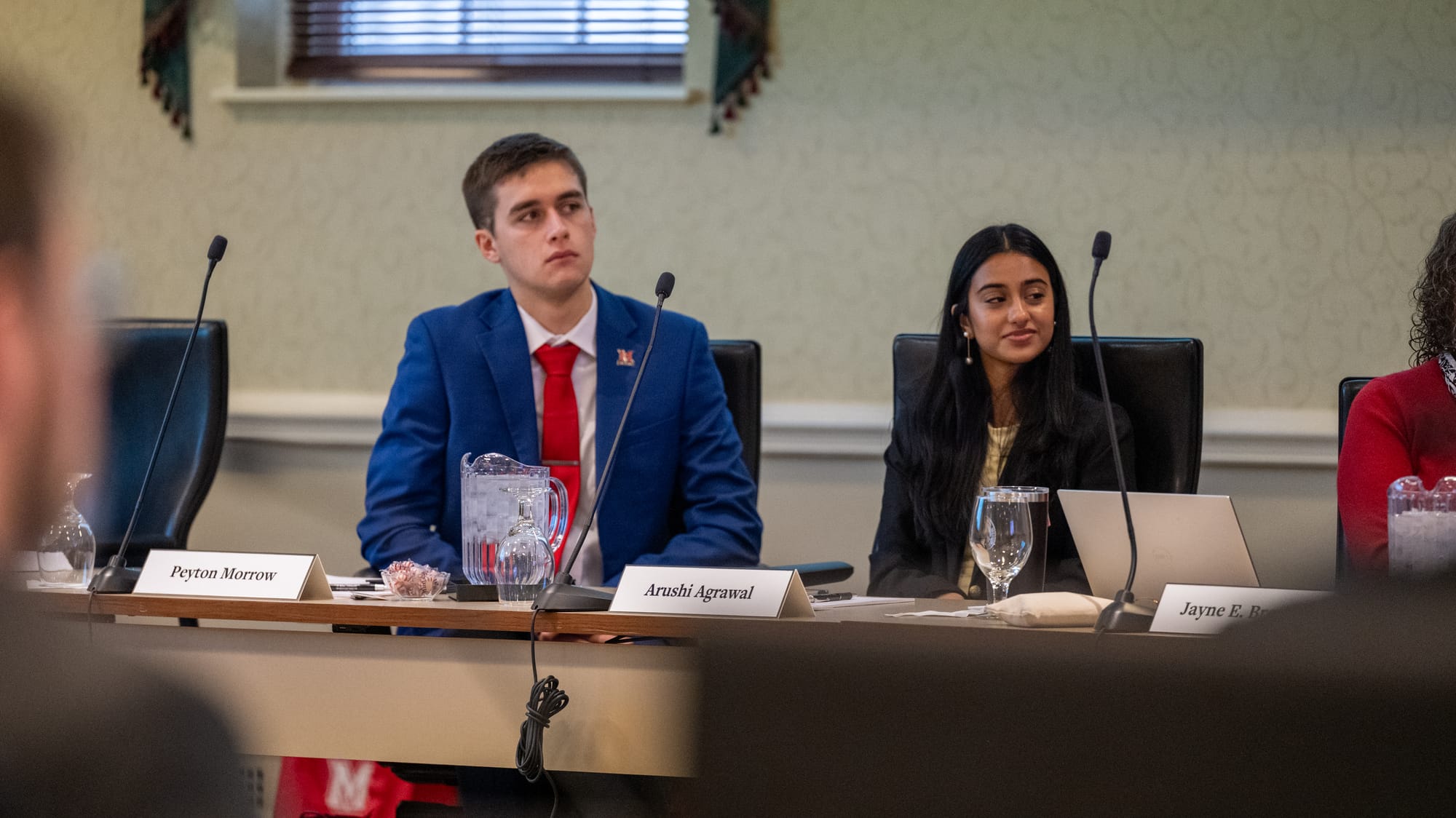
Arushi Agrawal, another student representative, said, although students may not realize the importance of courses included in the Miami Plan as they take them, “as they graduate, they realize the importance of what that class taught them, that maybe their major might not have taught them.”
Cathy Wagner, a professor of English and member of the Faculty Alliance of Miami, spoke during the full BOT meeting Dec. 12 about her overall concerns about changes at Miami, including previously proposed changes to course sizes, the sunsetting of some humanities courses and any effects of SB1.
“Even while political pressure pulls Miami from its mission, our union can build power here and nationwide toward a vision for education as a public good, for freedom to teach, learn and research without political constraint,” Wagner said.
Regional campus transition
In other business, Melissa Thomasson, associate vice president for strategic initiatives and an economics professor, told the committee the university can expect to save $188,000 annually by repositioning staff as it transitions its regional campuses to provide a polytechnic education.
Moira Casey, interim dean of the college of liberal arts and applied sciences at the Miami regionals, told the Oxford Free Press last month a full “rebrand” of the regional campuses in Hamilton and Middletown and the Voice of America Learning Center in West Chester will be complete with a new curriculum beginning in the fall 2027 semester.
Casey said the transition involves working closely with local industries to understand talent pipelines, embed applied learning throughout the curriculum and meet workforce needs.
Thomasson told the committee the current plan is to cut down the curriculum for the regional campuses from having 12 departments to 6, in which many would merge into a larger unit. Still, she said permanent faculty numbers are expected to remain the same, even as 10 degree programs are sunsetted.
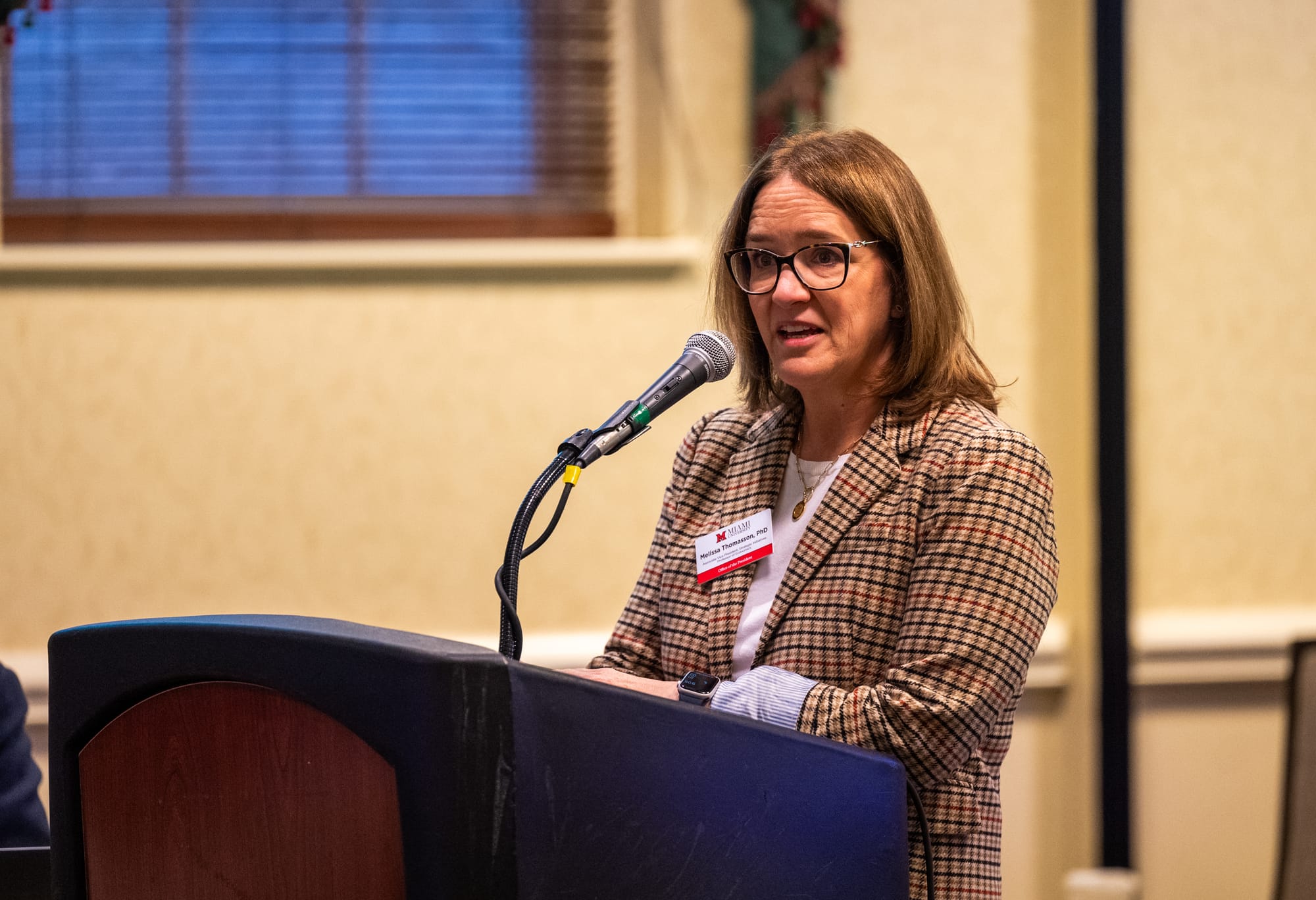
Thomasson also said in her presentation to the committee, the current tuition model for the regional campuses poses a “risk” to the polytechnic, as it is traditionally lower than the Oxford campus’ tuition. She said raising tuition or fees could support higher-cost faculty and new labs with the transition.
“Faculty who are very workforce-aligned and in these in-demand areas are very expensive, and it’s going to be harder and harder to hire them,” Thomasson said, adding although she’s concerned this may reduce access, the regional campuses could increase scholarship opportunities.
The board passed a resolution to amend its 2027-2032 Capital Improvements Plan and Funding Request to include $40 million to “support a transition to a Polytechnic Institute” on the Hamilton campus for Fiscal Year 2027 through FY28 and another $40 million for the same purpose for FY31 through FY32. Six-year requests are required by the Ohio Office of Budget and Management and the Ohio Department of Higher Education.
Applications down
The committee also received an update on admission data. Applications for the Oxford campus for 2026 are down overall by 1.3%, or around 471 less students applying than in fall 2025.
The largest decrease is in international student applications, of which Miami saw a 30.4% drop, or around 756 less than fall 2025. Still, Miami saw an increase in applications from students from Ohio and Indiana, although there were less from non-resident students.
When asked what may be causing the decline in international student applications, Rachel Beech, vice president for enrollment management and student success, told the Oxford Free Press in an email students may not be applying because they’re aware of “challenges” to move through the visa process or changes to the strength of the United States dollar.
Applications for the regional campuses in Hamilton and Middletown are expected to decrease by 28.5% overall, or 143 less than fall 2025.