
Middleton’s Musings: An interpretation of Miami’s potential move to the American Conference, a when-not-if scenario
Miami athletics seems to be on the move sooner rather than later, and despite the chaos (and the asking price), the move is a net positive

MACtion – a slang term for college football games played by the Mid-American Conference (MAC), particularly the high-scoring, chaotic matchups held on Tuesday and Wednesday nights in November.
The whole concept has been a staple since the term was coined in 2010, and it has evolved into an all-encompassing turn of phrase.
For anyone who has lived or is living in Oxford, has been a student or professor, the word “MACtion” starts with football season, but it’s used across all RedHawks athletics to signify an in-conference rivalry game.
Miami University has been with the MAC since 1948, two years after the conference’s inception. However, according to recent reports, MACtion and the involvement with the conference as a whole could soon be a thing of the past in southwestern Ohio.
In recent years, Miami’s Name, Image and Likeness (NIL) fund has skyrocketed. In 2024-25, the reported budget for the RedHawks football team was around $80,000.
Now, it sits around $6 million, according to The Sideline, while some other reports suggest it could be even higher – within the $8-10 million range.
With the increase in funding not just for football, but across all sports, along with a new basketball arena that costs $281 million on its way, it appears Miami could be looking to move away from the MAC for something a bit more lucrative.
Reported on Sept. 25 by Brett McMurphy of On3, Miami, along with James Madison University and the University of Connecticut, are looking to join the American Athletic Conference (AAC).
While the potential departure (at the time) of all three was a major piece of news, the most significant part was that Miami offered between $30-40 million to make the move and leave the MAC.
As of Oct. 12, James Madison has been accepted into the American Conference and will become a full-time member no later than July 1, 2028 (despite McMurphy’s sources also saying the Conference isn’t looking at expanding at this time).
One down, and it certainly feels like there’s more on the way.
For the amount of smoke in the air, it’s hard to say there isn’t a fire somewhere around the RedHawks and a potential move, and I think that’s something to be incredibly excited about.
The NIL fund has seen a significant increase, and Miami Athletic Director David Sayler has had meetings with prominent alumni, including Los Angeles Rams Head Coach Sean McVey and his Defensive Coordinator Chris Shula, alongside Starbucks CEO Brian Niccol, over the past summer, trying to figure out how to vastly improve investment into RedHawks athletic programs and the student-athletes who occupy them.
Sayler also hasn’t been shy about wanting to increase the pedigree of Miami athletics, and he didn’t exactly deny that there haven’t been talks about leaving the MAC when releasing a statement to Chase Souder of the Cincinnati Enquirer.
It honestly felt like he was pitching Miami even more in the statement, while still trying to remain in the present.
In other reporting, like an article in The Athletic, Sayler has laid the groundwork that his ambitions lie far, far beyond the MAC.
“If you think of the Big Ten, we’re not a huge land-grant institution, like Minnesota or Wisconsin, but we are very much like Virginia Tech, Syracuse, Georgia Tech, Wake Forest or Duke, in terms of the size and the kinds of things that we offer academically,” Sayler said in August. “Could I see a reshaped ACC (Atlantic Coast Conference) one day where we somehow play a role in that? Yeah, maybe.”
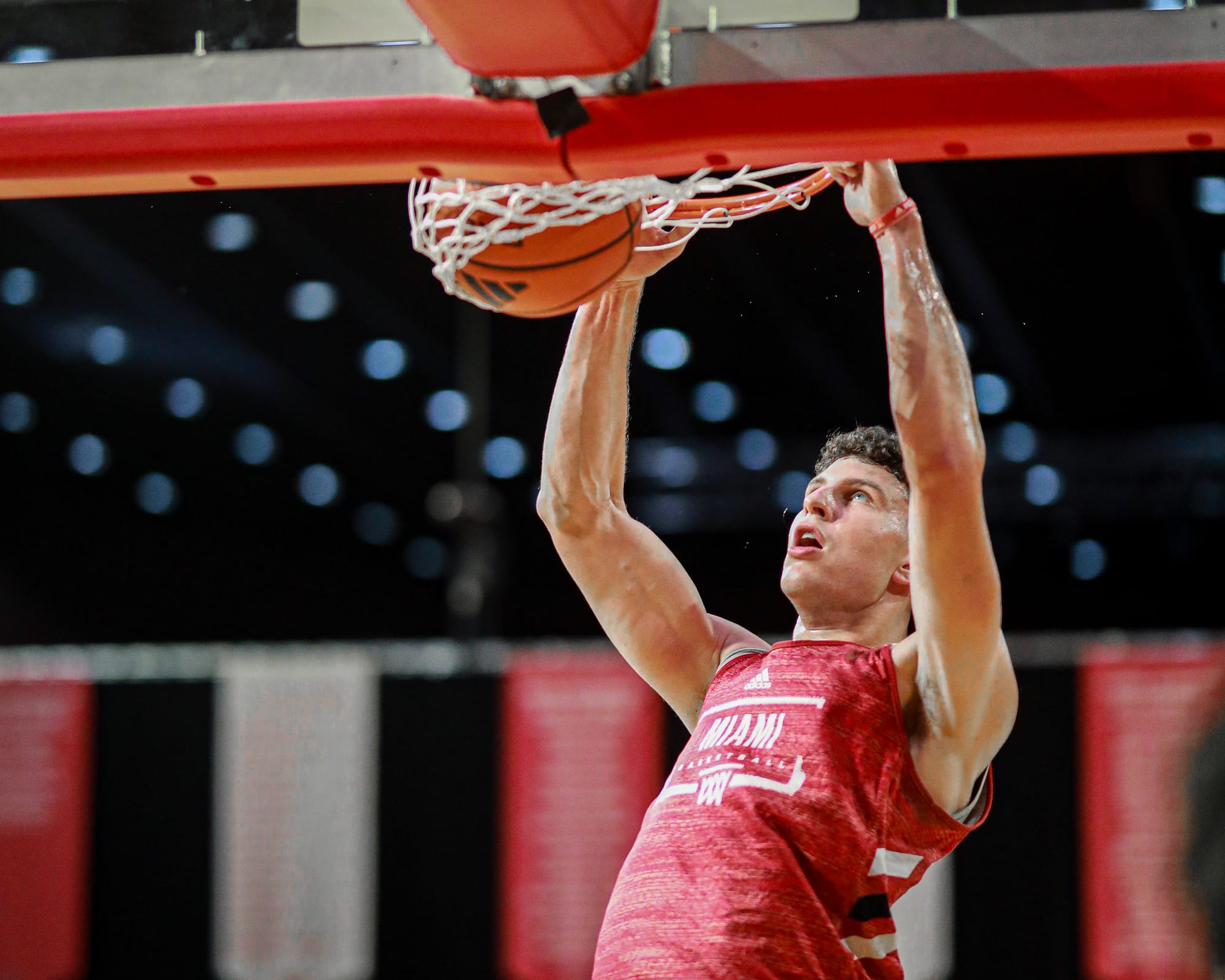
Any increase in investment for college athletics and the athletes who play them, especially at a school like Miami, which has thousands of alumni across the country and globe, is spectacular. And the new basketball arena, while many might disagree with its overall placement within the Miami campus, is an obvious investment in the future of not just the men’s basketball program, who are coming off an undefeated regular season and an NCAA Tournament berth, but the entirety of Miami athletics as a college sport experience.
One of the most interesting pieces of the puzzle, though, is regarding the Miami NIL fund and, more specifically, who runs it.
Kyle Decker, a former Miami football player and the founder of Red Brick Legacy, the university’s official NIL organization, is also the founder of Riley Decker Companies. Interestingly, as of Aug. 20, Decker’s company is now an official sponsor of the American Conference.
Of course, it’s worth mentioning that this doesn’t mean anything outright. But it seems too good to be true for any RedHawks fans interested in the subject. Maybe the idea is simply leading a horse to water.
But will it drink?
So, what does this mean for Miami, and why is moving conferences so important?
The simple answer: the money, the most common influence across all sports, and progress toward Sayler’s ambitious vision for the school’s athletics.
The American Conference brings in the highest revenue in regard to media rights across the Group of Six conferences, which includes the MAC.
While the MAC’s television deal expires after the 2026-27 school year and brings in only about $800,000 per school, the American’s brings in around $7 million annually and expires in 2031-32.
It is also worth mentioning that TV deals across college sports, outside of the Atlantic Coast Conference, which ends in 2036, all end before 2035.
The Southeastern Conference’s (SEC) deal ends in 2034, the Big 12’s TV deal ends in 2030-31 and the BIG 10 ends in 2029-30.
So, if Miami were to try and find a new suitor, even if it meant paying extra to get there, now is the time, with the MAC’s new TV deal needing to be officially put in place and announced, and the future for the American being solid for the next few years in an ever-poaching world of college athletics.
Additionally, there are reports that the MAC is looking to change its exit fee to around $10 million. So if the RedHawks were to want out, now is the time to pull the trigger and avoid an even more costly maneuver later down the line.
With those factors in mind, it feels as if the move is inevitable.
And not only does it feel inevitable, but the timelines appear to have been exacerbated, and with the next Miami Board of Trustees meetings scheduled for Dec. 10-11, 2026 and Feb. 25-26, 2027, who knows if an announcement could be flying off the shelf any day.
But despite the ever-evolving string of events and the likelihood of conference realignment seeming closer every day, this is a net positive for Miami athletics.
Anyone who has been to Oxford knows how special it is.
Whether it’s a walk around campus, a hockey game at Goggin Ice Center, a football game at Yager Stadium or a men’s/women’s basketball game at Millett Hall, the feeling that resides is one of, “Imagine how much higher this place could go. Imagine how much potential is untapped here.”
Now, the Miami athletic department is trying to achieve just that.
Yes, the asking price is high. Spending $30-40 million to move conferences isn’t pocket change for Miami, but considering what other schools have done to try and better their prospects – like the University of Memphis offering the Big 12 $250 million to join in July 2025 – the idea isn’t far-fetched.
In fact, considering where the MAC is relative to where Miami is (and is trending toward with continuous upward investment), trying to move out as soon as possible makes sense.
Miami isn’t the only MAC school to have move rumors floating around.
In July 2025, while the reports about Memphis’ offer to the Big 12 were circulating, Ohio University was the subject of rumors about a move to the Sun Belt Conference, which were ultimately denied. The University of Toledo has also had its name thrown around with the Sun Belt and the Mountain West Conferences, although nothing more than chatter has ever come to fruition.
Conference realignment is a chaotic process, especially in today’s college athletics world. But it also feels inevitable for a school like Miami, especially with someone like Sayler at the helm.
Investment in athletes and the school’s teams has gone up. The RedHawks haven’t had any shortage of success in men’s and women’s sports. And a new arena that could cost nearly $300,000 isn’t built for an annual TV revenue of $800,000 per year.
Considering these factors, a move from the MAC feels like a when-not-if scenario. Now, a question moving forward will be: will the university address it? Or will they make a decision and have chaos erupt in the aftershock?