

Observations: Jimmy Carter
Carter became the best ex-president this nation has ever had.
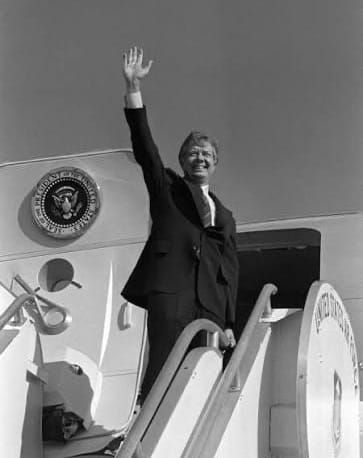
While driving along Chestnut Street the other day, I passed the extensive Habitat for Humanity project. It led me to think back to my teaching days, when I was working on a number of Habitat for Humanity projects with my students, and even more importantly, to Jimmy Carter. In his own quiet way, he became a kind of spokesman for Habitat for Humanity, and encouraged many people like me, to become involved in the program.
Carter, president from 1977-1981, was a mediocre chief executive. Indeed, writing about him in a book I published in 1986, I wrote, “With his singsong speech and humorless approach, he provided no spark at all.” I then quoted journalist and author Hedrick Smith, who said, “His greatest shortcoming so far has been his failure to rouse the nation with the lift of a driving dream.”
And yet, Carter became the best ex-president this nation has ever had.
Habitat for Humanity became his signature program. He not only donated money to it. He and his entourage went to project after project, framing houses, pounding nails and laying roof shingles. He wasn’t looking for publicity, he was simply doing what needed to be done as well as he possibly could.
At the same time, Carter embraced what he loved, namely folk and country music. He became friends with Willy Nelson, who was a guest at the White House. He threw himself into all kinds of projects, monitoring elections around the world.
My wife Sara once saw him at the Serena Hotel in Nairobi, Kenya, but didn’t want to bother him there. Years later, she regretted not going up to him and shaking his hand.
I was more fortunate. At a historical meeting in Atlanta, Carter presided over a town hall session, speaking for 10 or 15 minutes, then opening up the floor to questions. And after that, you could stand in line to purchase his most recent book and have him sign it. I did so, and when it was my turn, I said, “Mr. President, I read your essay about climbing Mt. Kilimanjaro and really enjoyed it.”
His face lit up and he said, “That was tough. Rosalynn got further than I did.”
Then, I said, “I’ve climbed it too, and I got to the top, and wrote about it as well.”
Clearly interested, he asked me to send him my essay, and I did. Much to my delight, I got a hand-written note back telling me I had done better than he did and a thank you for sending it along.
As I think back to the past 40 years and the presidents we have had, I have begun to feel that perhaps I was too critical of Jimmy Carter. He conducted his presidency with integrity. He believed passionately in human rights – both for people at home and those around the world. He made every effort to work through Congress, even when that was difficult. He stands in stark contrast to some of the Presidents who have followed him.
And though my book is long out of print, if I had the chance to do a revision today, I think I would temper my assessment of Jimmy Carter – a man of decency, integrity and passion for what he thought was right.
Allan M. Winkler is a University Distinguished Professor of History Emeritus at Miami University, where he taught for three decades. He serves on the Board of Directors for the Oxford Free Press.