

Observations: Rachel’s wedding
She became a part of our family, more so than any of the other African students in our orbit.
This story begins in the fall of 2004. My wife, Sara, and I were scheduled to lead a semester-long foreign study program for 20 students to Kenya. We had spent months planning what to do. But weeks before our departure, the U.S. State Department declared a travel warning and told us that Kenya was off limits.
We quickly decided to take the students to neighboring Tanzania, though we knew almost nothing about it and had no contacts there. But we went over, met people and figured out what to do. We were told there was a man who could help us with homestays and other arrangements for a 3-week period in Iringa – a city 10 hours north of the capital Dar es Salaam.. So, we took a miserable bus trip, met Geoffrey and hired him to help us.
Geoffrey was wonderful. He helped us in countless ways, not least feeling comfortable in the community. One evening, he invited us to his home for dinner.
There, we met Rachel, his 8-year-old, third grade daughter. She spoke good English, and, it turned out, cooked the entire dinner. We were so taken by her that when it came time to leave Iringa, we told Geoffrey that we would pay her school fees.
Two years later, our friends Brent and Nancy led the Tanzania program, and they joined us in paying for the school fees.
Rachel thrived. Eventually, she was accepted into an outstanding private high school and did extremely well. She gained admission to the prestigious University of Dar es Salaam and graduated successfully there.
At that point, I asked her if she might want to come to the United States and pursue a master’s degree in her field, public health. I had been helping numerous Kenyan students come to Miami University for graduate work and thought she could be successful, though not at Miami, which did not have the program she needed.
She was enthusiastic, and that began a process that lasted over several years. The University of Cincinnati invited her to a summer program in “event planning,” which got her over here, and introduced her to the city and the school. Then, after she went back home, we helped her prepare for the necessary language exam. Her English was excellent, but she had never taken this kind of standardized test before – it was a challenge. Eventually, she was accepted, and we had to raise the money to attend. Friends all over the country contributed, and in time, we made it happen. Rachel performed beautifully, got her degree and is now working successfully at UC Health.
When Sara was in UC Hospital, she came by almost daily to visit.
She became a part of our family, more so than any of the other African students in our orbit.
And then she met someone, began dating him and they decided to get married.
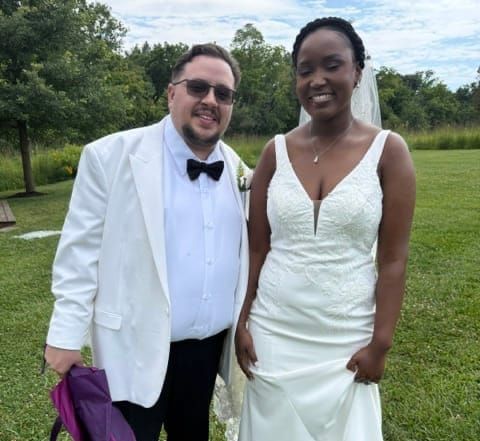
Her parents, in Tanzania, could not attend, due to visa restrictions imposed by President Donald Trump. And so, I had the privilege of walking her down the aisle.
The wedding was a lovely affair. People from Rachel’s church in Cincinnati participated, and I have never seen anyone look so happy or beautiful.
Her husband Caleb is a good man, and I look at both of them with enormous pride, affection and love.
Allan M. Winkler is a University Distinguished Professor of History Emeritus at Miami University, where he taught for three decades. He serves on the Board of Directors for the Oxford Free Press.