
Observations: The Humanities
These thinkers – and their works – provided a window into the fundamental questions of human life.
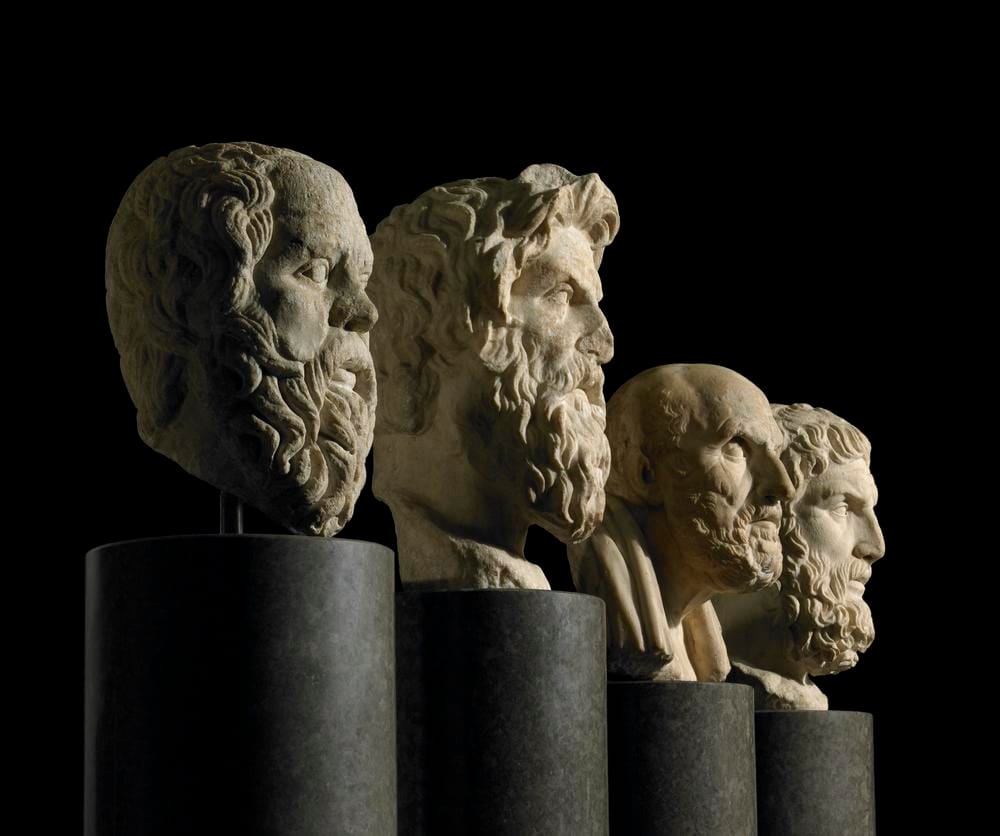
When I was a college freshman, many years ago, I enrolled in a course on the History of Western Civilization. In it, we began by reading Plato, Aristotle, Hobbes, Locke, Rousseau and other prominent philosophers. The next semester, I took a Political Science course that focused on political theory, and we began by reading Plato, Aristotle, Hobbes, Locke, Rousseau and other thinkers. And at the start of my second year, I took an introductory Philosophy class in which we read – you guessed it – Plato, Aristotle, Hobbes, Locke, Rousseau and other philosophers.
What was going on? I finally realized that these thinkers – and their works – provided a window into the fundamental questions of human life. Who are we? What are our values? What is the basis for the moral code to which we cling? How do we decide the crucial questions of life, love and loss? In short, they provide us with a framework that is crucial in small daily decisions as well as the larger issues we all confront.
And these are the questions that affect all of us – and should affect all of us. They are the questions that lay at the heart of the Humanities, both here at Miami University and in other universities and institutions.
When I came to Miami University in 1986, as chair of the History Department, I found that History was listed as a Social Science. History obviously draws on the insights of Sociology, Anthropology, Political Science and all the other Social Sciences. But I felt that History also drew even more strongly on the teaching of the Humanities, and in my first year, I moved the department into the network of the Humanities, where it belonged.
For years, the Humanities thrived at Miami University. My department, along with others, taught large numbers of students about the issues we felt were so important.
But in recent years, quietly, unobtrusively, the university has begun to prefer the Sciences and Business – all of which are crucial – but at the expense of the Humanities, and that, I fear, is a huge mistake. My own department has shrunk in size, lost graduate awards, and become a shadow of what it once was. And that is a mistake.
What is happening here at Miami mirrors what is happening at universities on the national level. The National Endowment for the Humanities (NEH), created in 1965 as part of President Lyndon Johnson’s Great Society, has effectively been gutted, like so many organizations that have run afoul of Donald Trump’s priorities.
Over the past 60 years, NEH has given more than $6.5 billion in support of some 70,000 projects, including such video efforts as Ken Burns’ documentary “The Civil War.” It has also given significant amounts of money to state Humanities organizations, such as Ohio’s own committee Ohio Humanities.
Like many historians and other scholars, I have been a beneficiary of NEH funding. I once received a fellowship that provided me with a year to work on my book about the atomic age. I had a hand in writing two large grants that funded Miami’s fledgling Humanities Center, under the leadership of then Dean Karen Schilling, and now built into a powerful organization by Director Tim Melley. I have been part of dozens of NEH evaluation panels. And I served two 3-year terms, including one year as Chairman, on what was then called the Ohio Humanities Council.
NEH has suffered from political influence in the past. When Lynne Cheney served as Director from 1986 to 1993, she gave preference to conservative projects at the expense of most others. But that effort pales against what has been done in the Trump administration. Many of its grant programs have been paused or ended entirely. Two thirds of the staff has been fired. Scholarly panels to review grants have been shut down.
The Humanities are important. They inform everything we do in our daily lives. I can only deplore the decisions that are shutting them down.
Allan M. Winkler is a University Distinguished Professor of History Emeritus at Miami University, where he taught for three decades. He serves on the Board of Directors for the Oxford Free Press.