
Observations: The Peace Corps
I called the Peace Corps in Washington D.C. the next day, and within two weeks we were accepted into a program in the Philippines, which would commence shortly after we got married.
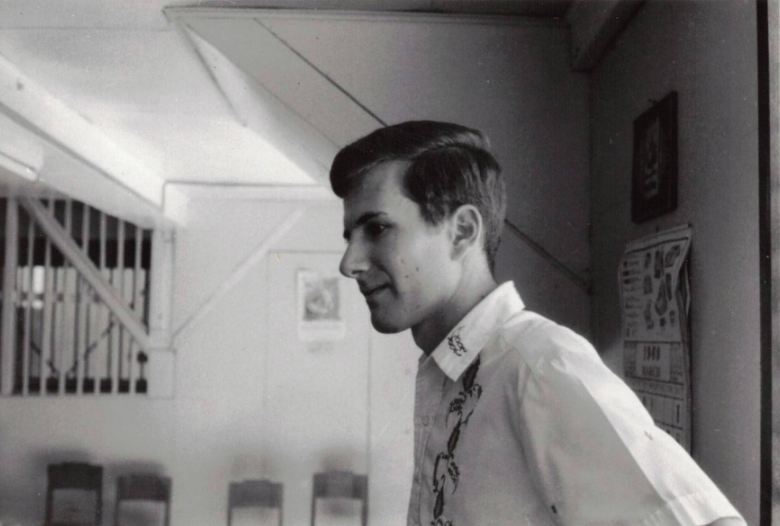
About 60 years ago, as I was finishing a master’s degree in history, I was sitting in the apartment of my fiancée. I was already admitted into a doctoral program that would have carried me beyond my 26th birthday and, therefore, my eligibility for the draft. My fiancée was completing her undergraduate degree, and had a job waiting for her teaching at an excellent private high school in New York City. I was reading the New Yorker, and saw an advertisement saying: “Join the Peace Corps. See the world.”
“How would you like to join the Peace Corps?” I asked. It was a throw-away line. But much to my surprise, she said yes.
I called the Peace Corps in Washington D.C. the next day, and within two weeks we were accepted into a program in the Philippines, which would commence shortly after we got married.
The Peace Corps was but a few years old back then, and this kind of quick acceptance would never happen today. But it did then, and it changed my life.
We were told we would be training for three months on the Big Island of Hawaii, which sounded good to me. It would be a kind of honeymoon, we thought.
On a deserted sugar cane plantation, we joined eight other newly-wed couples in a large room, with alcoves separated by shower curtains – so much for quiet romance.
We learned about Filipino culture and also worked in our content fields. With my M.A. in history, the Peace Corps, in its infinite wisdom, assigned me to teach elementary modern nath. Turns out, I loved it, and the practice teaching I did to barefoot Hawaiian kids in the third and fifth grades was the best training for the college teaching I would later do.
We studied Tagalog – about four hours a day for nine weeks. Then, the Peace Corps decided that with my degree, we would be sent to a teacher training college in Leyte, where they spoke Cebuano, a different, though related, language. So, we started all over again.
We both loved living in Ormoc City, Leyte, working at St. Peter’s College, and interacting with our neighbors. And, in addition to the teaching we were doing, we discovered other things to do. A number of us found a clay tennis court in sorry shape at the sugar central processing plant. We got permission to clean it up and to play. It turned out that the vice mayor had played tennis in college, and when he joined us, all kinds of other folks joined too. When I visited 25 years later, there was a huge tennis stadium in the town square that came about because of what we had started.
We built a children’s library in the school, and got 5,000 books donated from the United States. We built small desks and chairs and insisted that the books circulate and not be locked behind glass.
We worked with local doctors to get operations for children with hare lips, to allow them to live normal lives.
50 years later, I took Sara to the Philippines, and the library was still there. We saw my physician, who now also had Parkinson’s disease, and reminisced about days gone by.
I’ve always thought that every young American should do some kind of service, whether it be military, Peace Corps, Teach for America or another program. Looking back, I am forever glad I had that chance.
Allan M. Winkler is a University Distinguished Professor of History Emeritus at Miami University, where he taught for three decades. He serves on the Board of Directors for the Oxford Free Press.