
On My Plate: The citrus crisis
"The oranges and grapefruit are not much to look at in Florida, because the prettiest ones are sent north. But the less comely oranges and grapefruit that remain in Florida are juicier than those in northern supermarkets."
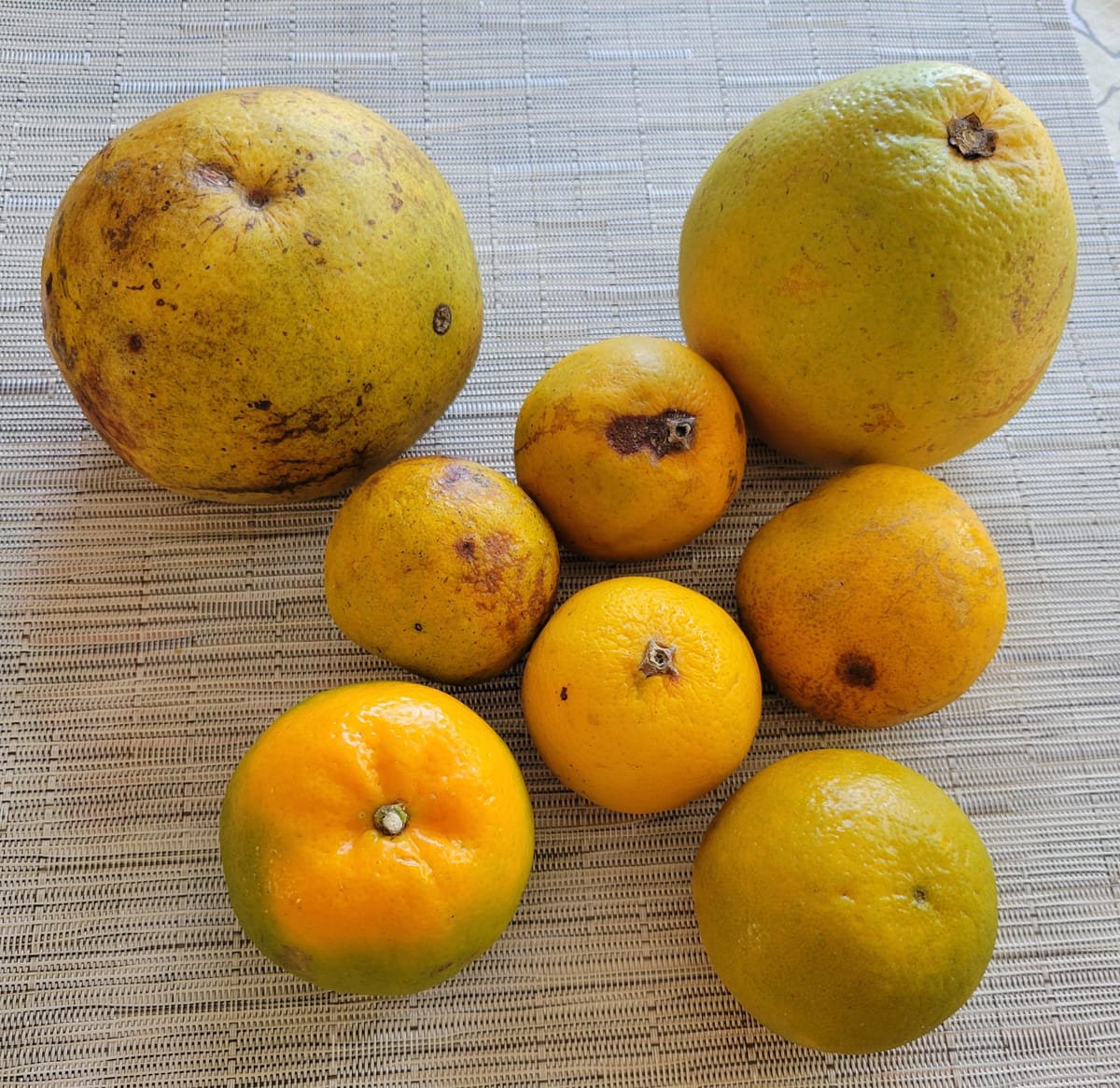
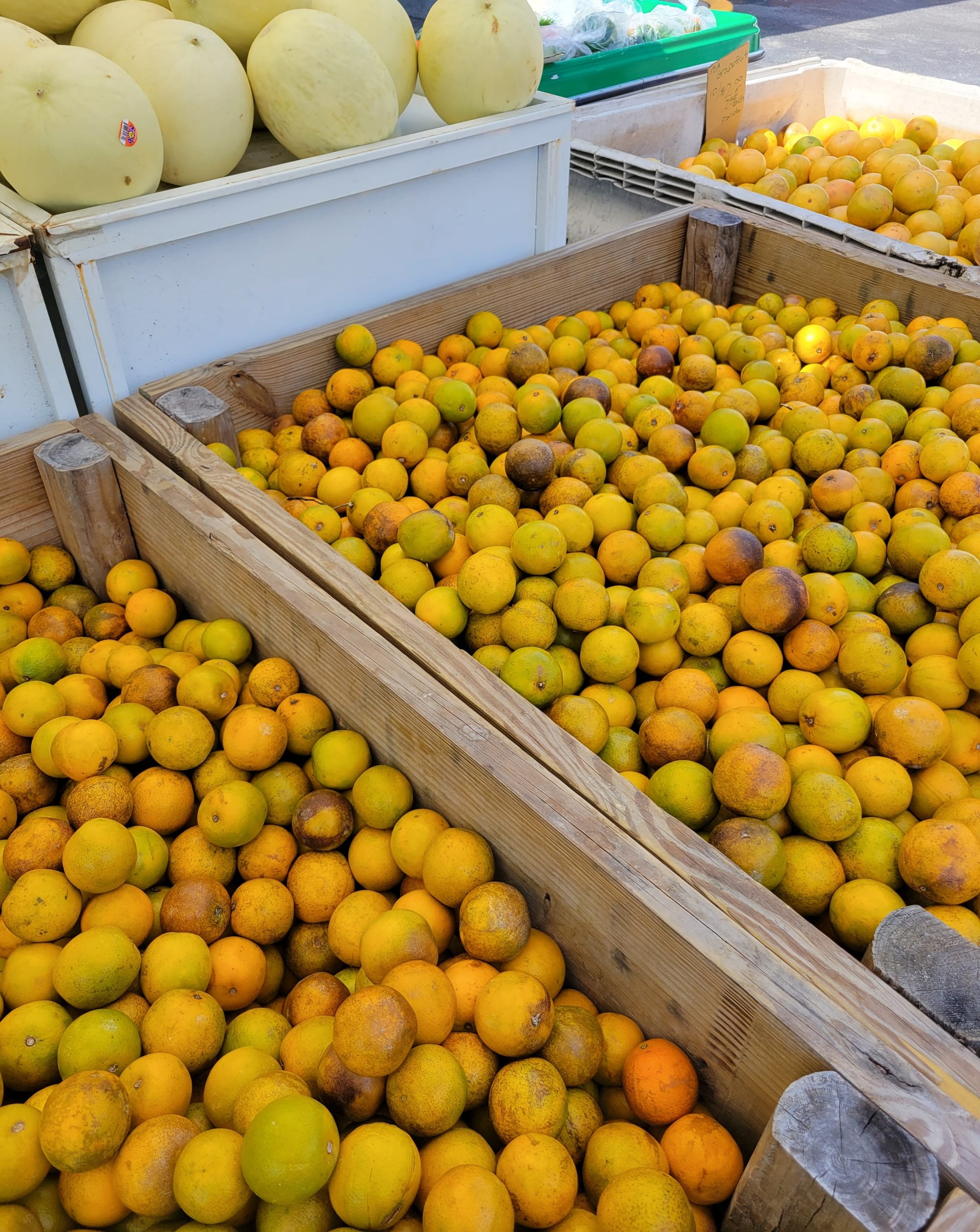
South Florida during spring break offers access to local fruits and vegetables not yet in season in Oxford. Not to mention Florida’s oranges and grapefruit that we will never call “local” in the Midwest.
The oranges and grapefruit are not much to look at in Florida, because the prettiest ones are sent north. But the less comely oranges and grapefruit that remain in Florida are juicier than those in northern supermarkets. The grapefruit in local farmers markets have been especially sweet (an adjective not usually associated with grapefruit).
However, the future of Florida’s citrus is endangered. Between 1998 and 2025, production of Florida oranges declined 95% and Florida grapefruits declined 98%. The cause of the sharp decline in Florida and elsewhere is citrus greening disease, also called Huanglongbing (HLB), a highly mobile bacterial infection that kills the trees and is spread by a tiny insect, known as Asian citrus psyllid, Diaphorina citri Kuwayama, spanning just an eighth of an inch.
Citrus greening disease devastated trees in Asia during the 1970s before reaching Florida in 2005. Once infected, a tree can remain asymptomatic for some time, yet serving as a source of bacteria that infects neighboring trees. The fruit of infected trees will drop or turn bitter, rendering it inedible. Infected trees eventually die.
Researchers are desperately searching for a way to save Florida’s citrus trees. There is no guaranteed treatment, cure or prevention at this time. Even massive doses of pesticides can’t stop its spread around the world.
Dundee Citrus Growers Association, one of Florida’s largest fruit cooperatives, has had modest success by placing trees under a massive screened structure to exclude the Asian citrus psyllid that spreads greening.
The most promising biological research to date has been accomplished by University of Florida (UF) scientists who have identified a gene that kills psyllids. That gene normally occurs in a soil-borne bacterium called Bacillus thuringiensis (Bt), according to a UF news release.
UF scientists have had success in laboratories and greenhouses by inserting that gene into citrus trees in order to produce a protein that kills baby psyllids. The gene has not yet been effective at killing the adult bugs. Plans are underway to inject Bt into trees growing in open fields rather than in greenhouses.
Lukasz Stelinski, a UF entomology professor, explained in a university news release that the Bt gene provides instructions for the new citrus tree on how to make this protein. Thus, when the gene is inserted into the tree, it produces the protein that kills psyllids.
In other words, UF scientists have concluded that the only promising way to save Florida citrus is through genetically modified organisms (GMOs). People around the world are concerned about the widespread use of GMOs in the United States. Concerns focus on the unknown long-term environmental and health risks, as well as control of our food production system by a handful of seed and chemical companies.
Europeans have banned most GMOs and require labels on GMO products that do get into their markets. In the United States, the conventional food industry has successfully prevented enacting GMO labeling laws.
The disease does not pose a health threat to humans or animals, but it deprives us of edible citrus. Orange juice is seen by American consumers as the ultimate healthy drink. Will American consumers accept GMO orange juice? Will most Americans even know or care? Or should we let nature take its sad course of killing off the world’s citrus trees, while we switch to apple juice?
James Rubenstein is president of the Board of Directors for the Oxford Free Press and professor emeritus of geography at Miami University.