
Oxford City Council agrees to enter deer management contract
The City of Oxford has taken the next step in controlling its deer population after concerns were aired at a meeting last month.
The City of Oxford has taken the next step in controlling its deer population after concerns were aired at a meeting last month.
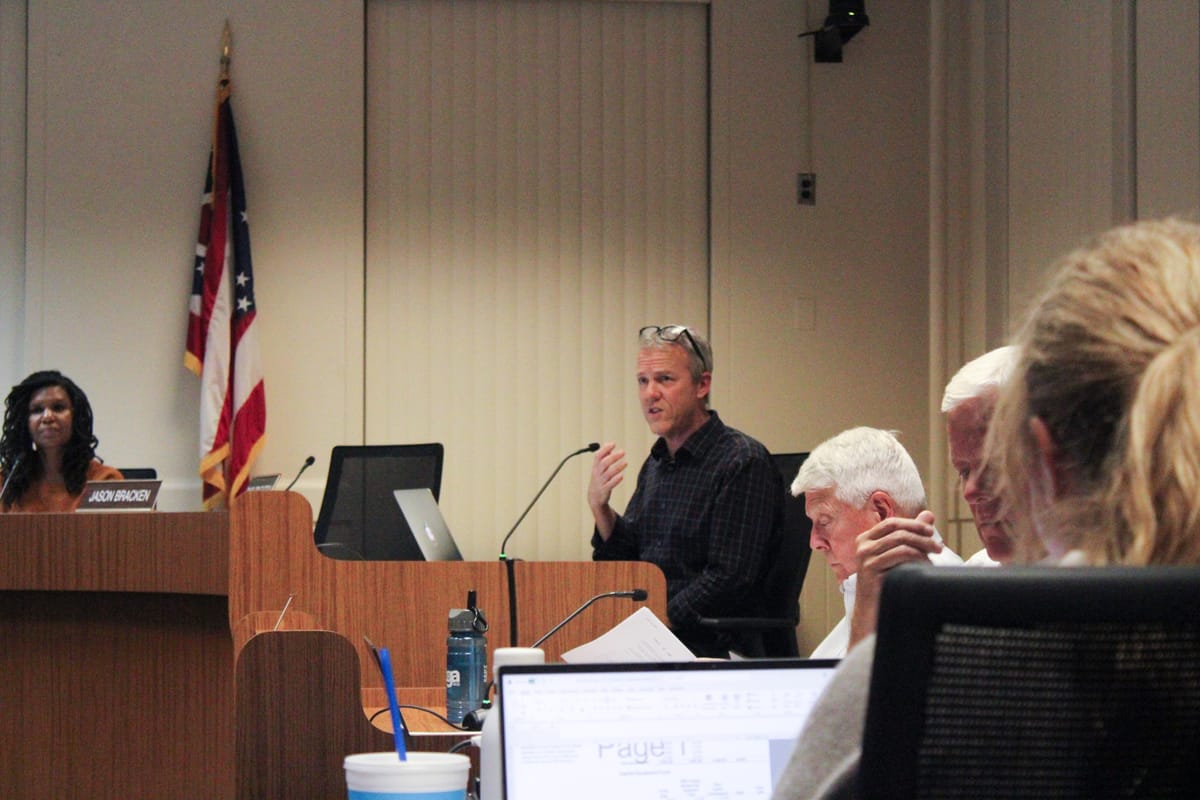
During a city council meeting Tuesday evening, council members passed a resolution allowing the city manager to enter a contract with White Buffalo Inc., a population management company with a track record of controlling white-tailed deer.
According to the resolution, the purpose of entering the contract is to “humanely euthanize deer to reduce the population to a sustainable level, restore ecological balance and protect public health and safety.”
The overall cost to the city is $63,984, which includes $49,984 for the contract with White Buffalo and $14,000 for the processing of the deer. The contract includes the culling of 100 deer, site selection and staff training.
Assistant City Manager Jessica Greene told the council, “Because natural predators are absent in the area, deer herds have expanded beyond (what) the local ecosystem can sustain.”
While presenting the resolution, she cited possible overgrazing, vehicle/deer crashes and tick-borne illnesses as issues of deer overpopulation. To understand the scale of the issue, she said the city will be conducting a deer population survey in November to determine the number of deer per square mile.
Once the survey is complete, Greene said the city will apply for a permit through the Ohio Department of Natural Resources (ODNR) Division of Wildlife and turn in its deer management plan. She said White Buffalo will be able to assist in the permit process as well.
“We do have a local hunting program, and we’ve made several improvements to that this year,” Greene said. “But despite those improvements, we believe that it’s time to implement a professional population control.”
“If you’re a property owner, you know how frustrating it is to see the deer and the damage to your property, and the car accidents I nearly see in front of my house on a daily basis, and I can’t do anything about it as a citizen,” Councillor David Prytherch said. “The city is in a position to do that, and so I want to commend everybody involved for taking on the problem, trying to understand its complexities.”
In other business, the council adopted a resolution to annex more than 157 acres of land, which includes the remaining portion of the Miami University airport outside the city’s corporate boundaries. The airport is owned by Miami University and managed by the Cincinnati/Northern Kentucky International Airport (CVG).
City Manager Doug Elliott said in presenting the resolution, “The airport is uniquely positioned to become a hub for innovation and advanced air mobility, as outlined in the city’s economic development strategic plan.”
“Annexing this land to the city will enable infrastructure extensions and upgrades, as well as grant opportunities,” Elliott read.
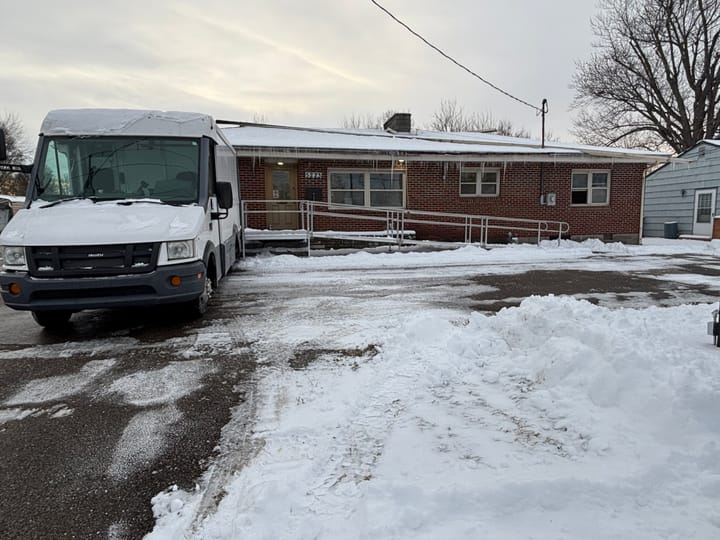
The council also adopted a resolution to enter into a development agreement outlining a proposed construction by Inclusive Housing Resources at 5234 Hester Rd.
According to the resolution, the city used American Rescue Plan Act (ARPA) funds to purchase the property for the purpose of an affordable housing development. In January, the Housing Advisory Commission published a request for proposals. Inclusive Housing Resources has been designated as the primary partner.
Greene said the goal is to install 16 units of inclusive micro-houses that will be up to 700 square feet. Inclusive Housing Resources and another partner, EmpowerMe Living LLC, will have three years to construct the development.
Mayor Bill Snavely said of the project, “This has been a long time coming, and it’s something that is very important to council, and I think it’s very important to the people of Oxford that we have affordable housing.”
The council also adopted a resolution authorizing the city manager to enter into a contract to construct a new public restroom facility in Martin Luther King, Jr. Memorial Park at 2 W. High St. It is unclear when this project might be complete.
The contract would not exceed $517,755 and would be with Leo J. Brielmaier Company. It will be funded through Ohio Capital Funds, a Community Development Block Grant (CDBG), Enjoy Oxford funds, the Oxford Chamber of Commerce and the Butler County Development Disabilities Board.
The council adopted two other resolutions, one to publish a weekly public notice for three weeks detailing the locations of property improvements and work performed and to send a letter to property owners notifying them of the costs for their parcel and payment options. If an owner objects, they must file their objection with the Clerk of Council within two weeks of the notice.
The other resolution asked the city council to apply for Ohio Public Works Commission funding for roadway improvements. If the grant is awarded, according to the resolution, work would be contracted in late 2026 and completed in summer 2027.
The city reviewed three ordinances for a first and second reading.
An ordinance read at the city council meeting proposes allowing the city manager to allow Duke Energy to purchase a .84 acre city-owned, surplus property for $110,000. The plot of land is located on Millville Oxford Road. Duke will use this space for a small trailer to run their fiber network.
Service Department Director Mike Dreisbach said, “We support that and recoup our costs, and there will be a small aggregate covered equipment trailer that will be landscaped around it, and I think, hardly noticeable to the public.”
The second ordinance will amend a previous ordinance by making supplemental appropriations to the Fiscal Year 2025 budget.
The first issue proposes using $70,000 of ARPA interest to fund a cold shelter.
The second issue proposes $146,500 to the capital improvement fund for additional funding needed for engineering design modifications.
The third proposes adding $62,729 to the current deer management program.