

‘Something has to be done’: Miami committee reviewed financial future ahead of arena decision
Miami University’s Board of Trustees approved the $280 million project after reviewing its financial situation for several hours the day before.
A multipurpose arena approved by the Miami University Board of Trustees on Feb. 27 is expected to cost $280 million, requiring the university to immediately go into more debt.
The day before the vote, committee members discussed the university’s financial situation, including a reduced credit rating, its current debt and an anticipated enrollment cliff where the university relies mainly on tuition dollars.
Still, Senior Vice President for Finance and Business Services David Creamer insisted during a finance and audit committee meeting on Feb. 26 that a project to the scale of the arena was necessary to turn Miami’s financial outlook around.
“I’ve gotten this question, ‘Are you suggesting, then, that the arena project is really not realistic because of the financial challenges that are in front of us?’” Creamer told the committee. “In reality, I’m telling you just the opposite. That if we are to overcome this, we are going to need to do something that has a substantial impact on our ability to recruit and attract students to the institution we developed.”
Arena plans
A breakdown of expenses for the arena reviewed by the finance and audit committee shows over $242 million going toward constructing the arena, with around $7 million dedicated for parking and road improvements, $9 million to relocate the recreation fields at the planned site of the arena, and more than $8 million to demolish the nearly 60-year-old Millett Hall.
The university had considered building a new ROTC facility, as the program was previously practicing in the basement of Millett. But the idea was cut from the proposal, as it would have cost an additional $54 million.
Instead, the university will be spending $13 million to renovate Harris Hall where the program will be relocated.
The multipurpose arena project includes a main arena for men’s and women’s basketball to cost more than $185 million, an $18 million practice court and $22 million volleyball arena.
These costs have increased significantly from the original $233 million estimate, wherein the arena itself would have cost $193 million.
A proposed layout of the new facility presented to committee members showed a 160,253-gross-square-foot main arena, a more than 21,000-gross-square-foot volleyball arena, and a “team operations” space including practice facilities, home locker rooms, shared spaces and offices to encompass more than 42,000 gross square feet.
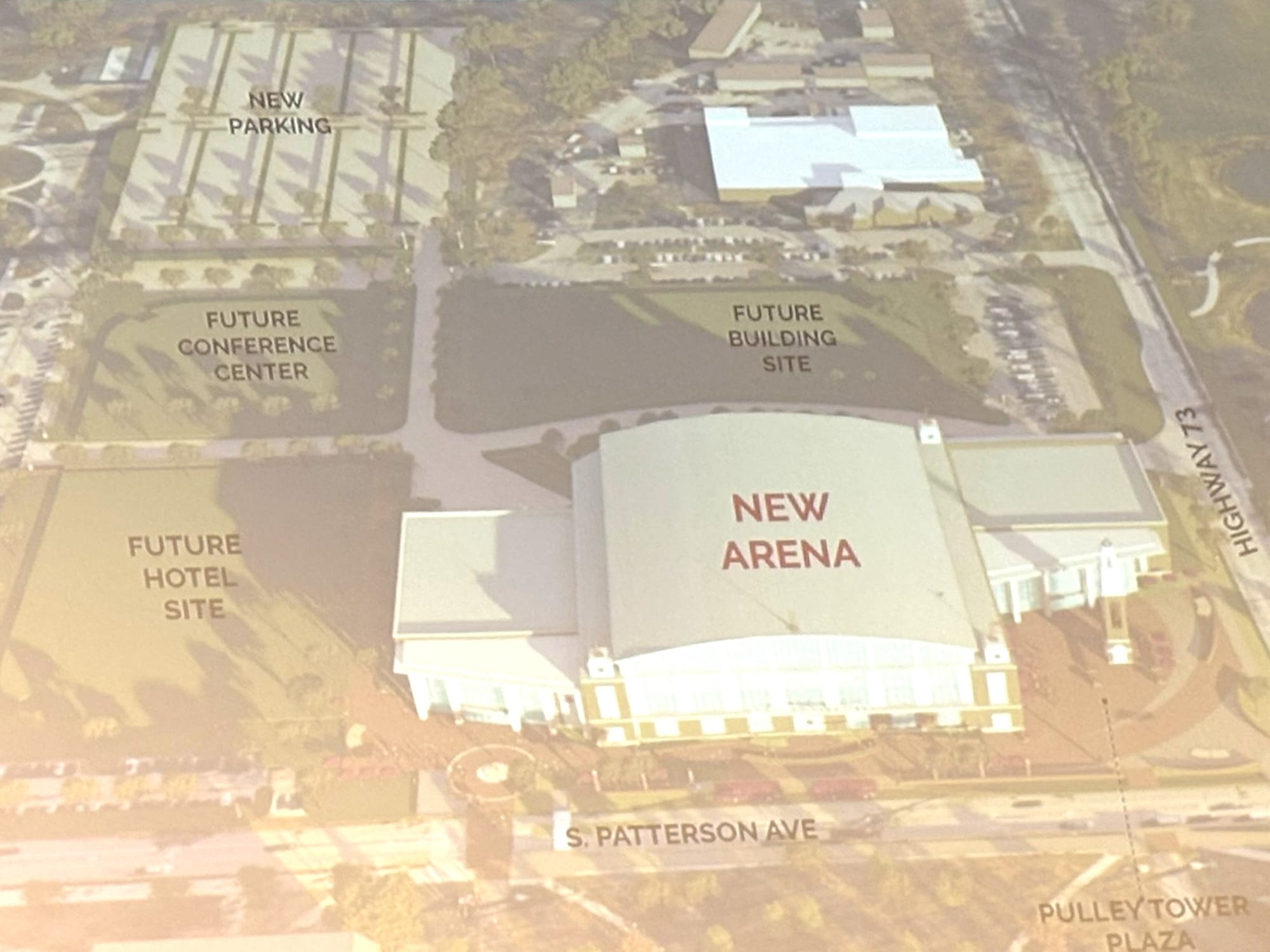
An aerial view of the plans show the arena on Cook Field at the corner of South Patterson Avenue and State Route 73. Directly next to it is the site for the future hotel – at the corner of South Patterson Avenue and East High Street – and behind the hotel is a development space for a potential conference center and a parking lot with around 600 spaces. Millett’s West Lot has 1,354 spaces.
Creamer said the university has not yet made a formal agreement with a hotel to develop on the site.
Creamer said additional parking for fans will be available at the North Campus Garage, which has around 670 spots, and its adjacent lot, as well as on the western campus. A sold-out event at the new arena is expected to attract more than 2,000 vehicles, but the assumed parking demand is closer to 1,600 vehicles, according to the plans presented to the committee.
Another space directly behind the arena is slated as a “future building site” in the hope that more development will come as a result of the arena.
“At this point in time, there’s not been anything built into the plans precisely that would go there,” Creamer told the Oxford Free Press following a board meeting on Feb. 27. “It would depend on how things evolve.”
Creamer said the space might eventually turn into more dining options or another academic building. He said the university is looking into possibly expanding the Farmer School of Business, which the space could be used for.
“One of the benefits of the Cook Field site, as we do this, [is] we are creating other sites that things could be built upon, depending on what the needs are of the institution and the future,” Creamer said. “Without that, … it gets a little more tight on campus as to where any significant new building project could go.”
During the committee meeting, members were also shown proposals including a “VIP-type club experience,” according to Cody Powell, associate vice president of facilities planning and operations, and a target of 6,500 seats in the main concourse, or up to 9,000 for an event with a small stage.
Although the new arena would have less seats than Millett currently holds, the plans also showed seats which are also more elevated, rather than pushed out from the court.
Miami’s financial outlook
During an investment subcommittee meeting on Feb. 26, members learned Miami’s Moody’s Rating, or credit rating, had dropped from a AA3 to a AA2, although Creamer told the Oxford Free Press the university was not given specific reasons for the drop.
While the university is taking on debt to cover the $280 million project, it is also taking donations and is issuing bonds to cover the cost.
Creamer said when bonds are sold, the updated Moody’s report will be sent to potential investors to give a full understanding of Miami's financial health. Still, Creamer insisted the university still has a much greater debt capacity than what it is expected to take on.
Currently, the university has an outstanding debt of more than $432 million, which Creamer said should be retired, or repaid, by 2040.
At the end of Fiscal Year 2025, a financial audit from the state of Ohio shows Miami landed with a $216 million surplus.
Overall, Creamer said the university isn’t currently in bad financial health, although he predicted a negative outlook for Miami based on a demographic cliff significantly cutting future enrollment.
Currently, 70% of Miami’s budget is paid for through student tuition and fees, Creamer said. But within the next decade, he predicted an enrollment decline of around 25% as fewer students within Miami’s geographic market graduate from high school.
Creamer told members of the finance and audit committee of recruiting new students to maintain its budget, “Something has to be done.”
“If the status quo is the solution,” Creamer said, “I can pretty much predict what the outcome is going to be. … It’s not pretty.”
Creamer told the Oxford Free Press, as the university’s expenses continue to rise and its revenue declines with fewer students, the university will face a “very difficult situation in the future if we don’t undertake some actions.” He said this realization led the university to take on its Miami Thrive strategic plan, which has included a number of recent developments, including its Advanced Manufacturing Workforce and Innovation Hub in partnership with Butler Tech.
“We're trying to stimulate more innovative and creative solutions to what looks to be a very big problem,” Creamer said. “Obviously, with change, you run the risk of making mistakes and prioritizing the wrong things. It’s why the board spends a good bit of time evaluating those decisions and getting to a point of comfort if we’re going to make a major change.”
Creamer said he has worked at Miami for 18 years, and the university has looked at building a new arena or creating another solution for Millett since he arrived.
Creamer told the Oxford Free Press during an interview in August 2025, the university needed to “make some adjustments” as international enrollment declined, and Miami saw some effects of federal reductions in research funding. He said the university’s “saving point” has been making changes in the way it invests.
Creamer also told committee members on Feb. 26, although a final decision hasn’t yet been made, the university would likely not benefit directly from the arena in terms of ticket sales or other revenue from athletic events, which would instead be invested in the athletic department. Instead, he said Miami would be collecting on “indirect benefits,” including the expected attraction to the university.
Making ‘trade-offs’
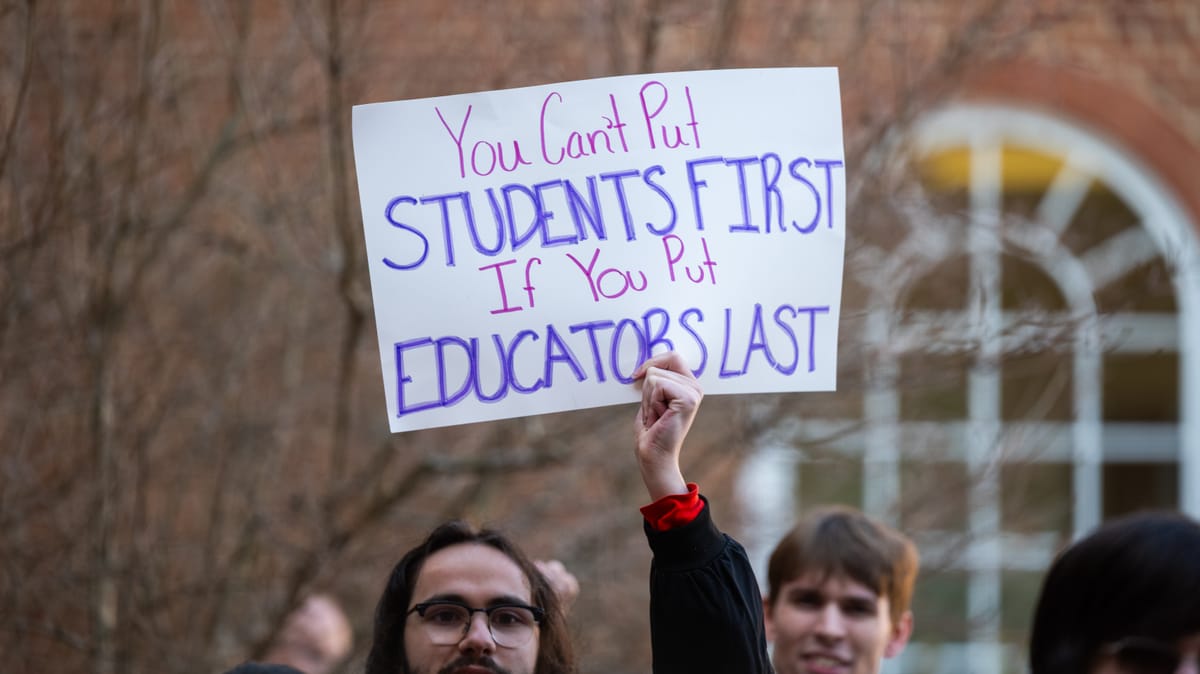
Some campus community members who spoke during the public speaking portion of the full board of trustees meeting suggested the university should instead focus its investments in keeping open academic programs it has previously closed.
Senior Ashley Reynolds, 21, who’s the vice president of the Ohio Student Association chapter at Miami, told the board her major had recently been cut, and “If we don’t have the funds for my education … then we don’t have the funds for an arena, plain and simple.”
Creamer said the university is making “trade-offs” overall. He also pointed out recent statewide legislation requiring universities to closely evaluate the demand for its academic programs and faculty workload.
“I know the conversation is likely to continue,” Creamer said of the public discussion about the arena’s development. “Usually over time, though, people come to accept the fact that the institution may be different, but actually it continues to grow and be an enhanced experience for students, because we undertake these kinds of projects.”