
Talawanda BOE members sworn in, discuss budget
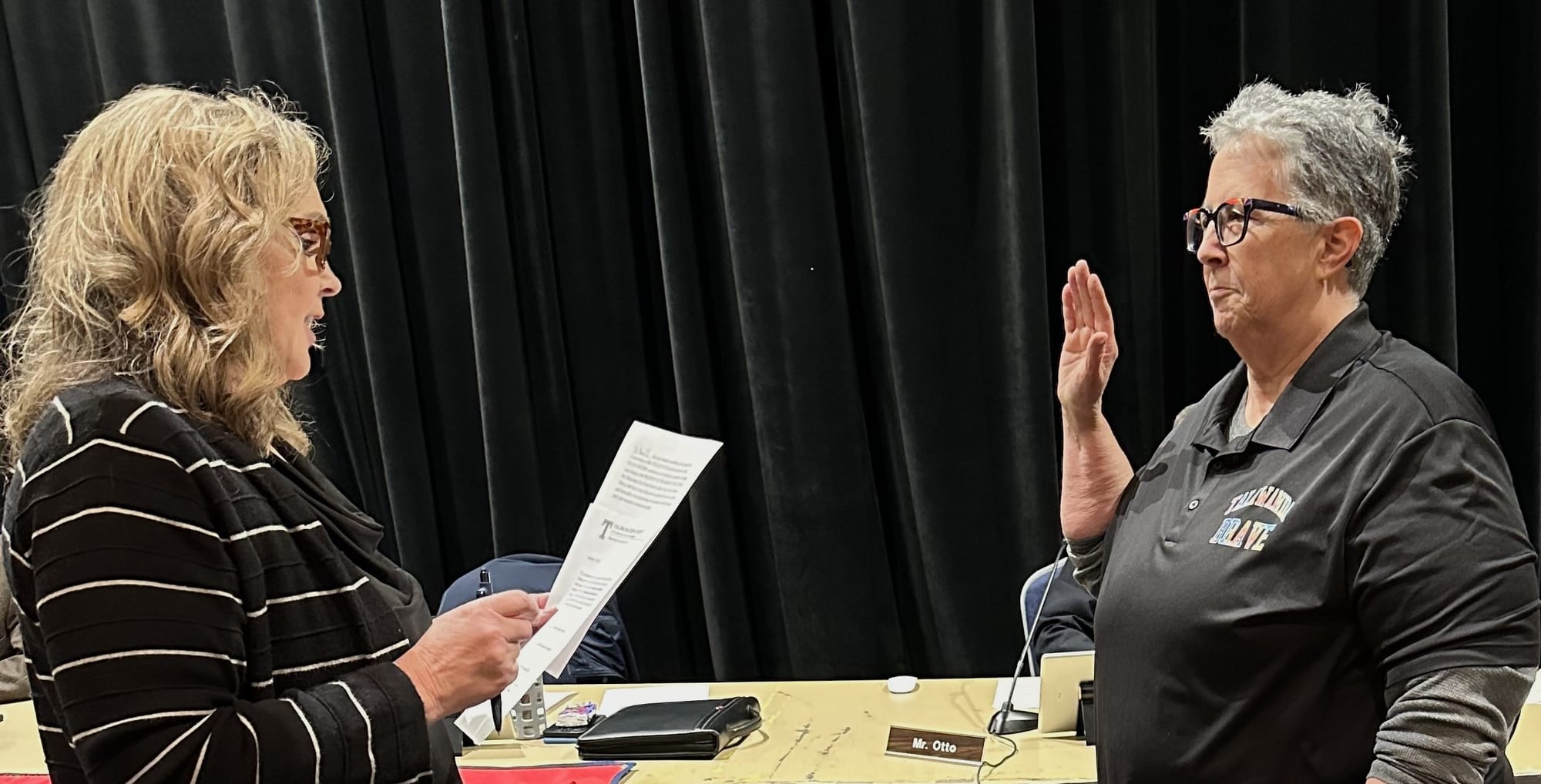
Recently re-elected members Pat Meade and Matt Wyatt were once again sworn in, as well as Board President Rebecca Howard.
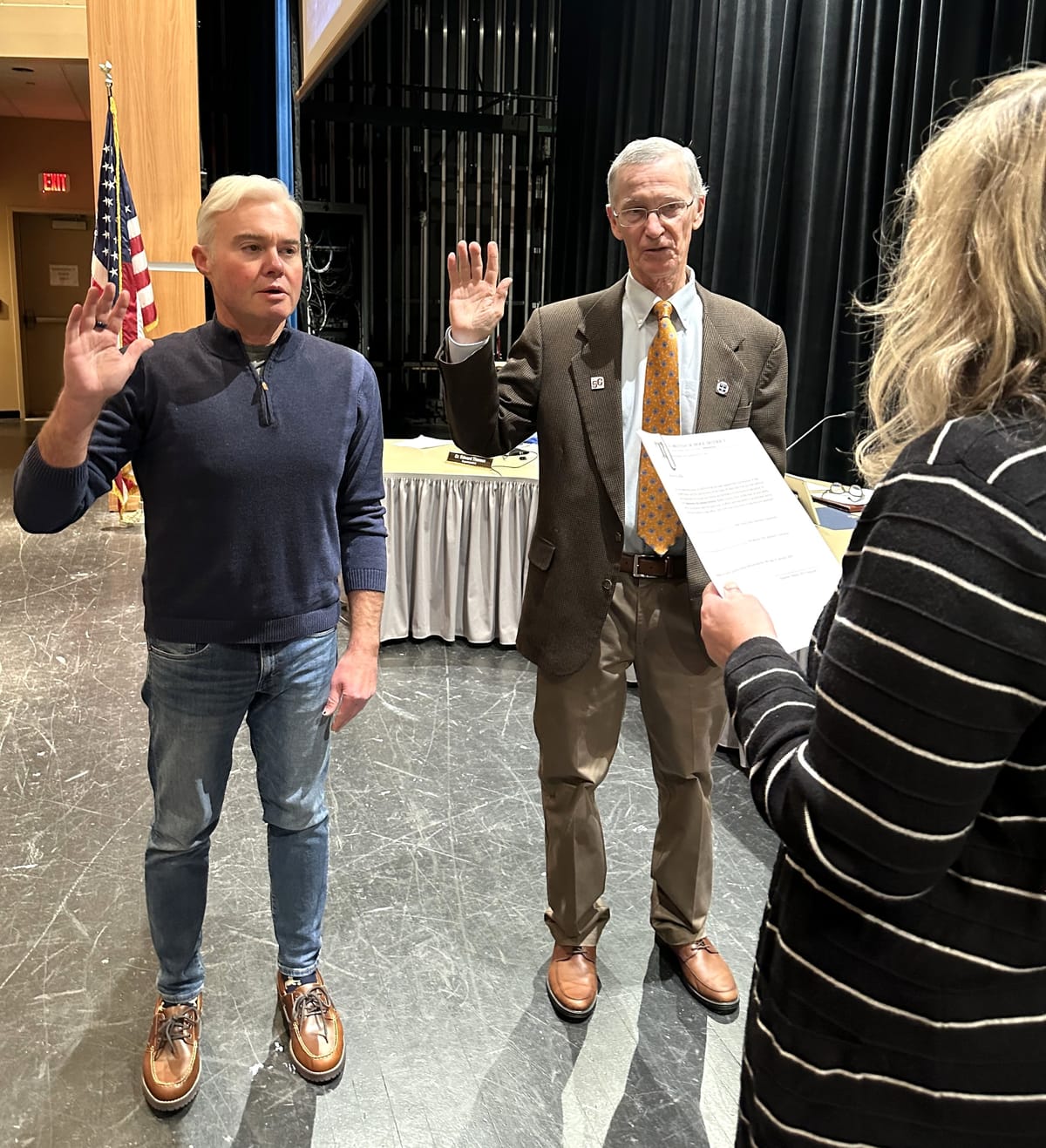
The recently re-elected Talawanda School District Board of Education members Pat Meade and Matt Wyatt were once again sworn in during an organizational meeting on Jan. 8.
Meade is entering his third consecutive term, or ninth year, as a member of the board. Wyatt is entering his first full term as a member of the board, as he was first appointed to serve in September 2024 after another member stepped down.
Rebecca Howard was once again appointed as the board president, and Meade was appointed as the board vice president. Board member Chris Otto was appointed as the board representative for the Butler Technology and Career Development Schools Board of Education.
Budget concerns
Wyatt noted five property tax reform bills were recently signed into law by Ohio Governor Mike DeWine, including a couple that the board had eyed as potential concerns for receiving funding.
Ohio House Bill 129 was signed by DeWine in December, which changes how a school district’s 20-mill floor, or the minimum amount of property taxes a school district may collect on, is calculated.
Beginning March 20, emergency, substitute and other fixed-sum levies passed by a school district will be included in the 20-mill floor calculation.
HB 186 also passed, which will prevent increases in school district taxes from exceeding the rate of inflation for those living in a district with a 20-mill floor.
HB 335 passed, which will limit revenue increases for the inside millage, or the portion of property taxes the school district collects on automatically without needing to pass a levy, due to a property reappraisal. Under this law, increases in inside millage will be limited to the rate of inflation.
HB 309 also passed, which School District Treasurer Shaunna Tafelski said in an email to the Oxford Free Press, is concerning because it expands the Butler County Commission’s authority relating to property taxes, allowing them to adjust school district collections annually.
Wyatt said of the bills, “We are carefully and will continue to carefully analyze how these changes affect our school district’s revenue.”
He said changes to school funding seem to be constantly happening, especially on the “negative side.”
“Projections, long-term financial planning is very difficult, as we know in this business. In Ohio, quite frankly, it’s ridiculous,” he said.
Tafelski said in her email that it is too early to have confidence in the financial losses the school district could face due to the newly passed legislation.
During a board meeting in October, Tafelski said Butler County Commissioners approving the Homestead Tax Exemption expansion in the 2025 tax year resulted in a $242,000 reduction in collections for the school district to be split between Fiscal Years 2026 and FY27.
Superintendent Ed Theroux gave a presentation to the board describing the school district’s savings from the past six years, as well as current and upcoming costs for the 2025-26 academic year.
Data provided by Theroux showed that in the 2021-22 academic year, the school district was able to save $350,841 on hirings, but it saved $6,787 for the 2025-26 academic year. Theroux attributed this to needing to hire back some service personnel, as well as the number of professionals on staff.
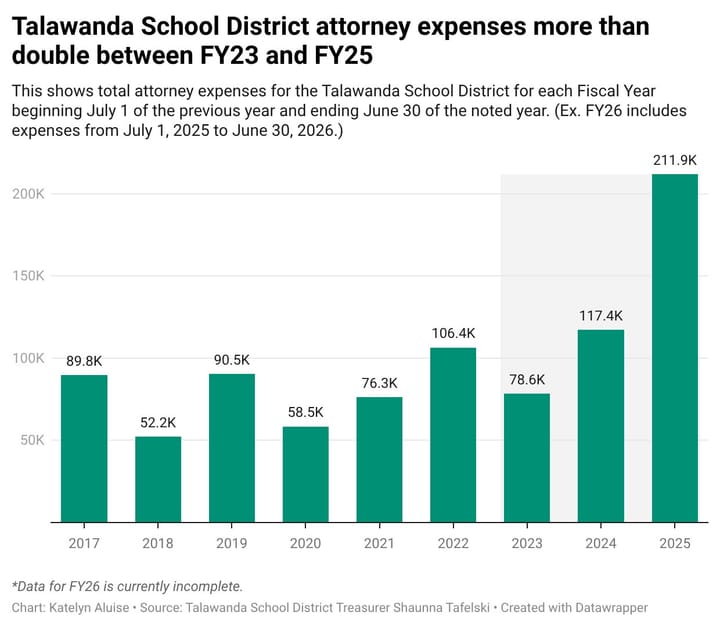
Theroux said there have been cost increases this academic year with bringing back two-tiered busing, which Tafelski initially estimated would cost the district around $445,000 annually. Theroux said there has also been additional special education staff required, increased attorney fees and other various expenses relating to hirings and some building upgrades.
Theroux’s presentation with the complete list of expenses is available on the Talawanda School District website under Board Docs.
Still, Theroux said some of the district’s savings have or will come from administrative fees collected by the district through the Interact for Health Grant (about $7,000) as well as from a Health Resources and Services Administration grant, and an attorney general grant of about $13,000.
The district is also updating its PublicSchoolWORKS online school safety and compliance training modules to see where it can condense and lower the number of licenses needed in order to eliminate some costs. Theroux said one bus route was also eliminated, as fewer students are taking the bus, and the district was able to save in a few other areas.
In the future, Theroux said the district will review its class sizes, continue to look for and apply for grants, and update job descriptions among other efforts to save, as well as continue advocating on behalf of public school funding at the state level.
AI policy
Wyatt also pointed out the school district is required to adopt a policy no later than July 1 on the use of artificial intelligence in schools.
Wyatt said the Talawanda School District is currently working through the process of developing its own policy that will be made available at a later date.