
‘Talawanda Class 23:’ Providing job, life training for students with needs post-graduation
While working alongside the other students in Talawanda Class 23, Felbinger said she’s learned that “hard work actually pays off.”
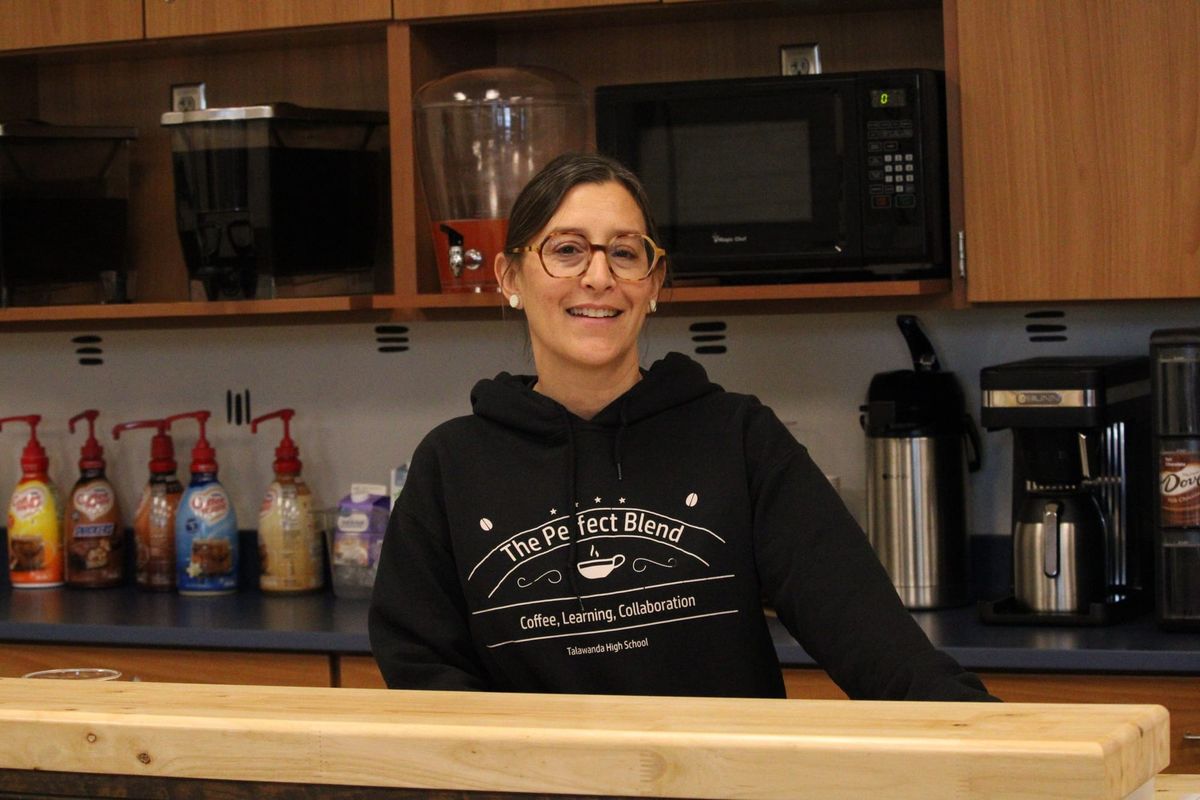
Back when Jenny George worked at Talawanda Middle School, the special services coordinator had identified a gap in education where students with disabilities were graduating from Talawanda High School (THS) without the skills necessary for employment.
George was approached with a mission: design a program at THS to keep these students in school until they’re 22 years old and help them learn the skills needed to find gainful employment.
Her idea for the program – called “Talawanda Class 23” in reference to students kept enrolled after graduation – would encompass the basics of life, leisure and employability by involving the students in the community through volunteering at local organizations, housekeeping at Airbnbs and hotels and taste-testing standard jobs, like order and delivery, food service, retail and hospitality.
Being a Talawanda resident of 22 years, she said it was easy for her to reach out to local businesses and organizations to find spaces for her students to go to work, volunteer their time and meet residents.
But in the first year of George’s program, she had already reached a hurdle – it was 2020, and the COVID-19 pandemic was in full swing.
“(It) was a very bad year for a community-based program to start, and that was the entirety of the program,” George said. “We were online learning, so I was running around like a crazy person delivering food and making cooking videos, and I finally got it so that we could go to different places. … We went to a host barn because we were outside together and we all wore masks. We worked at the doughnut shop. We worked all over the place.”
It wasn’t until two years later that George was able to gather enough funding to start a coffee shop in the teacher's lounge of THS where students could learn basic customer service, drink preparation and cashier skills. The idea was two-fold, in that her students (and other programs at THS wanting to use the shop) could benefit from the experience, while teachers could use the shop as a positive reinforcement tactic – complete the homework, get a coupon for a free coffee.
With the help of a $2,000 grant from the Oxford Community Foundation, “The Perfect Blend” coffee shop was open for business.
For just a few dollars – or a teacher-backed gift card – students and staff can purchase a hot or iced coffee, hot chocolate or specialty drink brewed by George and served by her students. To kick off November, George’s drink of choice was a Shirley Temple with cherry 7UP and orange juice.
Now, the coffee shop is entirely self-sufficient, and with the extra funding it raises, George can afford to take her students on field trips and provide other experiential learning opportunities.
“My program is really important. It’s really great for my students, and I love everything about it,” George said. “But the coffee shop lets staff and students come in here together and be on an equal playing field. … They have such good connections with their peers that they know their names.”
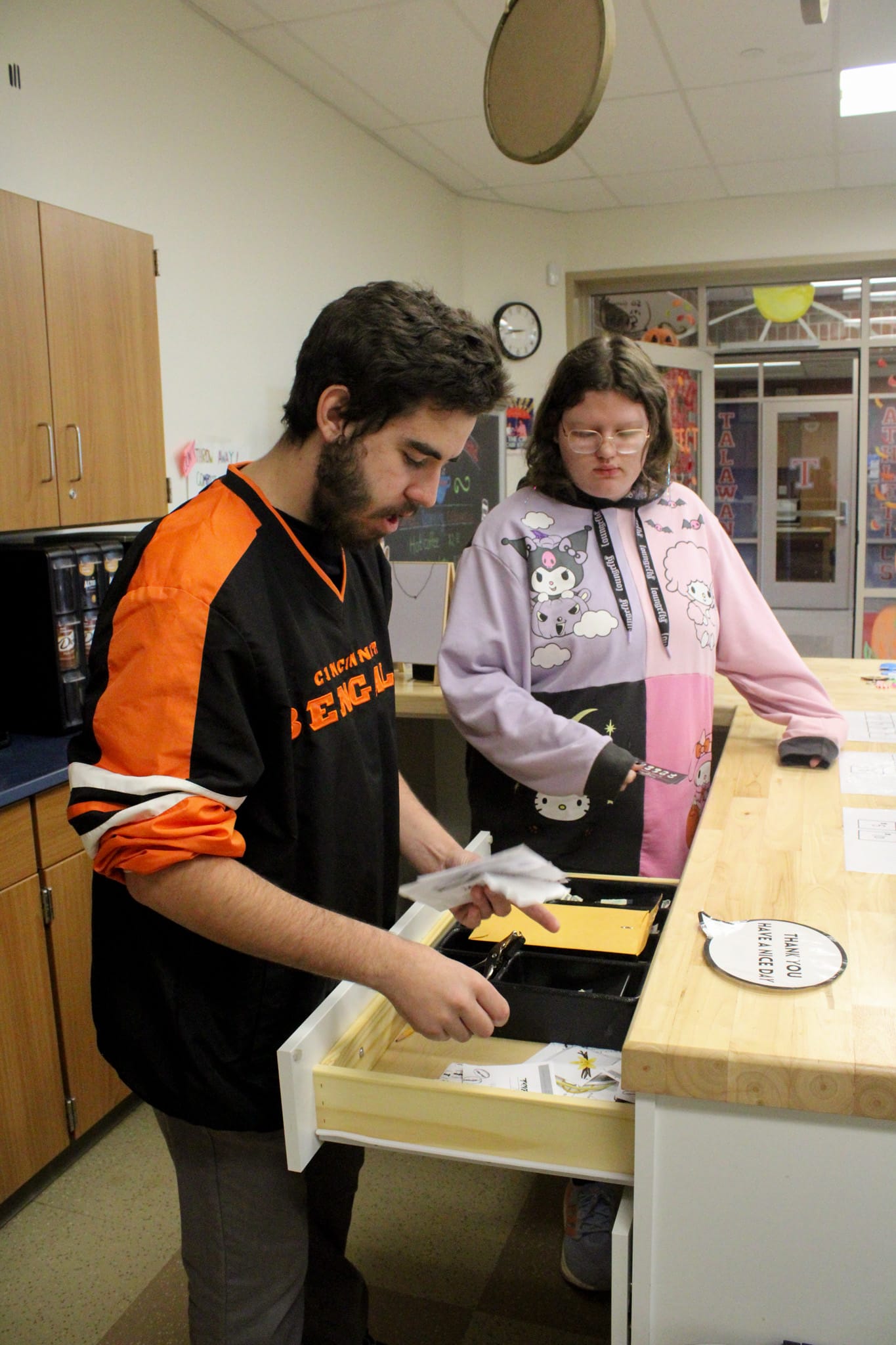
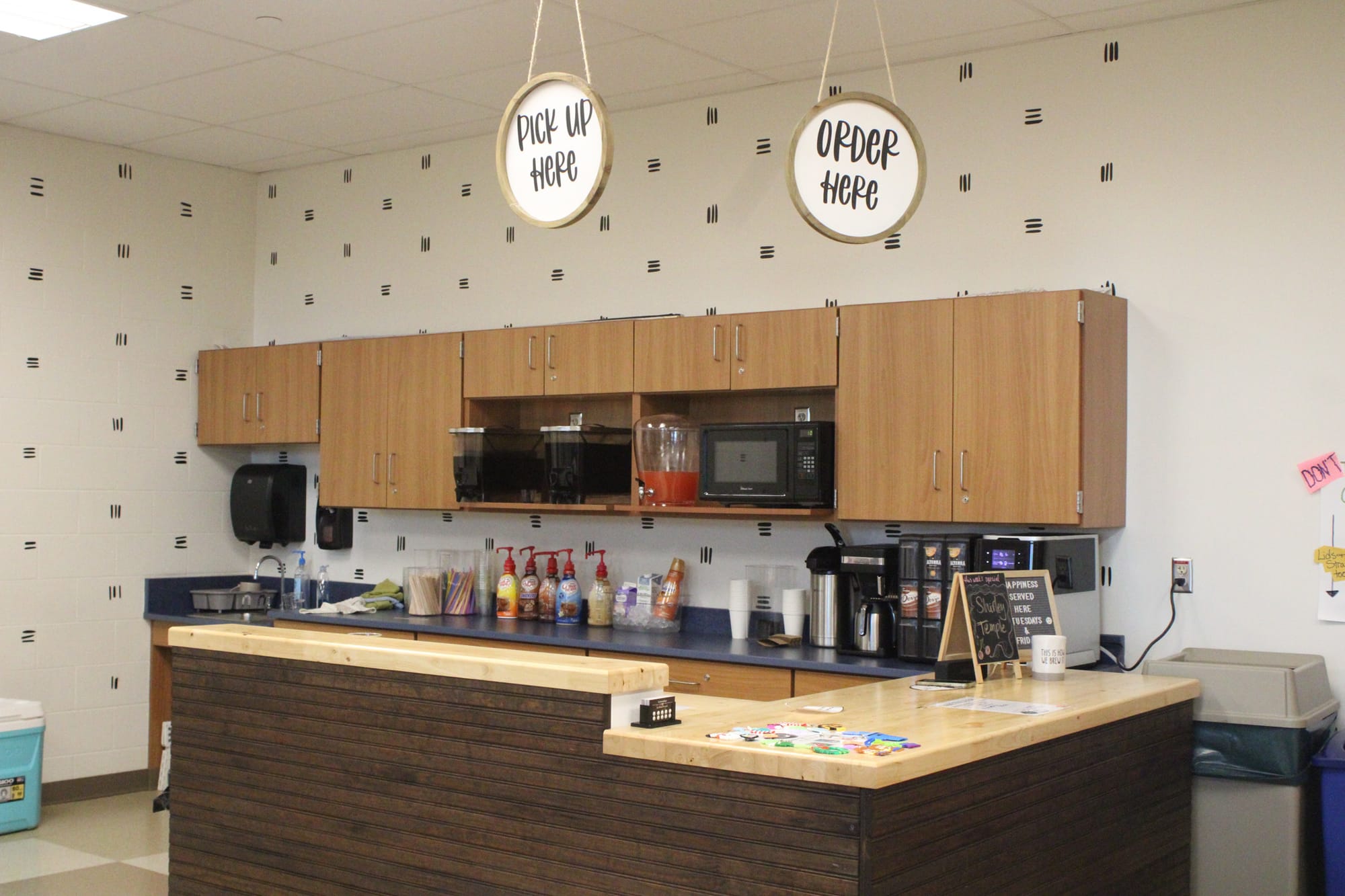
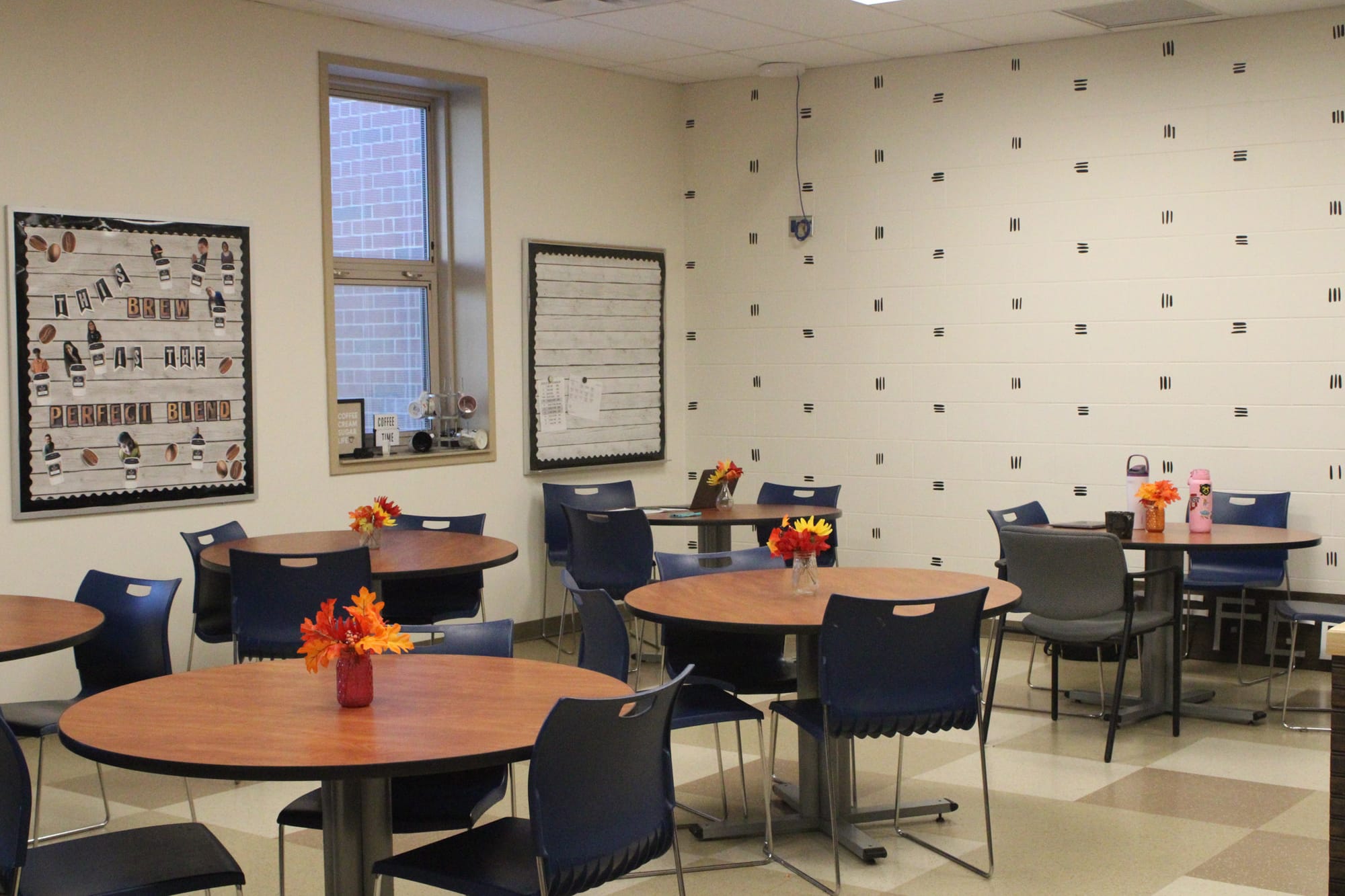
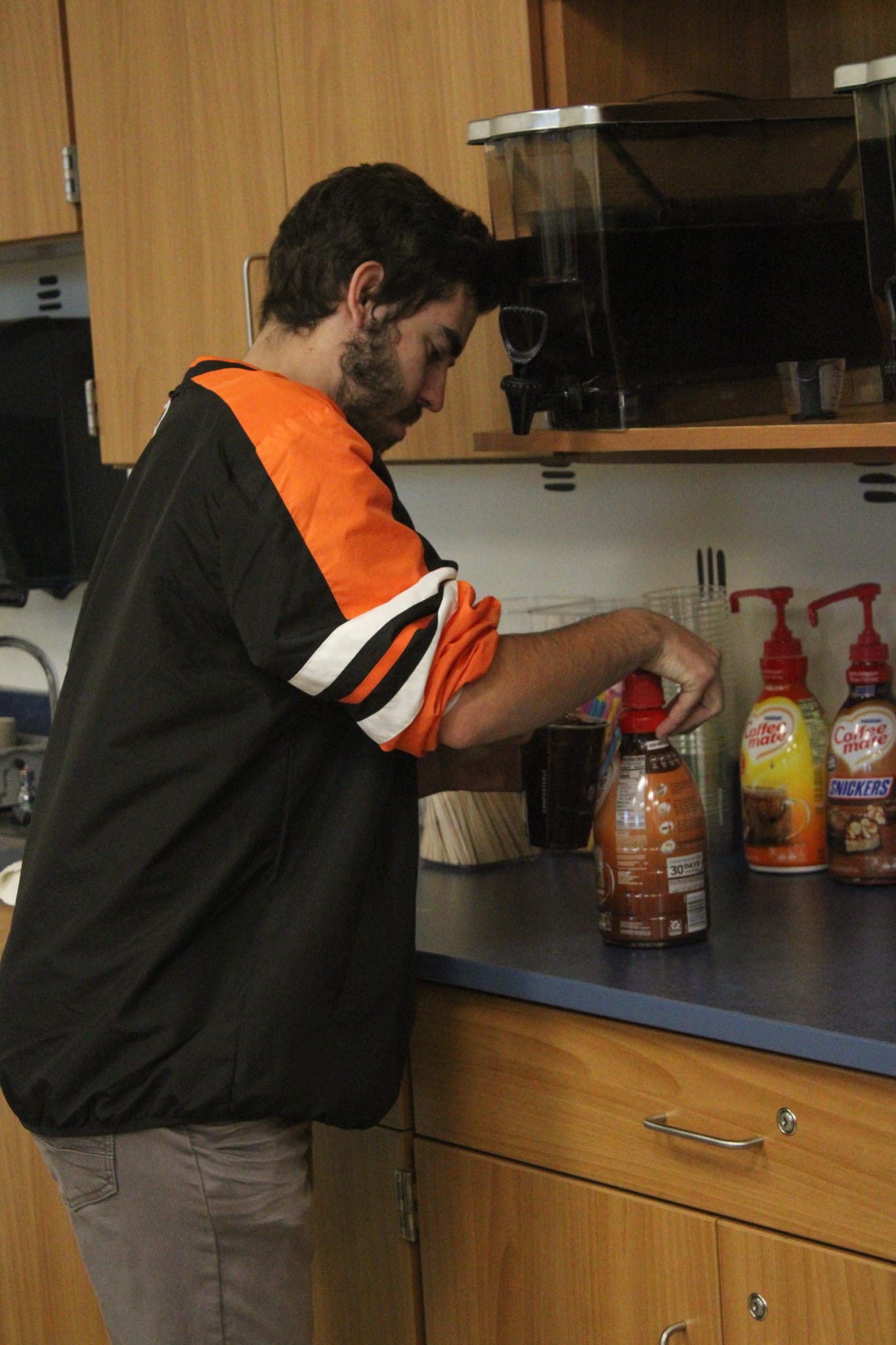
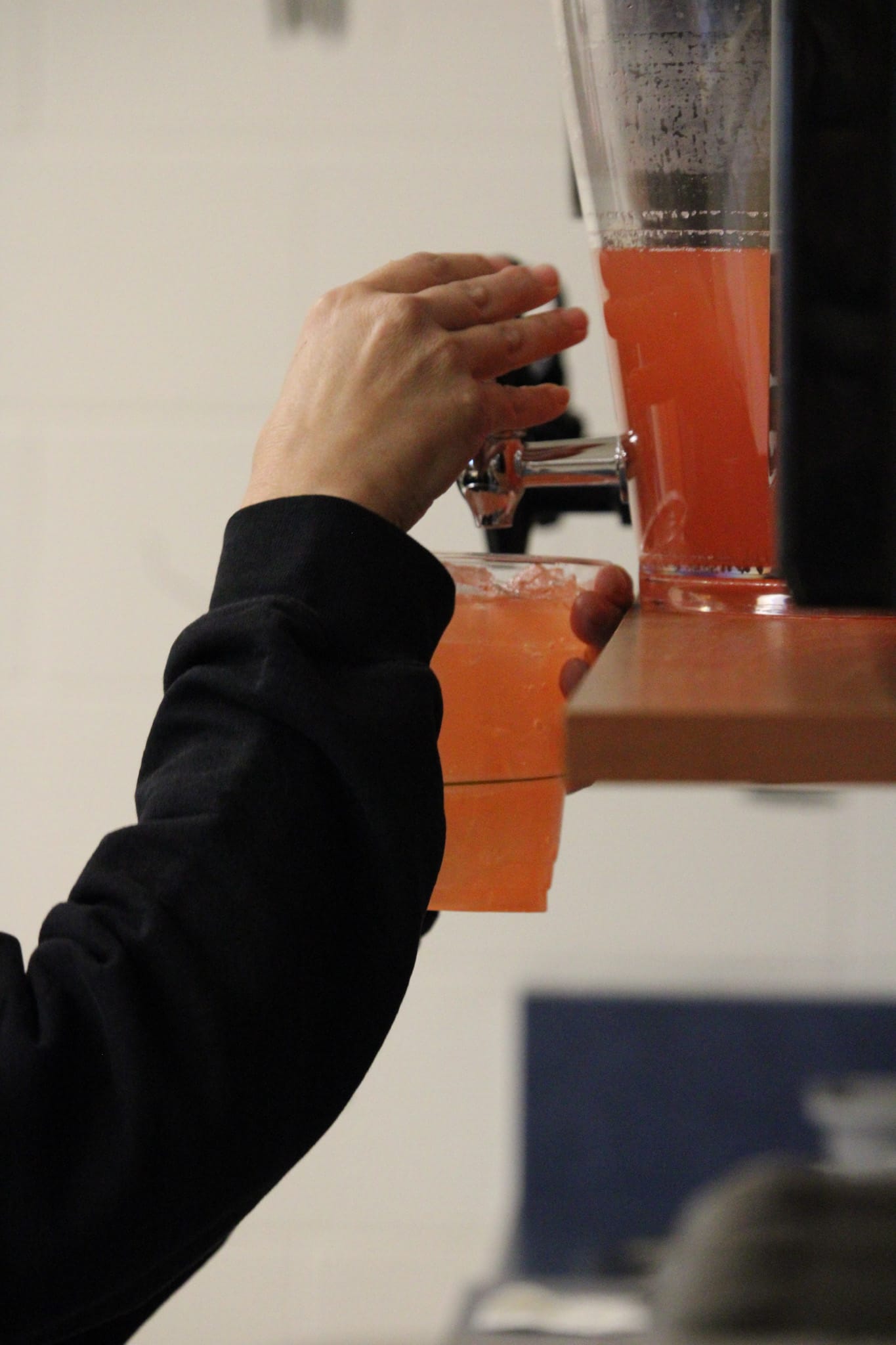
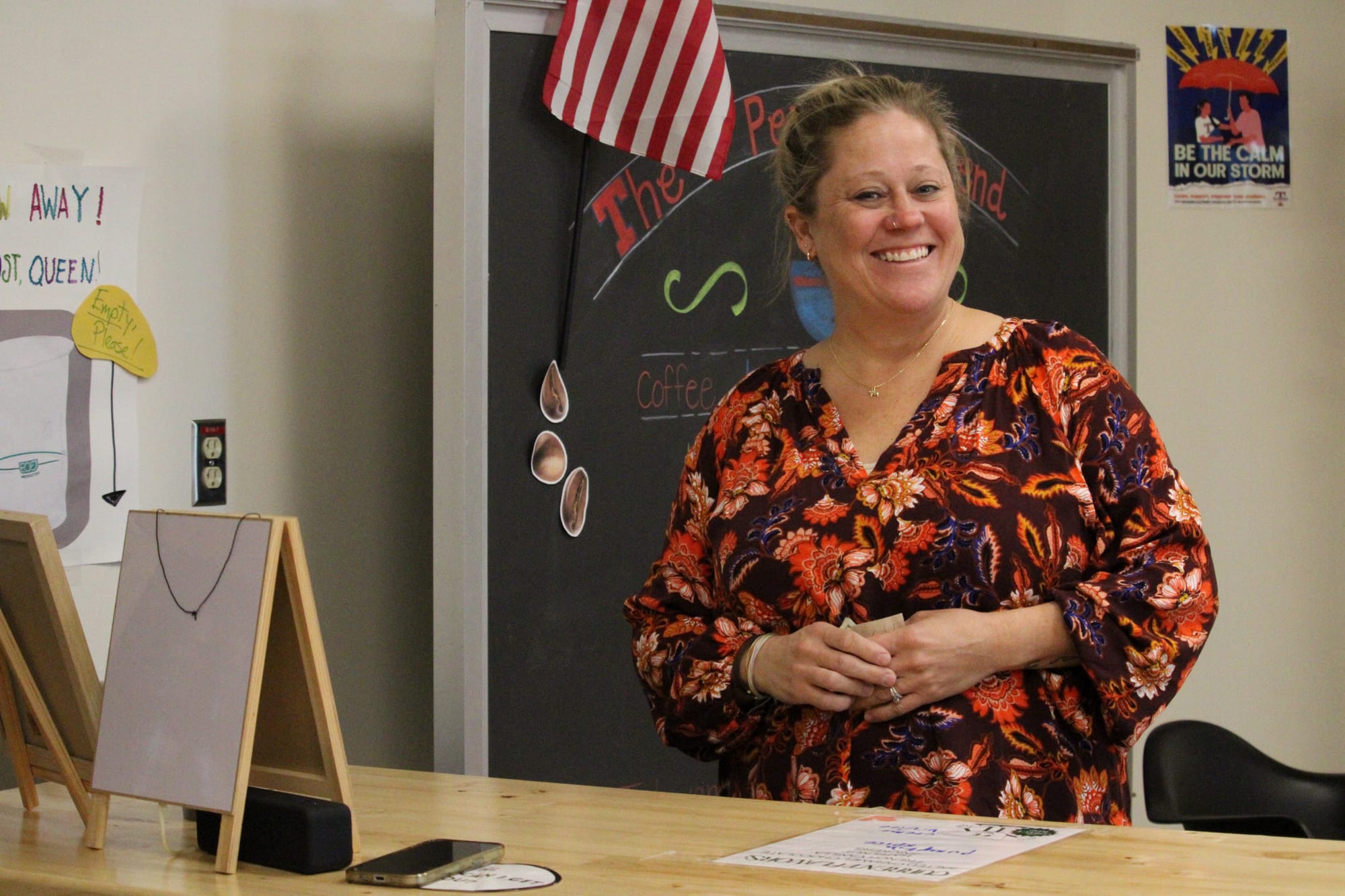
Talawanda Class 23 student Chase Anderson, 19, left, and high school student Bailey Felblinger, 17, demonstrate how the cash system works and fill drink orders at The Perfect Blend coffee shop at Talawanda High School. A THS faculty member is the first customer of the day on Nov. 10, 2026. The shop was started by Talawanda Class 23 teacher Jenny George and is operated by the students in her program and other students at Talawanda High School in need of job experience. Photos by Katelyn Aluise.
George currently has three full-time students who have already graduated THS and another four whom she occasionally pulls from class who need job skills.
Her class operates on Monday, Tuesday, Thursday and Friday, and her students’ time is split between various locations, which she is able to take them to with a van she afforded using a $44,000 anonymous donation.
Aside from working at the coffee shop, they’ll sometimes be at an Airbnb, learning to scrub toilets or change the sheets, or at the Oxford Senior Center helping them cook for their Friday potluck. They’ll go swimming at the Miami Recreation Center, out to eat for an occasion or to a book club for adults with disabilities at the Oxford Lane Library.
At the Hanover Reserve, they’ll help clean up from a wedding, and at the Woodland Manor, they’ll change the dining room over from breakfast to lunch – rolling silverware, clearing tables and wiping down chairs. At the Hampton Inn, her students pull off dirty pillowcases and duvet covers and collect garbage, and at McCullough-Hyde, they make fall bags, which include gripper socks, gait belts and other items.
The students also run an online snack cart at Marshall Elementary for teachers to purchase baked goods or snacks, which are then fulfilled and delivered by George’s students.
George said, at this point in the school year, she and Catherine Mabis, a paraprofessional at THS, can sit and supervise students completing the jobs without needing to offer help or demonstrations.
George is also connecting her students with agencies like the Butler County Board of Developmental Disabilities and Opportunities for Ohioans with Disabilities, which offers additional job coaching as students age out of her program. She keeps a skills checklist where she can rate her students’ level on each skill to show growth over time.
THS also has a job coach and an employability class, which George helped set up, where students may be given a week to practice their job skills at The Perfect Blend or with George and Mabis.
George said she thinks other schools may not be encouraging programs like hers because students who stay after they’ve graduated don’t count toward the school’s overall graduation rate. But THS Principal Scott Davie said if George’s program is the only thing keeping the school from a 100% graduation rate, “We’re happy to have that.”
“(The students) love it,” George said of her program. “I love our community partners, and Oxford is a really special place to have students that are going out in the community. … I have more places I could go than I actually can (take students).”
And she’s already seen successful results.
One of her students who’s currently enrolled, Chase Anderson, 19, now has a job at Kroger and often tells familiar customers to visit the coffee shop.
Anderson said he enjoys working at the coffee shop and at Kroger as a bagger. He said when he ages out of the program, he’d like to continue working at Kroger and move on to other roles.
Another student who was previously enrolled in Talawanda Class 23 is now enrolled at Miami University through the AccessMU Center, and another has been offered a job at a local hotel when she ages out of the program.
Bailey Felblinger, 17, is still a student at THS and works at The Perfect Blend on Tuesdays. She occasionally goes with the Talawanda Class 23 students to clean Airbnbs, to Hanover Reserve or to the library to check out audiobooks. She’s also been with the class to visit the Oxford Municipal Building.
She said the most popular drink she makes at the coffee shop is an iced coffee with salted caramel chocolate creamer, and the second-most ordered is a French vanilla coffee. Her favorite part about working there is that she “actually like(s) meeting new people and actually learning about what I can do at work.”
Felblinger’s dream is to be a fashion designer. She loves to draw and has a vision for creating clothing for people who struggle to find clothes in their size. George said when Felblinger graduates and joins the program, she may be able to take her to a retail store or other venues where she can learn more about working with and selling clothing.
While working alongside the other students in Talawanda Class 23, Felblinger said she’s learned that “hard work actually pays off.”