
TMS students step into inventors’ shoes in history of engineering course
Scott Dennis said his hope is students will also use the skills they learn in his class, even if they don’t become engineers, to save themselves time and money on household projects by having practical knowledge and skills.
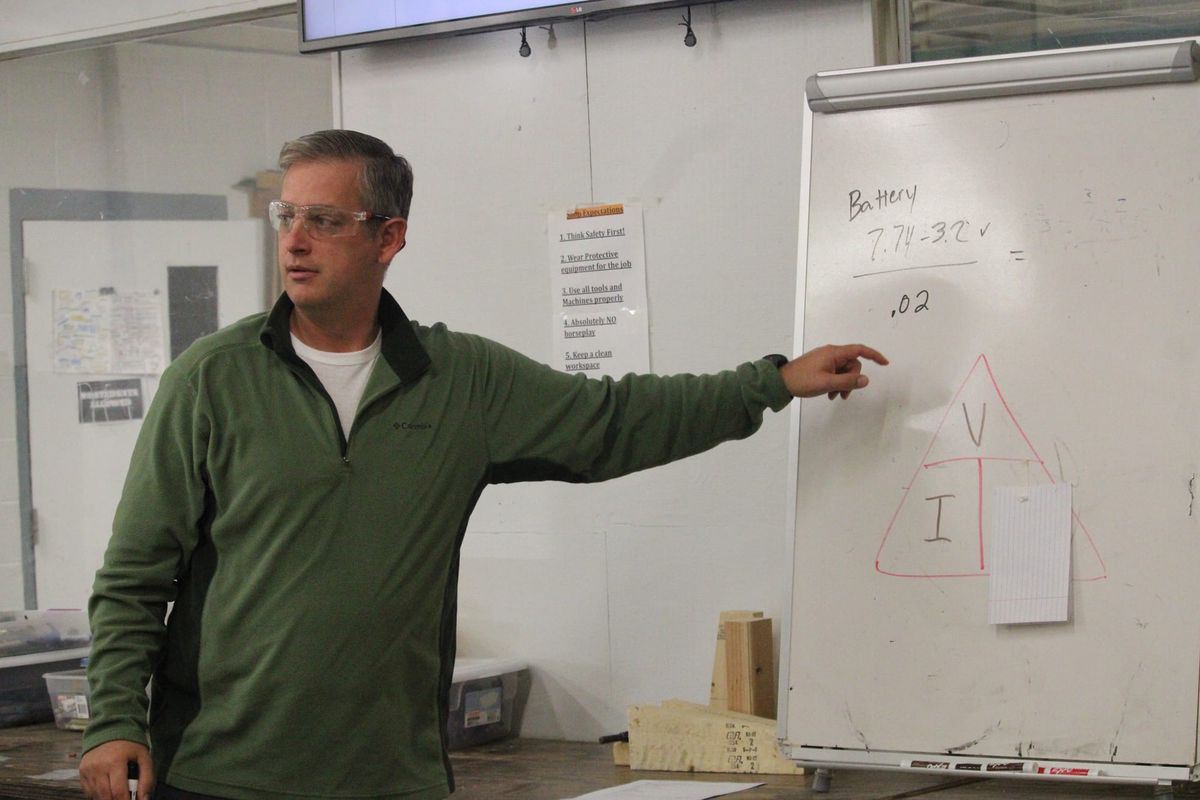
Around 8:30 a.m. on a Thursday at Talawanda Middle School (TMS), Scott Dennis’ students began their class period by watching a video about the creation of modern electricity and lightbulbs and the different inventors who learned how it worked by using their hands and failing over and over again – and getting electrocuted.
The videos, Dennis said, help students start thinking while building routine into their day.
Their next task: be the inventor. The students used what they learned about basic DC electricity, Ohm’s Law, resistance and how electrons hit atoms and cause heat to use basic materials – a nine-volt battery, breadboard, small jumper cables, LED light and a resistor – to complete a circuit and light a bulb.
In this way, Dennis said there are two parts to what he teaches in his class: getting students to understand the processes inventors went through and allowing them to use their hands to understand the equipment and learn from their failures.
This is Dennis’ third year teaching the history of engineering course at TMS. Prior to him taking over, the course was called “Intro to Engineering,” but Dennis used his social studies teaching background to expand the curriculum.
“I want to work in the skills, toolboxes … just getting into the material side of things and understanding how the material works,” Dennis said.
On the invention and historical side, he said, “It helps our country out to have students that understand … we’ve invented some great things here throughout time, and we do that to make life easy on ourselves.”
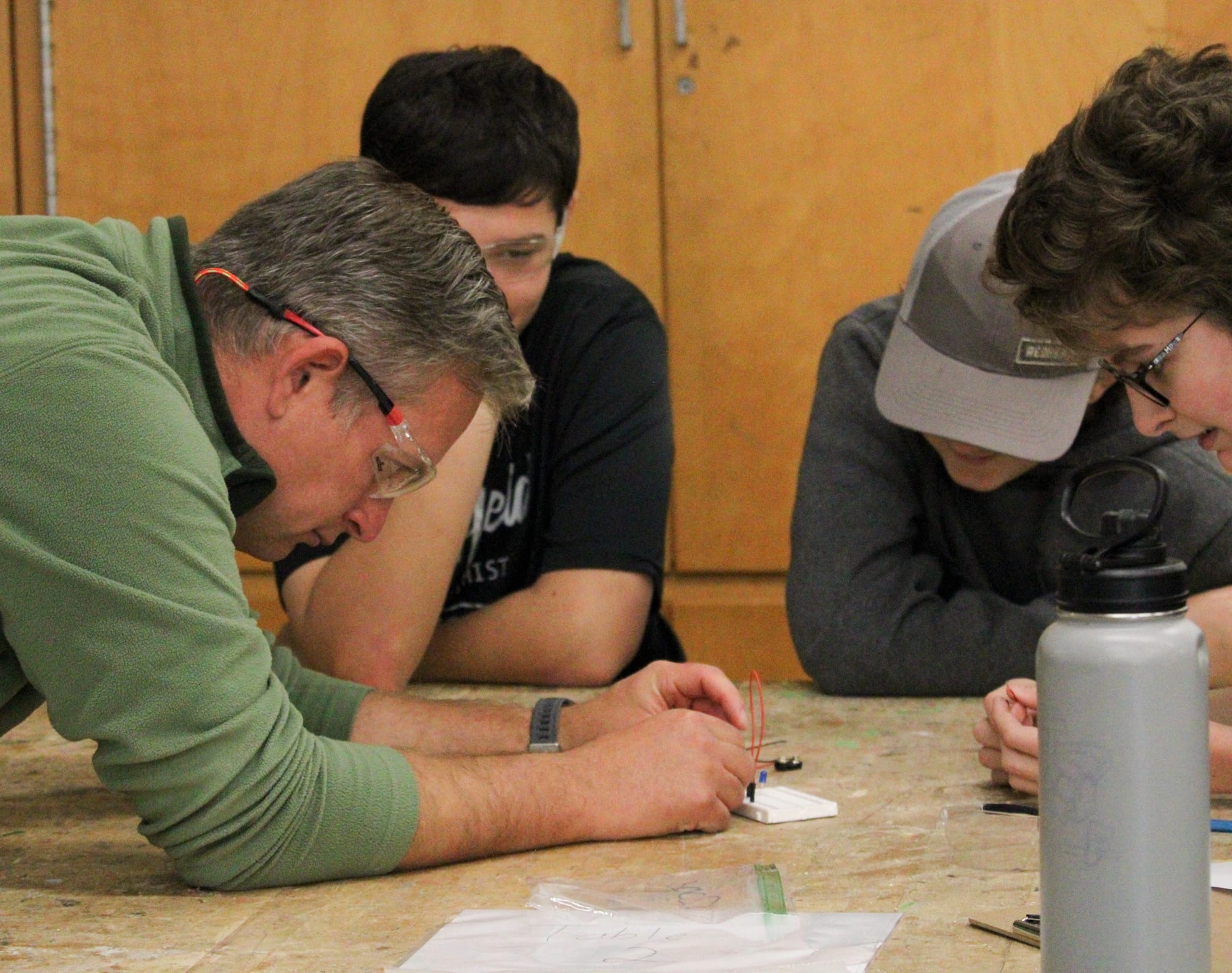
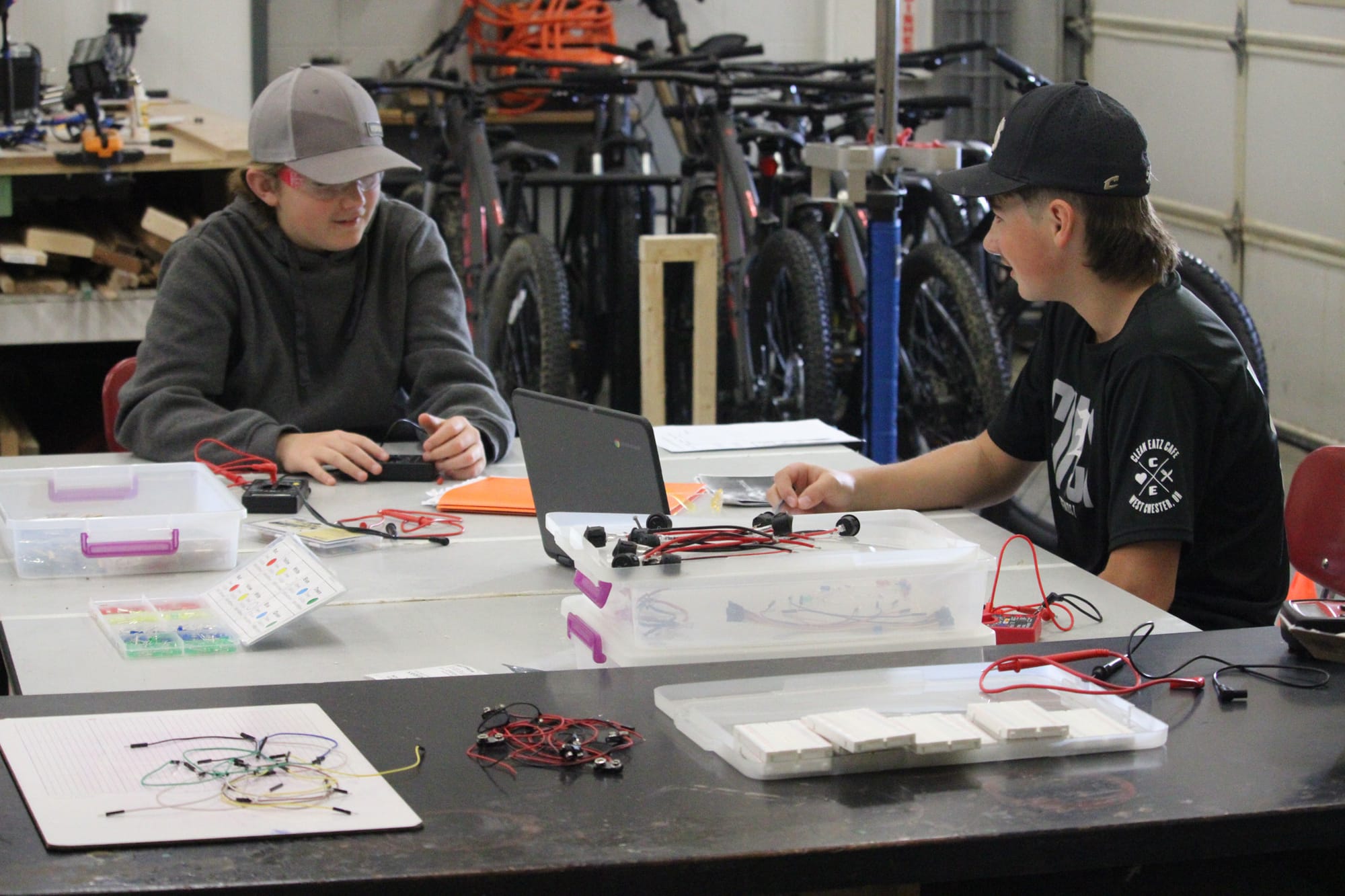
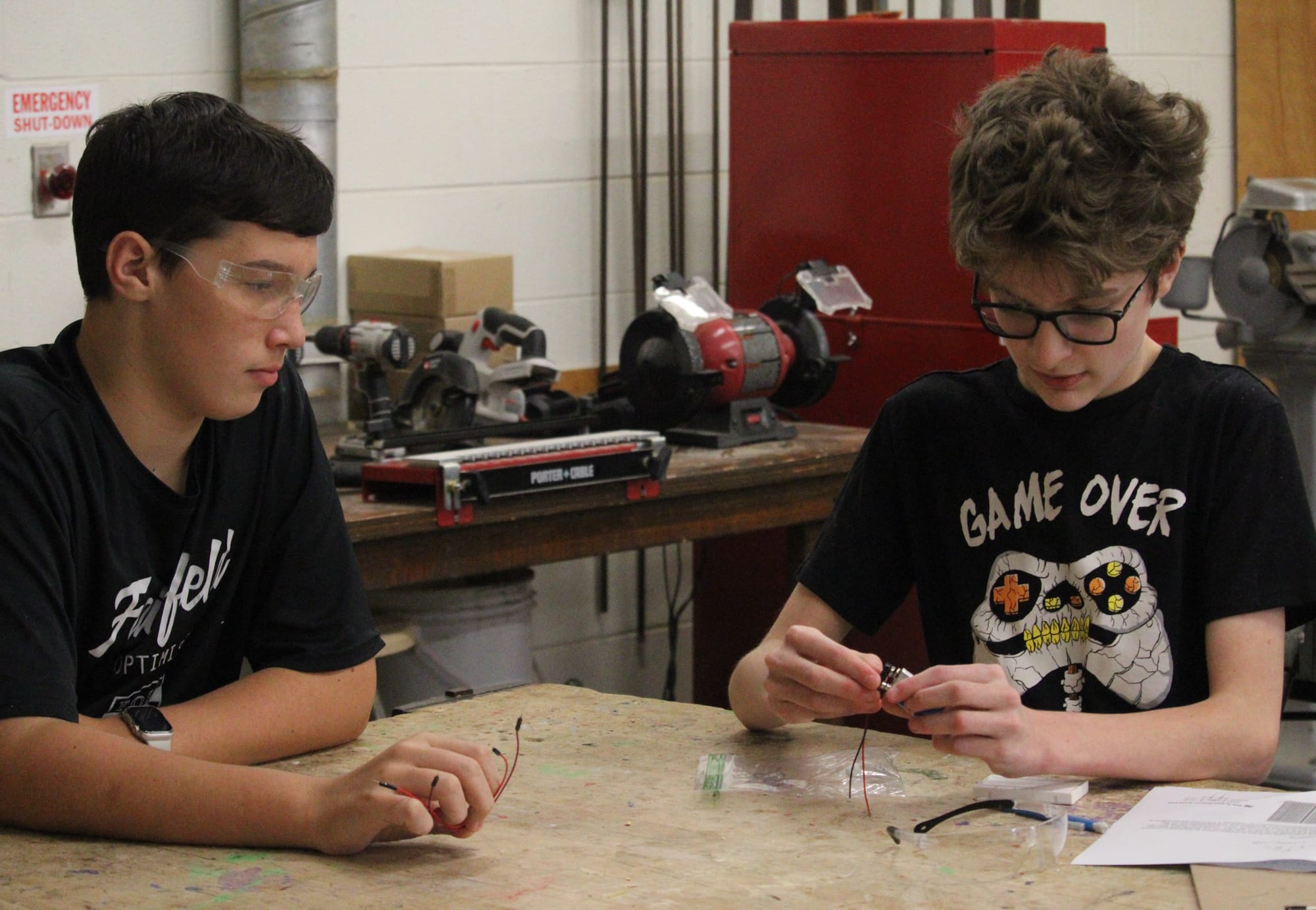
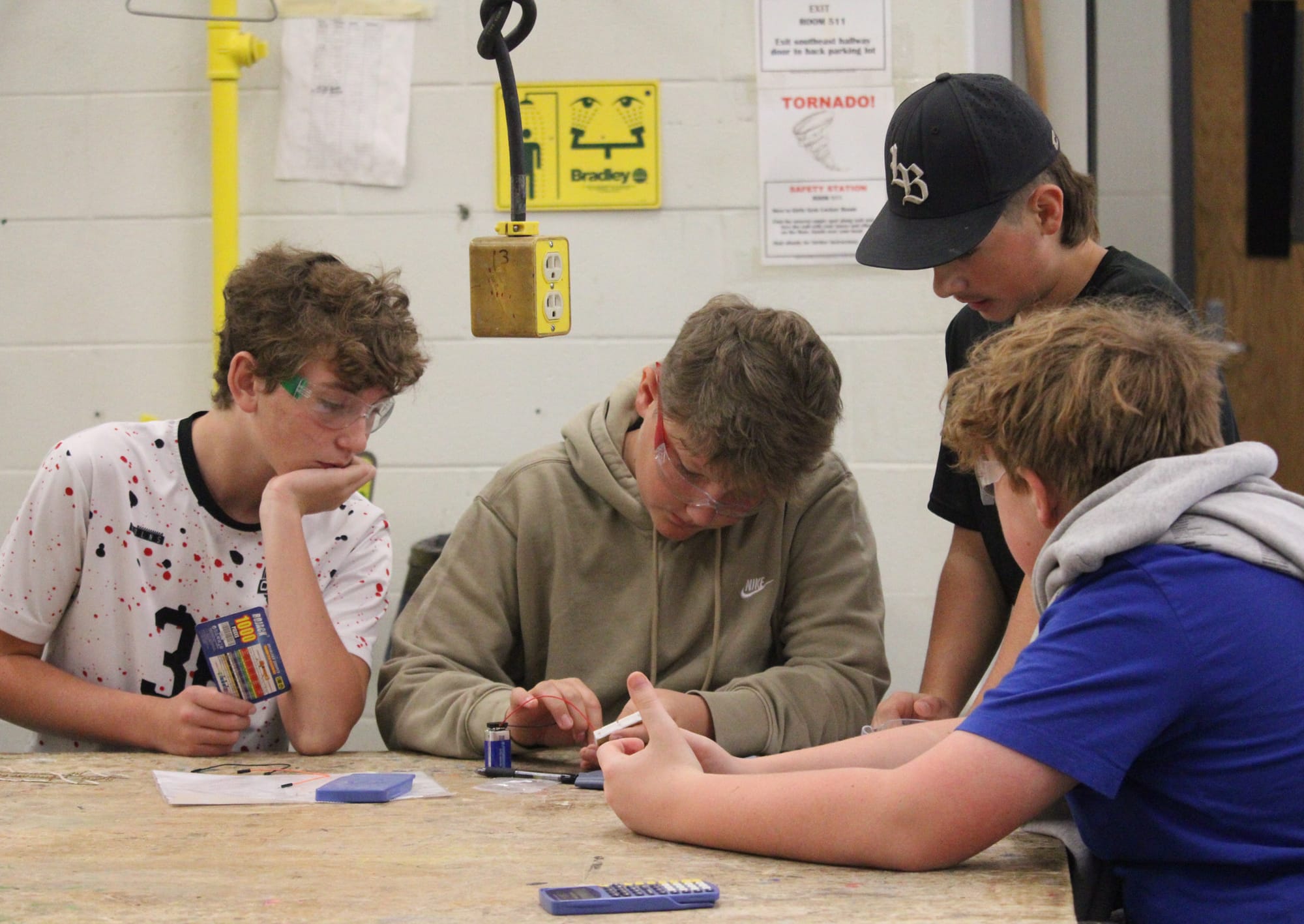
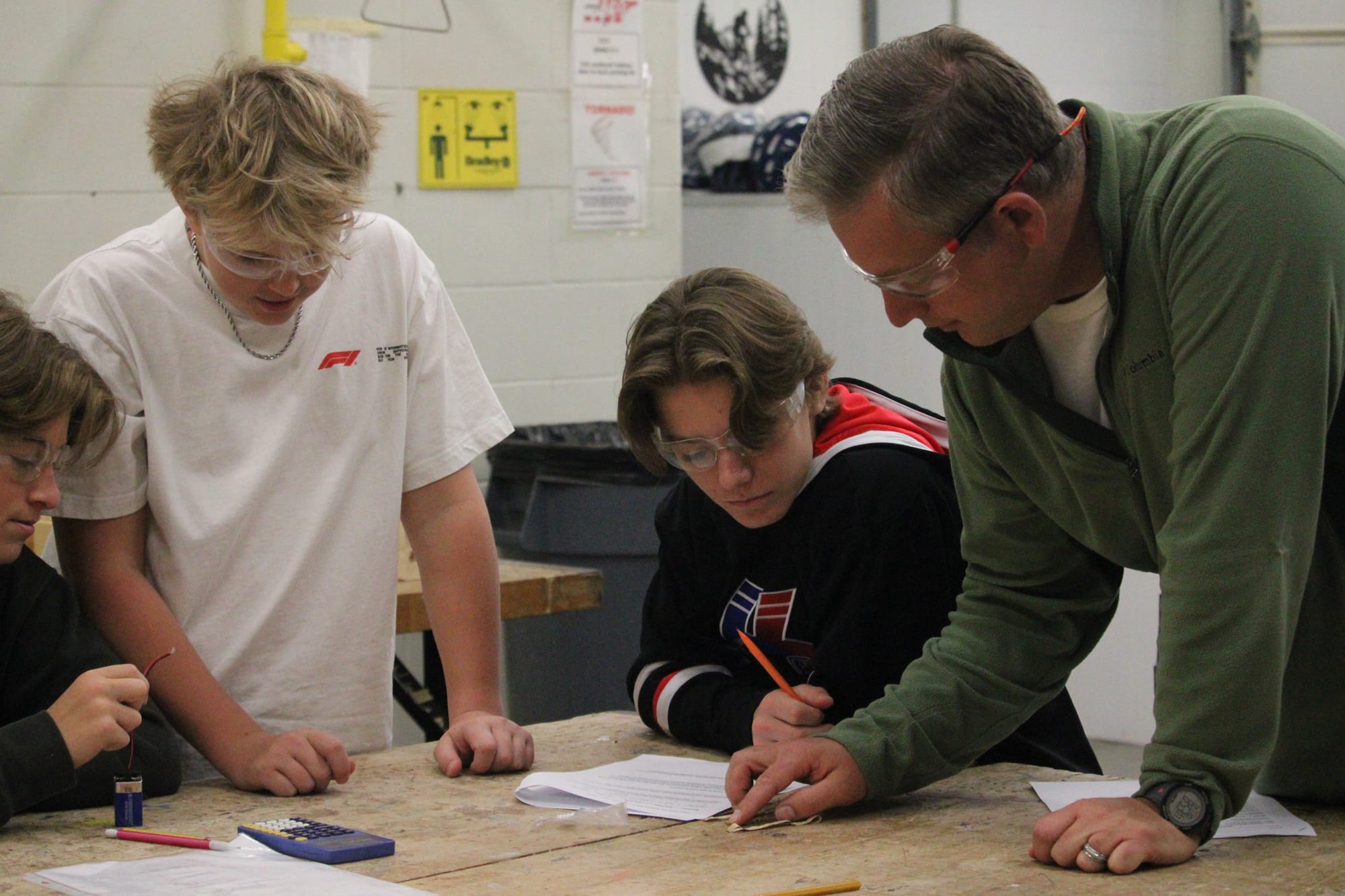
Talawanda Middle School students in Scott Dennis’ history of engineering class learn the basics of DC electricity and attempt to complete a circuit to light a light bulb on Nov. 5, 2026. Photos by Katelyn Aluise.
Dennis’ curriculum begins with students learning about ancient Egyptian, Grecian and Roman history, including the invention of concrete.
Students learn basic tool skills, like how to read a tape measure, use a hammer and nail, hand saw and carpenter square. Then they build a box and pour concrete into it while learning about the difference between ancient Roman concrete and modern concrete.
Then, students travel into the Middle Ages and learn how to make trebuchets with popsicle sticks, and into the Renaissance and build miniature water wheels similar to Leonardo da Vinci’s sketches using bird fountain pumps.
The projects advance as the class progresses, and students eventually move on to learning about the invention of wheels, gears and the modern bicycle and participate in building actual bicycles.
Prior to their lesson about electricity and light bulbs, students explored a timeline of inventions from the Industrial Revolution, including steam engines, and they’ll soon be moving on to learning about Henry Ford and building miniature carbon dioxide canister cars. At the end of the lesson, there’s a classwide race along a PVC pipe track to see who built the fastest car.
“We know they enjoy getting out of their seat,” Dennis said about one reason he decided to integrate the hands-on learning model into his class curriculum. “That’s what I try to keep it at probably 20% of the time.”
Dennis said his hope is students will also use the skills they learn in his class, even if they don’t become engineers, to save themselves time and money on household projects by having practical knowledge and skills.
For example, students in his class learned about different types of wood joints and how to create them using a simple hand saw – like the ones that make picture frames and doorways.
“You can do that yourself and understand how these angles go together and keep building off of that,” Dennis said. “I think those are helpful (skills) for kids to have.”