
Talawanda receives donations to help with lunch debt
As of December, Talawanda School District students accrued more than $58,000 in unpaid meal fees.
The Talawanda School District is expecting about $7,000 in donations to help settle student lunch debt following a November announcement from Superintendent Ed Theroux that it reached a high this school year.
District Treasurer Shaunna Tafelski told the Oxford Free Press following a regular Talawanda Board of Education meeting on Dec. 18, Talawanda students have accrued more than $58,132 in unpaid breakfast and lunch fees.
These fees, if left unpaid, will continue to accumulate each year until students reach graduation, at which point the students may be prevented from participating in the ceremony.
Although many students’ families who have accrued debt may have put off or forgotten to pay their dues and will likely cover it themselves, Tafelski estimated around 75% of Talawanda students with debt are in need of assistance with their lunch dues, and the most need is present at Talawanda High School. Overall, she said a high amount of debt is “normal” for the district.
Tafelski said, in the past, groups like the Oxford Community Foundation, Rotary Club and the Women’s Giving Circle donated funds to assist with the debt, although those donations had “dried up,” or all been used, by November.
But on Dec. 18, the board approved $3,000 in anonymous donations directed toward assisting with the debt. Tafelski told the Oxford Free Press the district is expecting another $4,000 from an anonymous donor to be used for debt at Kramer Elementary School, and more calls about donations are rolling in.
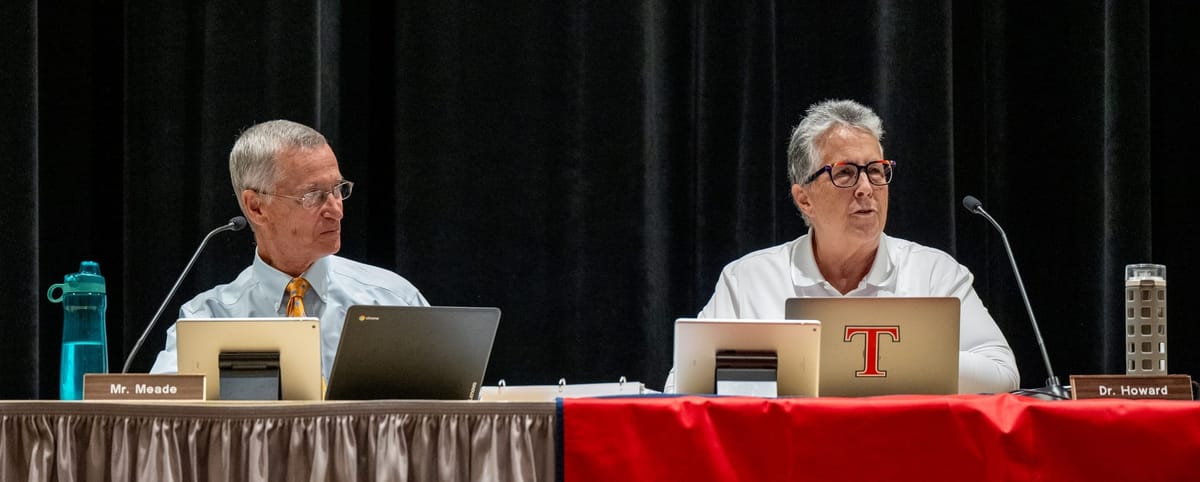
“There’s been a tremendous outpouring of support by the community,” board president Rebecca Howard said.
Enrollment data provided by Talfeski showed about 40% of Talawanda students currently qualify for free or reduced lunch, for which the school district would be reimbursed by the state. Families may apply for free or reduced lunch by filling out a form on the school district website under “department” and “food services.”
Anyone wishing to assist in paying student lunch debt may reach out to Tafelski by calling the school district at (513) 273-3100.
Pending legislation
In other business, board member Matt Wyatt discussed several bills currently being considered by the Ohio General Assembly which would affect Talawanda students if signed into law.
The Baby Olivia Act, Ohio House Bill 485, which was passed by the Ohio House of Representatives in November, would require every public school in the state to show students in grades five through 12 a video about fetal development.
The bill, sponsored primarily by Melanie Miller, chair of the Ohio House Pro-Life Caucus, currently includes an option to excuse students from this instruction if requested by a parent or guardian.
Wyatt also brought up a bill referring to the “success sequence,” Ohio Senate Bill (SB) 156, which was passed by the Ohio State Senate in October. The bill would require public schools to teach students that individuals who graduate high school, go on to work full-time and marry before having children are less likely to live in poverty.
“My concern as a board member (is that) the legislature is increasingly telling local districts exactly what to teach and how to teach,” Wyatt said.
He said of SB 156, “This curriculum (is) telling kids from single parent homes, kids being raised by grandparents, kids of all kinds of all family situations that there’s only one right way, one right path.”
“We need to figure out how to teach this in a way that’s honest and doesn’t shame kids in circumstances that they didn’t choose,” he said.
Wyatt also referenced SB 107, which would require state and school district board members to appear on ballots with a party designation.
Other board members did not share comments during the meeting about these bills.
Wyatt also gave an update on the EdChoice voucher lawsuit. According to initial reporting by the Statehouse News Bureau, a Columbus judge ruled in June the private school voucher program was unconstitutional by diverting money away from constitutionally required public schools.
Still, Wyatt pointed out EdChoice is continuing as the state appeals the case, meaning families using state funding for private schooling currently still have that option available.