
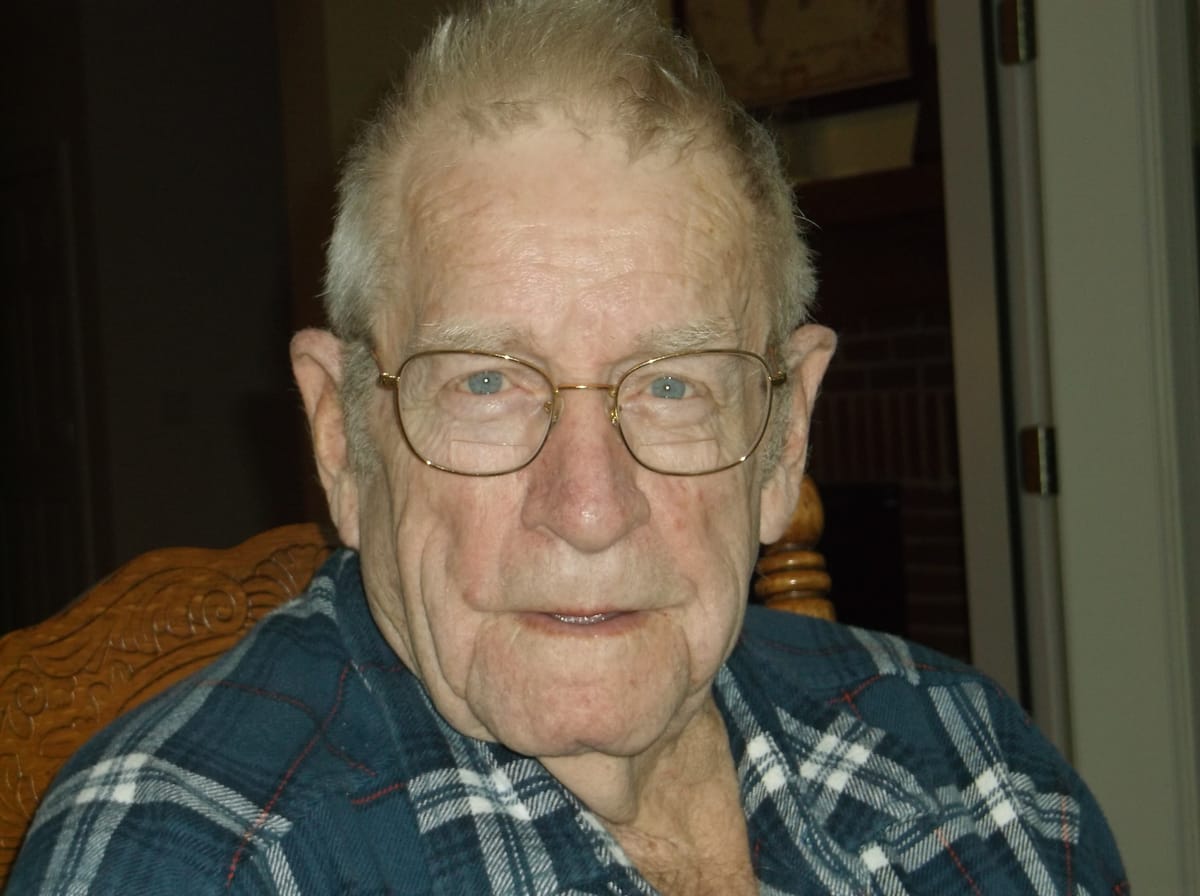
Veterans Among Us: Don ‘Mac’ McDaniel
"Don comes from a Hanover Township farm family filled with Navy tradition. His father served in the Navy as one of the original Seabees in World War II."
Author Joseph Conrad once said, “There is nothing more enticing, disenchanting, and enslaving than life at sea.”
Millions of sailors would probably agree with Conrad – and I sat down with one of those Sailors, Don “Mac” McDaniel, to share his view of life at sea with the U.S. Navy from 1961 to 1965.
Don comes from a Hanover Township farm family filled with Navy tradition. His father served in the Navy as one of the original Seabees in World War II. His father’s early advice to Don was to be sure to make sure that he found a career after he left the service. Don was a graduate of the then “new” Talawanda High School in 1961. His graduating class was the first class to complete all four years in the new building.
Two weeks later, he went to a Navy recruiter and enlisted. He was then off to San Diego, California for the first of many experiences that would shape his life forever. He went through naval basic training in San Diego and was then assigned to temporary duty on the USS Estes, an amphibious command ship.
Soon after, he was off to his Navy “A” school, the Navy’s training ground for specialty work within the Navy. “A” school was a fifteen week course, and Don shared that his first two career choices were as an electrician or a gunner on a Navy ship. “I liked electrical work, but I was also interested in things that went boom,” Don said.
Don eventually became an interior conversation/electrical specialist, responsible for maintaining and repairing any form of internal communication system or device on board any Navy ship.
Don’s home away from home after “A” school became the USS Currituck (AV-7), a sea plane tender. He called the USS Currituck home for the better part of 1963 and 1964.
Used in World War II to handle “float planes,” sea lane tenders became the training ground for future aircraft carrier pilots. Nicknamed the “Wild Goose,” the USS Currituck was one of the first ships of its type sent to Cam Ranh Bay in Vietnam. It is credited as being the first ship in the Vietnam War to deliver shore bombardments in support of ground troops, in June, 1965.
Prior to his deployment to Vietnam on the USSCurrituck, Don came back to Oxford on leave and was asked to attend the 1963 graduation ceremony at Talawanda High School.
Some of his younger high school friends were graduating that year.
“I thought that I would impress all of the ladies by going to the ceremony in my Navy Dress uniform,” Don said. “There was this pretty, bright eyed girl (Mary) that caught my attention. Even though she was the girlfriend of someone else at the time, I was determined to get to know her. We began exchanging letters, and through correspondence we became a couple.”
After his time on the USS Currituck, Don was assigned to the USS Pine Island, another sea plane tender, in April, 1965 for three months. The USS Pine Island was his last duty station before his enlistment was up in June, 1965. He ended his naval career as a 3rd Class Petty Officer.
Don returned to Oxford in 1965 and married Mary the next year.
His father’s early advice about creating a career while in the service led him to become a member of the International Brotherhood of Electrical Workers, Local 648, of which he was a proud member for 33 years.
Navel tradition in the McDaniel family continued when the McDaniel’s youngest son enlisted in the Navy and served in the Gulf War. This son married a Navy veteran of a higher Rank.
I asked Don what his Navy service meant to him, and he did not hesitate to say, “I realized the value of this country. I still get emotional every time I hear the National Anthem. I’m proud of the American flag.”
Former President John F. Kennedy shared the following at the US Naval Academy in August, 1963: “Any man may be asked in this century what he did to make his life worthwhile, I think, can respond with a good deal of pride and satisfaction with, ‘I served in the United States Navy.’”
Martin Luther King Jr. is quoted as saying, “Everyone can be great because everyone can serve.”
Kennedy and King’s comments spoke about Don McDaniel and millions of other veterans both past and present. They all stepped forward out of an inherent, intrinsic obligation to serve both in the military and as representatives of their communities. Many of them now wonder why this obligation, for many, seems no longer important.
Lee Fisher is a Miami graduate, resident of Oxford, Ohio and a Vietnam veteran.