
Veterans Among Us: Ed Pietzuch
Pietzuch shared that his naval service provided him with a career, self confidence that he never had before the Navy, and the ability to manage his life and people around him often under difficult circumstances.
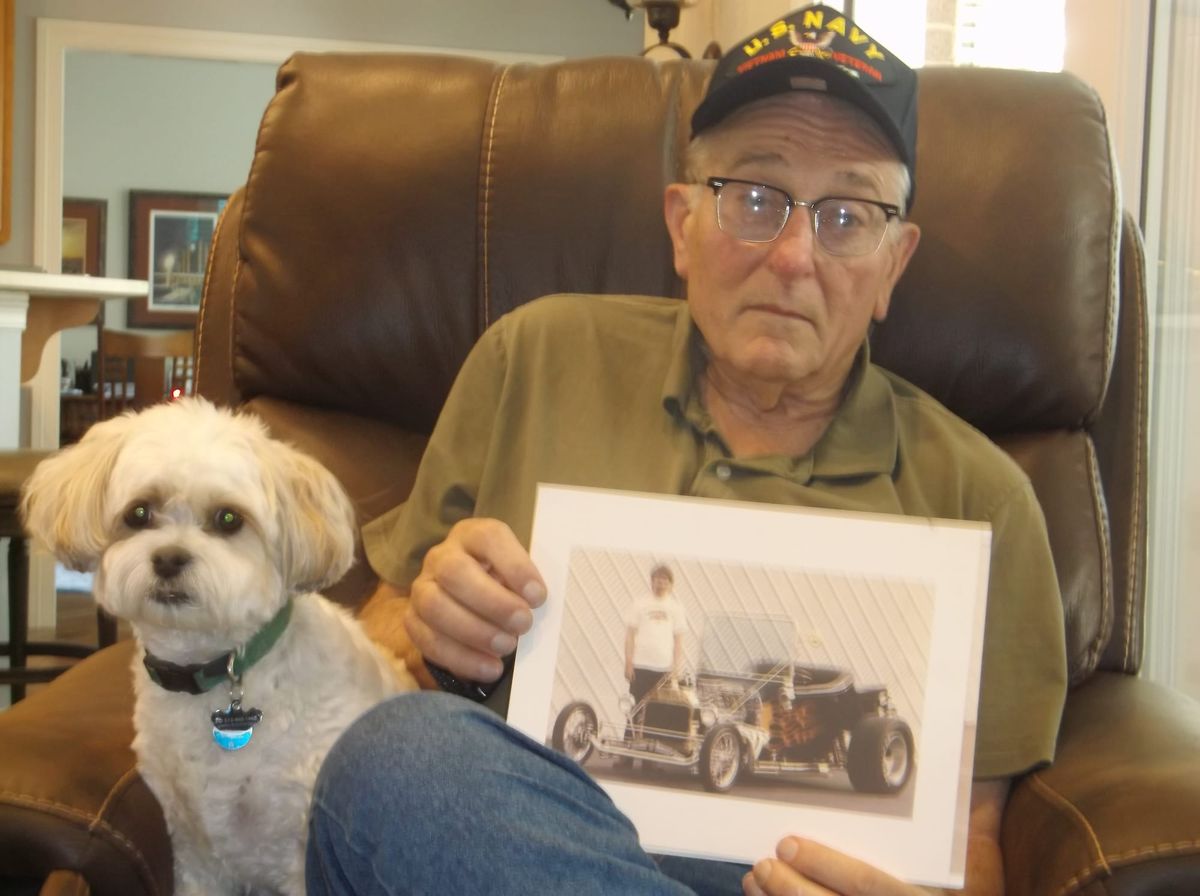
“Before the Navy, my life was wandering generalities,” said Ed Pietzuch.
As a young man, Pietzuch was raised in the Mount Healthy area of Cincinnati.
“My early years were filled with a fascination with cars,” Pietzuch said. “I built hot rods, raced them and enjoyed the company of girls who were attracted to them.”
In his late teens, the Vietnam War confronted him, and his father, a World War II veteran, said that he should either join the service or be drafted.
“The Navy recruiting office was closest to my home, so I signed up,” Pietzch said. “I was soon on my way to the Great Lakes Naval Training Center.”
In 1967, the Navy sent Pietzuch to jet engine school in Memphis, Tennessee. After Memphis, he was assigned to a billet in Imperial Beach, California, where he learned to work on rotary (helicopter) engines.
“This was my first glimpse of what my life as a Navy Sea wolf would be,” he said.
Pietzuch’s next stop in his Navy journey was in 1970, when he was assigned to the Navy’s Helicopter Attack Squadron Light (HA(L)-3, nicknamed the Sea Wolves, at Binh Thuy Air Base in Vietnam. The Sea Wolves supported riverine and Navy SEAL operations out of Binh Thuy throughout the Mekong Delta. This support included aid given to brown-water Navy boats, providing insertion and extraction of Navy SEAL teams and conducting medical evacuations under fire.
It was up to Seawolf Pietzuch and those around him to keep aircraft flyable. The Navy had no attack helicopters in its arsenal at the time, as all of their aircraft came from the US Army in the form of surplus UH-1B Hueys. Many of these aircraft were not new. Most came to the SeaWolves already damaged.
“It was the ultimate challenge for me and those around me to use our mechanical and fabrication skills to get planes in the air,” Pietzuch said. “Air crews often came to the shop and thanked us for putting a plane in service that came to us as a bucket of bolts.”
The Navy said goodbye to Seawolf Pietzuch in 1970 when his enlistment was up. HA(L)-3
was disestablished in Vietnam in 1972 without much fanfare. The squadron had flown over 100,000 combat sorties in Vietnam, lost 44 servicemen and had over 200 wounded.
One of the ironies of naval history is that HA(L)-3 was the most highly decorated naval aviation squadron of the Vietnam War, yet the squadron never had a home base in the United States to return to.
Pietzuch returned to the United States and picked up his Navy-learned skills with jobs in General Electric’s jet engine department and then work in the tool industry. It was through a fellow worker that he met his current wife, Gwen. Pietzuch had shared with this worker that he wished he could find a girl who played the piano. On the other hand, Gwen wanted to meet a guy who liked dogs. They both found these qualities in each other and they are both proud of Ed’s service.
Pietzuch shared that his naval service provided him with a career, self confidence that he never had before the Navy, and the ability to manage his life and people around him often under difficult circumstances.
An anonymous quote from a Navy SEAL who was rescued by the SeaWolves states, “Then, the tip of the spear needed help from above, and radio silence had to be broken…the word went Out ‘Scramble the SeaWolves.’”
We should all be thankful and grateful for people like Ed who turned their ‘wandering generalities’ into service to the country. Millions of servicemen and servicewomen have scrambled through countless conflicts to come to the aid of those around them.
Lee Fisher is a Miami graduate, resident of Oxford, Ohio and a Vietnam War veteran.