
All Miami departments to integrate AI into curriculum
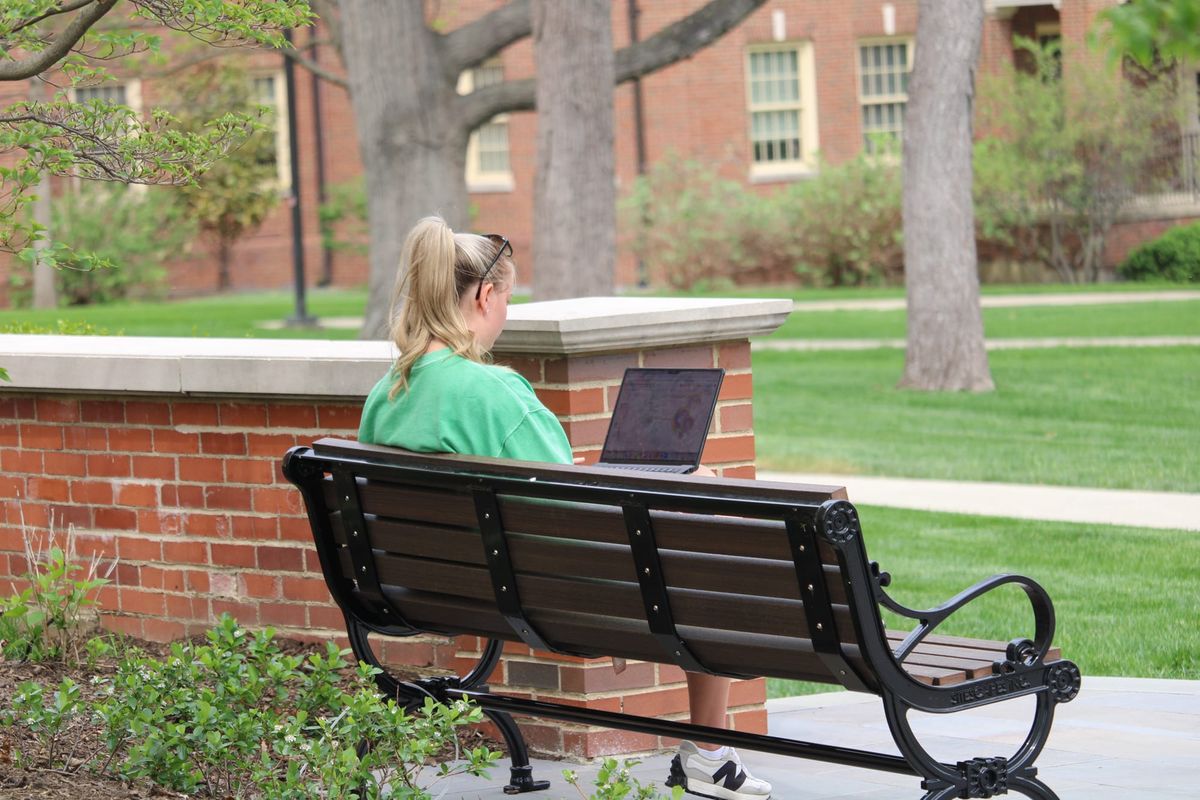
Miami University will begin integrating teachings about artificial intelligence into all academic departments’ curricula starting with the 13 that volunteered for this fall.
Miami University will begin integrating teachings about artificial intelligence into all academic departments’ curricula starting with the 13 that volunteered for this fall.
Marko Dumančić, associate provost for undergraduate education, said Miami’s idea is to have an AI competency learning outcome integrated into every major. Students would not only begin to understand AI, but also how it fits within their chosen professions.
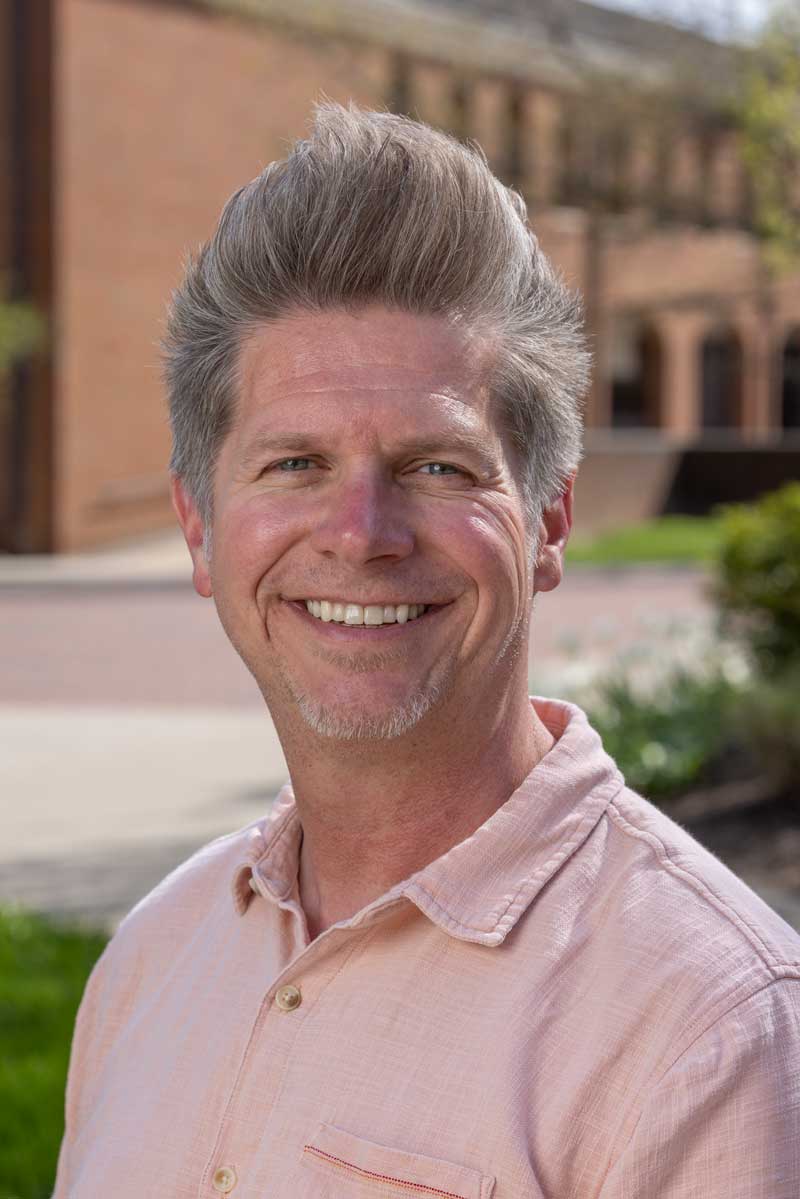
Dennis Cheatham, an associate professor of design in the department of art, was appointed to be one of two AI provost fellows for the current and next academic year.
Cheatham said the goal of the AI provost fellows is to research how students and faculty are engaging with AI, the challenges they're facing or the concerns they might have. It’s also to make connections between faculty and lead initiatives like integrating AI into the majors.
He said the concept of integrating teachings about AI into curriculums was introduced to department heads during a meeting in late January.
Cheatham said 13 departments volunteered during that meeting to be in the first cohort to teach subjects, like how professionals are using AI or how its uses are evolving, during the upcoming fall semester.
These 13 departments, he said, have been researching over the past semester what the impacts of AI in these fields are and how faculty can introduce these topics.
According to Dumančić, each department was given $1,000 to invite an expert close to their field to help them with this research, as well as a professional development stipend, although he could not provide the full amount the university spent on the endeavor.
The first 13 departments integrating teachings about AI into their majors include mathematics; anthropology; chemistry; physics; language, literatures and writing; sport leadership and management; electrical and computer engineering; accountancy; art; teaching, curriculum and educational inquiry; educational psychology; statistics; and speech pathology and audiology.
According to Cheatham, each of these 13 departments has chosen one major in which to first integrate AI into the curriculum in the fall, although he could not provide a list.
In the fall, the next cohort of 20 departments will begin their research process for which the results will be implemented for another 20 majors during the spring 2027 semester. The final 22 departments will implement AI into the curriculums of another 22 majors during the fall 2027 semester.
“The idea is, when you have a department that has one major that has integrated AI into it, then they can help other majors in that department as those majors update their learning outcomes to match how AI is impacting them in various ways,” Cheatham said. “This is a very … ground-up process where faculty in a disciplinary area, in a subject matter, (have) freedom to choose how to implement (AI) in ways that make sense for them.”
This doesn’t mean integrating AI into every class or assignment, and it doesn’t necessarily mean using ChatGPT for assignments or having AI analyze datasets, Cheatham said, and departments haven’t been taking that direction.
Instead, for some majors, the changes may include a learning outcome that asks students to question AI’s uses in their profession or decide how to recommend future clients or coworkers use AI for a specific outcome, according to Cheatham.
“Some departments are implementing AI use,” Cheatham said. “Some departments are doing outcomes that are putting AI at the center of investigation or inquiry or really testing it out and being critical of it.”
Faculty union response
Theresa Kulbaga, president of the Faculty Alliance of Miami (FAM) union, which represents over half of the university’s faculty, or nearly 800 people, said she’s heard mixed reactions from faculty related to the idea of integrating AI into curriculums.
As a faculty member herself, she said she isn’t against faculty working AI into their teaching and research, nor does she believe others are against it as a concept. But as the president of FAM, she wants to draw attention to the contract which represents faculty members, including articles related to academic freedom and intellectual property, that she said “complicate the university’s desire to integrate AI everywhere.”
“Our academic freedom article means that in teaching and research … faculty get to choose what tools they use,” Kulbaga said, adding the intellectual property article allows faculty to have the agency to choose whether to use AI in delivering their intellectual property.
“FAM’s position is that we’re not entirely anti-AI, but we do want the university to honor our academic freedom in both research and teaching as required by the contract, and that means the freedom to choose to use AI in the classroom or not,” Kulbaga said.
Kulbaga said faculty already have some language about AI in their current contracts. Now, she said FAM’s union representatives, as well as librarian representatives, are negotiating a second contract with stronger language related to AI that would explicitly protect faculty against being compelled to use AI in teaching and research, as well as protect faculty and librarian jobs from being replaced by AI.
Kulbaga said bargaining began in March when the union presented an AI article with five points, including that the university may not assign, reassign or subcontract work by union members to be performed by AI.
It also includes that the university would not use faculty members’ or librarians’ intellectual property to train or develop AI except with permission from the union member; the university, faculty and librarian union members agree academic freedom includes the freedom to abstain from AI use in class and in research; the university shall not use AI in assessing, evaluating or monitoring union members; and the university will notify the union of any planned use of AI in matters impacting members.
“We’re the experts in our disciplines,” Kulbaga said. “The university wanting to have AI in every major, I understand the logic, but as far as individual faculty members go, we get to determine to what extent we engage with AI or not.”
Some using AI already

Heidi McKee, a professor who was also appointed as an AI provost fellow, said she teaches professional writing, which is already being impacted by artificial intelligence, for example, in grant writing.
McKee first looked at AI in writing as a topic in 2016. Back in 2023, she was teaching undergraduates how to use critical thinking related to using AI in medical writing. She’s also worked with students in thinking about using AI in business communication.
An article published in “Computers and Composition” in 2024 called, “Writing with generative AI and human-machine teaming: Insights and recommendations from faculty and students,” for which McKee is listed as an author, shares several experiences in working with large-language model generative AI for a semester of a professional writing course. Among her many findings, McKee said in the article the integration of AI writing systems worked well among her students.
“We are continually adapting our teaching while always holding true to the most important part of education, which is to help students develop to be the fullest possible thinkers and contributors in the world in ways that they want to be,” McKee said.
Ellen Yezierski, director of the Center for Teaching Excellence and professor of chemistry, is supporting three departments as they have researched integrating AI into their curriculums this semester while also working to integrate it into her own department.
She said the first part of the departmental research had to do with how AI is being used in various workspaces students may be exposed to after graduation. The second part was determining where AI competencies may fit into existing lessons.
Yezierski said once the conversation surrounding AI in the majors was started, it was easy to get faculty involved.
“Even the people who did not want to see any changes to their course with respect to AI integration, they had an opportunity to say, ‘I don’t think it fits in (my) course, and here’s why,’” Yezierski said. “It seems like, across a major, there’s room for everything and I think it’s important that the students are faced with a variety of positions.”
Machine learning and AI have already been embedded into many tasks performed in the physical sciences and specifically chemistry, Yezierski said. At the advanced level, she said the chemistry department has already been incorporating the use of AI to support students in building models of chemical phenomena and understanding how they work, the approximations and predictions they’re making.
At the introductory level, she said students may be using generative AI tutor bots like Google Gemini “Gems,” or custom AI assistants built by users to complete tasks, or custom GPTs.
“ChatGPT is programmed to be sycophantic and … just give all the answers,” Yezierski said. “That’s not good for student learning. … How can generative AI be used to support taking a student from where they are and helping develop their thinking and understanding? And so we’re building little bots that can help do that.”
In teaching professors through the Center for Teaching Excellence, Yezierski said she built a custom GPT, called the “classroom activity builder,” in which faculty may enter their learning content and it creates a guided inquiry learning experience – a student activity for example – based on the information. Although she said the first draft usually isn’t good enough to use in an actual classroom, it gives professors ideas about what an activity could look like.
According to Yezierski, although the conversation about AI generally revolves around whether it’s “good” or “bad,” she said it ultimately “is.”
“I think we have to start there because there are limitations, there are affordances,” she said. “It’s the opportunity of the faculty in this project to start figuring that out and start working with the workplace.”
Using critical thinking
Overall, Dumančić said the idea of the integration is not to encourage or enable “the worst behaviors” when it comes to AI, but to use it in a way that develops students’ critical thinking skills.
While other universities Miami looked into during its research may have at least one course about AI that all students are required to take, he said the university wanted students to be able to understand it within the context of their field.
In having the opportunity to use AI in a “guided fashion,” Dumančić said, the university’s hope is that students may develop more positive, productive AI habits.
“This project is not meant to sort of turn a blind eye to all the potential and real and proven drawbacks and negatives of AI, but to also think of it critically,” Dumančić said.
In Dumančić’s own history class, he asked his students to judge when or when not to use AI or how to repurpose what it produces based on what they could learn by using the technology.
“We’ve aimed to make (the integration) as grassroots as possible so that it’s really a truly department conversation … about AI in the classroom,” Dumančić said. “What I think is good about this program is that it doesn’t force those who feel, are conscientious objectors to AI, but it’s just one of the learning outcomes rather than something that’s suffused in the entire program, so that it leaves space for both those who are adopters and those who are skeptics.”
As AI continues to develop and change with technology, and the impacts on industries and people become apparent, Cheatham said, the integration program is an example of “a great challenge of implementing any kind of emerging technology … transformative technology into teaching and learning.”