
Miami committees, BOT reviews capital project updates, $1B campaign
Board of trustees doesn’t vote on polytech resolution
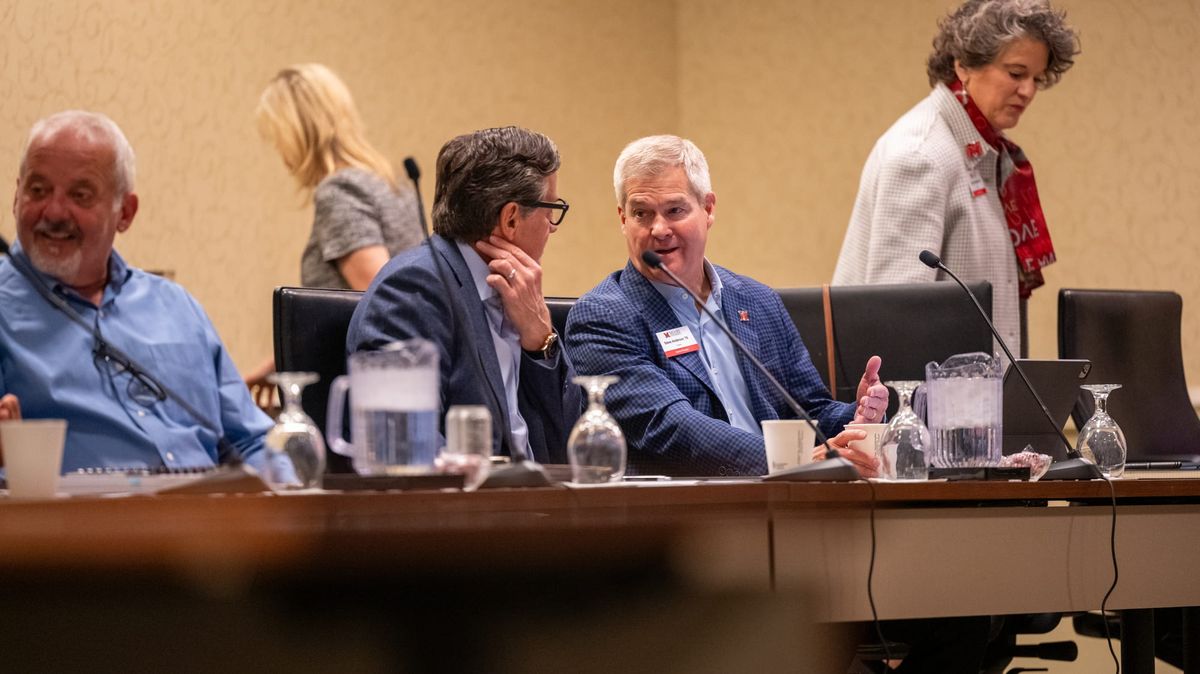
The Miami University Finance and Audit and Academic and Student Affairs committees and the board of trustees were given updates on ongoing capital projects, as well as the capital campaign and the transition of the regional campuses into polytechs during meetings on May 14-15.
Capital projects
Since last February, the university has completed five major capital projects, as well as 12 under $500,000. A couple of the major projects were the $72 million renovations to Bachelor Hall, which were recently completed, and the Sharon and Graham Mitchell Sustainability Park that was dedicated in April.
According to Cody Powell, vice president of facility planning and operations at Miami, the geothermal conversion of residence halls related to the completion of the North Chiller Plant geothermal well installations is expected to be finished by August. The conversion cost $55 million and is part of Miami’s effort to expand geothermal usage and eliminate 5,810 metric tons of carbon dioxide equivalents in emissions annually.
Miami has geothermal wells installed beneath the front lawn of Millett Hall and beneath the sustainability park.
The removals of several Spring Street properties, including Hanna House, Williams Hall, Wells Hall and Joyner House, costing the university $7 million, are only 2% complete but set to be finished in November.
Interior renovations to Miami University’s Police Services Center, costing more than $2 million, are 5% complete and due to be finished in January 2027.
Other high-cost projects include renovations to the Cedar Tech facility in Cleveland, costing $1.5 million and due to be finished this month, and a new refrigeration system in the Goggin Ice Center costing $3.5 million that is expected to be completed by October.
Capital Campaign
Miami President Gregory Crawford told the board of trustees the university has so far raised $836 million of its $1 billion capital campaign that started in 2022 – the largest in the university’s history.
According to the university’s website, $450 million of the campaign is meant to be dedicated toward scholarships; $150 million will be dedicated to clinical health sciences; $300 million will be dedicated to business and entrepreneurship; and $100 million will be dedicated to digital innovation and technology.
Crawford told the board around $703 million in total, or 85% of the campaign funding collected to date, will be spent on academics.
Polytech transition
The board of trustees did not take action on a resolution to officially rename its regional campuses to “Miami University Polytechnic,” despite the ongoing transition of the campuses to polytechs that is set to be completed with a new curriculum beginning in fall 2027.
Seth Bauguess, senior director of communications, told the Oxford Free Press in an email the university is “continu(ing) to explore moving forward” with the shift and working out the fine details, like tuition and enrollment projections. Bauguess said the trustees have requested more information about the initiative before taking a vote and will consider the resolution instead at its June meeting.
The board approved a tuition increase for students of the regional campuses of 3% for the upcoming fall semester. Melissa Thomasson, associate vice president for strategic initiatives, told the board in December the current tuition model of the regionals, traditionally costing less than tuition at the Oxford campus, poses a “risk” to the polytechnic, and raising tuition or fees could support higher-cost faculty and new labs.
Thomasson said while raising tuition could reduce access, the regional campuses could increase scholarship opportunities.
Rachel Beech, vice president for enrollment management and student success, told the Academic and Student Affairs Committee regional tuition is currently covered almost entirely by a full federal Pell Grant, which is given to students demonstrating exceptional financial need. Beech said there is a larger percentage of enrollment of Pell students at the regional campuses because of this.
So far, Thomasson said 10 degree programs are being sunsetted at the regionals as the curriculum is changing, and Bauguess said two majors have been eliminated.