
‘Good Trouble Lives On’ teach-in continues legacy of activism in Oxford
“You’re sitting in the very space where King came during Freedom Summer, and we are all here in Oxford to continue that legacy of activism.”
Editor's note: This store has been updated.
The annual “Good Trouble Lives On” movement returned to Oxford on July 18 at the Holy Trinity Episcopal Church – the same one Rev. Martin Luther King Jr. once visited in the 1950s.
The movement honors John Lewis, a civil rights icon and former member of the U.S. House of Representatives. He coined the term “Good Trouble,” which is the “act of coming together to take peaceful, non-violent action to challenge injustice,” according to the movement’s website.
“Good Trouble Lives On Weekend of Action” was a national weekend this year from July 17-19 of educational events to inform communities about current political issues and share ways they can take action, according to the movement’s website. This movement came to Oxford last year as a protest on July 17.
This year’s “teach-in” – a technique that aims to educate people about political issues and encourage action – featured presentations on several relevant issues, notably legislation impacting voter rights, gerrymandering and the Reconstruction Era.
The panelists were Phyllis Boanes, former professor of history and director of African and African American Studies at Earlham College; Kathie Brinkman, co-president of the League of Women Voters of Oxford; and Anne Whitesell, associate professor of political science at Miami University.
The event consisted of two rounds of panel discussions and Q&As and a small group strategy session.
This year’s “Good Trouble Lives On” event came just two weeks after America celebrated 250 years of independence on July 4th, but also after numerous recent moves by Congress and state legislatures that could impact voters.
One such issue is the SAVE America Act, a bill that would require proof of citizenship to vote or change voter registration. In June, President Donald Trump canceled a scheduled signing of legislation related to housing costs, saying he would only sign it after Congress approved the voting bill.
The list of accepted proof is limited and includes U.S. passports and birth certificates. The Brennan Center for Justice estimates that 21.3 million people have neither a copy of their birth certificate nor a passport, according to a report from 2024.
The event’s panelists discussed the financial implications of this bill, such as the cost of gathering these documents promptly, and how it could impact poll workers, as it could be passed right before a major midterm election.
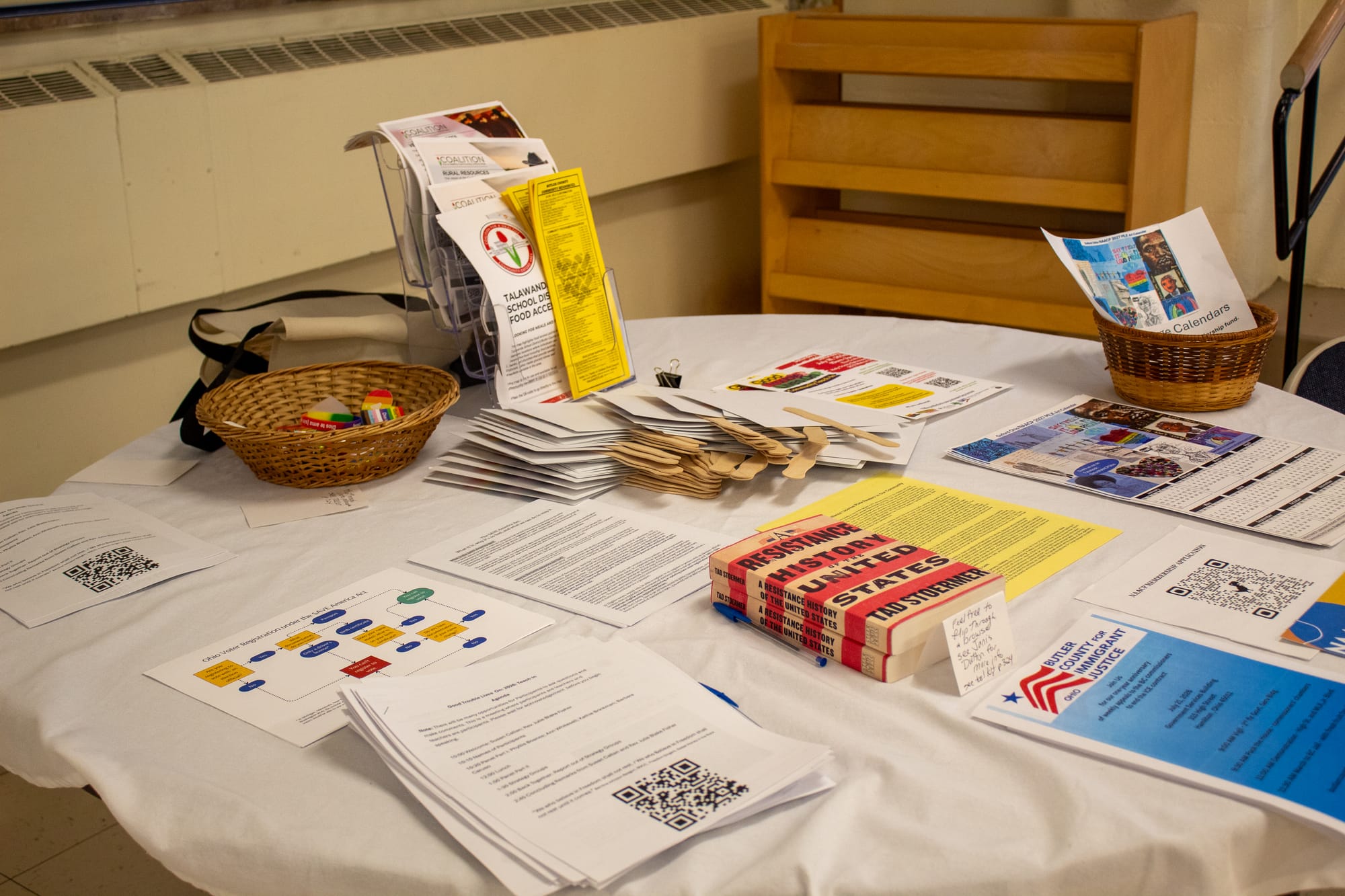
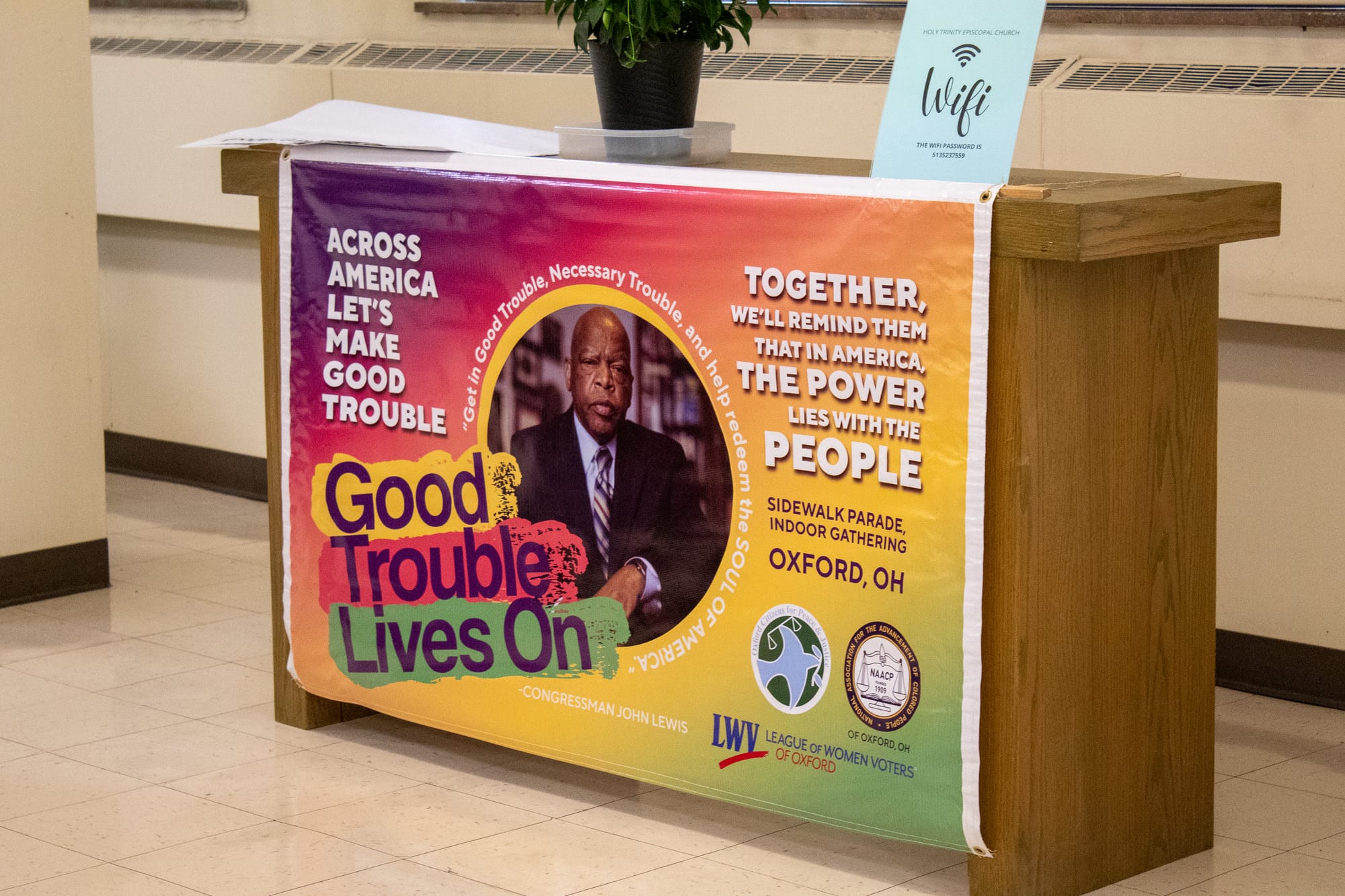
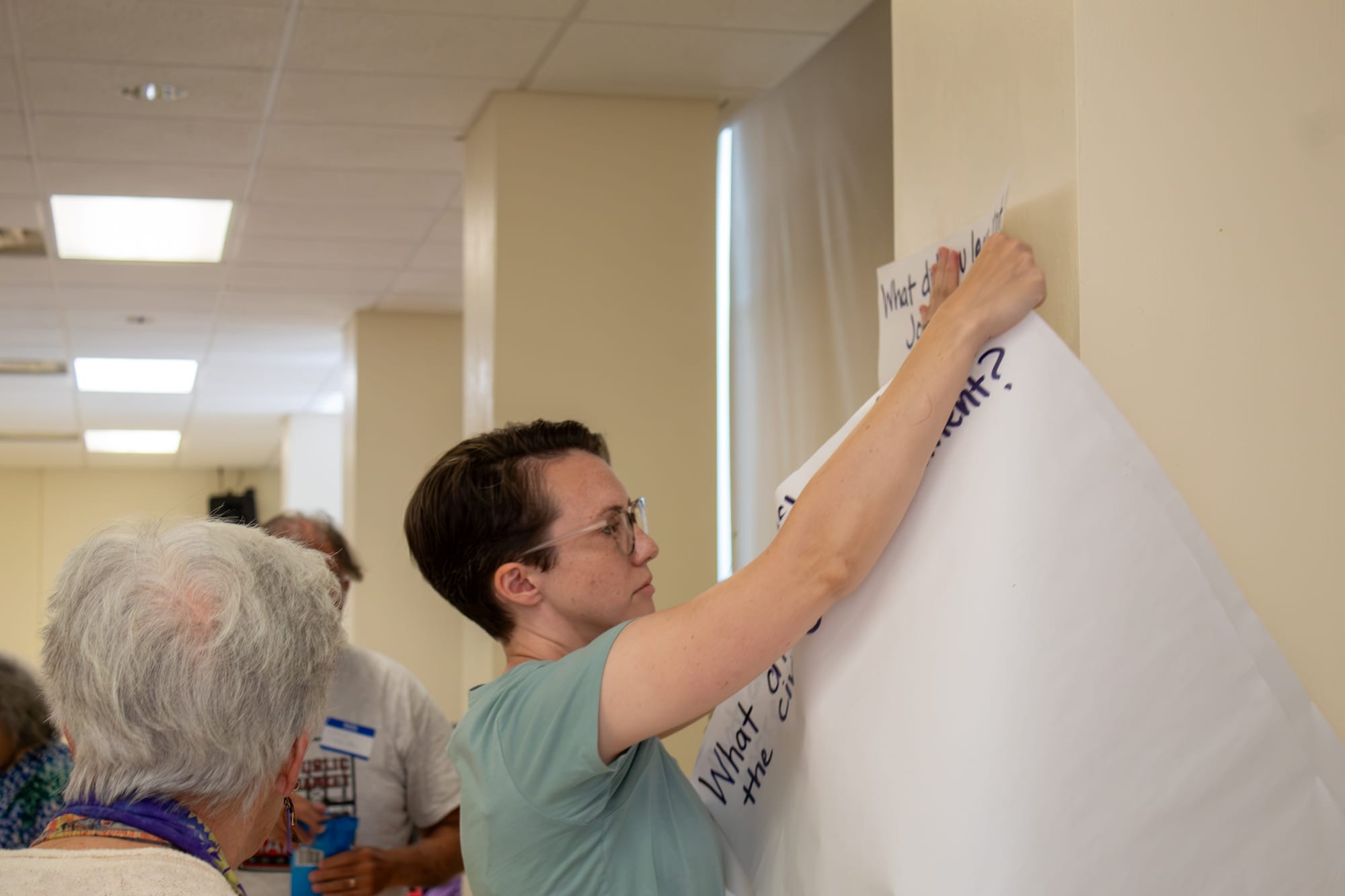
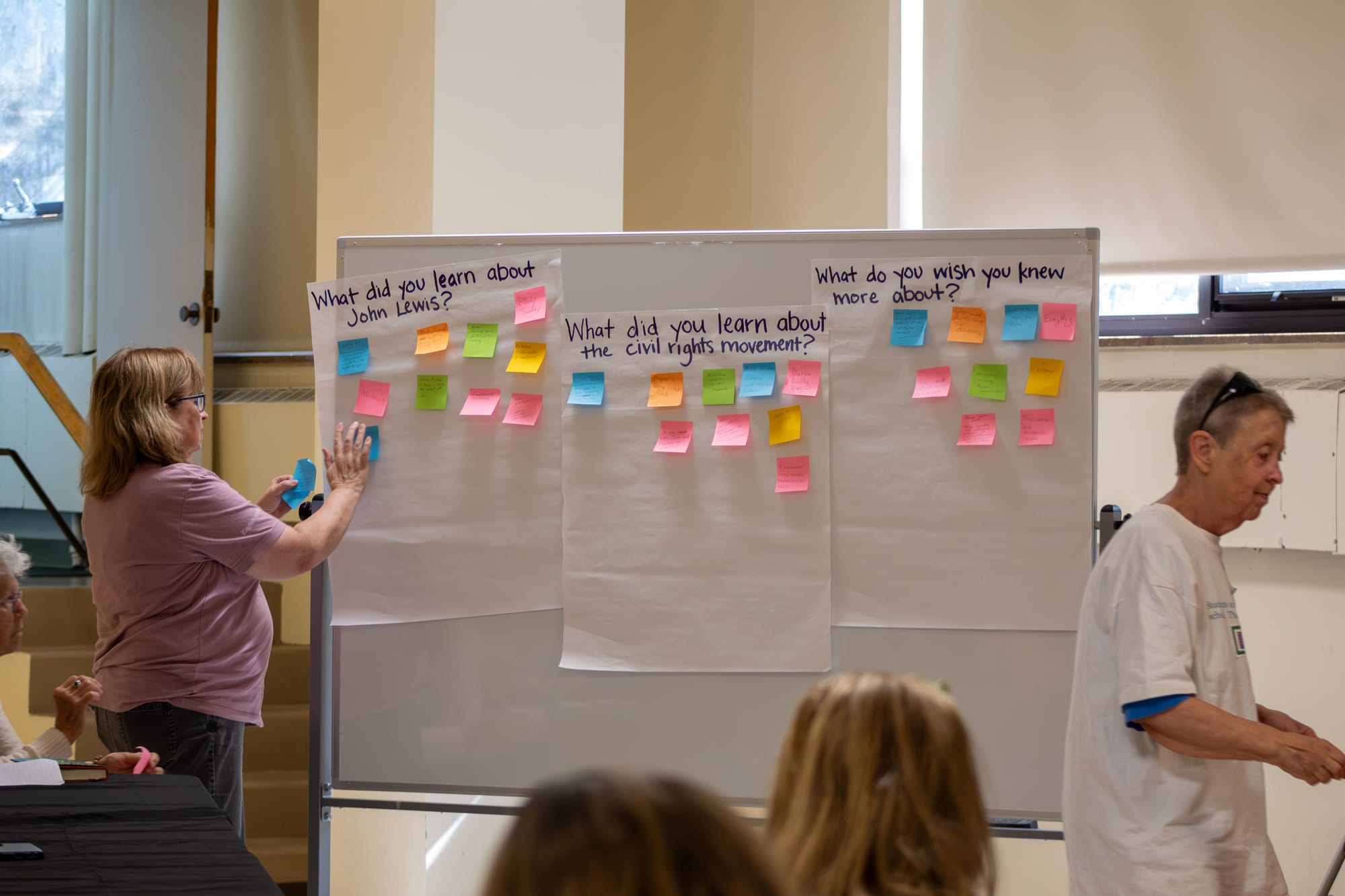
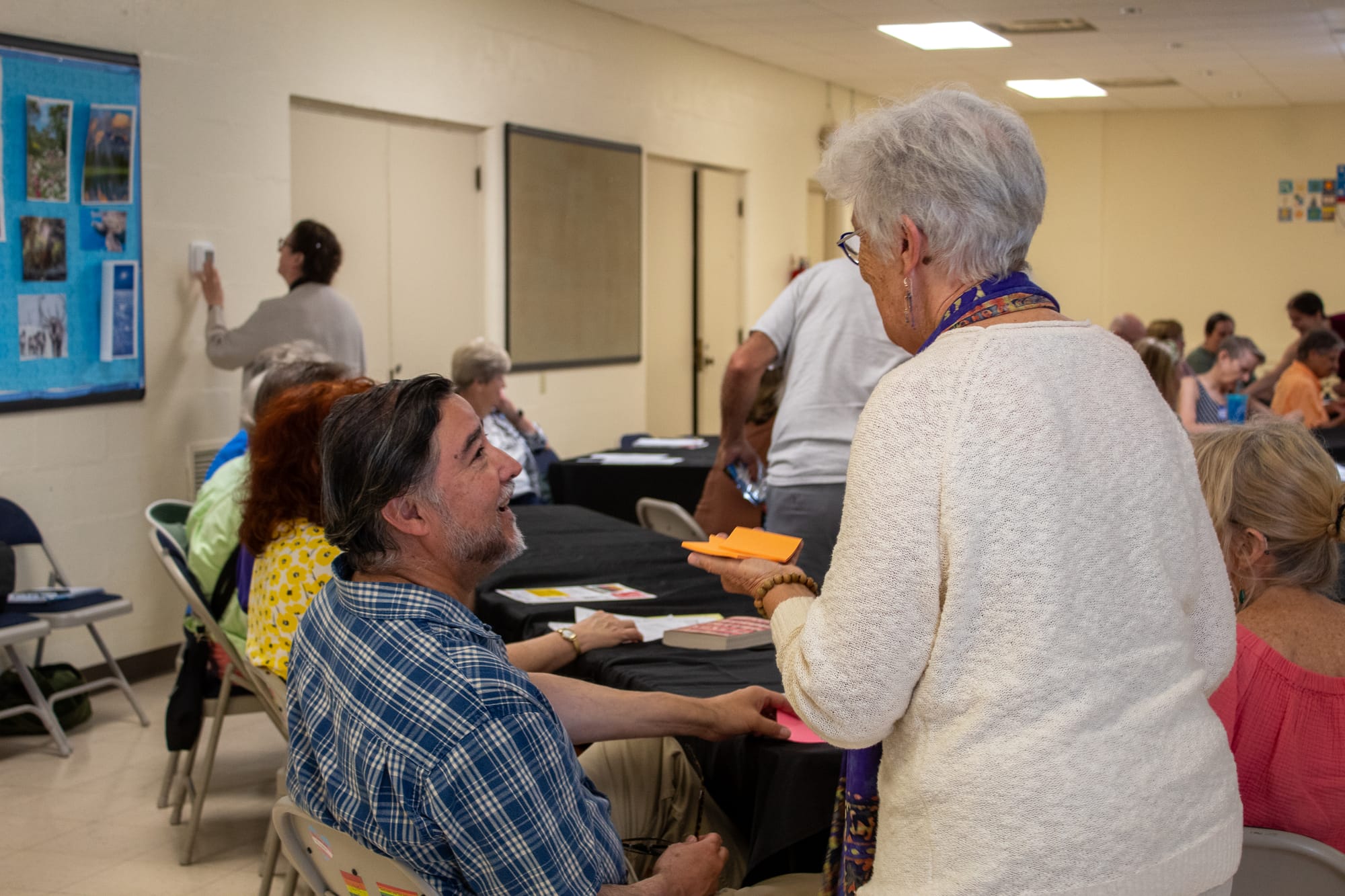
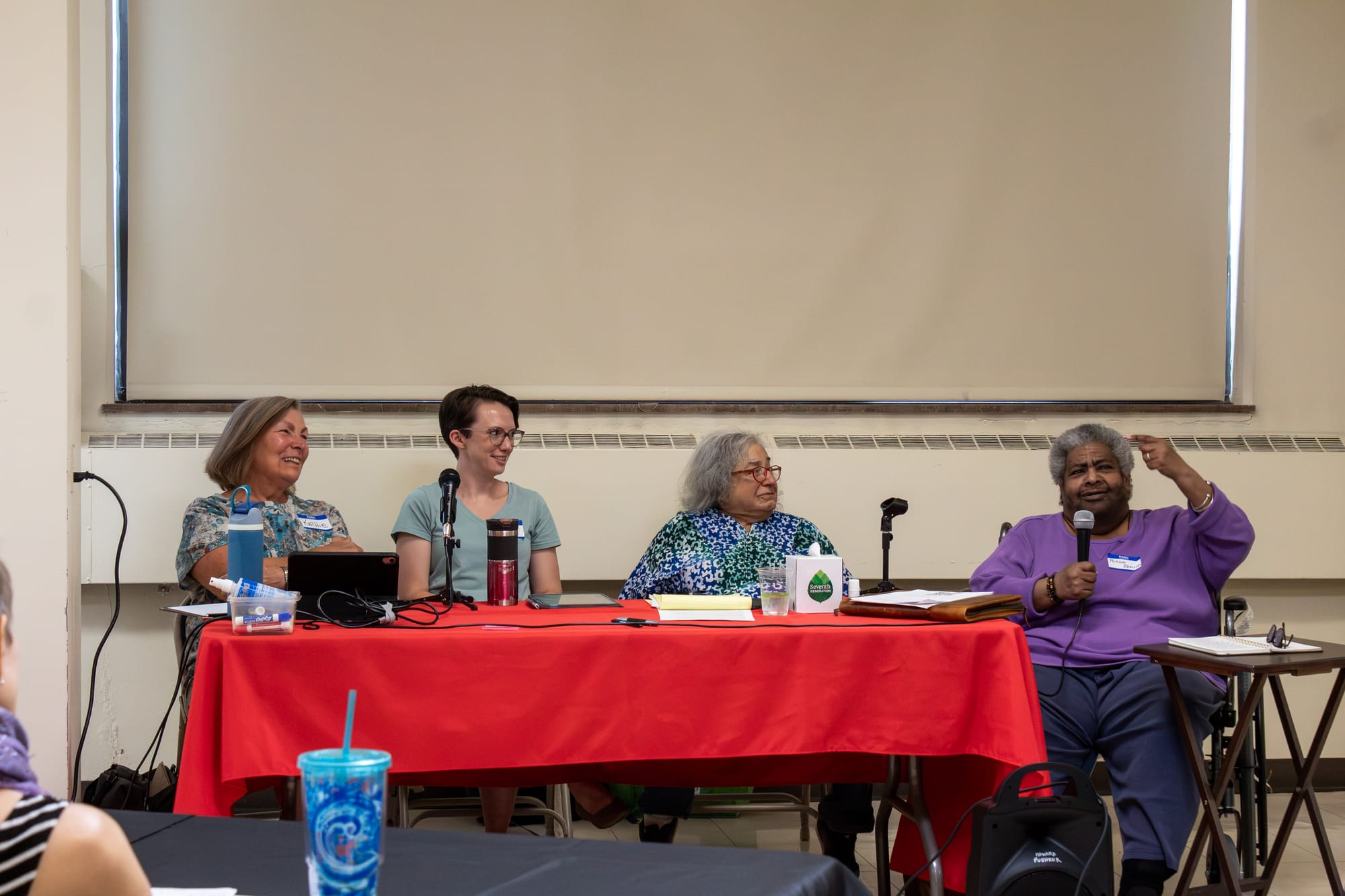
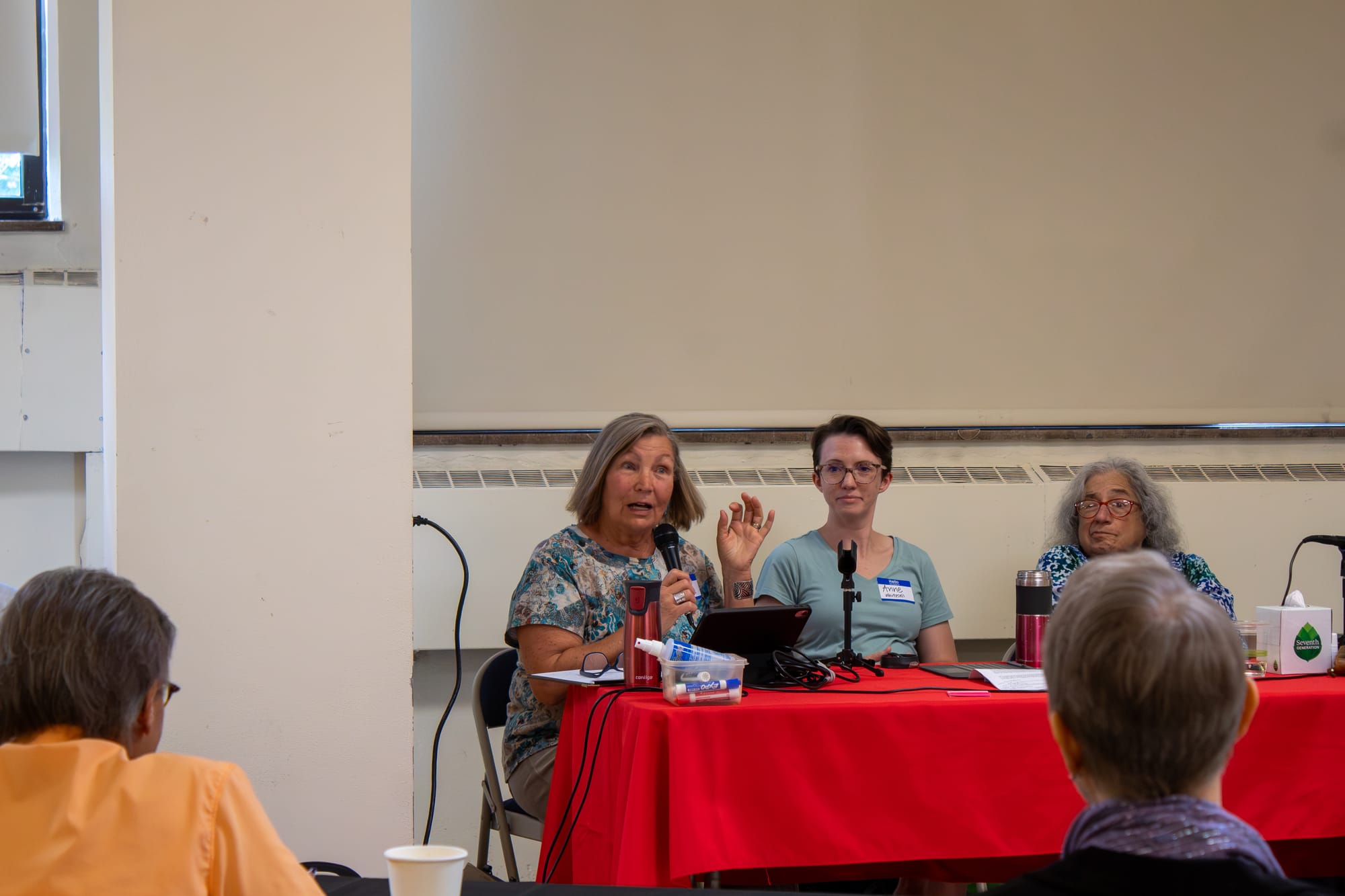
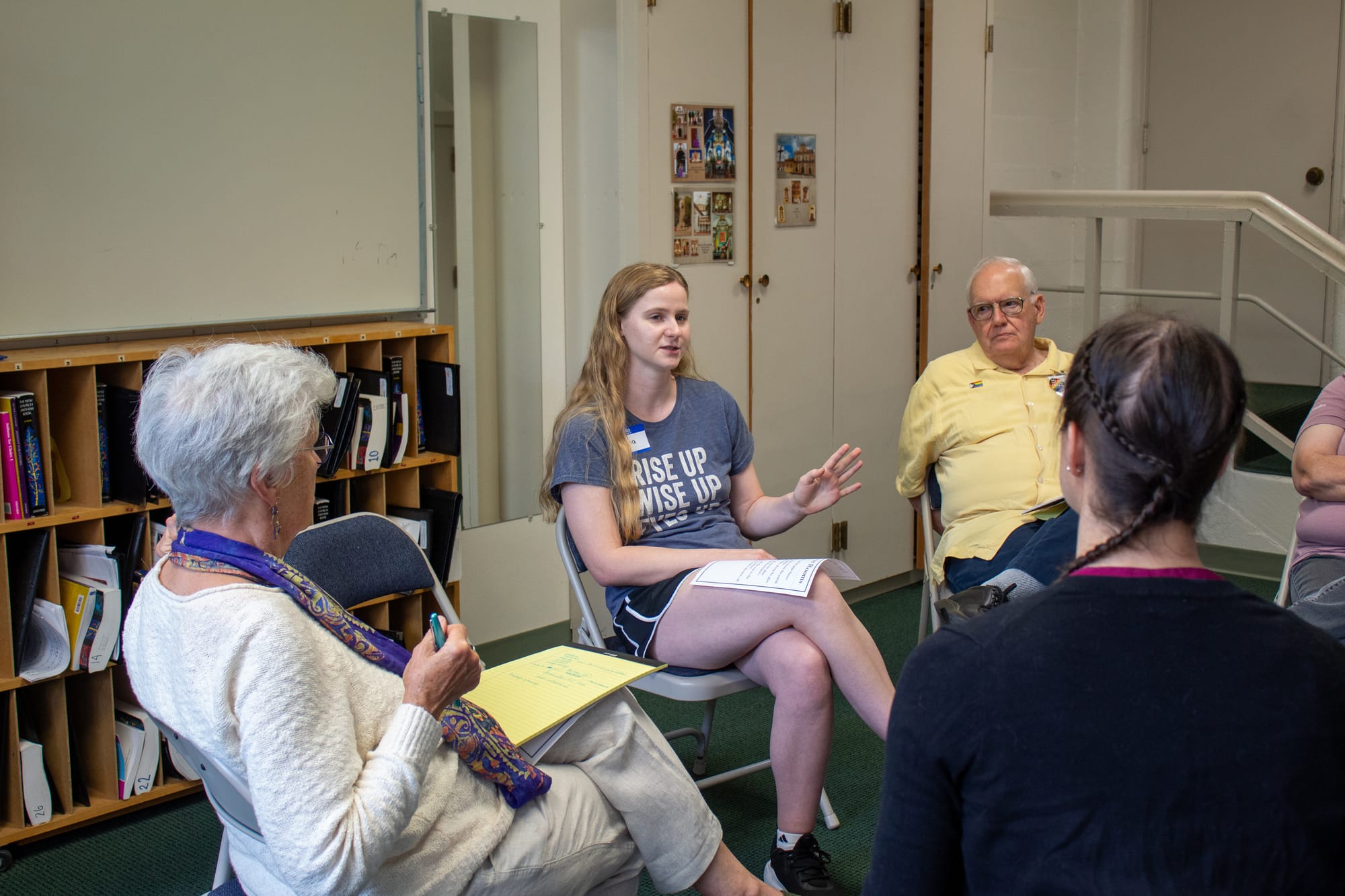
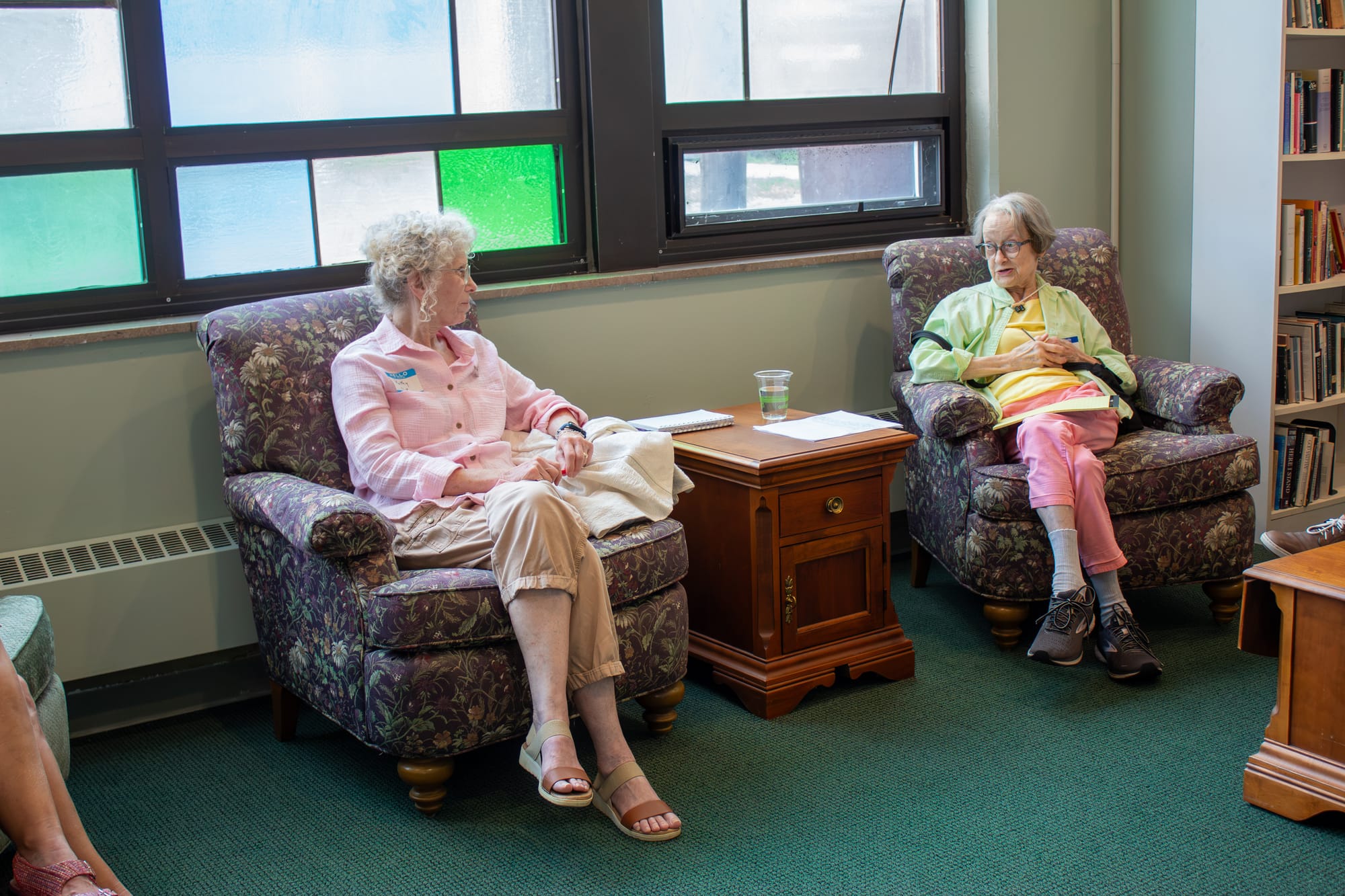
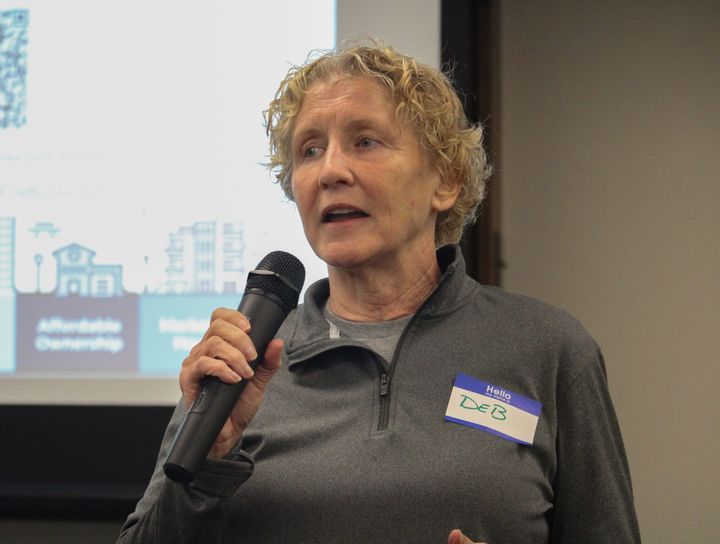
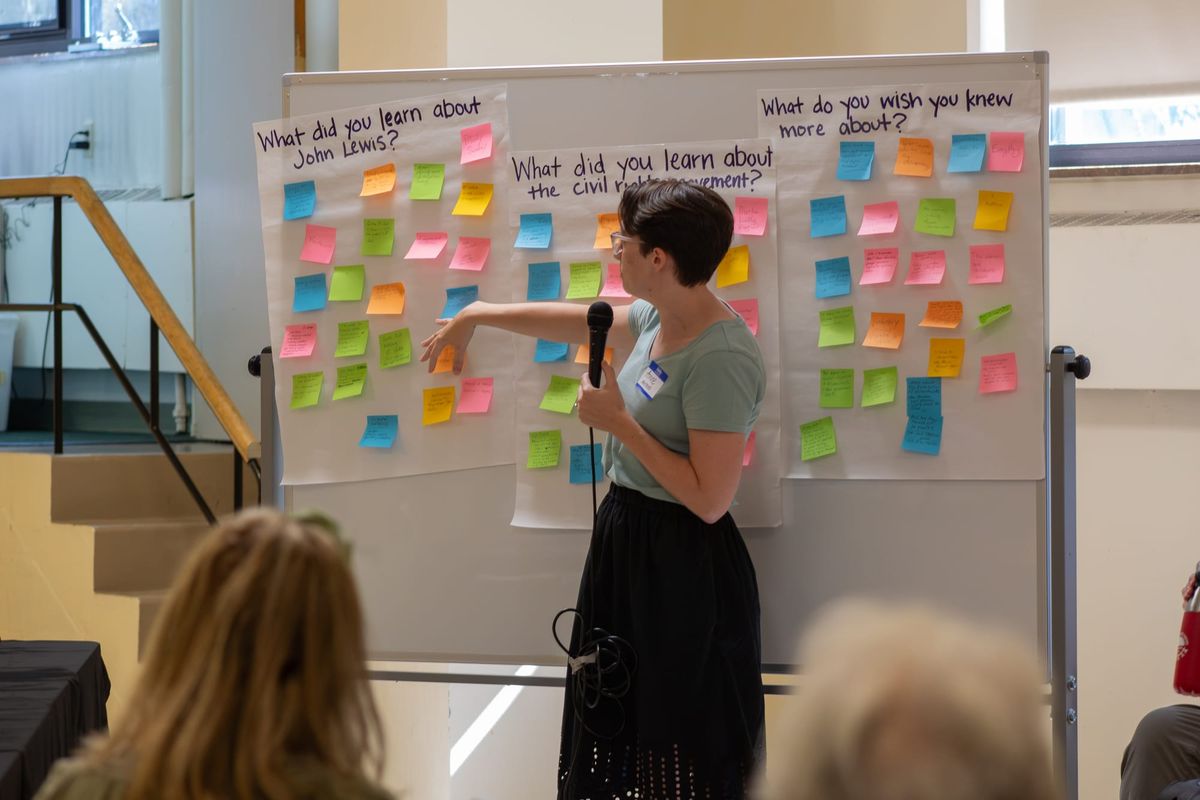
Attendees discussed current political issues and civic engagement at the “Good Trouble Lives On” teach-in on July 18, 2026, at the Holy Trinity Episcopal Church. Photos by Taylor Powers.
Another recent event discussed by the panelists was the U.S. Supreme Court’s decision in Louisiana v. Callais in April, which ruled that Louisiana's 2024 election map that created a second majority-Black congressional district was "an unconstitutional racial gerrymander,” according to NPR.
This ruling impacts Section 2 of the Voting Rights Act, which prohibits redistricting that negatively impacts voters of color. Now, anyone who claims political lines restrict minority voting power must prove discriminatory intent, which can be difficult.
Anne Carroll, who works for the Department of Chemistry and Biochemistry at Miami University, heard about the event at a Coalition for Concerned Citizens meeting days before. She said she decided to come because she’s committed to learning more about how to be politically engaged and take action.
Carroll said local communities can influence the impact national issues have on them by working with local officials, who are more likely to listen to local voices.
“We are going to need the protections of our local politicians, of our local laws, our local community, as the national decisions trickle in,” Carroll said.
Carroll is Episcopalian herself and said she was pleased this event was happening in the Episcopal Church.
Reverend Julie Blake Fisher of The Holy Trinity Episcopal Church said the place has a long history of supporting civil rights movements. The church hosted a dinner during Freedom Summer, which King attended.
“You’re sitting in the very space where Dr. King came ... we are all here in Oxford to continue that legacy of activism,” Fisher said to attendees at the beginning of the event.
Fisher said the presentations made her more aware of constitutional amendments made after the Civil War and how loopholes were used to reduce voting rights for others. She said everyone of all ages in Oxford should get involved with events like “Good Trouble Lives On” to find practical ways to bring about change.