

How the OPD uses Flock cameras to investigate crime
“This is not new technology. It is just much improved technology today.”
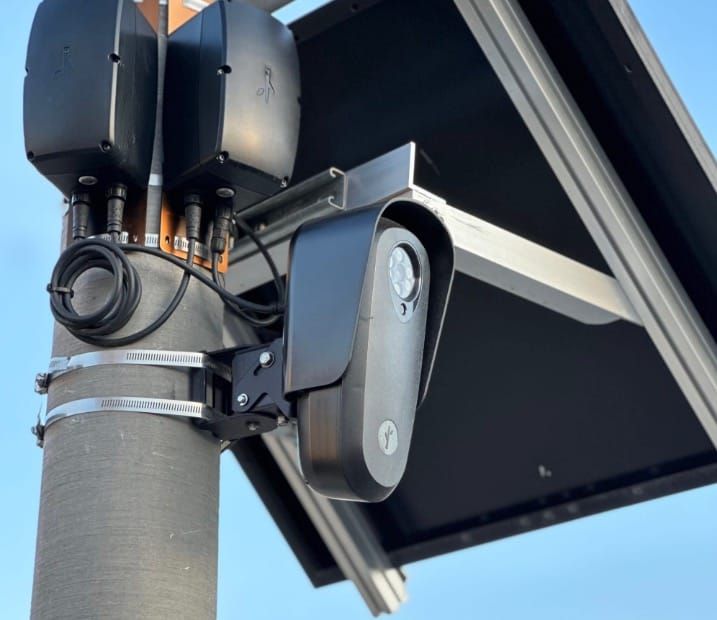
The Oxford Police Department (OPD) currently uses 14 Flock Safety automated license plate recognition (ALPR) cameras to develop investigative leads and receive real-time alerts involving stolen vehicles, missing persons and vehicles associated with violent crime.
“The camera provides a lead,” Oxford Police Chief John Jones said. “It doesn’t provide probable cause … there’s still a lot of human interaction that has to happen before we can even make a traffic stop on the vehicle.”
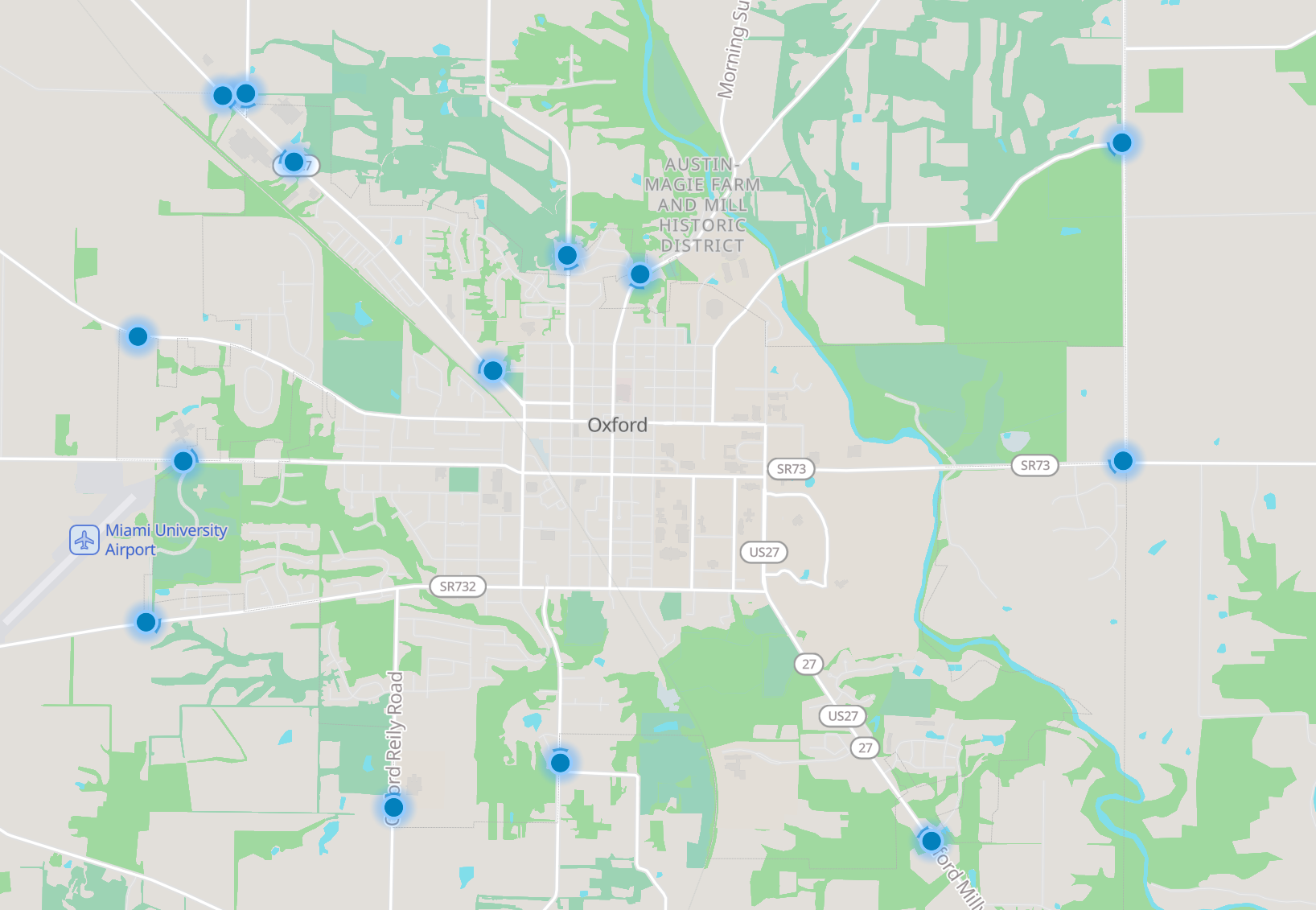
Only after a crime occurs can OPD officers search for suspected vehicles connected to robberies, burglaries, hit-and-skip crashes, vehicle thefts, assaults and missing persons cases to create investigative leads. Flock data can also be used for real-time alerts, including vehicles stolen or associated with violent crime, Amber Alerts, missing or endangered persons and local hotlists for dangerous persons.
“A Flock alert is not the basis of a (traffic) stop,” Jones said, “but it should help the officers engage in proactive policing and develop probable cause based on officer observations.”
Jones also said any users of the data are required to provide an offense type to search the system.
Other options for a search include case number, reason for search, vehicle details – such as license plate number, state of license plate and vehicle signature – and location and time.
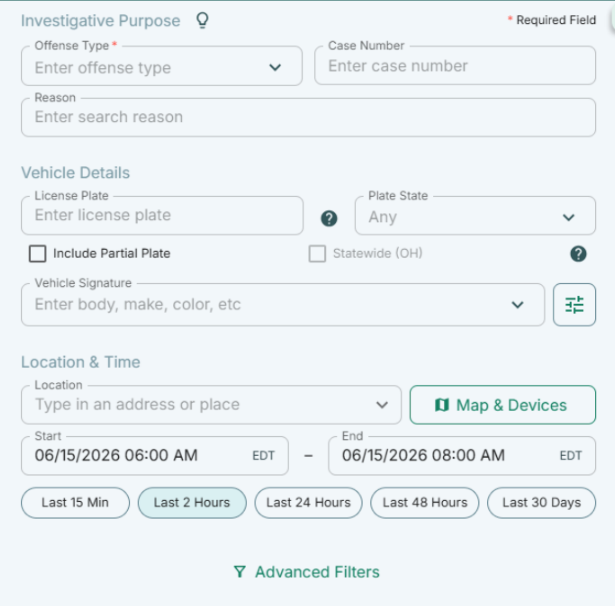
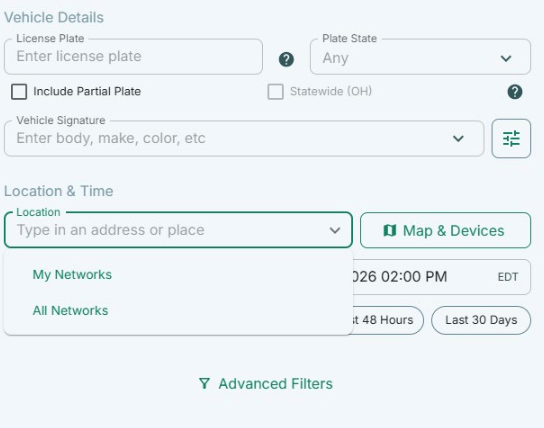
A screenshot of the search function staff can use to access Flock system data. A screenshot of the vehicle lookup search function for agencies with access to the Oxford Police Department’s Flock data. Photos provided by the Oxford Police Department.
Jones said he believes Flock cameras in Oxford have contributed to increased department success. He shared that Flock cameras helped aid in reports and investigations of retail and vehicle theft cases and assaults and stalking cases.
Flock cameras have also contributed to the confirmation of the time of events and alibis in sexual assault cases, according to Jones.
History of surveillance cameras in Oxford
The OPD has been using ALPR cameras since the mid-2000s, specifically three fixed cameras on U.S. Route 27 North and mobile technology in some OPD cruisers and parking vehicles in order to issue parking tickets, Jones said.
“This is not new technology,” Jones said. “It is just much improved technology today.”
In 2022, the OPD signed a memorandum of understanding with Flock. This trial agreement allowed for the OPD to access Flock data before implementing its cameras in the city.
“Flock gave us the software, and we were able to examine it (and) see if it was something we were interested in,” Jones said.
On Feb. 6, 2024, the Oxford City Council voted to enter into an agreement with Flock. The cost of the contract was $50,600. This included 14 cameras purchased at $42,000 with setup fees. Recurring annual costs are $3,000 per camera.
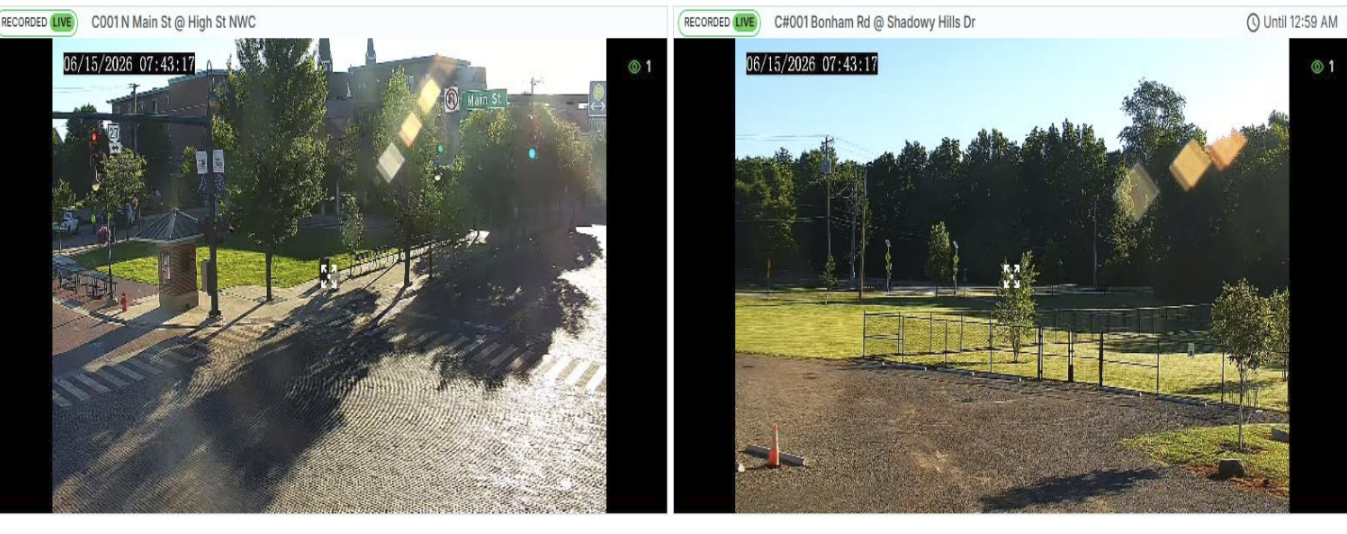
Since the agreement took effect, the OPD has added two Condor cameras, bumping the cost to $48,000 per year. One of these cameras is located on the corner of North Main and High streets and the other is located on the corner of Bonham Road and Shadowy Hills Drive. These cameras have a zoom function and can stream live and recorded video feeds.
“These are just your typical security cameras that are found in businesses and public parks,” Jones said of the Condor cameras.
Crime prevention
Jones said Flock cameras have crime prevention benefits, including deterrence. Visible cameras can discourage vehicle theft, burglary crews, organized retail theft and criminals entering neighborhoods.
Another prevention benefit is rapid response, which includes faster identification of suspected vehicles, improved information sharing and increased recovery of stolen vehicles.
As previously reported by the Oxford Free Press, Flock cameras are viewed as force multipliers or an increase in support for OPD staff. These cameras are active 24/7 and can cover areas that officers cannot at all times.
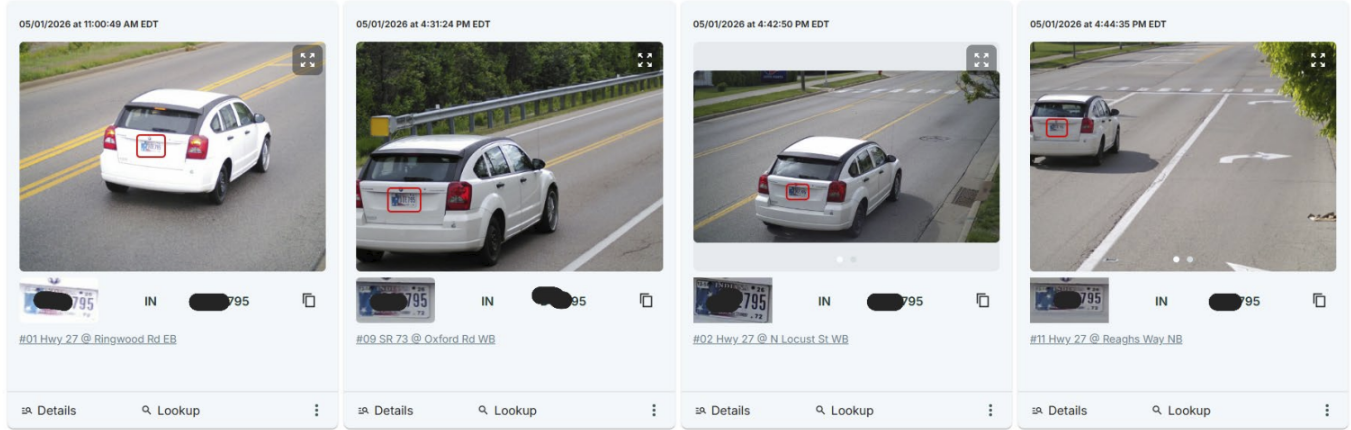
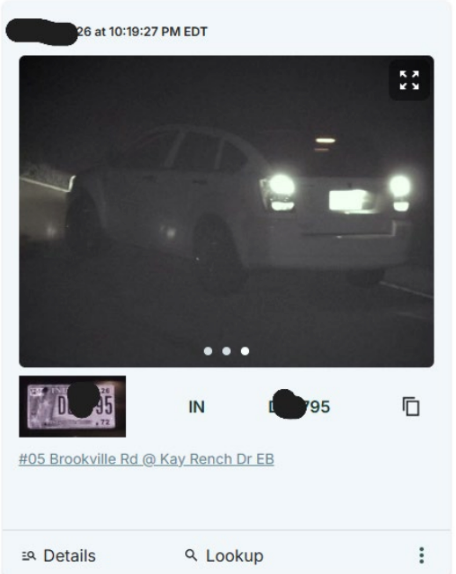
Screenshots showcasing examples of both a daytime and a nighttime image search result staff can use to access Flock system data. Photos provided by the Oxford Police Department.
Data storage and privacy
The terms and conditions of this agreement state the OPD owns the data it collects, Jones said. All stored data on the OPD’s Flock systems is deleted after 30 days.
The Flock system also purges information from the OPD’s Flock data systems, or Law Enforcement Automated Data Systems, multiple times a day to create notifications if there is a warrant for a person’s arrest, according to previous reporting by the Free Press.
While Jones said Flock does not share the department’s data and it is not sold to third parties, other agencies that are in the OPD’s network can access the data.
The OPD’s current contract with Flock is slated to end in February 2027.