
Introduction to Wild Ones
"As a transplant to Southwest Ohio myself, I recognize that there is irony in my efforts to restore the ecology that existed before people like me were on the scene."
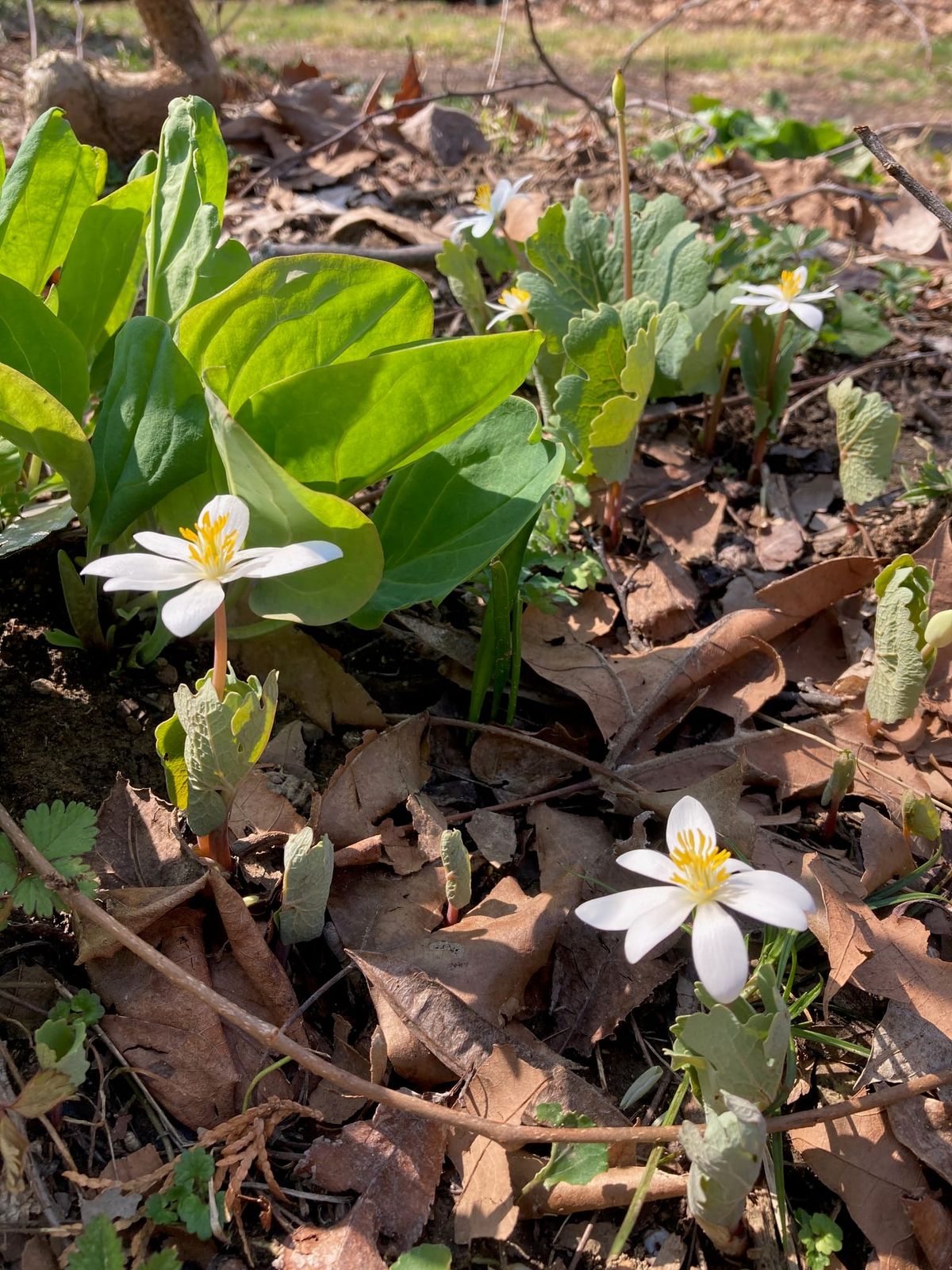
This column was contributed by Carla Blackmar.
A friend’s recent post read: “Winter Creeper and English Ivy are my new archenemies” and ended with “F- - - both of them!” It unleashed a chorus of assent, with one poster commiserating: “WHY DO PEOPLE PLANT THIS STUFF?!” and others cursing the specific introduced plants that overrun their yards, like Vinca minor and Lonicera maackii, our invasive Amur honeysuckle. It doesn’t take much prodding to open the floodgates of frustration felt by gardeners and land managers in our region. Each of us is toiling away in a sisyphusian battle to clear just a little space for the native trees, shrubs and forbs that we know nature depends on.
In the time I’ve spent pulling up wintercreeper, uprooting vinca, yanking down English ivy, popping and chopping honeysuckle, and digging up Callery pear, I have asked myself many times how someone could ever have been fool enough to put in that first Amur honeysuckle hedge, or to have planted that first flat of vinca as a “carefree colorful groundcover.” Sometimes I even imagine history in reverse – fantasizing about a world where we’d understood the nuances of ecology just a little sooner or had done more research before handing out Amur honeysuckle through erosion prevention programs and covering each new subdivision with Callery pear street trees and burning bush shrubs.
As a transplant to Southwest Ohio myself, I recognize that there is irony in my efforts to restore the ecology that existed before people like me were on the scene. When folks like my ancestors colonized North America, we brought our entourage with us: our pigs, our plants, our rats and our blights. We remade the new world for our own comfort, felling the old growth forests, burning huge amounts of wood in our fireplaces and nostalgically importing life forms – often for purely ornamental reasons. Lest we fantasize that we could clean up some of that mess, it’s worth remembering that we’ve never stopped mucking things up. You can still buy English ivy and Vinca minor at most any garden center, and many people see these plants as an asset. We bring new lifeforms of all kinds with us in the rapid comings and goings of our globalized world… in this way, we’ve lost our chestnut and ash trees and gained the pests that many of us spend our weekends battling.
With the odds stacked against us, I often ask myself, “Is it worth even trying?”
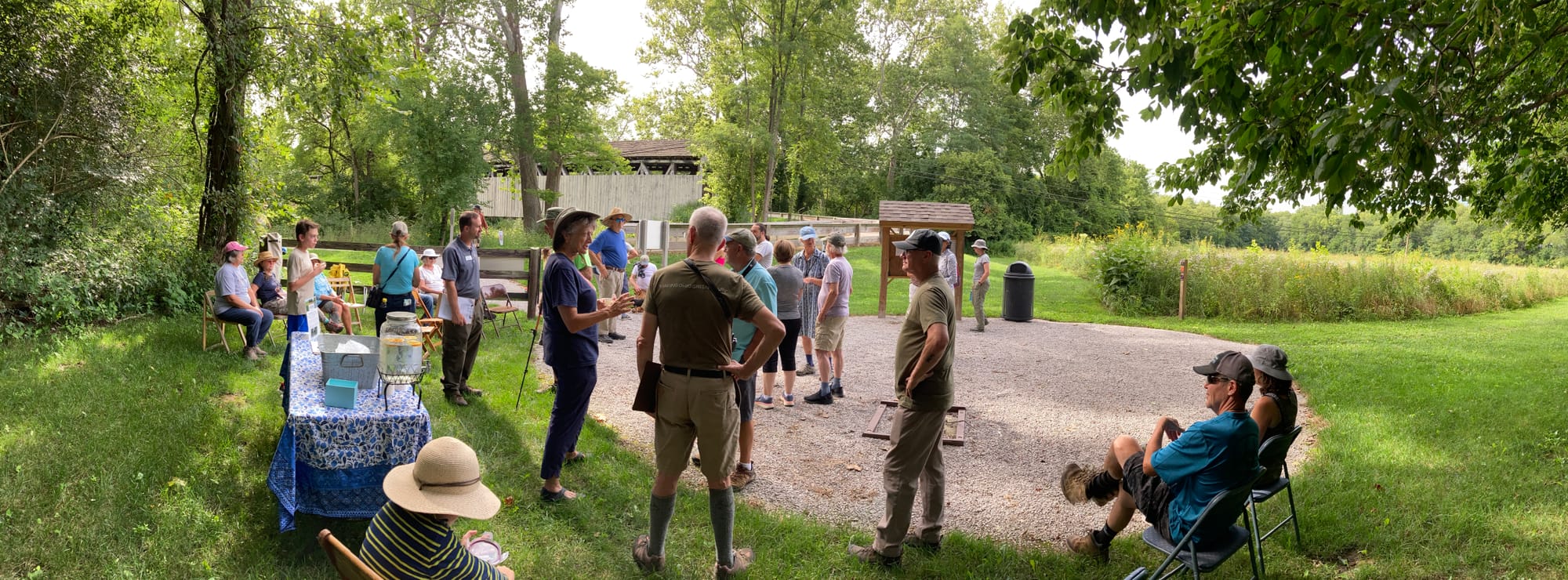
This is the question we try to engage in our local chapter of Wild Ones – building a community that helps remind us that it is worthwhile, and gives us the tools to persist. Our Wild Ones Miami Valley chapter emerged from conversations that began prepandemic, where we sought to build community momentum for biodiversity-supporting landscape practices. We became a “seedling chapter” in 2023 and a “full” chapter in 2024. Now 60 members and growing, it’s becoming clear that there’s a great need for camaraderie and sharing as we navigate the very complex world of our managed landscapes.
The first lesson I’ve learned from my involvement in this work is humility. I’ve made mistakes with plants, like putting a sweet little oregano seedling in a flower bed, only to have it take over. I bet that whoever planted the first wintercreeper under a shady tree did so with good intentions. The consequences of unconsidered planting demonstrate that we need to back up our good intentions with some serious research and education. Wild Ones as a national organization tries to disseminate clear information and guidance about how our yards can support biodiversity – and there are many other excellent groups doing the same. Leveraging the native garden designs on the Wild Ones website alongside tools like iNaturalist Seek to identify plants can help avoid sad mistakes. Before you buy a plant, look it up!
The second lesson I’ve learned is to redirect focus to preserving and enhancing ecologically-supportive plants, with the full understanding that we’ll never be able to pull up all the ecologically-destructive ones. Woody plants, in particular, hold so much promise. Protect and water native trees and shrubs when they are young, clear the area around them, and over time these plants will become a lifeline for caterpillars and birds, even if there are vinca, wintercreeper and ivy below.
Finally, I’ve learned that community is essential to sustaining us in this work. I love attending Wild Ones garden tours, meetings and events and hearing both the frustrations and the victories of my fellow gardeners-in-arms. Alone, this work feels so futile as to be hopeless. But if I plant a spicebush and pawpaw tree, and my neighbor plants a spicebush and a pawpaw tree, the odds that we’ll have swallowtail butterflies and pawpaws this fall are so much greater. Moreover, it’s really fun to swap fruit and talk about it.
Wild Ones has three garden tours coming up this summer and you can find out more and join our community at miamivalley.wildones.org.
Carla Blackmar is the Membership and Media Officer for Wild Ones Miami Valley and is a curatorial assistant at the Hefner Museum of Natural History at Miami University.