
Local Legends: Always remembered
As Oxford remembers Prince on Memorial Day, the comrades he served with remembered him every day.
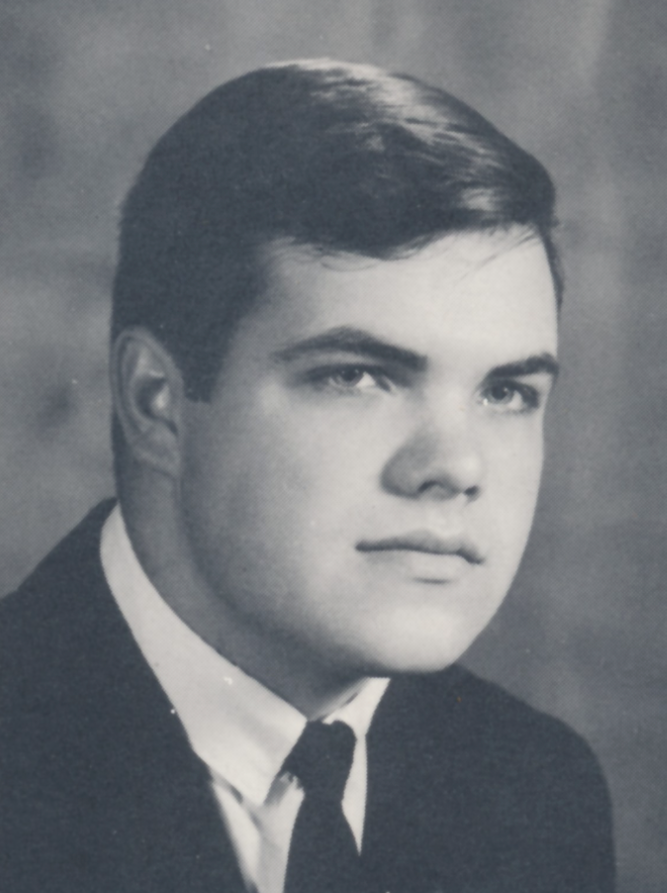
Inscribed on Panel 9E, Line 101 of the Vietnam Veterans Memorial in Washington, D.C. is the name of Specialist Fourth Class Danny Dean Prince – Oxford’s first casualty of the Vietnam War.
Prince was born in Hall, Nebraska on Christmas Day 1946, the son of Lawrence Junior “Larry” Prince and Audrey Nadine (Nielson) Prince. His birth came right after Prince’s father had returned from World War II, during which time he worked as part of a command in charge of sending replacements to the combat zone.
Larry remained in the Army Reserve, assigned to the Adjutant General Corps, and within three years of Prince’s birth had moved the family to Lorramie, Wyoming where he attended school at the University of Wyoming.
Prince and his sister Cynthia L. “Cindy Lou” (Prince) Minton, who joined the family in 1950, grew up all over the country as the family followed their father’s educational journey to Colorado University, Iowa State University, University of Michigan, Nebraska Central College and Massachusetts State College before finally ended up in Galion, Ohio where he worked for the North Electric Company.
In 1963, they came to Oxford, residing at 6324 Devonshire Drive, after Larry earned a position as the chair of the Department of Systems Analysis. Prince transferred to Talawanda High School, joining the Class of 1965.
His mother later described his patriotism, “When he graduated from Talawanda he said he realized he was giving up a lot of things to go to Viet Nam but that was what he wanted to do.” He enlisted on June 11 or 19, 1965, official documents list two different enlistment dates, graduated basic training second out of 2,000 at Fort Knox, trained as a radio operator and completed jump school at Fort Benning. He passed up a chance to go to officer candidate school in order to get to Vietnam sooner.
Prince got his wish, arriving in Vietnam on Dec. 1, 1965, joining Alpha Company, 2nd Battalion, 7th Cavalry of the 1st Cavalry Division (airmobile). The “airmobile” designation of his unit illustrated its innovative use of organic rotor wing assets, especially the iconic Bell UH-1 Iroquois “Huey” series, to transport and support its cavalry troopers in ground operations.
The unit he joined had immediately prior to his arrival been at the tip of the spear, fighting at Landing Zone X-Ray (LZ X-Ray) during the final phase of the Battle of Ia Drang. The first major engagement of the Vietnam War involving U.S. forces, that battle was immortalized in the book “We Were Soldiers Once…and Young” by Col. Hal Moore and Joe Galloway, also later made into a major motion picture.
Leaving LZ X-Ray, 2nd Battalion, with other attached units, was ordered to march to LZ Albany, but was ambushed along the way resulting in the costliest single battle of the entire war for U.S. forces with 155 Americans killed, 124 wounded and four missing in action. Prince was among those replacing these casualties and soon found himself in combat.
Operation Masher, also called Operation White Wing for political reasons, Prince’s first mission, kicked off on Jan. 24, 1965 when his battalion was airlifted by four U.S. Air Force C-123 transport aircraft to the army special forces camp at An Khe in preparation for a move against North Vietnamese Army (NVA)forces in the Bong Son Plain. One of the planes crashed shortly after takeoff, killing all 46 men aboard and leaving his unit without a quarter of its strength.
From An Khe, Alpha Company transferred to another special forces camp at Bong Son and set out foot patrolling the villages to its north. Prince spent that night in a dry crop bed, and in the morning, boarded a Huey that took his unit to a remote location where they were to establish a forward operating base for use as a staging area for a planned attack into the village of Phung Du.
Having achieved this, Alpha Company moved out on Jan. 28 to join their sister units in the attack, heading to the south of Phung Du to set up a blocking position. Prince lugged his heavy AN/PRC-25 manpack radio as he trudged through a series of rice paddies in the midst of a seasonal monsoon.
Coming down off of a ridge en route to their objective, they encountered a flooded rice paddy adjacent to a cemetery hindering their progress. As the first troopers made their way across the rice paddy, the enemy opened up on them with machine gun and small arms fire from a concealed trenchline. An intense firefight followed which only ended when one of Alpha Company's platoons assaulted trenchline head-on and routed the enemy off the field.
It was during this engagement that Prince likely earned his first Bronze Star Medal, after he pulled a wounded comrade to safety through the rice paddy while under fire.
Now low on ammo, Alpha Company secured the cemetery and utilized it as an LZ for resupply, though one of the Huey’s was shot down on the way in and crash landed in the rice paddy. Prince stayed awake that night as NVA troops probed their perimeter around the cemetery while directing harassing sniper and machine gun fire at the opposite end of the perimeter.
Alpha Company held the perimeter, which was reinforced by survivors of their battalion’s Charlie Company who had snuck past the NVA and dragged a large number of their wounded there overnight. When the weather cleared enough for medevac choppers to land, the wounded were evacuated. As a radio telephone operator, Prince likely called in some of the resupply and medevac choppers.
When a mass of over 100 NVA troops was sighted by observation aircraft approaching the cemetery, it was only through aerial bombardment, including high explosive bomb, white phosphorus and napalm drops, that they were held off from reaching, and possibly overrunning, the cemetery.
The balance of the battle changed by Jan. 30, when Alpha Company was airlifted by chopper to support an artillery position set up at LZ4. At LZ4, they received some enemy mortar fire during the following night and also skirmished with enemy forces until the end of the operation on Feb. 4.
It was probably at LZ4 that Prince earned his first Purple Heart, as it was reported that he was wounded and hospitalized for 10 days in February 1966 but his unit received no casualties in their remaining engagements during the month.
Prince was back with his unit for the search and destroy missions undertaken by the 1st Cavalry Division in May and June 1966, Operations Crazy Horse and Nathan Hale. During this time Prince saw yet more combat, receiving a second Bronze Star Medal after engaging in hand-to-hand combat with enemy troops.
On Aug. 2, 1966, Prince went into combat again with the start of Operation Paul Revere II, another search and destroy mission. His platoon air assaulted into LZ Pink, about seven miles north of the LZ X-Ray battlefield, initially meeting no resistance.
However, a reinforced company of NVA had concealed themselves in the brush and waited for the Americans to walk into their ambush before opening fire. Prince was shot in the head and fell dead on the field, likely targeted because of his radio, which was stolen off his body by the NVA. He died alongside 17 members of his platoon and when friendly forces reached their position an hour later, having been delayed by heavy rain, they found only nine men remained alive, six of whom were wounded.
His mother lamented to the Oxford Press, “Danny’s luck just ran out… Danny was proud of his country.” He was four months away from an opportunity to join U.S. Army Special Forces that he was highly anticipating. Prince’s remains were repatriated to the United States for burial in Elmwood Cemetery in St. Paul, Nebraska.
As Oxford remembers Prince on Memorial Day, the comrades he served with remembered him every day.
A veteran of his company, Delmar Nelson, posted on the website The Wall of Faces in 2014, “I will alway's remember Danny, along with Harlen Harris and Fred Saiz who were killed oug.2nd (Aug. 2nd) 1966. That was one of the worst day's for me during my time in viet nam. the last 49 year's I've keep your memory alive. You three have never been forgotten. and it was an honor to serve with men such as you. Garry Owens Brother's.”
Brad Spurlock is the manager of the Smith Library of Regional History and Cummins Local History Room, Lane Libraries. A certified archivist, Brad has over a decade of experience working with local history, maintaining archival collections and collaborating on community history projects. He also serves as a board member for Historic Hamilton Inc. and the Butler County Historical Society.