
Local Legends: The patriots of Indian Creek
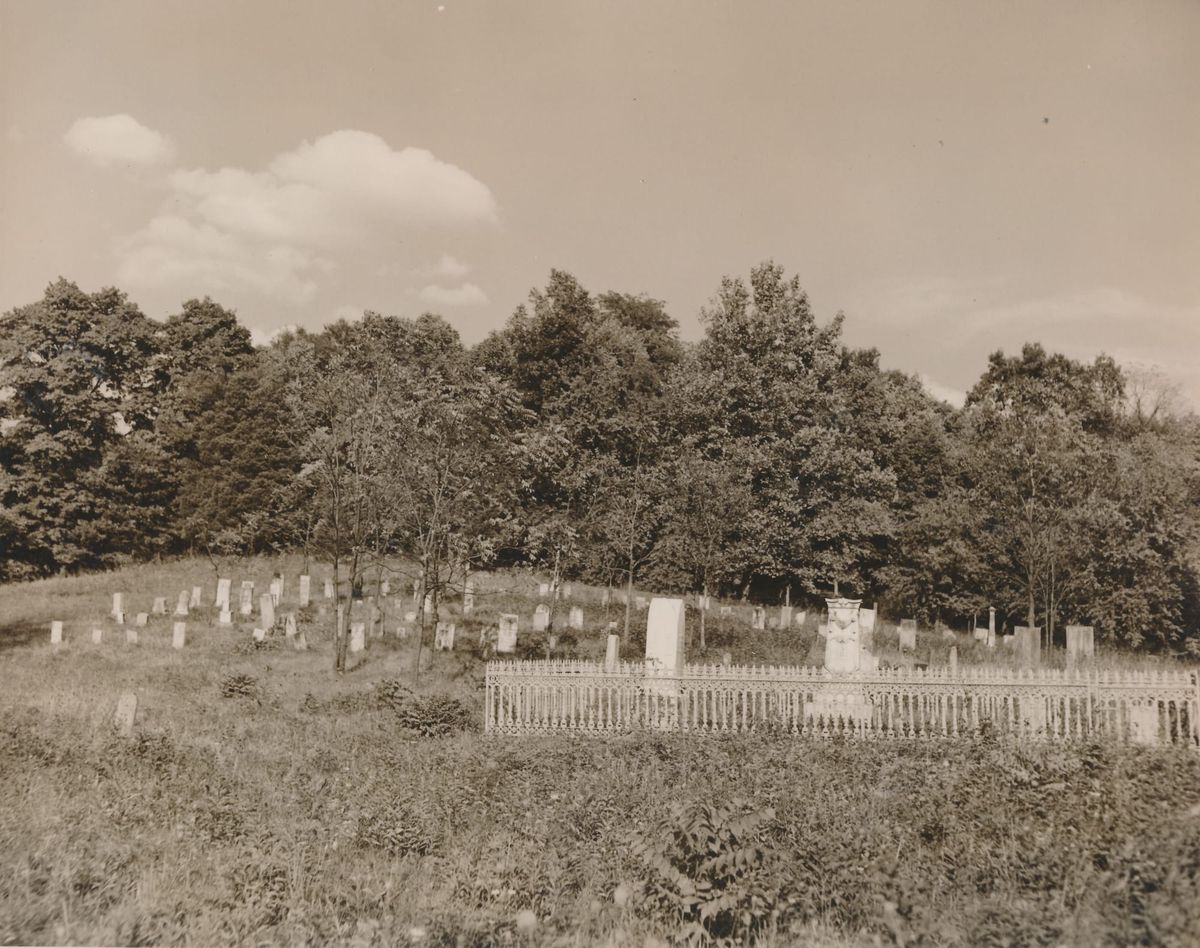
In the year 1809, Reily Township was sparsely populated. That year, Reverend Tyner of Brookville, Indiana arrived in the region to preach, bringing with him his Baptist faith. He and a series of other pioneer preachers that followed rapidly developed what would become the Indian Creek Baptist Church with a congregation of 100 members within 18 months.
In the graveyard of the church are buried two patriots from the American Revolution who served their new nation in state militias during the War for Independence, Heman Adams and Thomas Boone.
Records pertaining to Revolutionary War service are not always straightforward and research methods for more recent conflicts do not always apply for locating information on the nation’s first soldiers and sailors. Likewise, beyond the most notable early pioneers of Butler County, records and information on the first settlers of the county is incomplete. The biographical outline of the lives of Adams and Boone is certainly not exempt from this reality.
Heman Adams was born on June 5, 1761 in the town of Sandwich in Barnstable County, Massachusetts. Adams’ father, Nathaniel Adams, was also born in Barnstable County while his mother, Thankful (Chadwick) Adams was a native of Falmouth on the opposite shore of Cape Cod.
With the coming of the American Revolution, Adams’ father enlisted for service in 1776 and marched with his regiment to Rhode Island. Adams followed his father into the Barnstable County Militia two years later in 1778 at the age of 16, being assigned to Joseph Griffith’s Company of Col. John Jacob’s regiment at Swansea, Massachusetts.
His regiment stood by guarding against any potential northern incursion by British forces from Rhode Island. The Battle of Rhode Island kicked off on Aug. 29, 1778 with an American attempt to besiege British-occupied Newport, Rhode Island and Aquidneck Island, resulting in an inconclusive battle. Adams exact role in the battle, if any, is unclear and his enlistment likely ended in December 1778.
With the Revolution continuing to be fought in three theaters between New Jersey, New York and the Carolinas, the House of Representatives of the State of Massachusetts Bay passed a resolution on June 9, 1779 to raise reinforcements for the Continental Army. Adams was among those who answered the call to arms, reenlisting for another nine month term of service on Aug. 17, 1779. Enlistment records describe the 17 year old as being 5 feet 4 inches in height, on the shorter side of average at the time and of a light complexion.
He was initially assigned to the militia company commanded by Captain Simeon Fish of Colonel Nathan Freeman’s regiment and stood “on alert” at Falmouth and Dartmouth with the threat of British naval raids remaining. He ended his enlistment as a member of the 13th Massachusetts Regiment on May 17, 1780 at Story Point, New York.
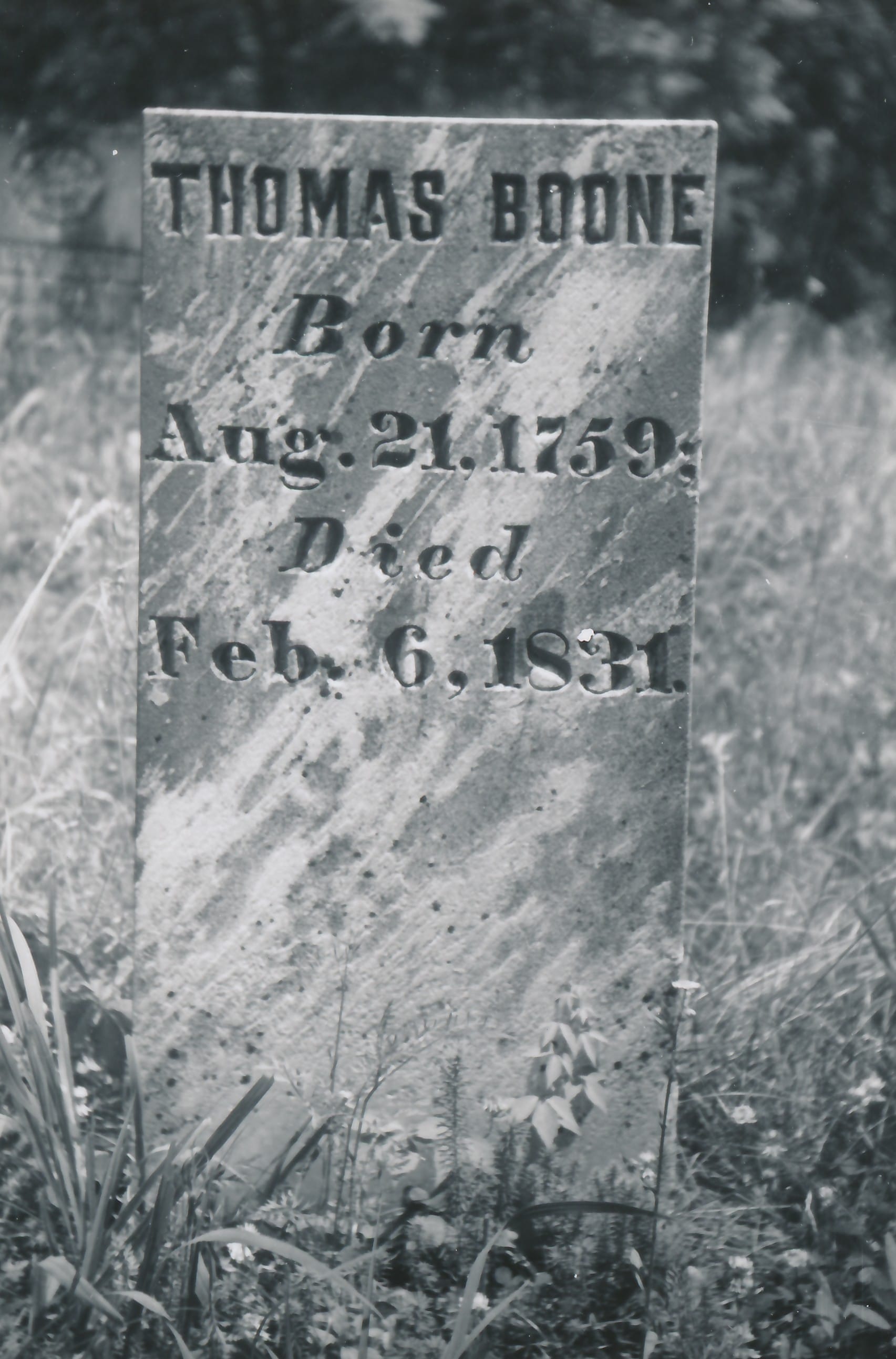
Also guarding his home county against the British was Thomas Boone. Boone, a first cousin of the famed Kentucky pathfinder Daniel Boone, was a native of Reading in Berks County, Pennsylvania. He was born on Aug. 21, 1759, the son of Joseph Boone Jr. and Elizabeth (Warren) Boone.
By the time of his first enlistment on Nov. 28, 1777, he was 18 years old. Boone initially served in the 6th Battalion of the Berks County Militia under Captain Henry Spyker. Boone reenlisted with Captain James Murray in the 10th Battalion of the Lancaster County Militia on April 12, 1781, less than six months before the surrender of the British at Yorktown. The details of his service are not recorded and it is unknown if he was engaged in combat at any point during his enlistments.
With the end of the conflict, both Boone and Adams looked toward Ohio as a place to settle. Due to their families unwillingness to accept their religious differences, Boone eloped with and married Susannah (Brumfield) Boone, who was later described in a biographical work as a “Pennsylvania Quakeress,” in 1782.
Boone first arrived in Ohio at Upper Sandusky, but soon moved to a small town called Limestone near Maysville, Kentucky and then on to a blockhouse at Bryant’s Station in Fayette County, Kentucky. They had nine known children along the way, William, Sarah, Joseph, Katherine, Rachel, Brumfield, Susan and Levina Boone and Elizabeth (Boone) McClain.
The Boones became one of the first families to settle in the area that is now Indian Hill along the Little Miami River in Hamilton County, Ohio in 1794, opening a tavern there before relocating once again, this time to Cincinnati. While some records claim that the Boones arrived in Reily Township in 1807, Boone wasn’t issued a land patent until Aug. 31, 1812 which gave him ownership of the southwest corner of Section 4.
Initially remaining in Barnstable, Adams had joined Boone in Reily Township by 1820, though he never owned property in the township. He had married Lucy (Cobb) Adams on Nov. 14, 1781 just after the end of his enlistment.
Their children, Asenath (Adams) Smith and Lot Adams, as well as two other possible children, were born in Barnstable. Moving to Reily, it appears that they lived with their daughter and son-in-law Warren Smith, who later had Adams declared insane for an unknown cause and length of time, in southern Oxford Township. At some point Adams also acquired stok in the Venice Bridge Company, a tollbridge serving Ross Township and eastern Butler County.
Boone was a founding member of the Indian Creek Baptist Church and encountered some controversy when he was called out for attending “frolics,” or dances, by a female member of the congregation named Abigail Wilkinson. Wilkinson was kicked out of the church for violating rules that disallowed women from speaking out during services, but was later allowed to rejoin the church.
Boone died on Feb. 6, 1831 at age 71. Adams lived quite a bit longer before his death on Nov. 21, 1848 at age 87. The two patriots remain at rest in Indian Creek Cemetery as the nation they helped forge nears its 250th birthday.
Brad Spurlock is the manager of the Smith Library of Regional History and Cummins Local History Room, Lane Libraries. A certified archivist, Brad has over a decade of experience working with local history, maintaining archival collections and collaborating on community history projects. He also serves as a board member for Historic Hamilton Inc. and the Butler County Historical Society.